Kitesurfing Lanka
★ 9.2/10 (62 reviews)
less than 1 km away as the crow flies
Dive centre · Kalpitiya · Sri Lanka
5.0740 Google reviewsExperience four generations of diving expertise with a PADI 5 Star Dive Resort operating across both the Kalpitiya and Trincomalee coasts.
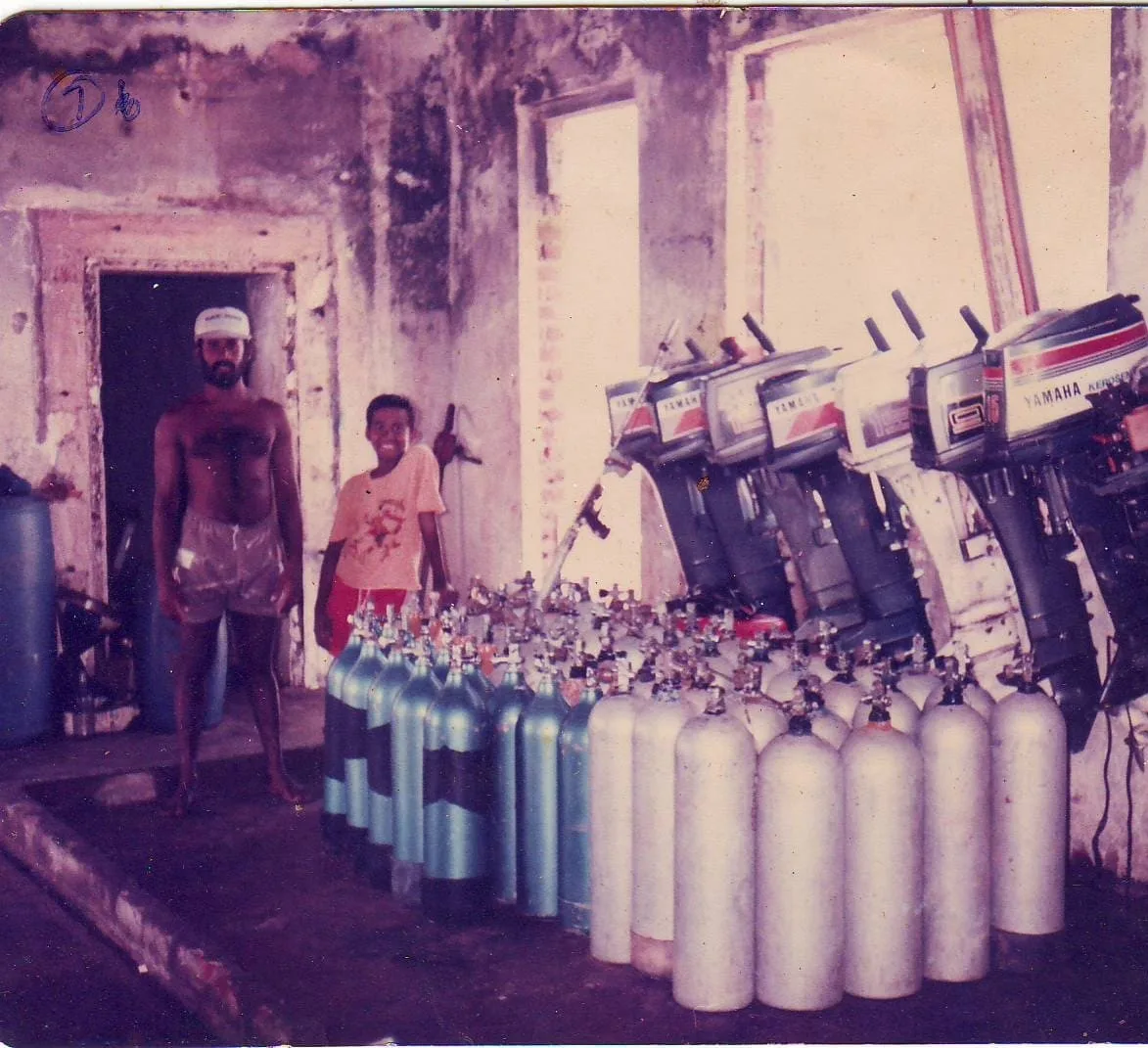
Established in 2002, the Kalpitiya Diving Center is the oldest and first diving operation in the region. Founded by Shanth Fernando, a pioneer of Sri Lankan diving, the centre has evolved into a multi-generational family business that understands the nuances of the local waters.
To ensure year-round diving, the centre operates from two distinct locations to match the seasonal monsoon shifts. From November to April, the focus is on the west coast in Kalpitiya, while the east coast centre in Trincomalee operates from mid-March to November. This dual-base approach allows you to find calm seas and reliable conditions regardless of the time of year.
The centre is led by Samith Thilina Fernando, a PADI Master Scuba Diver Trainer with nearly 20,000 dives logged. This level of experience is woven into the centre's culture, ensuring that safety and professional standards are maintained across all levels of instruction.
Instruction is delivered in English, French, German, Spanish, Sinhala, and Tamil. To maintain a high standard of supervision and personal interaction, the centre keeps dive groups small, with a maximum of five divers per guide.
Beyond training, the team is deeply committed to marine conservation and the local environment. They are officially accredited by the Sri Lanka Tourism Development Authority (SLTDA), reinforcing their professional standing in the region.
The training programme is extensive, catering to everyone from those taking their first breaths underwater to professional candidates. PADI courses include Open Water Diver, Advanced Open Water Diver, and Rescue Diver, as well as the Divemaster programme.
For divers looking to specialise, the centre offers several PADI specialties. These include Deep Diver, Night Diver, Wreck Diver, Nitrox, and Peak Performance Buoyancy. They also provide technical and skill-based training such as Drift Diver, Boat Diver, and the Delayed Surface Marker Buoy (DSMB) Diver course.
Educational offerings extend into marine science and photography, with courses in Fish Identification, Coral Reef Conservation, Dive Against Debris, and Digital Underwater Photography. Emergency First Aid Response is also available to ensure your safety skills are up to date.
The centre provides a full range of rental equipment for those not travelling with their own kit. This includes BCDs, regulators with gauges and octopuses, dive computers, and full wetsuits. For night dives, torches are available for hire.
Nitrox is available on-site for divers looking to extend their bottom times. The centre also provides air cylinders, weights, and weight belts to ensure you are fully equipped for your sessions.
Bar Reef is the largest coral reef system in Sri Lanka, covering over 300 square kilometres. It is an ideal site for those at the Open Water Diver level, featuring vibrant hard and soft corals, moray eels, turtles, and occasional reef sharks.
Dutch Bay offers excellent opportunities for beginners to explore reef life, including turtles and the occasional manta ray. The waters here are generally well-suited for those building their confidence.
Pigeon Island Drift is designed for Advanced Open Water Divers and above, as it involves navigating moderate to strong currents. It is a dynamic environment that rewards those comfortable with drift diving.
Trincomalee's deep sites reach depths of 30 metres and feature rocky and sandy bottoms. You can explore fascinating rock formations, underwater statues of gods, and even visit a local wreck or the underwater museum.
And some of the dive sites the centre runs.
The reefs are teeming with life, from colourful reef fish and parrotfish to groupers and octopus. You will frequently encounter moray eels and various species of turtles navigating the coral gardens. On the sandy sections and rocky outcrops, stingrays and electric rays are common sights.
For those interested in larger pelagics, the area offers significant seasonal opportunities. Manta rays are present between November and April, while Spinner Dolphins and Humpback Dolphins can be seen in the region. If you visit Trincomalee between March and July, you may encounter various whale species, including Sperm Whales, Blue Whales, Minke Whales, Melon-Headed Whales, and Dwarf Sperm Whales.
Macro enthusiasts will find plenty to observe, including nudibranchs and various tropical fish species. The biodiversity of the reef flat and the deeper walls ensures that every dive offers something different for the keen observer.
Diving conditions in Sri Lanka are heavily influenced by the monsoon seasons. In Kalpitiya, the best window is from November to April, offering calm seas and excellent visibility. You should avoid this area from mid-April to October due to the north-west monsoon, which brings strong winds and rough seas.
In Trincomalee, the ideal period is from mid-March to late October. Conversely, the east monsoon from mid-November to March can bring heavy rain and agitated seas. When conditions are favourable, visibility typically ranges between 15 and 25 metres.
Hello, I'm Marina, DivingDeal.com's AI assistant. I answer in detail about hotels, dive centres and liveaboards.

Thinking about the whole trip and the flights? Talk it over with Edith →
Marina is an AI. Some links are affiliate links: DivingDeal may earn a commission, at no extra cost to you. Bookings are made with the partner.