 IAC
IACHang-Loose-Diving®
★ 5/5 (256 reviews)
8.3 km away as the crow flies
Croatia · Mediterranean
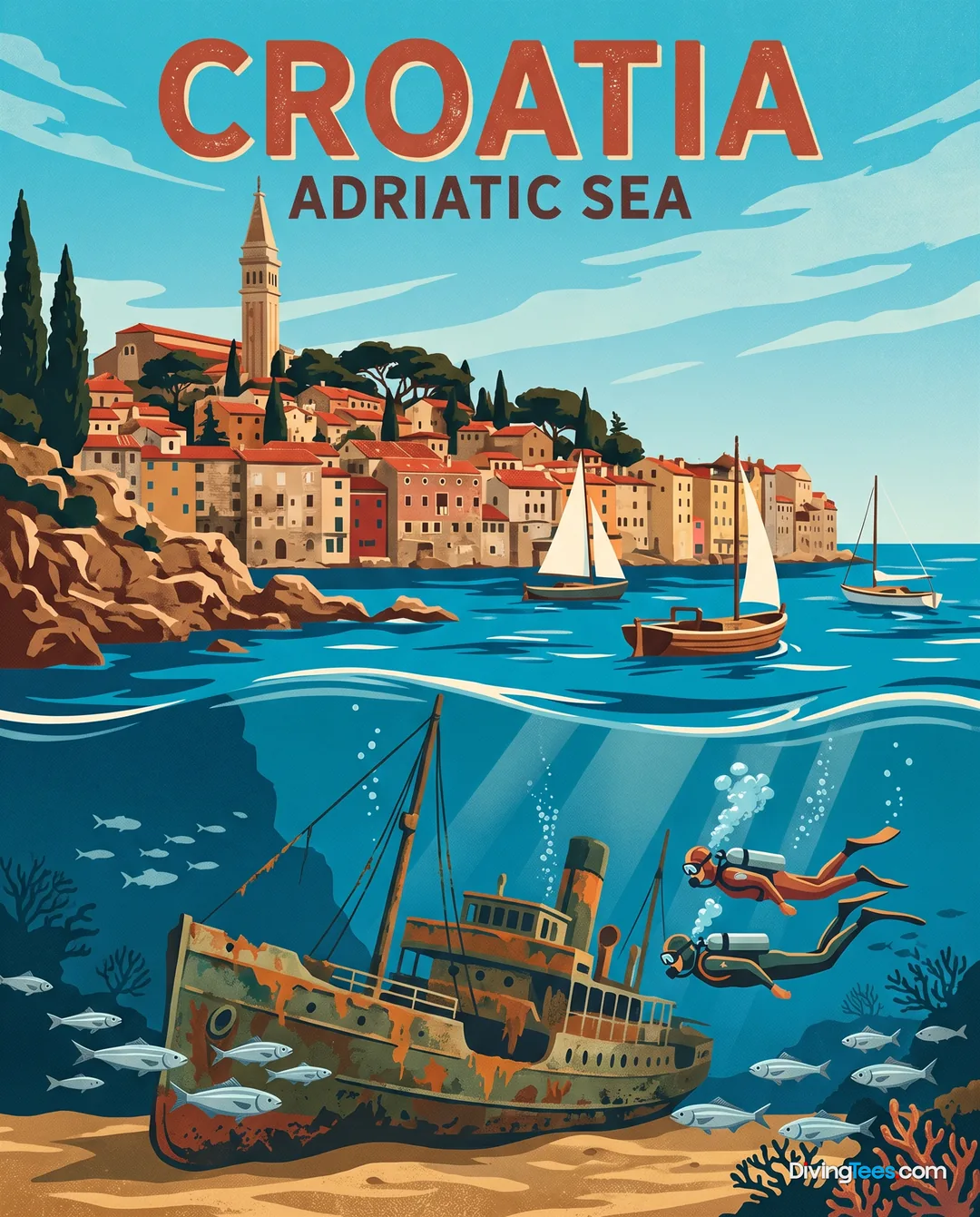
Cargo wrecks on sandy slopes, a north-to-south tunnel, vertical walls and island harbours give Kvarner Bay its distinctly Adriatic character.
Kvarner Bay is a practical northern Adriatic diving region built around islands, harbour towns and the mainland coast. Its appeal lies in the change of scenery between dives: one day may involve a cargo wreck on a sandy slope, another a rock tunnel opening onto a decorated wall. The area works particularly well for divers who prefer a shore-based holiday with day boats, repeat dives and time to explore island towns rather than a liveaboard schedule.
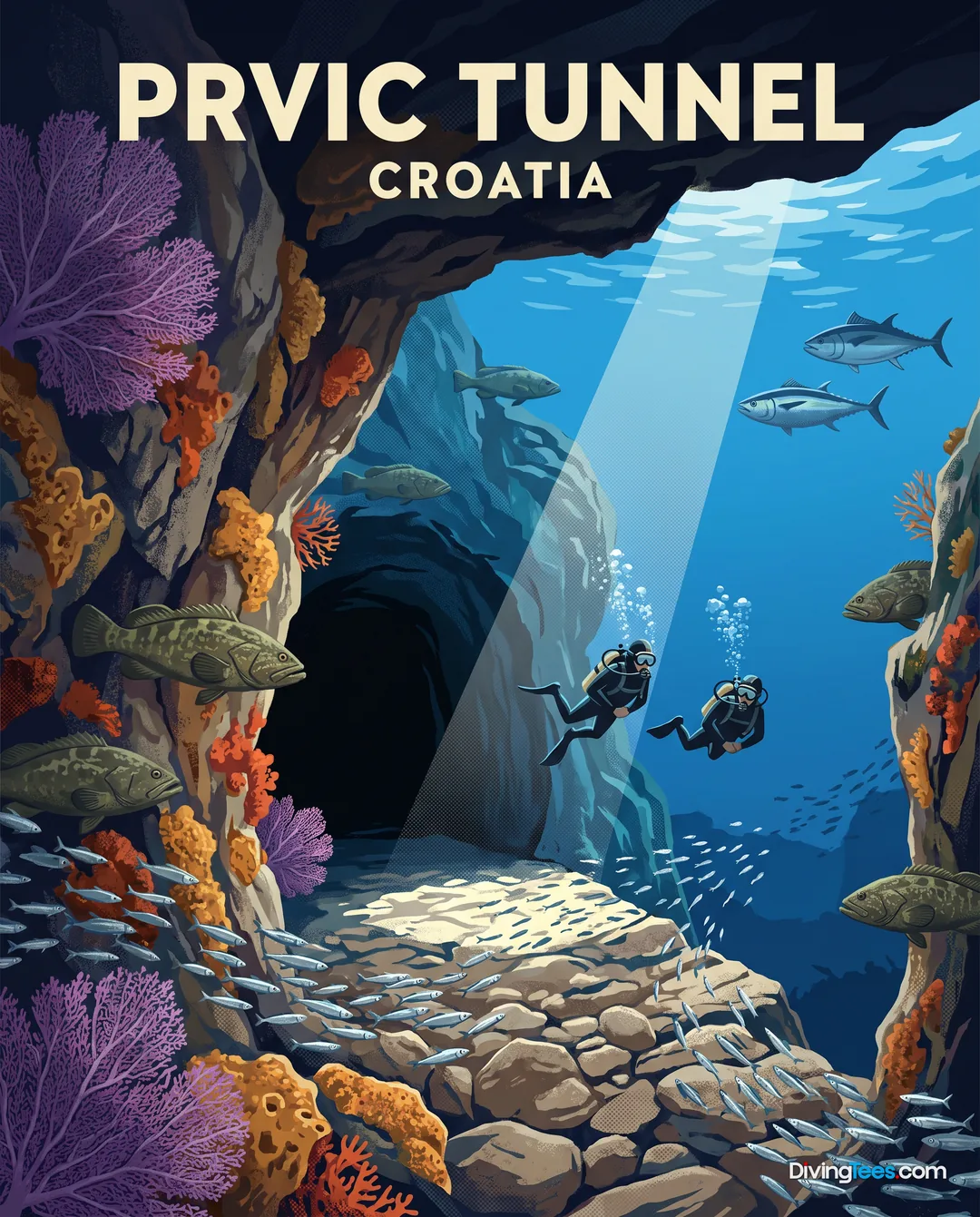
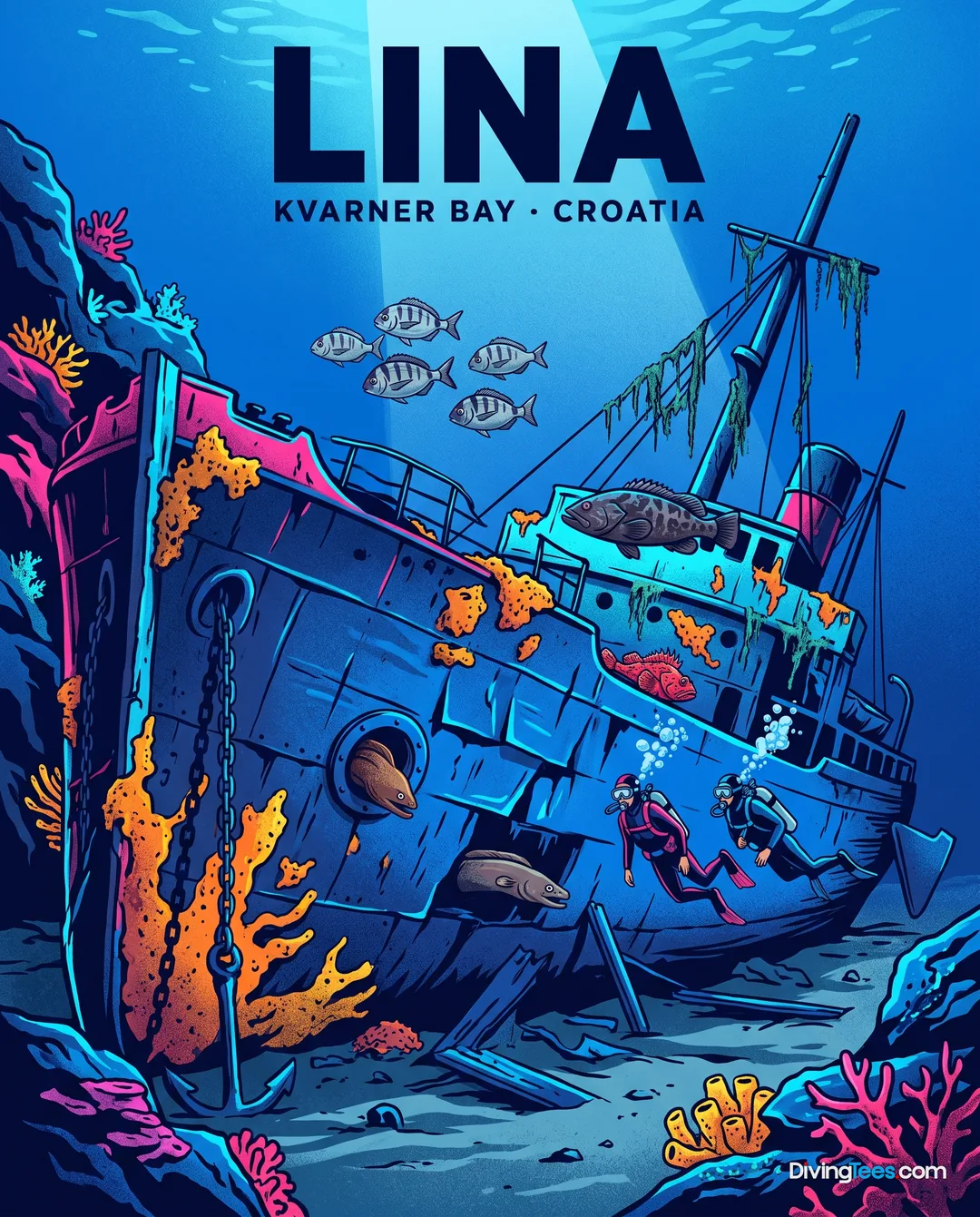
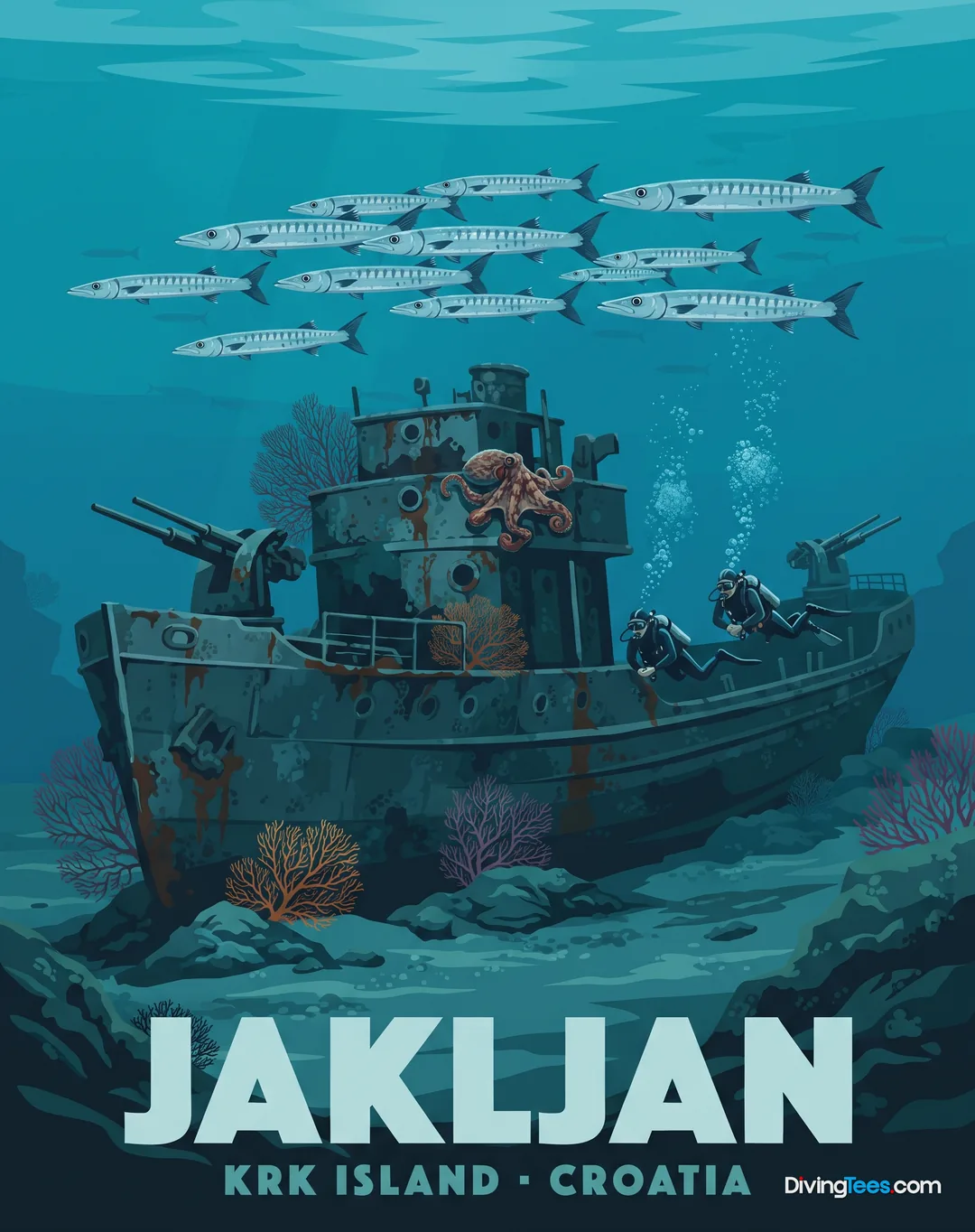
The underwater character is mixed, with wrecks providing the clearest identity. Lina lies on a sandy slope, with an intact bow and access towards the holds and captain’s cabin structure between 27 and 52 metres. Jakljan sits upright from 37 to 55 metres, its preserved anti-aircraft guns making it a serious historical dive as well as a deep one. Peltastis is shallower, with superstructure, holds and bridge from seven to 32 metres. For a different pace, Prvic Tunnel gives an eight-to-18-metre drift through rock before opening onto a vertical wall. Currents are variable rather than consistently strong, so the skipper’s assessment still matters. Visibility can reach 40 metres in good conditions, while Lina is noted for particularly clear water and useful light at depth.
The named animal interest is modest but well suited to close observation around structure. Peltastis attracts scorpionfish and schooling fish around its preserved superstructure, holds and bridge, giving the wreck more to offer than steel and history alone. Crab is another reason to slow down around the wreck and coastal terrain, particularly where sand meets structure or rock. On Prvic Tunnel, the change from enclosed rock to decorated vertical wall shifts attention from navigation to the detail on the exposed face. These are sites where a diver who keeps a steady pace and checks the wreck’s edges is likely to see more than one who simply follows the outline of the vessel.
The measured pattern places the calmest period from March to September, with the lightest rainfall from June to August. That makes late spring through summer a sensible choice for a shore-based itinerary, especially when ferry connections and boat departures need some margin. Site information also points to May through mid-July, then mid-September through October, for favourable wreck conditions. The latter window can be useful for divers wanting a quieter island stay, while June to August is the more straightforward choice for combining diving with time ashore. Weather flexibility still matters because a missed boat or rough day can affect the plan as much as underwater conditions.
Kvarner Bay covers all levels, but the wrecks divide the destination by depth. Prvic Tunnel suits Open Water divers, with intermediate experience helpful for appreciating the passage and wall. Peltastis is an Advanced Open Water dive at its deepest sections. Lina requires advanced experience, while Jakljan belongs firmly to technical territory, with Advanced Nitrox and decompression requirements. A Wreck certification is useful for anyone intending to go beyond an external tour, and Nitrox has practical value on repetitive diving where authorised.
From London Heathrow, Gatwick or Manchester, the journey is organised around reaching the road-accessible ports of Rijeka or Opatija; Croatia Airlines is the named European carrier in the available planning information. From there, island-based diving usually means a scheduled ferry or catamaran, followed by a local road transfer once ashore. This is the key structural point: the crossing is not an optional sightseeing extra but part of getting to many bases. Timetables should therefore be checked before fixing the diving days, with enough margin for a late arrival or a missed connection. Harbour towns generally keep accommodation and diving close together, often within walking distance, while larger islands may require a short taxi or local transfer.
Base the holiday on the island or coastal stretch where the intended diving actually takes place. Kvarner is not one compact dive site, and a beautiful-looking base can become an awkward daily exercise if every outing depends on a ferry or a long onward transfer. Treat the ferry timetable as part of the dive plan: leave slack around arrival and departure days, and avoid putting the most important wreck immediately after a crossing. A five- to seven-day stay gives weather and sea conditions room to move without sacrificing the whole trip. Divers coming for Lina or Jakljan should confirm the depth, decompression and certification profile before packing the itinerary around them. Bring cooler-water layers and equipment suited to repeated boat entries, rather than relying on a tropical kit list. Finally, expect Adriatic wreck-and-coastal diving, not warm-water coral or dedicated macro diving; that expectation will make Peltastis, Prvic Tunnel and the island setting work in their own terms.
A sensible stay lasts five to seven days, using one island or coastal base for day-boat diving and repeat outings. Keep the first and last days flexible around ferry connections, then mix deeper wrecks with shallower coastal dives such as Prvic Tunnel. Non-divers are well served by harbour promenades, island-town walks and ferry day trips, so the holiday does not need to revolve entirely around dive boats.
Hello, I'm Marina, DivingDeal.com's AI assistant. I guide you through destinations, areas and countries.

Thinking about the whole trip and the flights? Talk it over with Edith →
Marina is an AI. Some links are affiliate links: DivingDeal may earn a commission, at no extra cost to you. Bookings are made with the partner.

★★★★
★ 9.5/10 (567 reviews)
less than 1 km away as the crow flies
★★★★
★ 9.2/10 (1,103 reviews)
5.9 km away as the crow flies
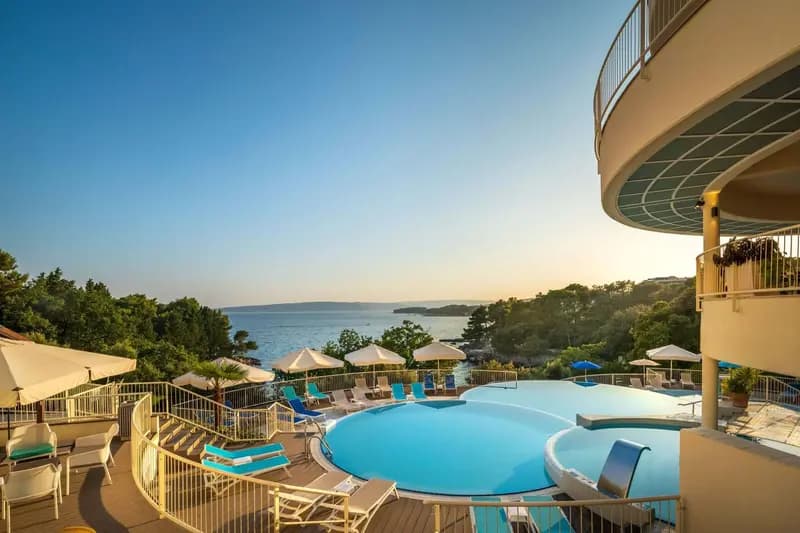
★★★
★ 9/10 (655 reviews)
8.9 km away as the crow flies
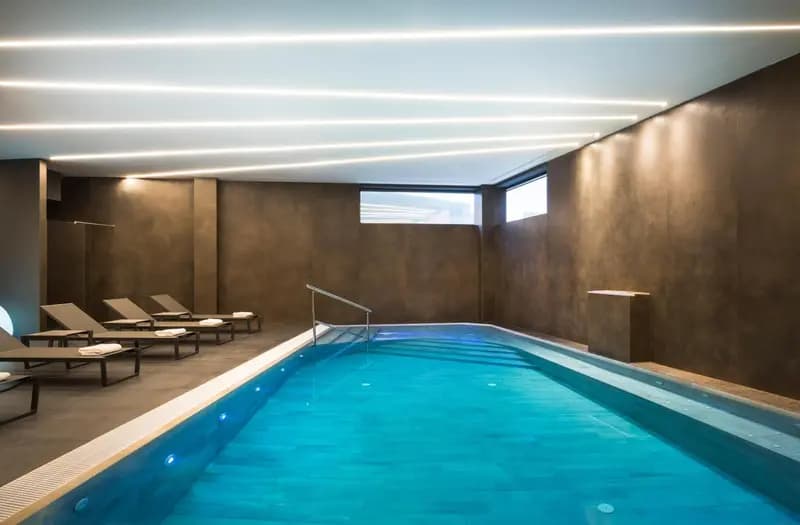
★★★★
★ 9.3/10 (234 reviews)
less than 1 km away as the crow flies