
Hippocampus Diving Center
Google 4.9/5 (230 reviews)
Croatia · Mediterranean
A 25-metre dredger, long limestone walls, coastal canyons and Mediterranean shoals shape Pula’s diving, with wrecks and rocky sites reached by boat.
For subtitles in English: start the video firstthen click the gearat the top right of the video, select “Subtitles/CC”, then “Auto-translate” and choose “English”.
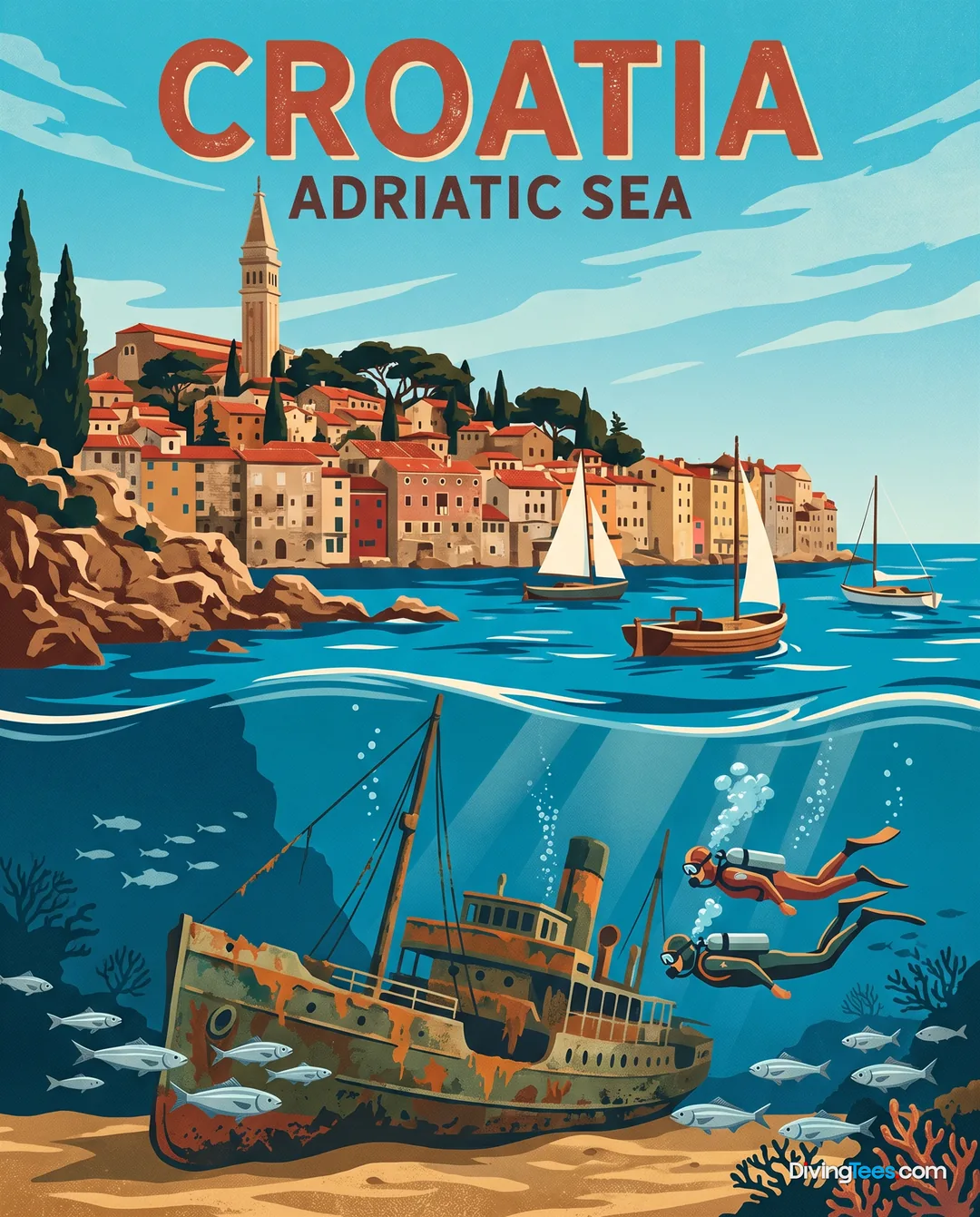
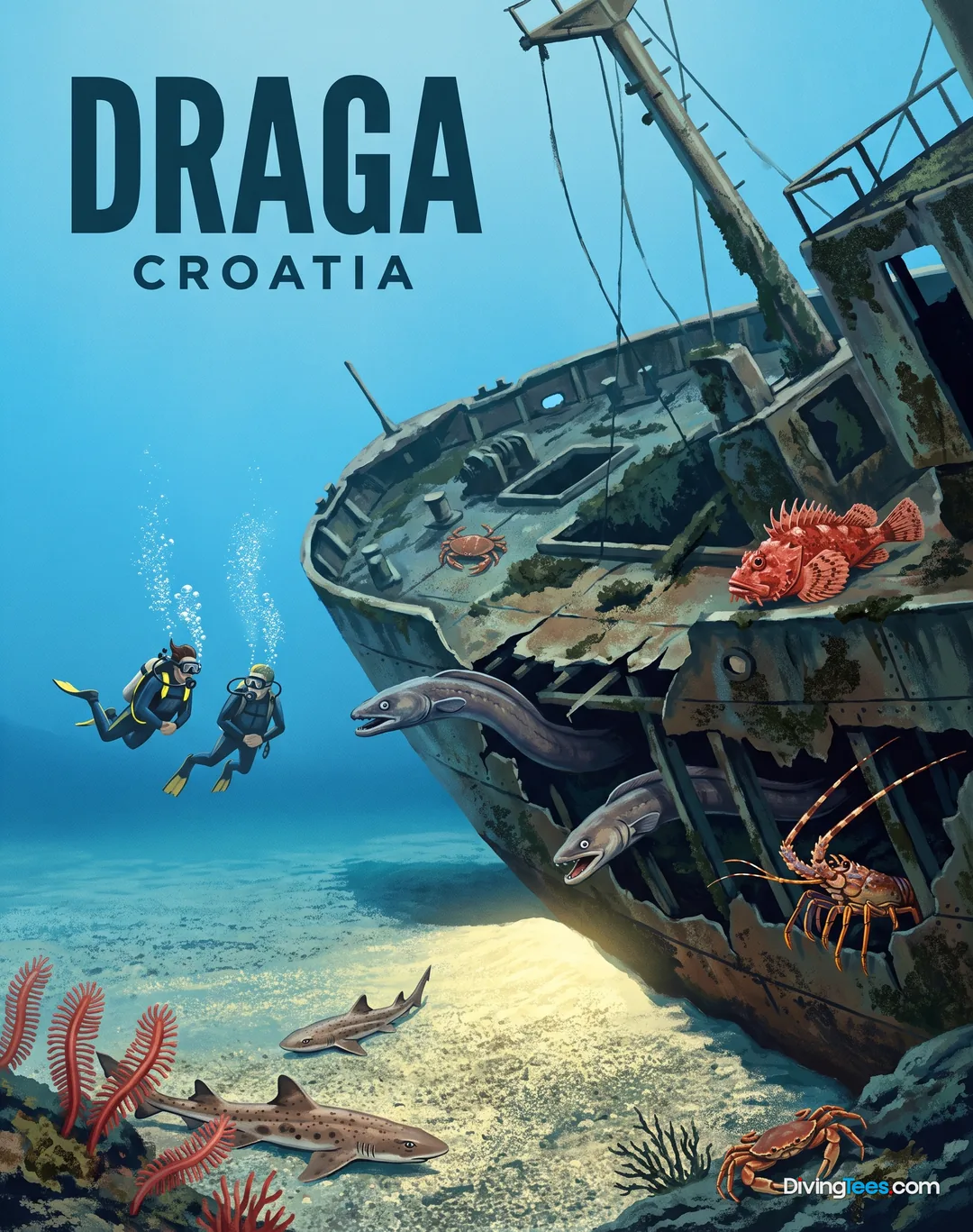
Pula is a shore-based Adriatic diving base built around boat trips to wrecks, rocky walls and nearby islands. The underwater scenery is firmly coastal: Bumbište drops through overhangs and vertical sections, while Stoja offers crevices and canyons from shallow water downwards. Draga provides the deeper wreck option, an upright former sand dredge now used by marine life. This suits divers who enjoy structure, history and Mediterranean detail rather than expecting a continuous tropical reef.
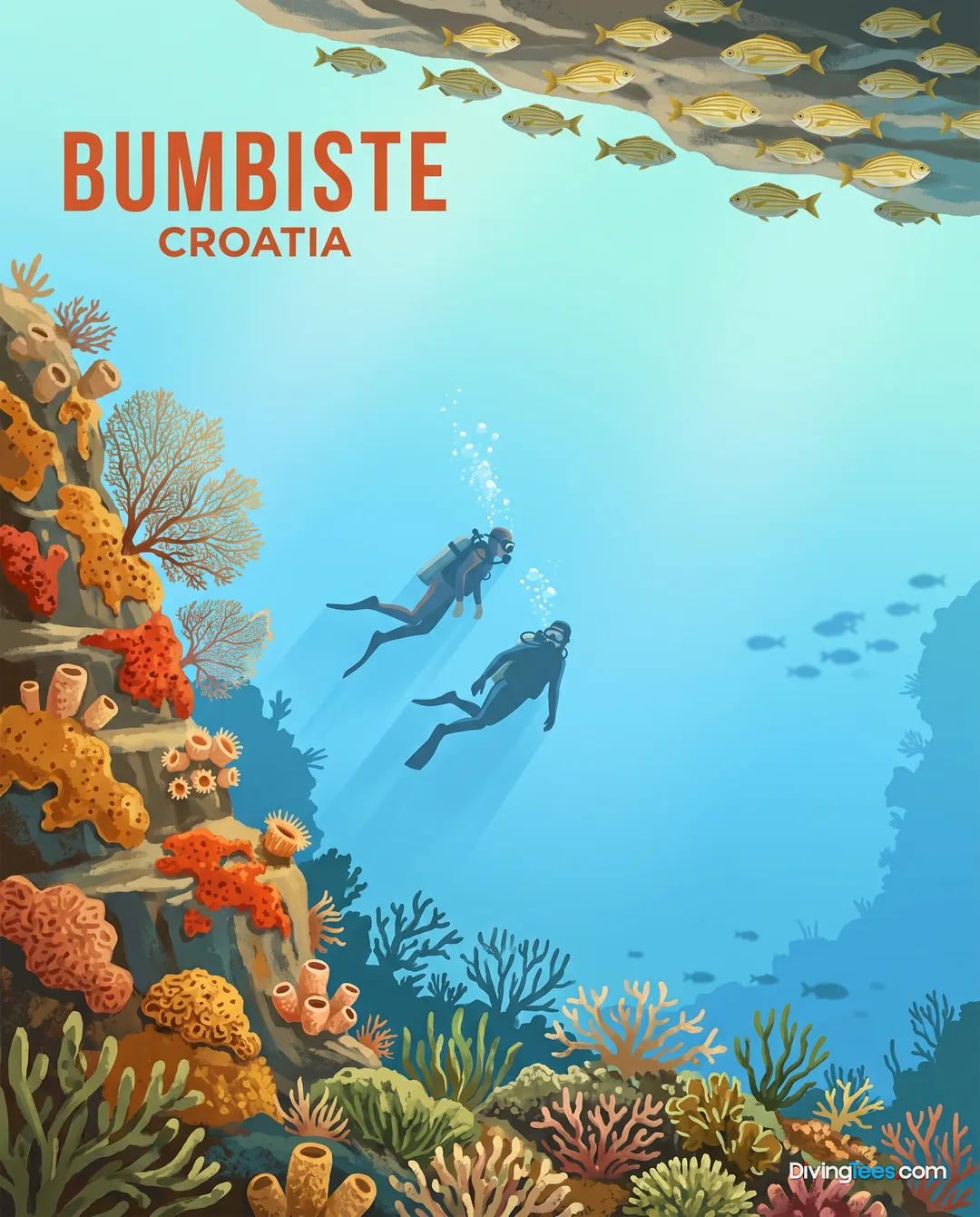
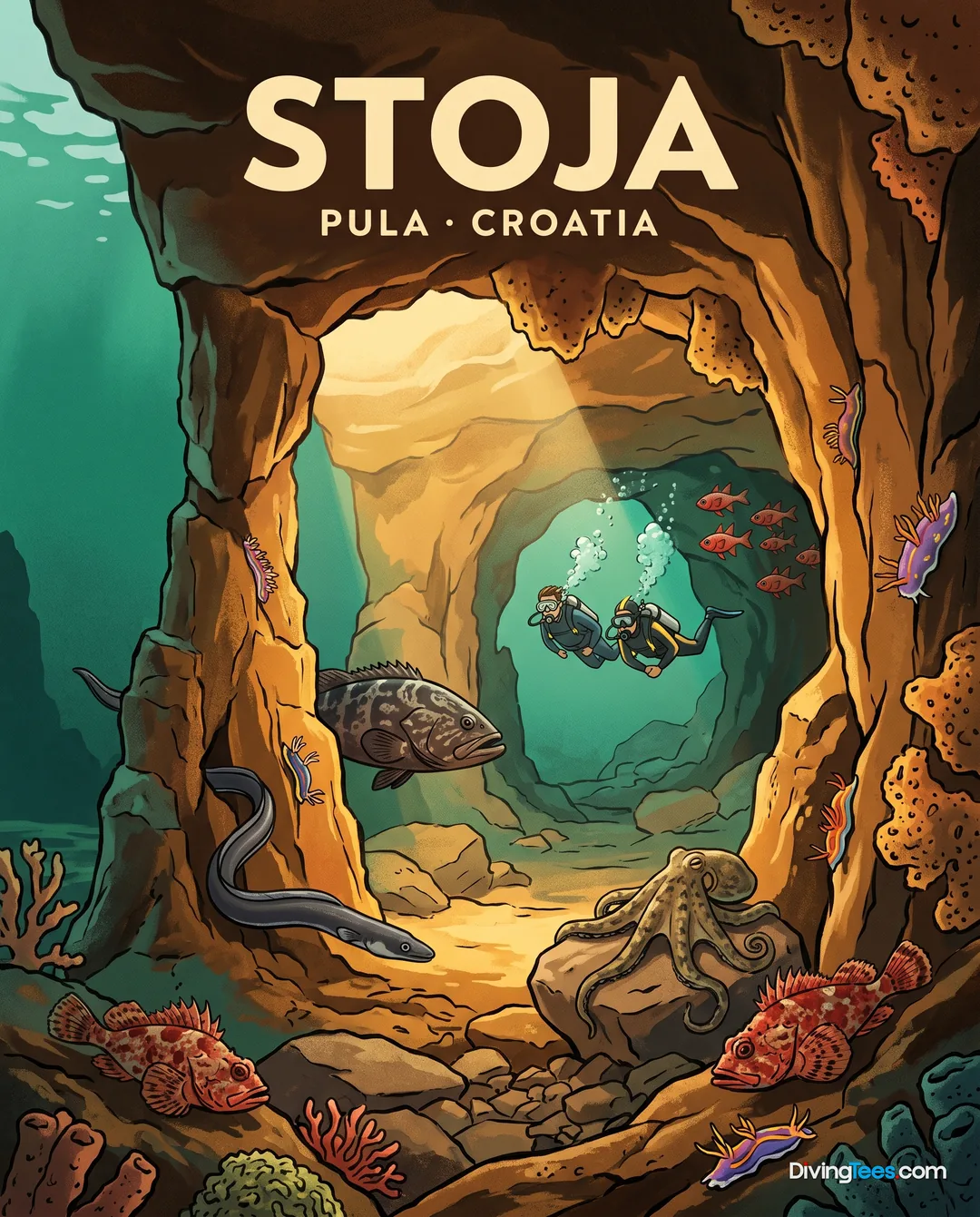
The diving around Pula is a mixture of rocky relief, wreck exploration and boat-accessed coastal sites. Bumbište follows a long wall from five metres to 33 metres, with caps, overhangs and vertical faces that reward careful finning along the contours. Stoja is more broken in shape, with an irregular seabed, cracks and canyons between three and 27 metres. Draga is the deeper commitment: the 25-metre dredger lies upright between 34 and 37 metres, with the site listed to 39 metres. Currents are generally light, although Stoja can bring moderate movement and may suit a drift-style approach for confident divers. Visibility changes with wind, sea state and seasonal plankton; Draga is noted for consistently good visibility. Most interesting dives are organised as boat outings from Pula and the nearby Istrian coast.
Pula’s wildlife is Mediterranean and closely tied to rock, wreck and wall habitat. Draga can produce encounters with eels, scorpionfish and lobsters around the dredger, while Stoja’s broken rock is used by dentex and seabream. Coastal Mediterranean shoals are a regular summer feature, adding movement to otherwise close-looking rocky scenes. Octopuses are possible from spring through autumn, and groupers may appear in summer, though neither should be treated as a guaranteed sighting. Spring is the most useful period for nudibranchs. The emphasis here is on finding animals in cracks, beneath overhangs and across the wreck structure, rather than waiting for large pelagic encounters. Around the Brijuni islands, protected habitats benefit from restrictions on collecting and anchoring, giving the surrounding rock and marine life stronger protection than ordinary busy summer coastlines.
May to September is the measured window for the calmest sea, making it the most dependable period for boat diving and for reaching the more exposed wreck and island sites. June to August has the lowest rainfall, while the centres are also most active through summer. June and September are usually easier-going than the July and August peak, with less pressure on boats and sites. Spring brings the better chance of nudibranchs, whereas summer brings coastal shoals and occasional groupers. November through February is a poor fit for a conventional dive holiday because winter weather is less settled and local operations are more likely to close.
Pula can work for all levels, provided the dive is matched to the site. Open Water divers can use the shallower sections of Bumbište and Stoja, although Stoja’s uneven rock and possible moderate current call for comfortable buoyancy control. The deeper parts of Bumbište are better suited to Advanced Open Water divers or equivalent experience. Draga requires Advanced Open Water certification or a comparable depth qualification, making it inappropriate for an improvised step up. BSAC, PADI and SSI divers should bring proof of the training relevant to the planned wreck and depth.
From London or Manchester, Pula is reached either by air through Pula Airport or by road from Croatia and neighbouring countries. The practical constraint is that air links can be seasonal, so the itinerary needs checking before the diving is fixed; the final road transfer still has to be allowed for after arrival. Travellers driving from the surrounding European countries have a simpler route into the city, but the exact journey depends on the starting point. Once in Pula, the short transfer to the port and coastal dive bases is usually on foot, by taxi or through a local transfer. There is no need to plan around a liveaboard connection: the diving is organised from land, with boats leaving the Pula and nearby Istrian shoreline.
Treat the sea state as the day’s deciding factor. The northern Adriatic can become uncomfortable faster than the short distance from shore suggests, so keep the wreck or more exposed wall for a calm forecast rather than forcing the plan. Ask before boarding whether the day is centred on rocky relief or wrecks; Pula’s character changes noticeably with that choice. A 3 mm suit may be enough for some divers, but a 5 mm is the more comfortable option for repeated dives or anyone who feels the cold. June and September reduce the pressure of the summer peak, while the most requested wreck trips merit early booking in July and August. Do not arrive expecting a tropical reef: the appeal is the deliberate exploration of walls, canyons, cracks and wreck structure. Leave deeper profiles such as Draga to divers with the appropriate qualification, and check the arrangements before diving in the protected Brijuni area, where permits and authorised zones apply and anchoring is restricted.
A four- to seven-day stay gives enough room to alternate wrecks, walls and rocky coastal sites without turning every day into a rushed boat schedule. The normal pattern is a land-based holiday with daytime boat diving from Pula or nearby Istria, rather than a dedicated liveaboard. Non-divers are well catered for by Pula’s old town and waterfront, trips towards the Brijuni islands, and light walking or rocky beaches elsewhere in Istria. Nitrox can be useful when several dives are planned across consecutive days.
Hello, I'm Marina, DivingDeal.com's AI assistant. I guide you through destinations, areas and countries.
Thinking about the whole trip and the flights? Talk it over with Edith →
Marina is an AI. Some links are affiliate links: DivingDeal may earn a commission, at no extra cost to you. Bookings are made with the partner.
Your last day stays dry: no diving in the 18-24 hours before a flight, the perfect window to see the destination from another angle.
 Culture
⏱ 2 h · ★ 5.0 (14 reviews)
from £101$135€121
see on Viator ↗
 Nature
⏱ 2 h · ★ 5.0 (10 reviews)
from £54$73€65
see on Viator ↗
 Culture
⏱ 2 h · ★ 5.0 (10 reviews)
from £17$22€20
see on Viator ↗

⏱ 1 h · ★ 5.0 (7 reviews)
from £40$54€48
see on Viator ↗
Ratings and reviews collected by Viator and Tripadvisor.
Plan your Pula diving between May and September, when sea conditions are generally calmer for boat trips to wrecks and islands. June and September are usually less pressured than the July and August peak. Spring is useful for nudibranchs, while summer brings coastal shoals and occasional groupers.
Pula offers sites for different experience levels. Open Water divers can explore shallower sections of Bumbište and Stoja, provided they are comfortable with uneven rock and possible movement. Deeper Bumbište sections suit Advanced Open Water divers, while the Draga dredger requires Advanced Open Water certification or comparable depth training.
Pula combines wrecks, walls, canyons and rocky seabeds rather than tropical reef scenery. You can explore the upright Draga dredger, Bumbište’s overhangs and vertical sections, and Stoja’s crevices and canyons. Eels, scorpionfish, lobsters, dentex and seabream are possible, with octopuses, nudibranchs and summer groupers also appearing.
Use Pula as a land-based base for daytime boat diving from the city or nearby Istrian coast. Allow time to alternate wrecks, walls and rocky sites, and keep plans flexible around sea conditions. Check seasonal flight links, arrange transfers, book popular wreck trips early, and confirm authorised arrangements for Brijuni diving.