
Sea Star Diving
Google 5/5 (137 reviews)
Croatia · Mediterranean
Walls dropping into blue, cavern passages and sheltered boat dives make Molunat a quiet base for exploring Croatia’s southern Adriatic coast.
For subtitles in English: start the video firstthen click the gearat the top right of the video, select “Subtitles/CC”, then “Auto-translate” and choose “English”.
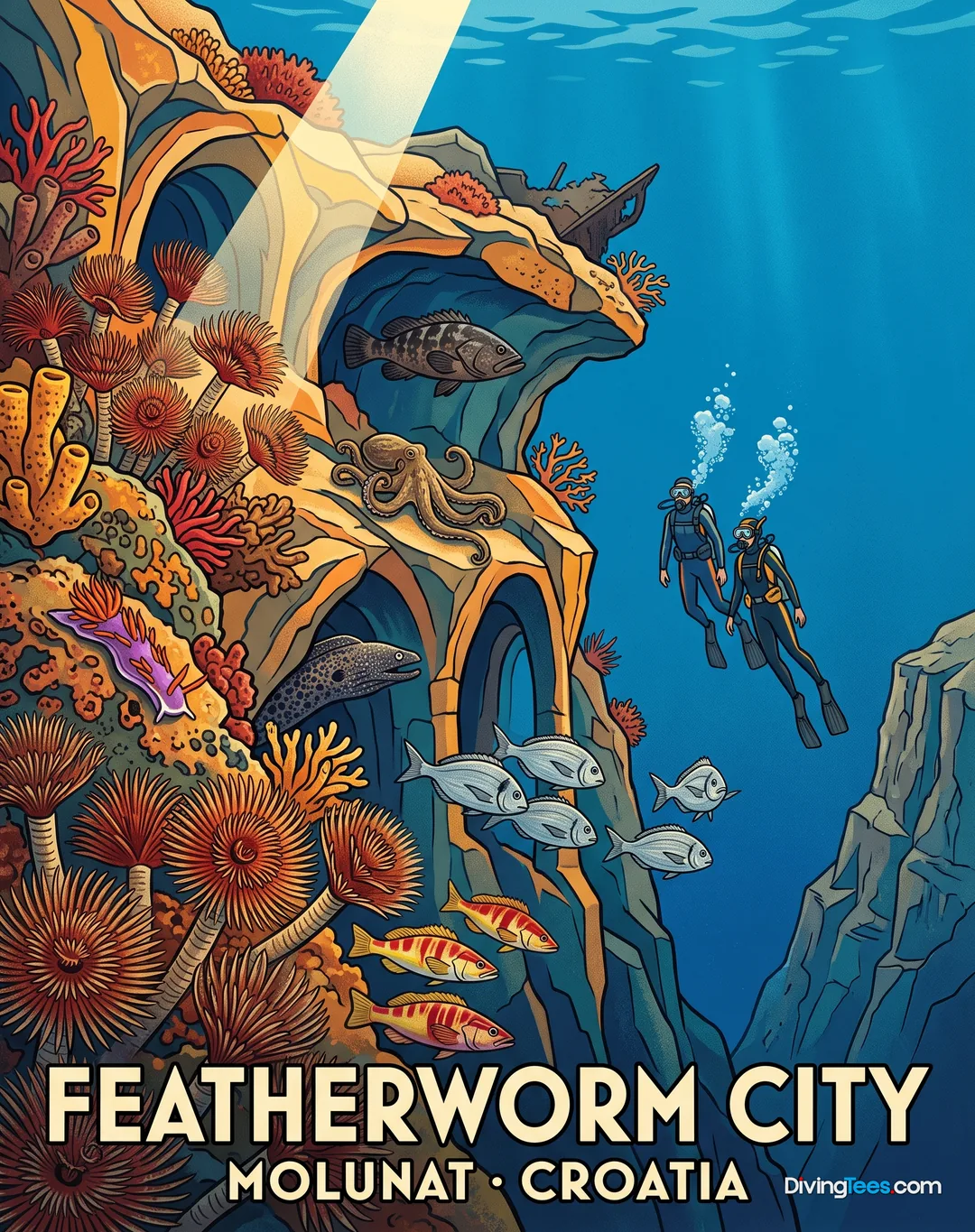
Molunat is a small coastal base in Konavle, south of Dubrovnik, where diving fits around a quiet village stay rather than a full-scale dive itinerary. Boats head out to local Adriatic sites such as Blue Hole, Saint Ivan’s Bay and Vranine, while Featherworm City offers a shallower profile for an easier day in the water. It suits divers who want simple logistics, modest surroundings and several short outings without committing to a liveaboard or a busy resort.
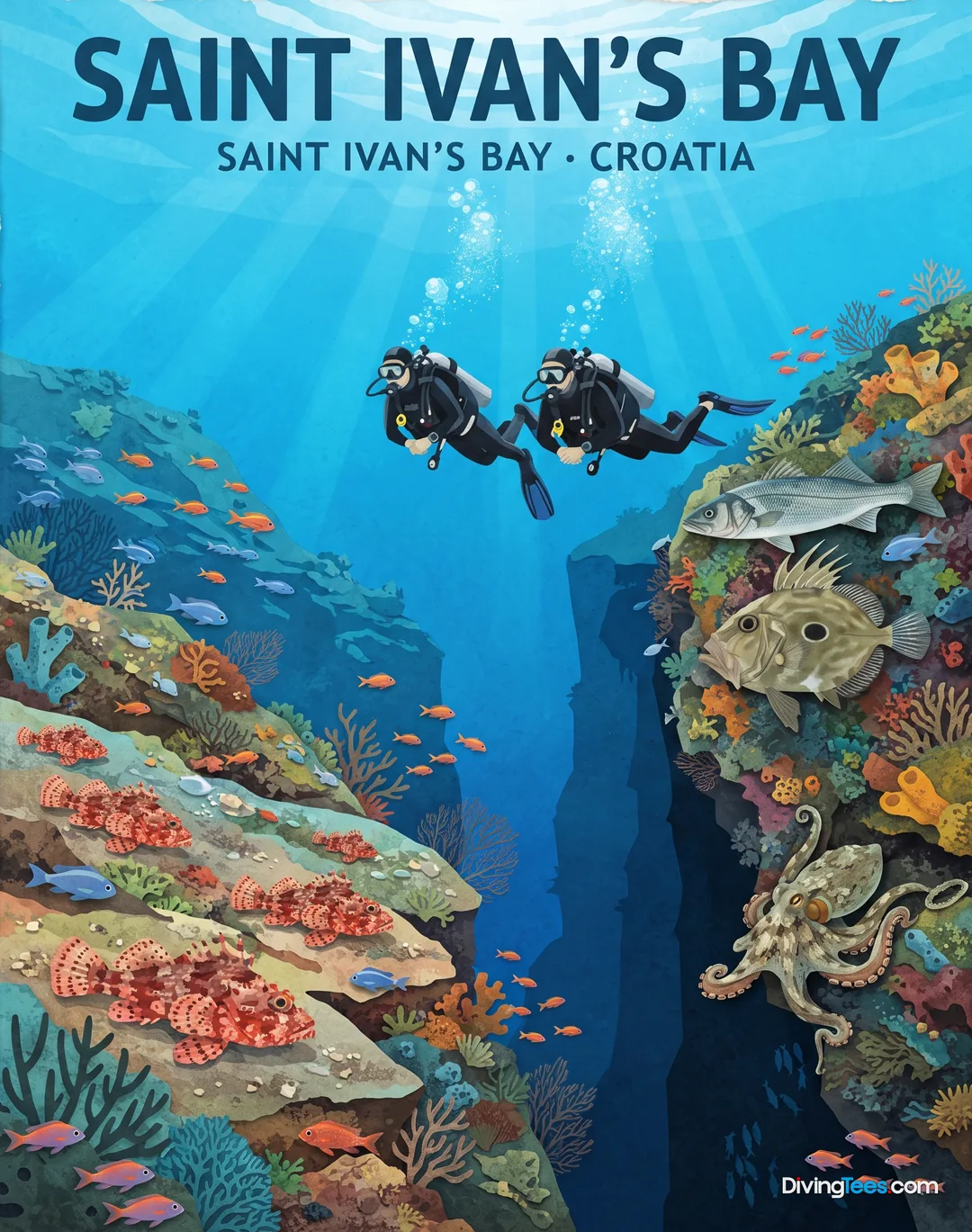
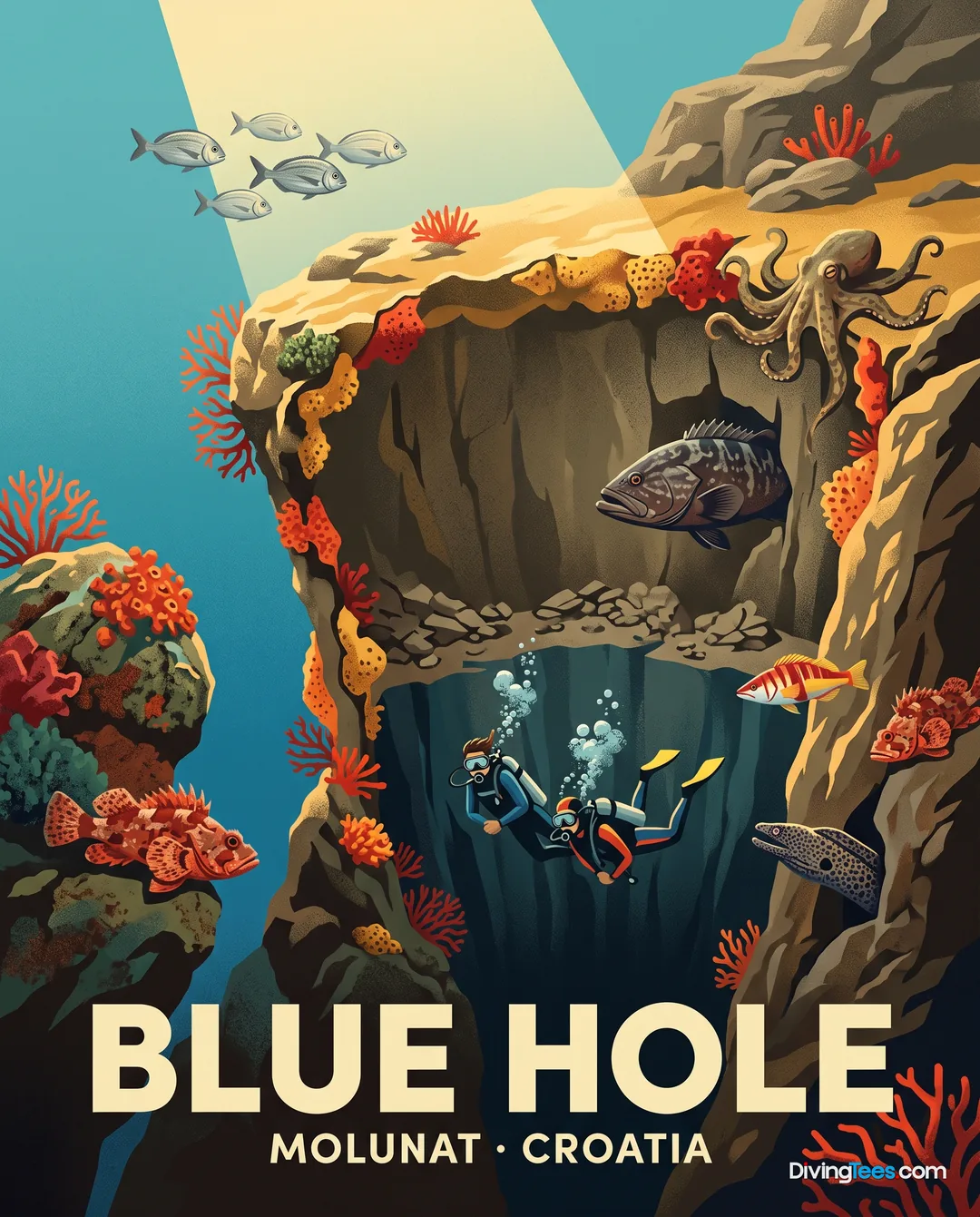
The underwater character is shaped by rock rather than wrecks: shelves fall away into walls, and Blue Hole adds a cavern element to a dive that can continue down to 40 metres. Vranine combines rockfall, a sloping shelf and more pronounced walls, giving the descent a changing outline rather than one continuous drop. Saint Ivan’s Bay starts gently before reaching a wall, with a maximum depth of 30 metres. Featherworm City stays between 6 and 15 metres and is the natural choice for a relaxed profile. Currents are generally light, so the diving is not built around drift techniques. Visibility can be impressive at the named sites, although no reliable destination-wide range should be assumed. Expect boat diving from the coast, with the day’s plan shaped by wind and sea conditions.
Molunat’s appeal under water is the combination of rock faces, sloping shelves, cavern space and the marine life attached to these structures. Saint Ivan’s Bay is described as a place full of life and hidden corners, rewarding a slow examination of the transition from shallow shelf to wall. At Blue Hole, the cavern and vertical relief provide the visual focus, while Vranine gives divers rockfall and changing wall contours to follow. Featherworm City offers a shallower setting for looking closely rather than chasing depth. The available site descriptions do not establish a seasonal species list, so Molunat is better approached as a topography-led destination than as a trip built around a particular animal or migration.
May, June, September and October are the sensible months for a Molunat diving stay. They sit within the May-to-October window given for the named sites and avoid making the trip depend entirely on the busiest part of summer. The shoulder months should also mean a calmer village atmosphere and less coastal pressure than the height of the season. Keep some flexibility in the programme: conditions are coastal and boat departures may need moving when wind or sea state changes. There is no confirmed month-by-month visibility pattern to plan around, so the useful strategy is to arrive with several diving days rather than a single fixed outing.
The area is suitable for all levels, with light currents and profiles that range from 6 metres at the shallowest sites to 40 metres at Blue Hole and Vranine. Open Water divers can use the gentler sites and conditions, while Advanced Open Water training or equivalent experience is useful when planning deeper sections and more complex wall or cavern terrain. The final site choice should still match the diver’s recent depth practice, comfort in a boat and ability to manage changing coastal conditions.
From London Heathrow, London Gatwick or Manchester, the practical route is to reach Dubrovnik and continue by road along the Konavle coast to Molunat. The village itself does not require a ferry or a domestic flight, but the final land transfer is an essential part of the journey and should be arranged rather than treated as an afterthought. Once in Molunat, the compact setting makes it realistic to stay close to the diving arrangements, either on foot or with only a short local drive. Those travelling through Dubrovnik should check whether their day’s diving is organised from Molunat or involves a separate excursion, as the distinction changes the morning transport and the shape of the day.
Treat Molunat as a small local base, not as a substitute for Dubrovnik’s larger diving infrastructure or as a destination built around famous wrecks and marine parks. Confirm before travelling whether the planned programme consists of short outings from Molunat or an excursion arranged from Dubrovnik; that single detail can alter the whole day. Book the first outings early in the stay, leaving room to move them if wind or sea conditions intervene. Divers particular about fit should bring their own basic equipment, since a small local base may offer less choice than Dubrovnik. Staying in Molunat avoids repeated transfers and makes it easier to use the best weather window. Keep expectations centred on walls, shelves, caverns and a quiet harbour setting rather than a long catalogue of headline sites.
Three to five days gives the destination room to work: enough time for several boat outings, a shallower dive at Featherworm City and a weather buffer. Staying in Molunat keeps the routine simple and leaves non-diving days for swimming, gentle coastal walks or a visit to Dubrovnik and nearby Konavle villages. The village works particularly well for travellers who prefer a calm base and do not need a large evening or resort scene.
Hello, I'm Marina, DivingDeal.com's AI assistant. I guide you through destinations, areas and countries.
Thinking about the whole trip and the flights? Talk it over with Edith →
Marina is an AI. Some links are affiliate links: DivingDeal may earn a commission, at no extra cost to you. Bookings are made with the partner.
Your last day stays dry: no diving in the 18-24 hours before a flight, the perfect window to see the destination from another angle.
 Culture
⏱ 9 h · ★ 5.0 (3 reviews)
from £373$498€445
see on Viator ↗
 Culture
⏱ 6 h · ★ 5.0 (2 reviews)
from £306$409€366
see on Viator ↗
Ratings and reviews collected by Viator and Tripadvisor.
May, June, September and October are sensible months for a Molunat diving stay, within the May-to-October window for the named sites. Plan flexibility because wind and sea conditions can move boat departures. The shoulder months may also offer a calmer village atmosphere and less coastal pressure than the height of summer.
Molunat suits divers of all levels, with light currents and sites ranging from shallow profiles to deeper sections. Open Water divers can choose gentler locations such as Featherworm City. Advanced Open Water training or equivalent experience is useful for deeper wall and cavern terrain. Match each site to your recent depth practice and comfort.
Molunat focuses on Adriatic rock formations rather than wrecks or a particular seasonal animal. You can explore shelves, walls, sloping rock, cavern space and marine life attached to these structures. Blue Hole combines cavern scenery with vertical relief, Vranine has rockfall and changing contours, Saint Ivan’s Bay has hidden corners, and Featherworm City offers a shallower setting.
Reach Dubrovnik first, then continue by road along the Konavle coast to Molunat, arranging the final transfer in advance. A stay of three to five days allows several boat outings, a shallower dive and a weather buffer. Book early outings while keeping them movable, and confirm whether diving starts locally or requires transport from Dubrovnik.