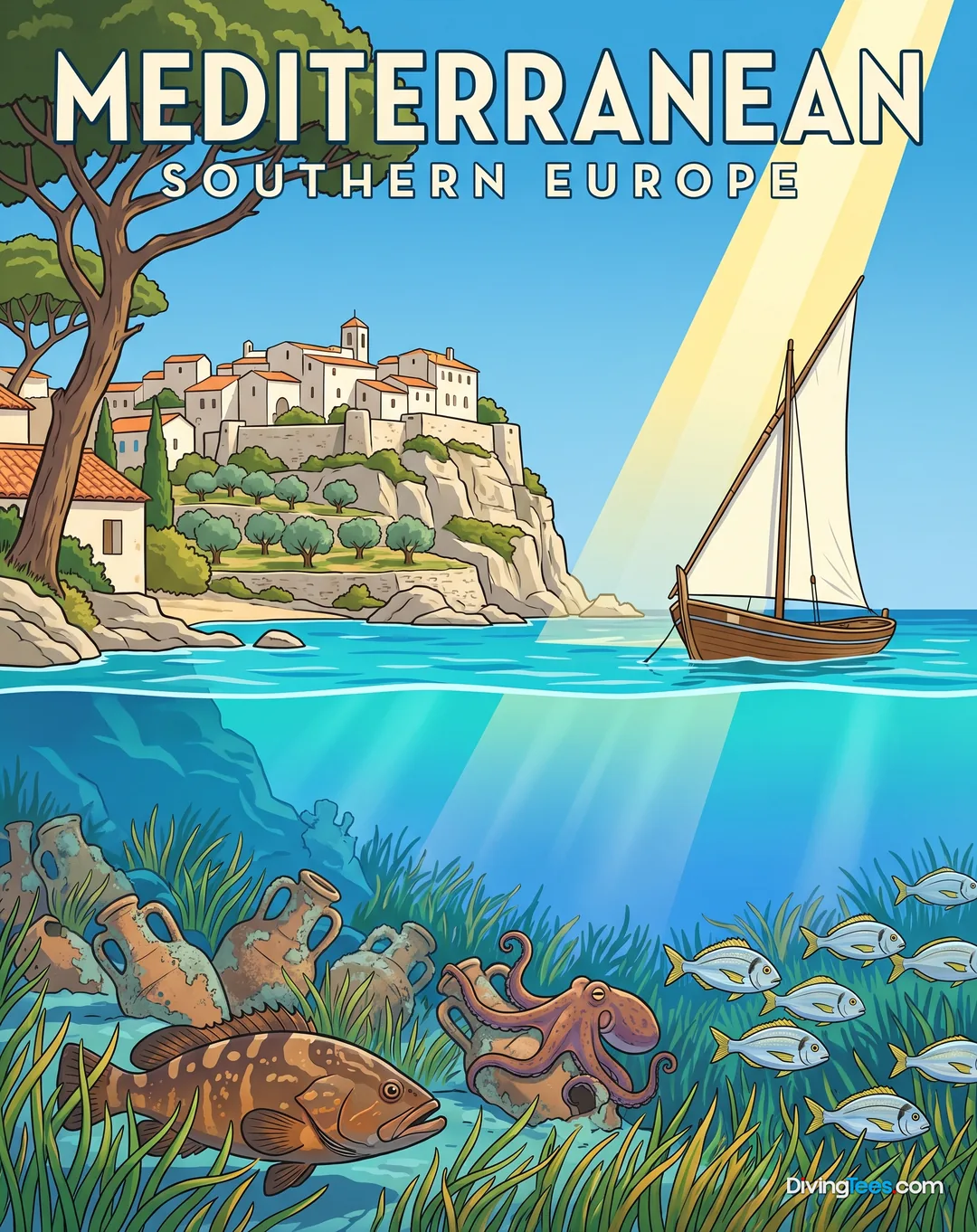
Mediterranean
Croatia: an Adriatic of wrecks and islands
From Pula’s Roman arena to Rab’s four bell towers, Croatia joins Adriatic wreck diving to an unusually tangible coastal history.
What makes this country unique
- Baron Gautsch off Rovinj, an Istrian wreck
- May through September across the northern coast
- Congers, lobsters and scorpionfish in northern waters
- Kvarnerski škampi from Opatija and the islands
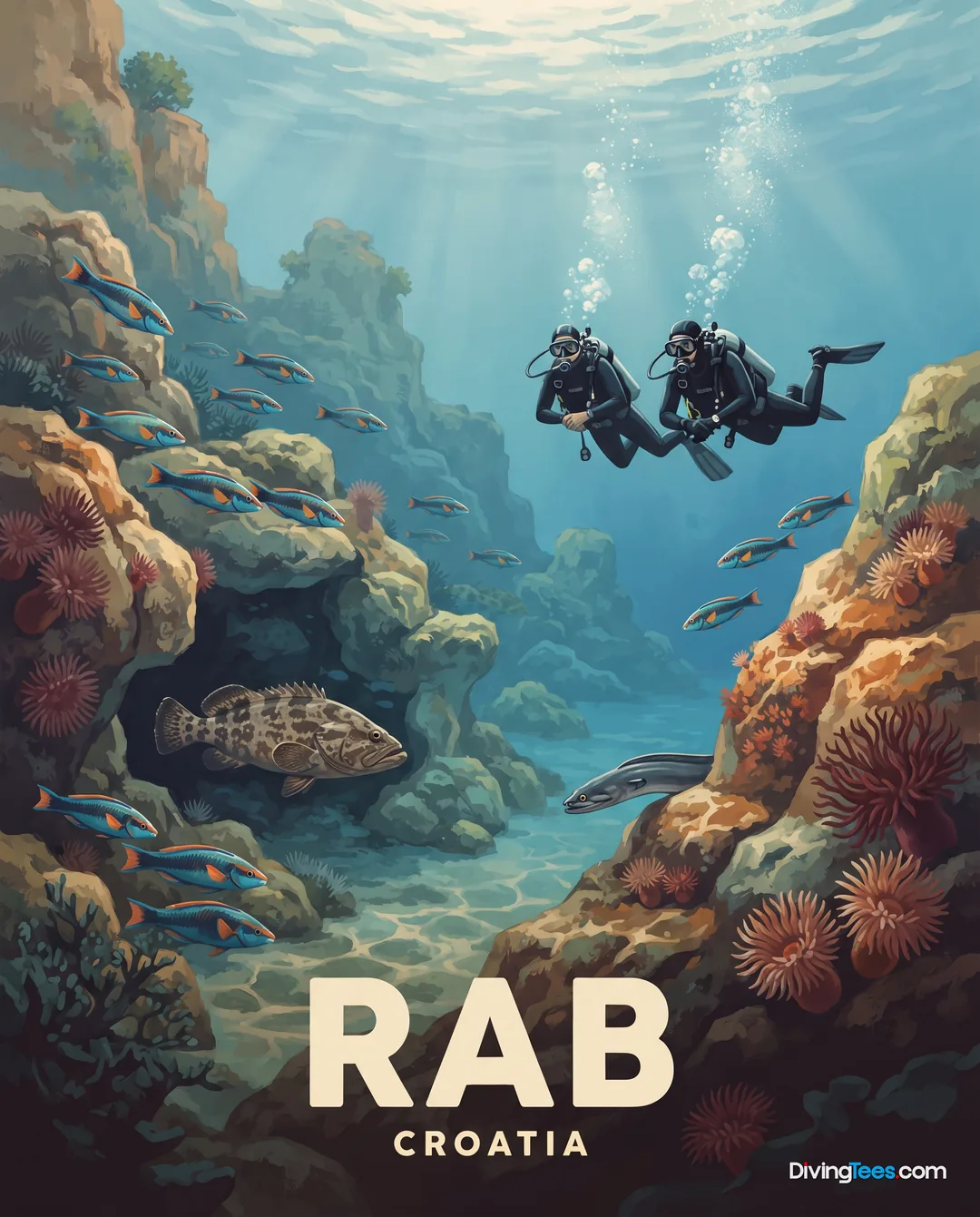
- Rab’s four bell towers above the harbour
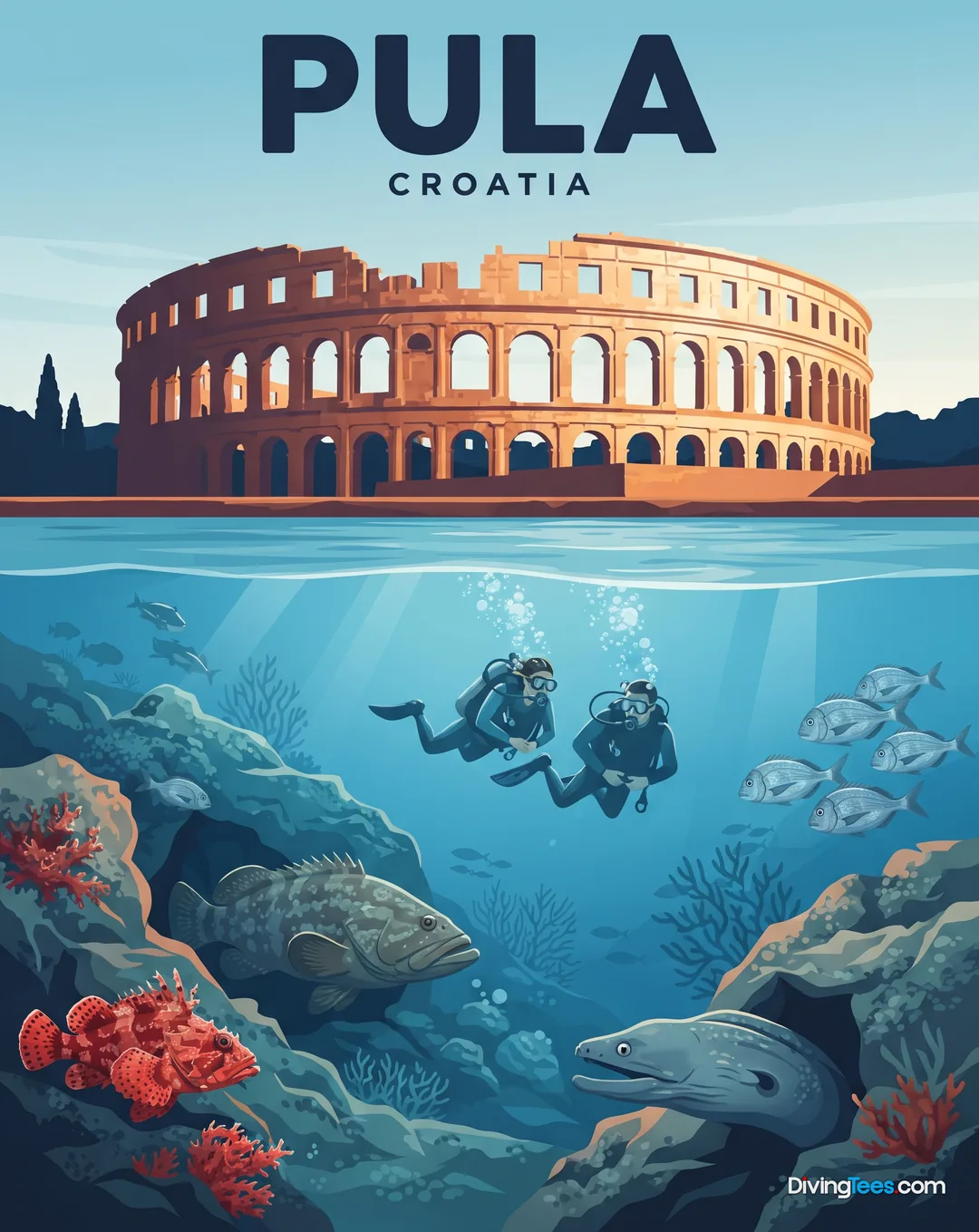
- Pula Arena and the Brijuni archipelago
- Molunat’s Blue Hole and Saint Ivan’s bay
For subtitles in English: start the video firstthen click the gearat the top right of the video, select “Subtitles/CC”, then “Auto-translate” and choose “English”.
This country for a diver
Croatia is an Adriatic diving country shaped by a long, indented coast, inhabited islands and a history written into its ports. The northern arc around Istria, Pula, Kvarner Bay and Rab combines boat diving with wrecks such as Baron Gautsch and Peltastis, while keeping towns, ferries and food close at hand. Molunat, south of Dubrovnik, has a different character: a rural Dalmatic coast and a boat-led base that operates throughout the year. Across the country, the appeal lies as much in joining sea travel to coastal life as in choosing individual dive sites.
How the country divides
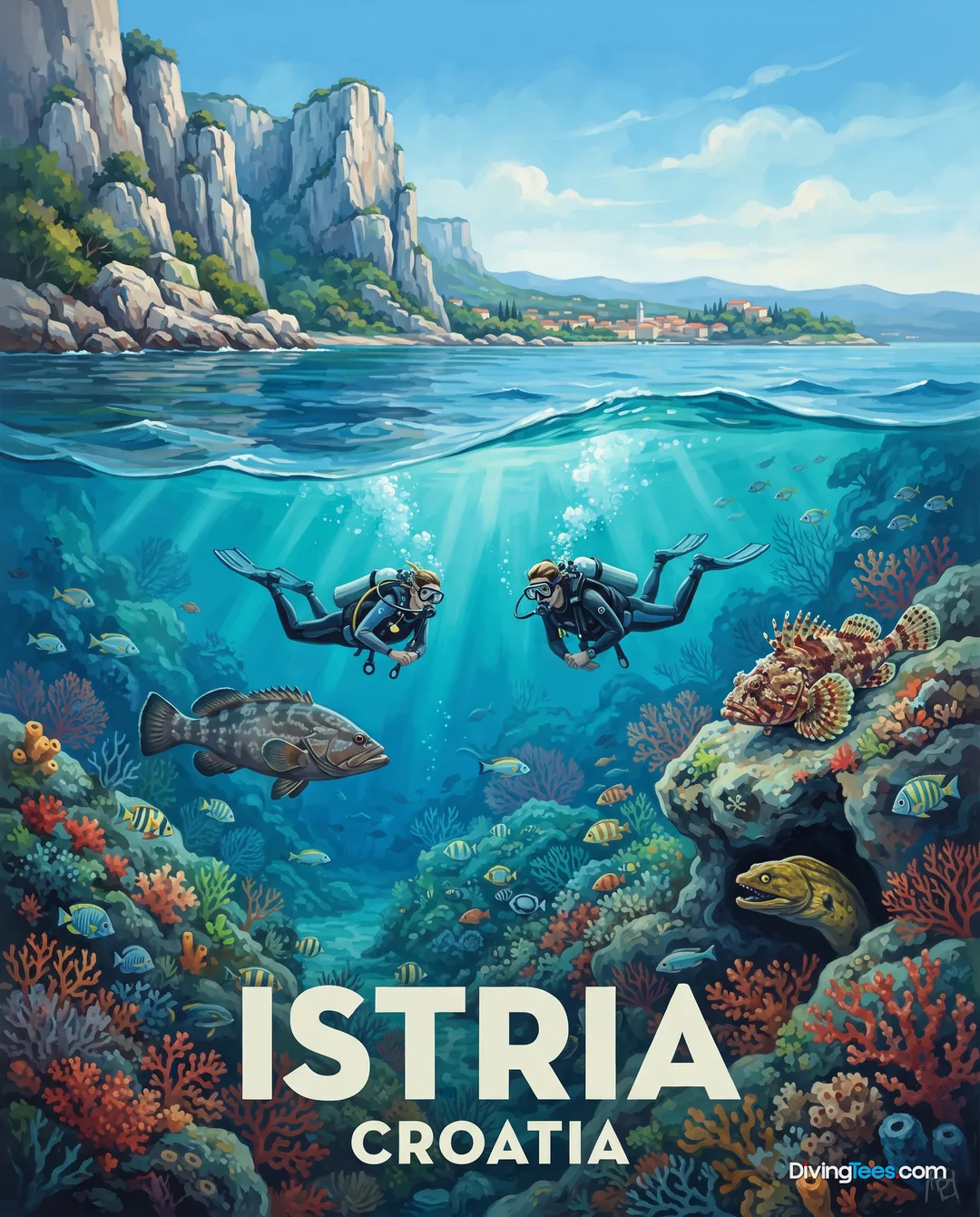
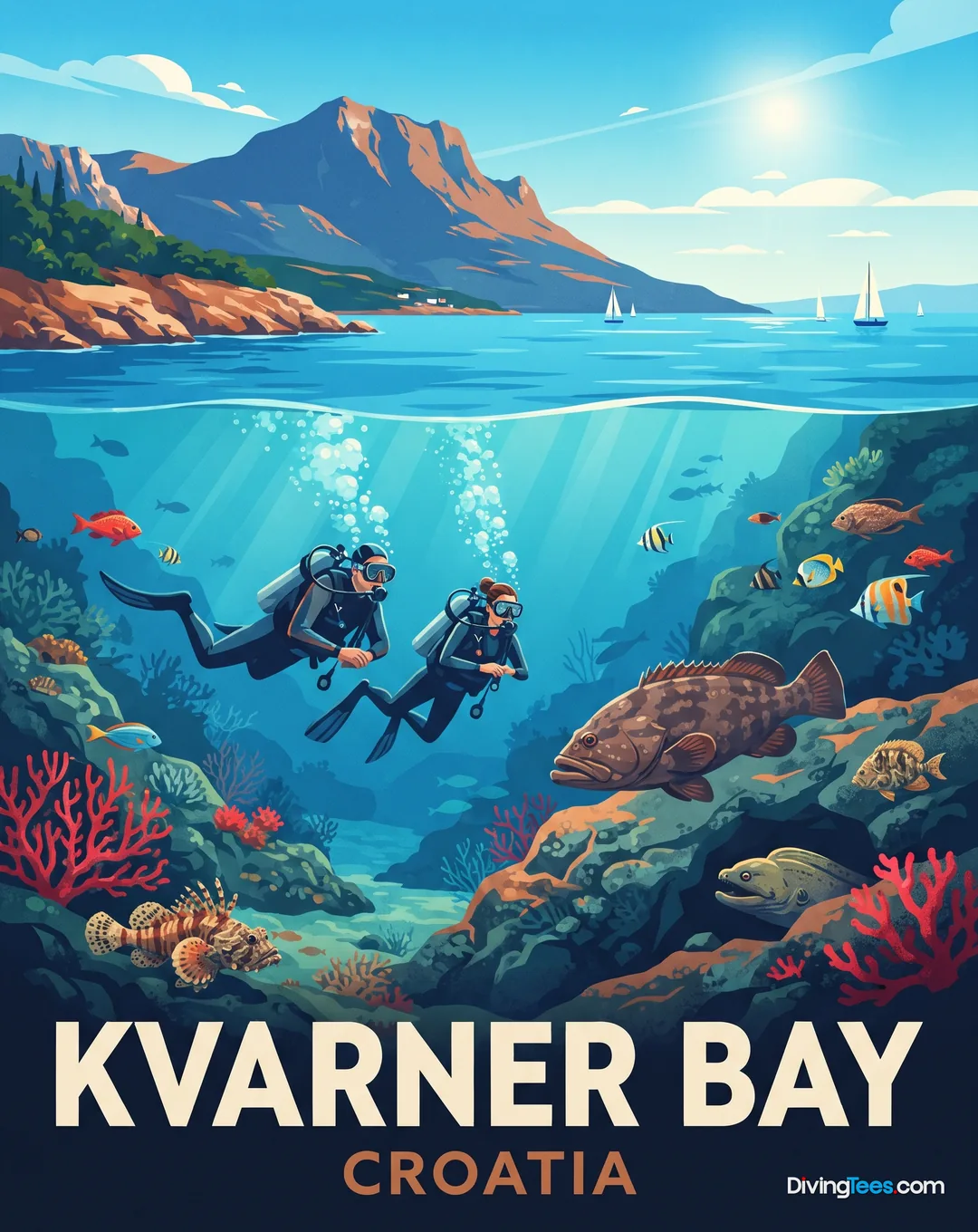
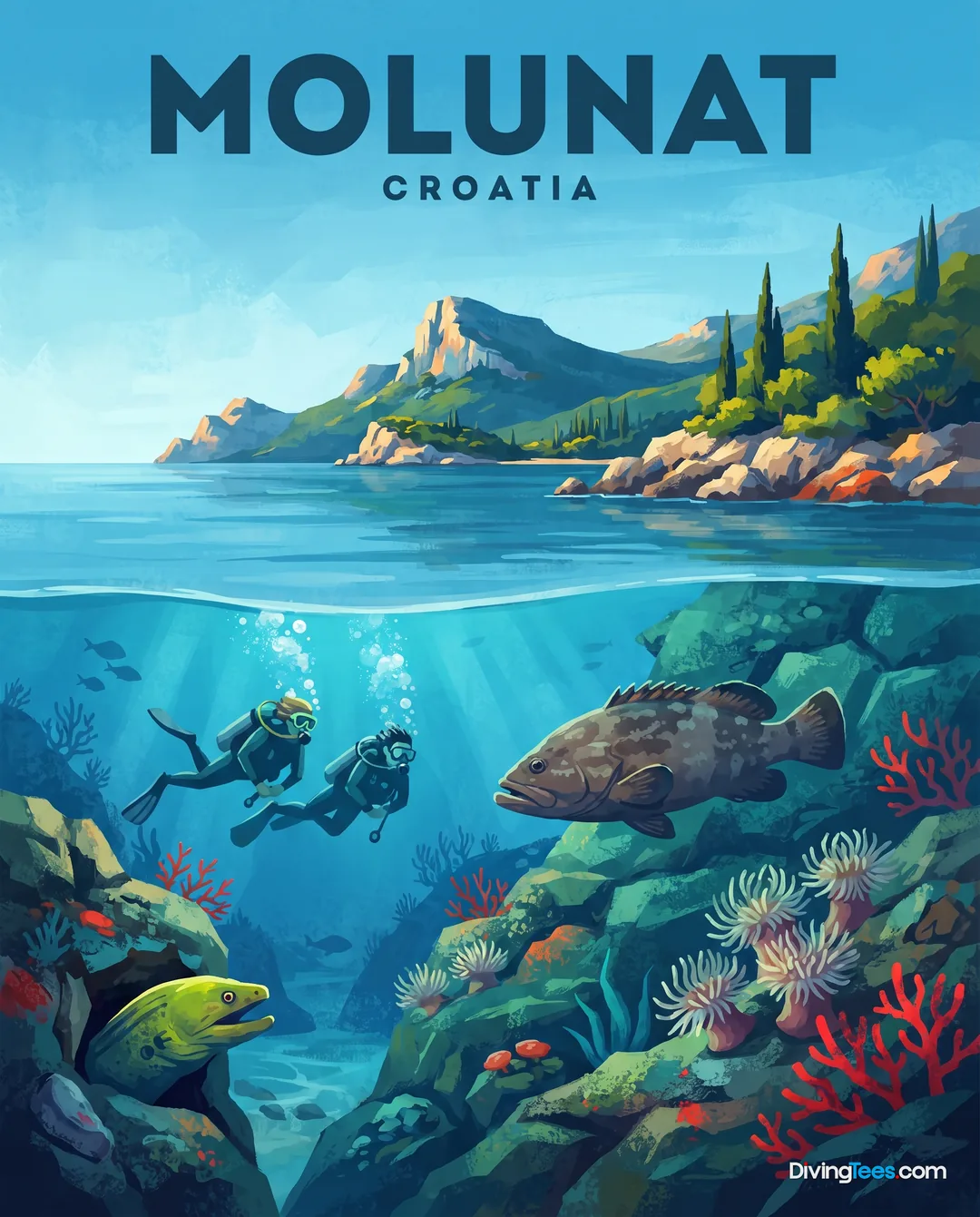
The northern group is best understood as one travel arc with distinct bases. Istria suits divers drawn to a peninsula of vineyards, olive groves and historic ports, with Pula providing a separate base for the southern Istrian coast and sites such as Bumbište. Kvarner Bay opens the island-and-gulf dimension, linking a mainland stay around Opatija or Rijeka with Rab; it is also the natural choice for a liveaboard-style itinerary. Rab works for a slower island stay, where diving can sit alongside the medieval harbour and short local excursions. These three neighbouring settings share the same broad operating window, from spring into early autumn, but they do not offer the same holiday rhythm. Molunat belongs to the southern Dalmatic group and is the outlier geographically and seasonally: a quieter, boat-based base near Dubrovnik, suitable for divers who want one settled location rather than a northern coastal circuit.
Diving destinations
Dive centres


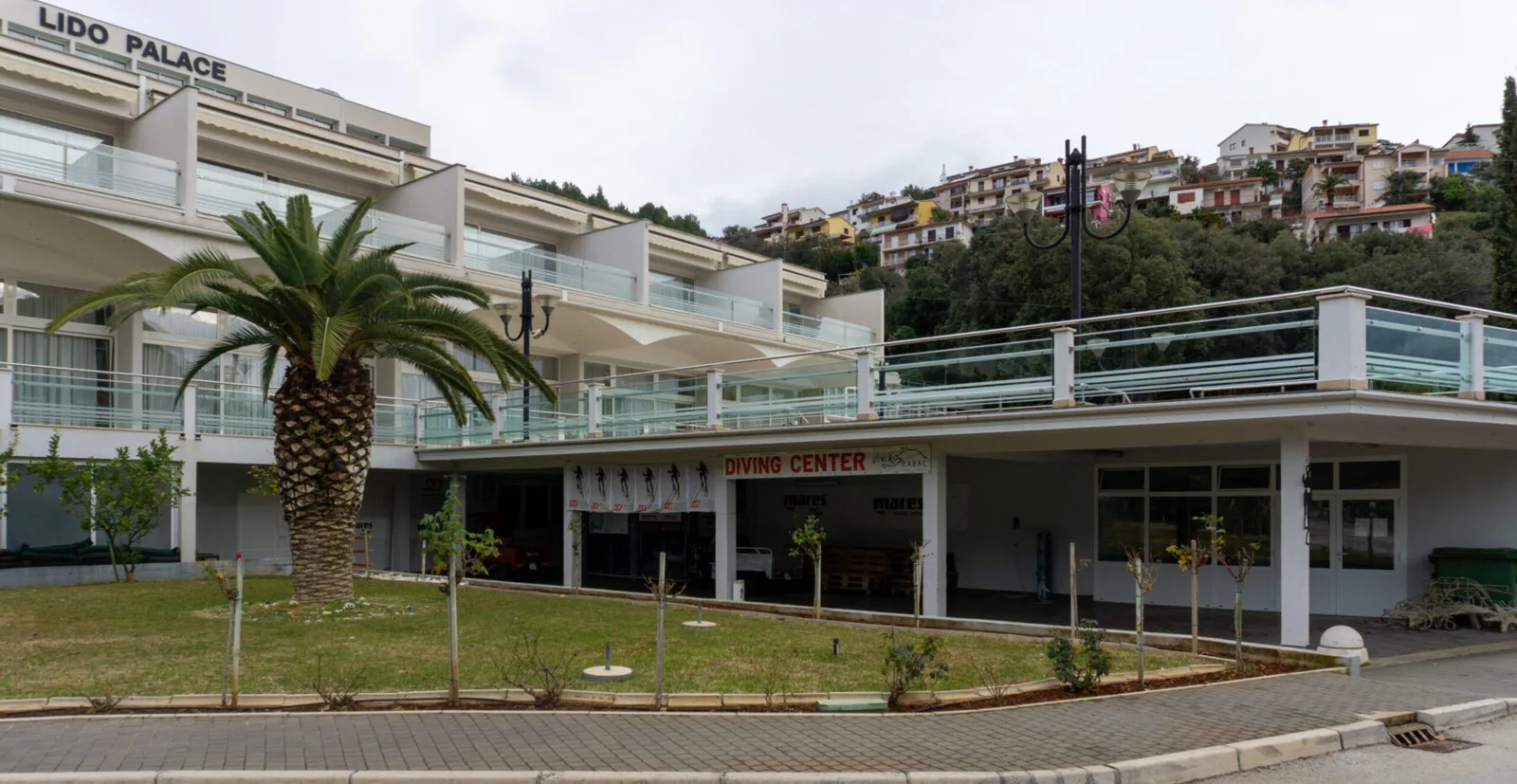


Hotels
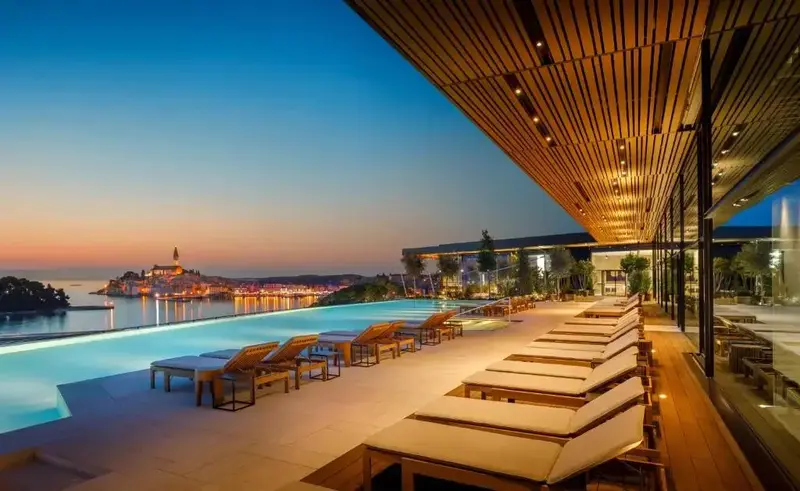
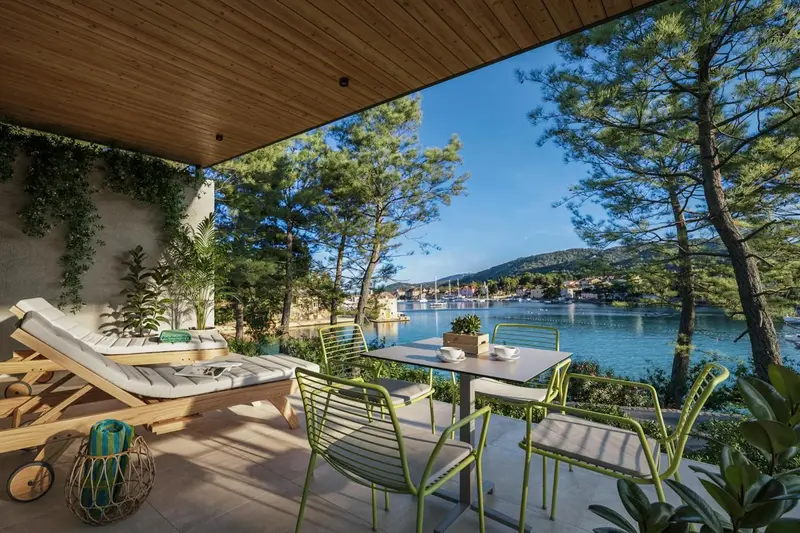
Liveaboards
When to go, and where by month
Molunat is the year-round exception, while the northern Adriatic follows a clear seasonal pattern. January and February offer no listed northern window; March opens Kvarner Bay first. In April, Istria and Rab join it, reflecting the gradual start of the wider northern season. From May through September, the whole northern group (Istria, Kvarner Bay, Pula and Rab) can be combined around its common operating period. October closes that northern window, followed by November and December. The practical consequence is straightforward: choose the coast before choosing the month. May to September gives the broadest choice for a trip linking Pula, Istria, Kvarner Bay or Rab, whereas March favours Kvarner Bay and April adds the other early-season northern bases. Molunat changes the calculation entirely, since its listed season covers every month and avoids the north’s spring opening and autumn close.
Marine life, coast by coast
The wildlife pattern is regional rather than uniform across the country. In the northern Adriatic arc, from Istria and Pula through Kvarner Bay to Rab, divers can look for conger, lobster and scorpionfish, alongside shoals of fish that give the rocky sites their movement. That combination is useful when planning an itinerary: a wreck-focused stay in Istria or Pula can still include familiar Adriatic reef life, while a Kvarner or Rab programme adds the island setting without changing the broad wildlife character. Molunat belongs to the southern Dalmatic part of the country and should be chosen for its own boat-based landscape rather than treated as an extension of the northern fauna. The named southern site Kaiser Franz Joseph I adds a historical focus to that separate itinerary.
Getting between the areas
The northern coast is the sensible region for a linked trip. Kvarner Bay and Rab are only 34 kilometres apart, while Istria and Pula are 41 kilometres apart, making either pairing manageable when accommodation is placed near the departure centre. Kvarner Bay and Pula can also be connected, although the 71-kilometre road journey starts to make a single-base holiday more attractive. Ferries determine the island section, so a car transfer includes both road time and the crossing to Rab. Molunat is a different proposition: it lies 391 kilometres from Rab and 420 from Kvarner Bay, with the southern journey becoming a full travel day rather than a casual excursion. Centres often operate from particular marinas and campsites, so staying beside the chosen base saves equipment transfers and early departures. In high season, early-morning boats are also the calmer option around Pula and Rovinj.
Take off your mask
Croatia’s coastal identity is easy to follow on land. Pula Arena gives Pula a Roman centre of gravity, while Opatija’s Belle Époque villas and the Lungomare promenade reveal the Kvarner’s Austro-Hungarian past. On Rab, the old town’s four bell towers rise above a compact medieval street plan, with Komrčar providing a shaded walk and Goli Otok offering a stark historical excursion. Istria rewards a drive inland to Motovun, where truffle country, vineyards and hilltop architecture replace the seafront. Food changes with the landscape. In Rab and Kvarner, brodet, octopus salad and Kvarnerski škampi belong in a harbour konoba; Rab also has rapsko sočivo, dried octopus and rabska torta. Inland Istria brings fuži or tagliatelle with truffle, Istarski pršut and Malvazija istarska. The Dubrovnik Summer Festival brings theatre, music and dance into Dubrovnik’s streets and courtyards in July and August, while Rab Film Festival and Rab Jazz Festival give the island a cultural life beyond its beaches.
What holds true everywhere here
Croatia rewards careful planning between the water and the road. Transfers from Zagreb, the Italian or Slovenian borders, or one coastal base to another can take several hours, so a first dive scheduled immediately after arrival leaves little margin. Ferries and catamarans run to strict timetables, particularly on the routes serving Rab, and the vehicle crossing adds another stage to the journey. Croatian rules also make autonomous diving more formal than some visitors expect: a diver’s card and permits for scuba diving are part of the framework, while solo diving is restricted in many areas. Lim Channel is a specific trap for casual planning, because diving there is prohibited and nearby alternatives need to be arranged with the centre. After the final dive, leave a proper safety margin before a flight or a long return crossing.
Frequently asked questions about Croatia
When should you choose Croatia for wreck diving?
Choose Croatia from May through September if Baron Gautsch off Rovinj is central to your plans. This Istrian wreck suits a northern Adriatic itinerary, where you can combine a wreck-focused stay around Istria or Pula with rocky sites featuring congers, lobsters, scorpionfish and shoals of fish.
What marine life can you see while diving in Croatia?
In Croatia’s northern Adriatic arc, from Istria and Pula through Kvarner Bay to Rab, you can look for congers, lobsters and scorpionfish, together with shoals of fish around rocky sites. Molunat in the south offers a separate boat-based landscape, rather than the same northern fauna pattern.
What coastal history can you experience alongside diving in Croatia?
Croatia combines Adriatic wreck diving with visible coastal history. You can visit Pula’s Roman arena, see Rab’s four bell towers above the harbour, explore the Brijuni archipelago, and choose the historical Kaiser Franz Joseph I site near southern Molunat. These landmarks and wrecks give different itineraries a strong sense of place.
How should you plan a diving stay in Croatia?
Plan your Croatia stay around one regional focus rather than treating the coast as uniform. Base a wreck-focused programme in Istria or Pula, add Kvarner Bay or Rab for island scenery, or choose Molunat for its boat-based landscape, Blue Hole, Saint Ivan’s bay and the Kaiser Franz Joseph I site.