RAID
Ektshef Deerti Diving Centre
Google 5/5 (25 reviews)
Qatar · Middle East
Concrete reef structures, steel wrecks, lionfish and cuttlefish make Doha a different Gulf base, with desert excursions above water for non-divers.
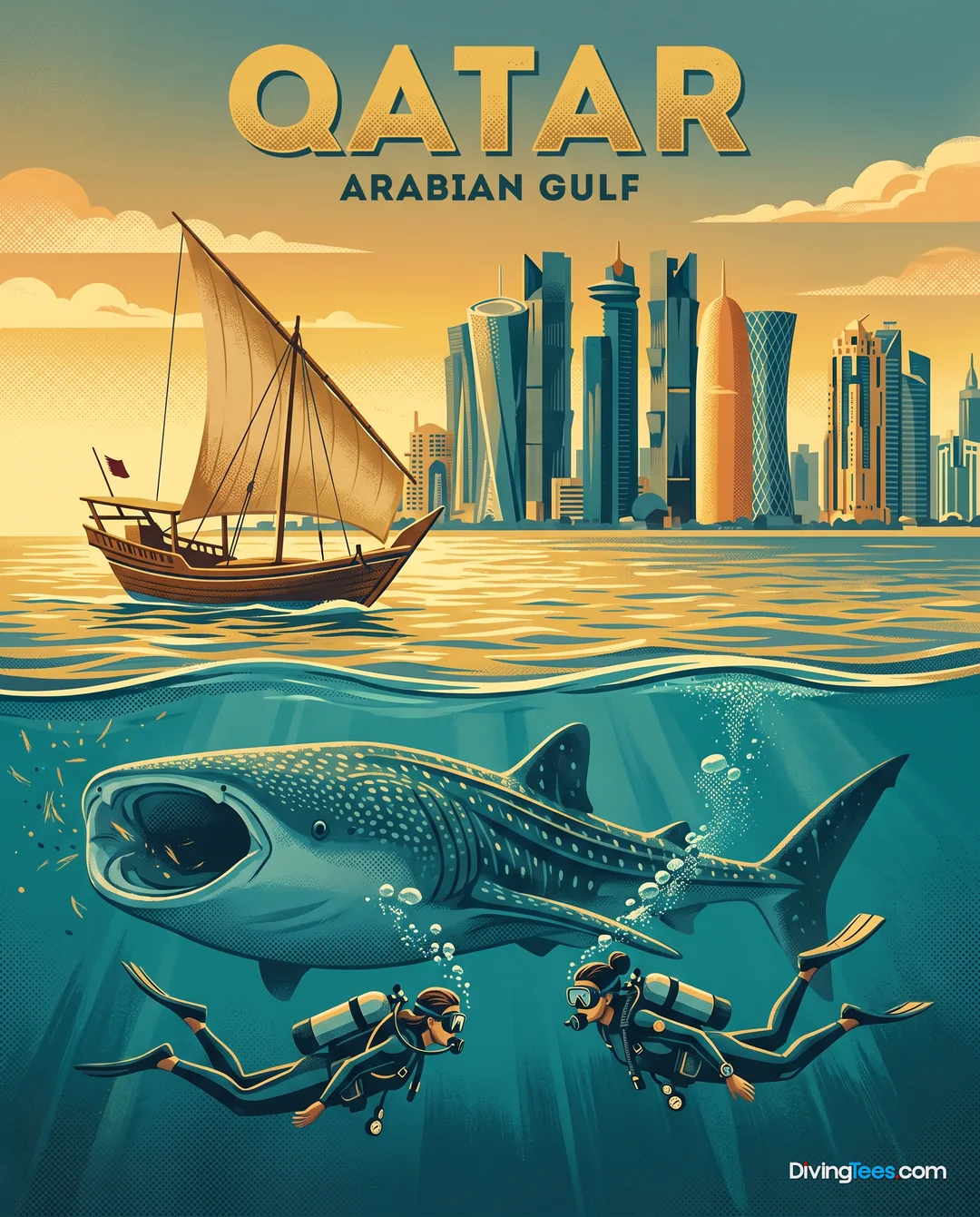
Doha works as a land-based diving base rather than a liveaboard destination. From the city, divers can reach shallow artificial reefs around Mesaieed, coastal sites, boat-accessed wrecks and more distant offshore reefs. The appeal lies in moving between concrete structures, steel hulls and natural reef rather than following one continuous coral landscape. Three to five days gives enough time for nearby dives, one or two wreck outings and an offshore trip, while leaving room for Doha’s museums, souks and desert.
Underwater, Doha shifts between easy shore dives and boat days over wrecks and offshore reefs. The GMC and Old Club sites are shallow, practical places to examine concrete structures, gaps and fish life, while the Barge, M/O Wreck and Pericles add steel, depth and the changing shapes of damaged hulls. Haloul is a longer speedboat outing, with the sea itself becoming part of the day. Currents vary, and tides can alter both visibility and the interest of a site. The clearest conditions are generally around 10 to 15 metres on the better sites, but plankton, swell, coastal conditions and currents can reduce that sharply. This is not consistently clear, Red Sea-style water. Expect shore entries or short boat runs close to Doha and Mesaieed, then allow a full, weather-dependent day for the farther wrecks and reefs.
The artificial reefs reward slow inspection rather than a search for large animals. Look into gaps and around the concrete for lionfish, groupers, crabs and smaller fish, with cuttlefish appearing among the structures. Barracuda, rays and schooling fish are possible throughout the year, while lionfish are regularly encountered. Natural reefs and wrecks add more open water and shelter, but sightings remain tied to conditions and the individual site. Dugongs and whale sharks may occur from March to September, although they are rare rather than a reason to book a particular week. Plankton-rich periods in spring and autumn can bring jellyfish into the water column, sometimes in notable concentrations.
November to March is generally the soundest window for Doha diving. Winter usually brings calmer seas, cooler water and the best visibility, which matters when a wreck or artificial reef is the main subject of the dive. Spring and autumn can still be pleasant, but plankton may soften the view and bring jellyfish with it. Summer is intensely hot and visibility can become less dependable. The season also affects planning more than the calendar suggests: offshore trips need a workable sea state, so winter gives the best balance between seeing the structures clearly and getting the boat out to them.
Beginners can enjoy the shallow artificial reefs with suitable supervision, particularly at GMC and Old Club. The more demanding part is not every wreck itself, but the combination of depth, boat logistics, variable current and structure. Advanced Open Water is useful for deeper wrecks and offshore trips. A Wreck Diver qualification is appropriate for wreck work and any authorised penetration. Never assume that an accessible opening means an invitation to enter: the guide, the condition of the hull and local rules decide what is sensible.
From London or Manchester, travel by air to Doha, then organise the diving around road transfers and boat departures rather than expecting to walk from a city hotel to the water. A hire car, taxi or arranged transfer is needed for sites south of the capital, especially around Mesaieed and Sealine. Shore entries may then involve a walk from the vehicle, while offshore reefs and wrecks require a boat. Some distant sites lie roughly 66 to 100 kilometres from Doha, and Haloul can take about two hours by speedboat, depending on conditions. Keep the land journey and the marine departure clearly separated in your plans, since the coastal sites are spread out rather than grouped around one convenient harbour.
Put the nearby Doha and Mesaieed dives early in the stay, then keep a spare day for Haloul or the farther wrecks. A rigid offshore schedule is the easiest way to lose a planned dive to the sea state or a changed departure. Confirm the exact land rendezvous before setting out for a shore dive, particularly south of Doha, where industrial areas, fences and unsuitable roads can make an apparently nearby site awkward to reach. Ask specifically whether a wreck dive includes penetration. The Barge, M/O Wreck and Pericles differ in depth and structure, and an opening in the hull does not remove the need for the right training or permission. Bring protection suitable for jellyfish when spring or autumn conditions are plankton-rich. Finally, judge the site against the tide and current on the day, and do not book Doha expecting unbroken Red Sea visibility.
Stay in Doha or the surrounding area and treat the destination as a series of day trips. Use shorter road-based dives for the dependable part of the itinerary, then reserve boat days for wrecks and offshore reefs. Three to five days suits a diving-focused visit, with extra time worthwhile for a desert outing, the Inland Sea, Al Thakhira mangroves, museums, souks or a beach day. A non-diver has plenty to do while the boat is away.
Hello, I'm Marina, DivingDeal.com's AI assistant. I guide you through destinations, areas and countries.
Thinking about the whole trip and the flights? Talk it over with Edith →
Marina is an AI. Some links are affiliate links: DivingDeal may earn a commission, at no extra cost to you. Bookings are made with the partner.
November to March is generally the soundest window for Doha diving, with calmer seas, cooler water and the best visibility. Spring and autumn can be pleasant, but plankton may reduce visibility and bring jellyfish. Summer is intensely hot, and offshore trips become more dependent on sea conditions.
Beginners can enjoy the shallow artificial reefs at GMC and Old Club with suitable supervision. Deeper wrecks and offshore trips are better suited to divers with Advanced Open Water experience. Wreck work requires appropriate training, and any penetration must be authorised by the guide and permitted by local rules.
Doha offers concrete artificial reefs, coastal sites, steel wrecks and offshore reefs rather than one continuous coral landscape. Look for lionfish, cuttlefish, groupers, crabs, smaller fish and schooling fish. Barracuda and rays are possible throughout the year, while changing conditions influence what appears at each site.
Stay in Doha or nearby and plan diving as a series of day trips. Arrange road transfers to coastal sites and boat departures for wrecks or offshore reefs. Schedule nearby dives early, keep a spare day for weather-dependent trips, and leave time for museums, souks, desert excursions or other activities.