
Drar Diving Center
Google 5/5 (772 reviews)
United Arab Emirates · Middle East
Cargo steel on a sandy bottom, artificial reefs and warm Gulf water make Dubai a practical diving add-on to an urban city break.
For subtitles in English: start the video firstthen click the gearat the top right of the video, select “Subtitles/CC”, then “Auto-translate” and choose “English”.
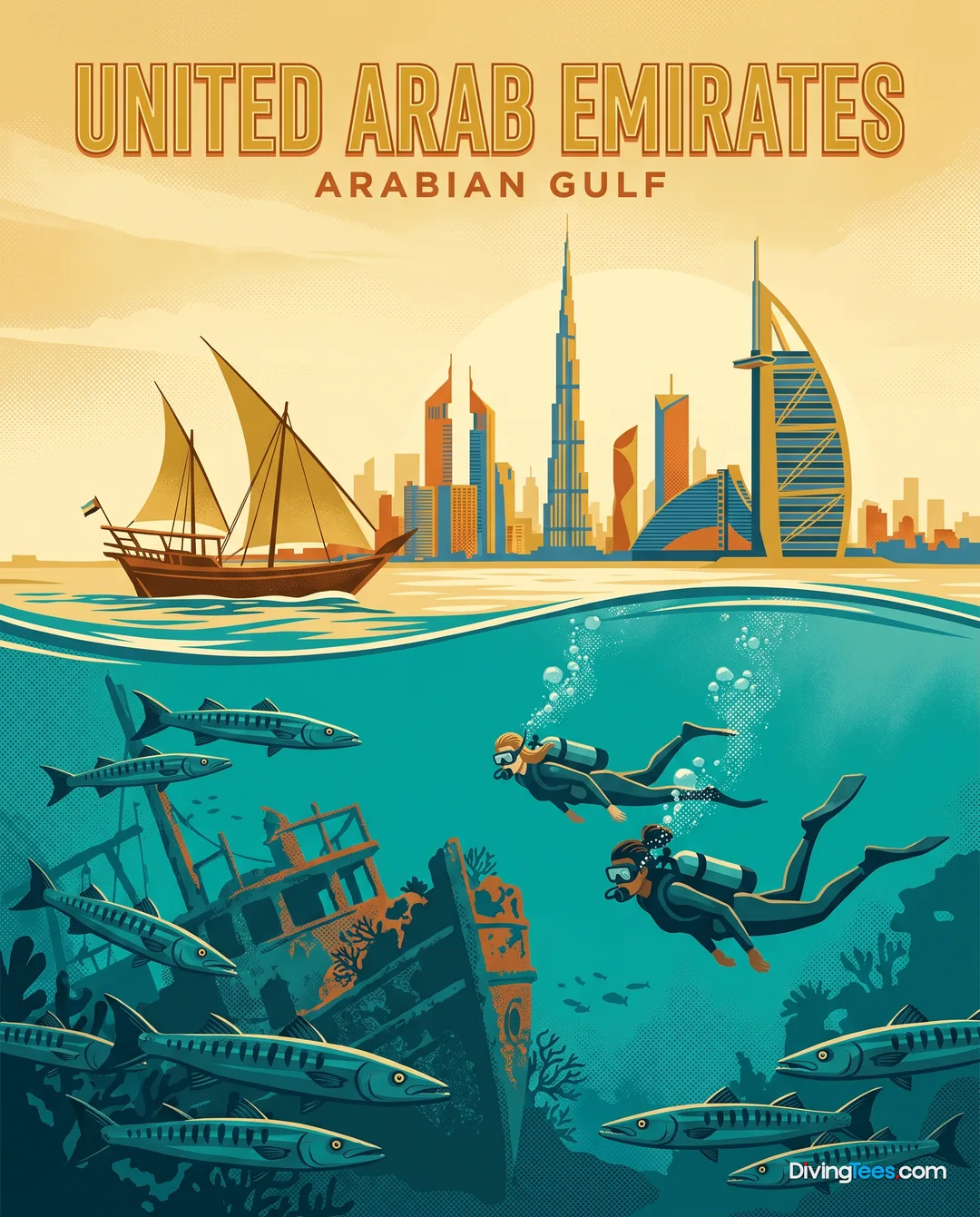
The Zainab Wreck gives Dubai its clearest underwater identity: a cargo ship lying on a flat sandy bottom, with its superstructure and interior offering something to explore rather than simply a bare seabed. Beyond this wreck, diving is built around boat trips to artificial reefs, wrecks and some natural reef areas. It is best understood as a convenient urban base for a few purposeful dives, paired with the city’s sightseeing, shopping and desert excursions.
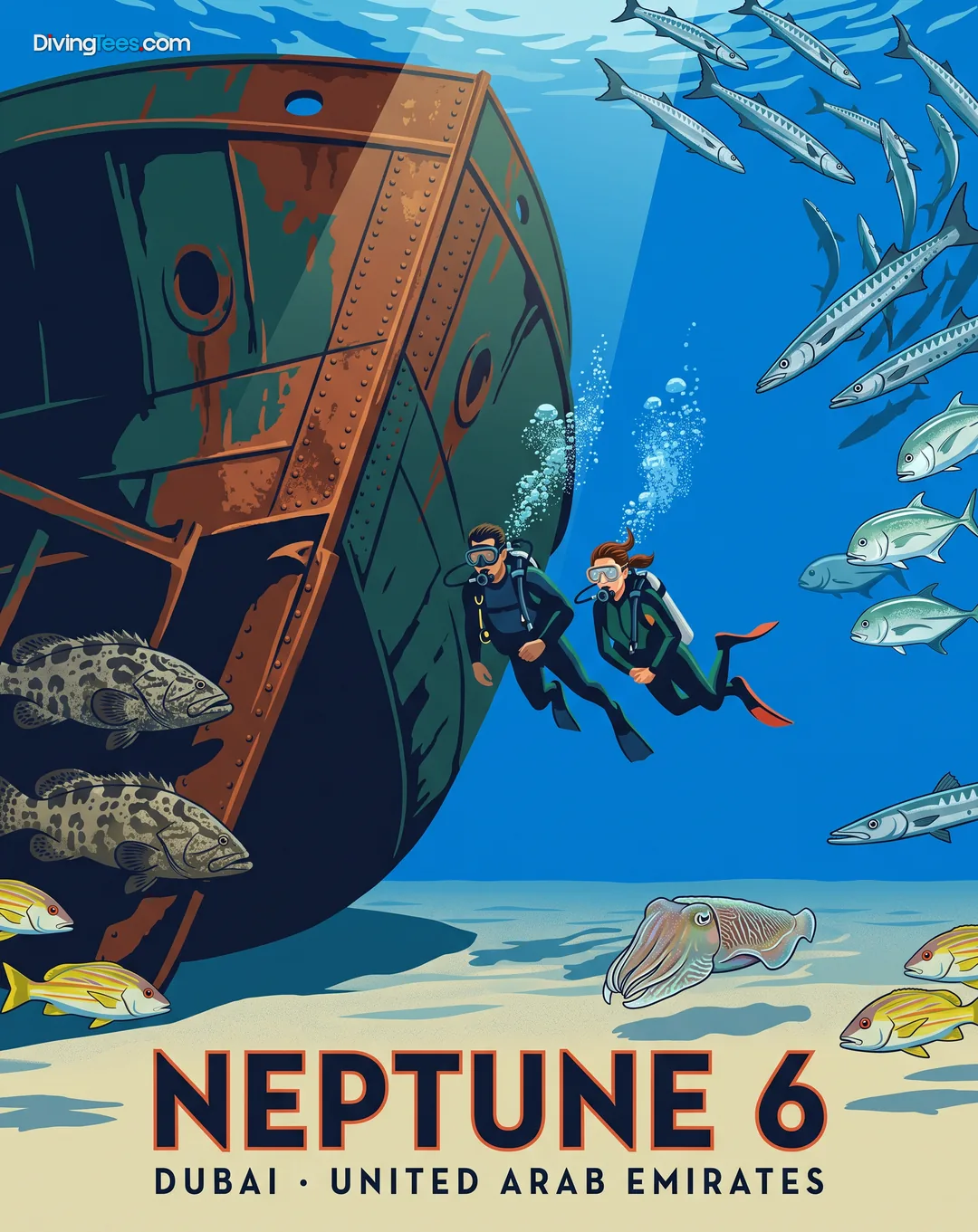
Dubai’s diving is mainly boat-based and generally takes place in warm, relatively sheltered Gulf waters. The underwater scenery is more industrial and constructed than classic tropical reef: sandy seabeds, wreck structure, artificial reef habitat and occasional natural reef areas. The Zainab Wreck is the most detailed example in the available sites, resting between eleven and thirty metres. Divers can circle the superstructure, look into the interior and, where properly trained and briefed, make swim-throughs. Visibility there is typically five to ten metres, so navigation depends on staying close to the wreck rather than expecting long views. Currents are variable and linked to tidal movement, with extra care needed during deeper exploration. The overall character suits ordinary boat diving, but the wreck’s overhead areas make a conservative plan more important than the city-break setting might suggest.
Marine life in Dubai is encountered chiefly around the structures that give these dives their shape. The Zainab Wreck has become a habitat on an otherwise flat sandy bottom, so the ship itself is the focus: divers work along the superstructure, inspect the interior and watch for life occupying the artificial reef. The wider destination combines wrecks, artificial reefs and some natural reef areas rather than offering one continuous coral landscape. That makes the underwater interest depend as much on the site’s construction and relief as on passing wildlife. Dubai is better chosen for its wreck and reef framework than for a particular animal at a particular time of year.
The measured window for calmer seas and the strongest diving conditions runs from June to December. This is the period that gives boat trips the best chance of proceeding comfortably, particularly when a short stay leaves little room to replace a cancelled outing. Rainfall is lowest from May to January, which also supports the wider city break, although the diving schedule still depends on sea state and tides. Dubai is therefore most straightforward when diving is placed in a dedicated block rather than squeezed between fixed sightseeing plans. A three- to five-day stay leaves some room for weather disruption without turning the trip into a week built solely around local diving.
The destination is suitable for all levels on its sheltered boat dives, provided the chosen site matches the diver’s training and comfort. The Zainab Wreck is a different proposition: its depth reaches thirty metres, and Advanced Open Water Diver training is appropriate for the full profile. Wreck-diving experience is strongly recommended where swim-throughs or overhead areas are involved. PADI, SSI and BSAC qualifications can all be considered through their equivalent experience requirements; the important distinction is between ordinary open-water touring and deliberate wreck penetration.
From London Heathrow, Gatwick or Manchester, Dubai is reached by international flight, with no ferry or domestic-flight transfer needed to reach the diving area. A nonstop journey from Western Europe takes roughly seven to nine hours, with longer timings when routed through a hub. Once in Dubai, the practical movement is usually by taxi or a pre-arranged transfer from the hotel to the dive centre or marina. The city’s size means that accommodation location can affect the morning routine, even though no boat connection between separate islands or regions is required. Dive days are therefore easy to add to an urban itinerary, but departure times and hotel-to-marina transfers should be agreed before the first boat morning.
Treat Dubai as a boat-diving city break, not as a tropical reef holiday. The underwater reward is the change of scene around wrecks and artificial reefs, with the Zainab Wreck providing the clearest reason to bring proper wreck-diving experience rather than assuming every outing is a simple open-water tour. Keep travel days clear of planned dives: a short sea-state disruption can remove a large part of a tightly packed schedule. The same applies to sightseeing; diving works better as a reserved block than as a last-minute addition after a full day in the city. On the Zainab, visibility of five to ten metres makes close control and careful navigation more useful than expecting to see the whole ship from a distance. Do not arrive expecting a Maldives-style coral landscape. The sensible approach is to brief for variable tidal current, preserve space around the wreck, and leave enough flexibility to use a later day if the boat programme changes.
A three- to five-day stay suits Dubai’s mixed purpose. Allocate a dedicated block for boat diving, with the Zainab Wreck or similar wreck and artificial-reef outings forming the underwater part of the trip. Keep at least some time free around those dives rather than filling every day with fixed plans. The remaining days can be used for city sightseeing, shopping, desert excursions or coastal leisure, making Dubai particularly workable when only one person in a travelling pair dives.
Hello, I'm Marina, DivingDeal.com's AI assistant. I guide you through destinations, areas and countries.
Thinking about the whole trip and the flights? Talk it over with Edith →
Marina is an AI. Some links are affiliate links: DivingDeal may earn a commission, at no extra cost to you. Bookings are made with the partner.
Your last day stays dry: no diving in the 18-24 hours before a flight, the perfect window to see the destination from another angle.
 Desert
⏱ 4 h · ★ 5.0 (136 reviews)
from £52$70€62
see on Viator ↗
 Culture
⏱ 2 h · ★ 5.0 (95 reviews)
from £30$40€36
see on Viator ↗
 Desert
⏱ 3 h · ★ 5.0 (88 reviews)
from £376$502€449
see on Viator ↗
 City
City⏱ 1 h · ★ 5.0 (69 reviews)
from £120$161€144
see on Viator ↗
Ratings and reviews collected by Viator and Tripadvisor.
Choose June to December for generally calmer diving conditions and a better chance of comfortable boat trips. Rainfall is lowest from May to January, which also supports sightseeing and other activities. Sea state and tidal conditions can still affect the schedule, so keeping some flexibility is useful during a short visit.
Dubai suits divers of all levels on sheltered boat dives when the site matches your training and comfort. The Zainab Wreck reaches thirty metres, making Advanced Open Water Diver training appropriate for its full profile. Wreck-diving experience is strongly recommended for swim-throughs and overhead areas, which require a conservative plan.
You can explore wrecks, artificial reefs and some natural reef areas in warm, relatively sheltered Gulf waters. The Zainab Wreck lies on a flat sandy bottom, with cargo-ship superstructure, interior areas and swim-throughs. Expect five-to-ten-metre visibility there, with marine life concentrated around the wreck and other constructed habitats.
Plan Dubai as a boat-diving city break, reserving a dedicated block for the Zainab Wreck or similar wreck and artificial-reef outings. A three- to five-day stay leaves room for weather disruption, while other time can cover sightseeing, shopping or desert excursions. Agree hotel-to-marina transfers and keep fixed plans flexible.