
Adventure Cook Islands
Google 4.8/5 (130 reviews)
Cook Islands · Pacific
Sheltered lagoon fish, coral drop-offs, current-swept passes and northern wrecks make Rarotonga a shore-based Cook Islands diving base with plenty to do between boats.
For subtitles in English: start the video firstthen click the gearat the top right of the video, select “Subtitles/CC”, then “Auto-translate” and choose “English”.
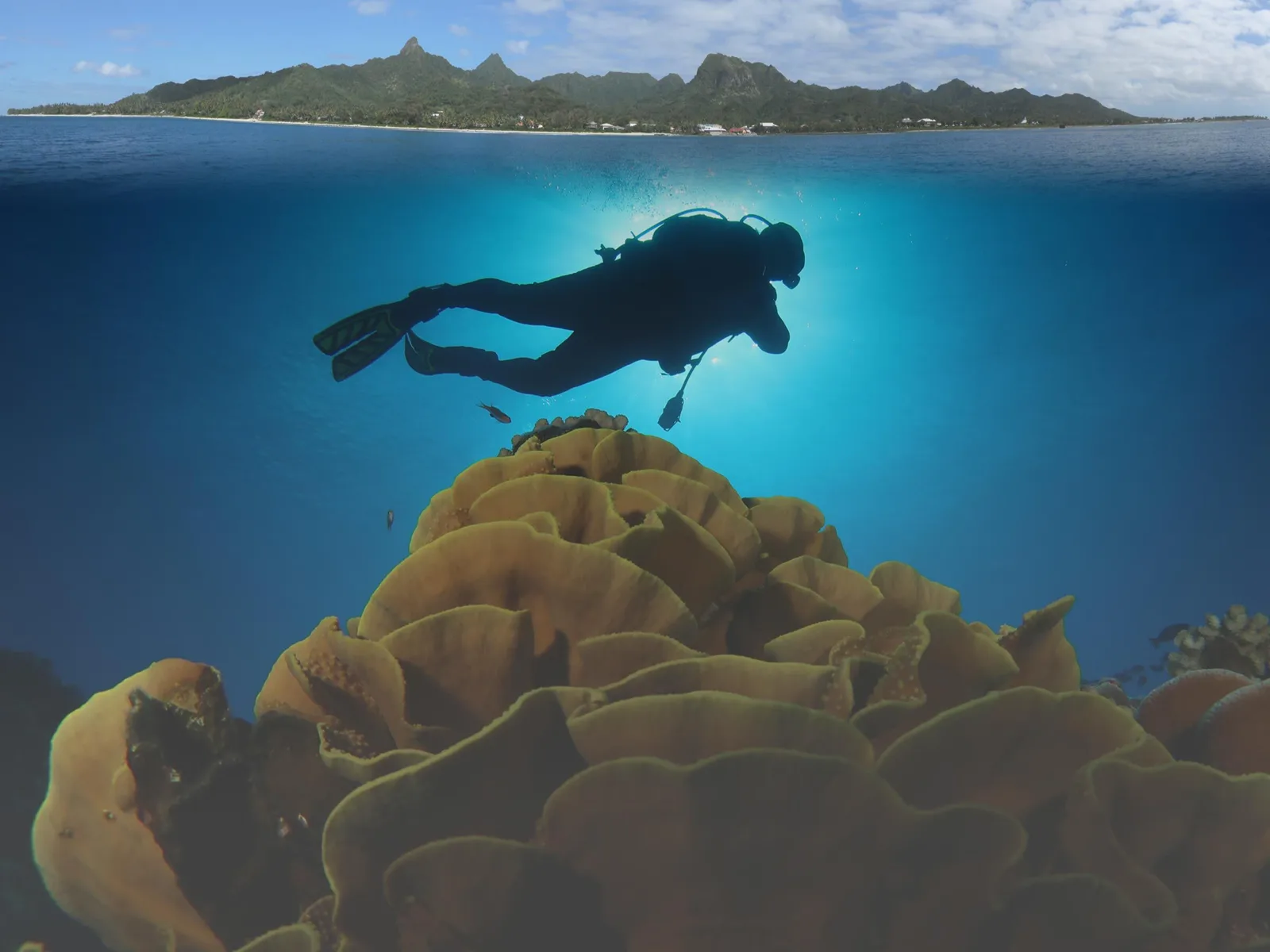
The reef ring around Rarotonga is punctuated by sheltered lagoon water, coral drop-offs and passes. A diver can base ashore and reach the outer reef by boat, with wrecks adding another strand to the underwater landscape. It suits a mixed party particularly well: non-divers have beaches, snorkelling, walks into the interior and Avarua, while divers can leave room for changing weather and still enjoy several different kinds of outing during a week on the island.
Boat outings dominate, taking divers from the coast to lagoon sites, coral relief, drop-offs, passes and wrecks. The sheltered water around Aroa Marine Reserve is the sensible starting point for beginners, while the outer reef gives experienced divers the more characteristic Rarotonga scenery. Currents vary considerably. Many sites are manageable, but passes can produce strong return currents, remous and downcurrent movement, especially when water and sediment are being pushed through the reef. A drift dive may be appropriate only after a local briefing. Visibility is commonly around twenty to thirty metres, and can be better in favourable conditions, but it drops quickly where currents stir sediment. This is not a destination where the clearest lagoon conditions automatically tell you what the pass will be doing. The first boat of the day is often the easiest way to read the sea and avoid the busiest timing.
Fish life is easiest to appreciate in the calmer lagoon water, particularly around Aroa, where the reserve is used for introductory dives and observation. Outside the lagoon, the attraction is as much the movement of water over coral relief and through passes as any single animal encounter. Nutrients and suspended sediment can reduce visibility, but they may also gather smaller marine life in places that reward patient photography. Humpback whales are an occasional offshore possibility from July to October, rather than a reason to treat every boat trip as a whale-watching outing. In practical terms, Rarotonga offers a mixture of reef fish, small subjects, coral scenery and the chance of a seasonal pelagic encounter, with conditions deciding how much detail you see.
May to October is generally the most dependable period, when the sea is more settled and visibility is usually more favourable. June and July are particularly attractive for clearer water, although passes can still cloud when currents lift sediment. The rainy season from November to March brings more rain, a greater chance of cyclonic swell and more disruption to boat plans. From July to October, humpback whales may be seen offshore. The dry-season window therefore gives a useful combination: better odds for outer-reef diving, enough flexibility to move outings around the weather, and a chance of a whale encounter without making that encounter the whole purpose of the trip.
Rarotonga works for all levels, provided the site is matched to the diver rather than the other way round. Aroa’s sheltered lagoon is suitable for beginners and introductory dives. Passes, drop-offs and deeper boat sites call for stronger control and more experience, with Advanced Open Water useful for the latter. A Drift Diver qualification is helpful where currents are part of the plan. Divers arriving with BSAC, PADI or SSI training should still expect a local briefing before entering a pass, particularly after unsettled weather.
From London Heathrow, London Gatwick or Manchester, reaching Rarotonga means flying through a Pacific regional hub, principally Auckland or Sydney. Allow roughly twenty-five to thirty-five hours for the complete journey, depending on the connection and waiting time, rather than treating the island as a simple long-haul stop. There is no ferry leg to arrange once you reach the Cook Islands. On Rarotonga, an approximately thirty-two-kilometre circular road links the main sectors. Buses, scooters, bicycles, cars and taxis all make it possible to reach a dive departure, and the island can usually be circled in under an hour by vehicle. The distance from your accommodation to the chosen departure point will determine whether an arranged pick-up is worthwhile.
Do not treat a pass as an ordinary beach entry. Ask locally about the return current before getting in, and do not enter from the shore simply because the lagoon looks calm. Keep a weather reserve in the itinerary: southern swell can affect exposed coral relief and passes, while conditions inside the lagoon may remain deceptively comfortable. If outer-reef walls and pelagic possibilities matter to you, book at least one boat outing for them rather than filling the trip with sheltered lagoon dives. The first departure of the day usually gives the clearest view of the sea state and reduces the chance of arriving after a site has become awkward. Carry a computer and more thermal protection than the word tropical may suggest, especially for long or repeated dives. Finally, keep a full day before the flight home, and place deep or repetitive diving early enough to complete the required safety stop and preserve sensible decompression margins.
Plan on seven to ten days ashore. That leaves several possible diving days when weather or swell interrupts a boat outing, plus time for the circular island road, the Cross-Island Track, beaches, snorkelling and Avarua. Accommodation can be paired with centres around Aroa, Arorangi or Muri, with operators commonly arranging pick-ups. A non-diving partner or family member has plenty to do while boats are out, and the final day can be kept for walking, culture or the beach rather than another immersion.
Hello, I'm Marina, DivingDeal.com's AI assistant. I guide you through destinations, areas and countries.
Thinking about the whole trip and the flights? Talk it over with Edith →
Marina is an AI. Some links are affiliate links: DivingDeal may earn a commission, at no extra cost to you. Bookings are made with the partner.
May to October is generally the most dependable period, with more settled seas and usually better visibility. June and July can offer clearer water, while passes may still cloud when currents stir sediment. From July to October, humpback whales may be seen offshore. November to March brings more rain and possible cyclonic swell.
Rarotonga suits different experience levels when you choose sites carefully. Aroa Marine Reserve’s sheltered lagoon is suitable for beginners and introductory dives. Passes, drop-offs and deeper boat sites require stronger control and more experience. Advanced Open Water is useful for the latter, while a local briefing remains important before entering a pass.
You can explore sheltered lagoon fish, coral scenery, drop-offs, passes and wrecks around northern Rarotonga. Calm water around Aroa is useful for observing reef fish and smaller subjects, while outer sites add moving water over coral relief. From July to October, humpback whales are an occasional offshore possibility rather than a regular dive encounter.
Plan enough time ashore for weather or swell to interrupt boat outings, and keep flexibility for lagoon, outer-reef and wreck trips. Accommodation near Aroa, Arorangi or Muri can be paired with operators arranging pick-ups. Leave a full day before flying home, and reserve the final day for walking, culture or the beach.