Pacific
Micronesia: Truk wrecks and island cultures
Micronesia combines the wrecks of Truk Lagoon with Nan Madol, Yap’s rai stones and sharply different island cultures within one federal republic.
What makes this country unique
- Truk diving from May through November each year
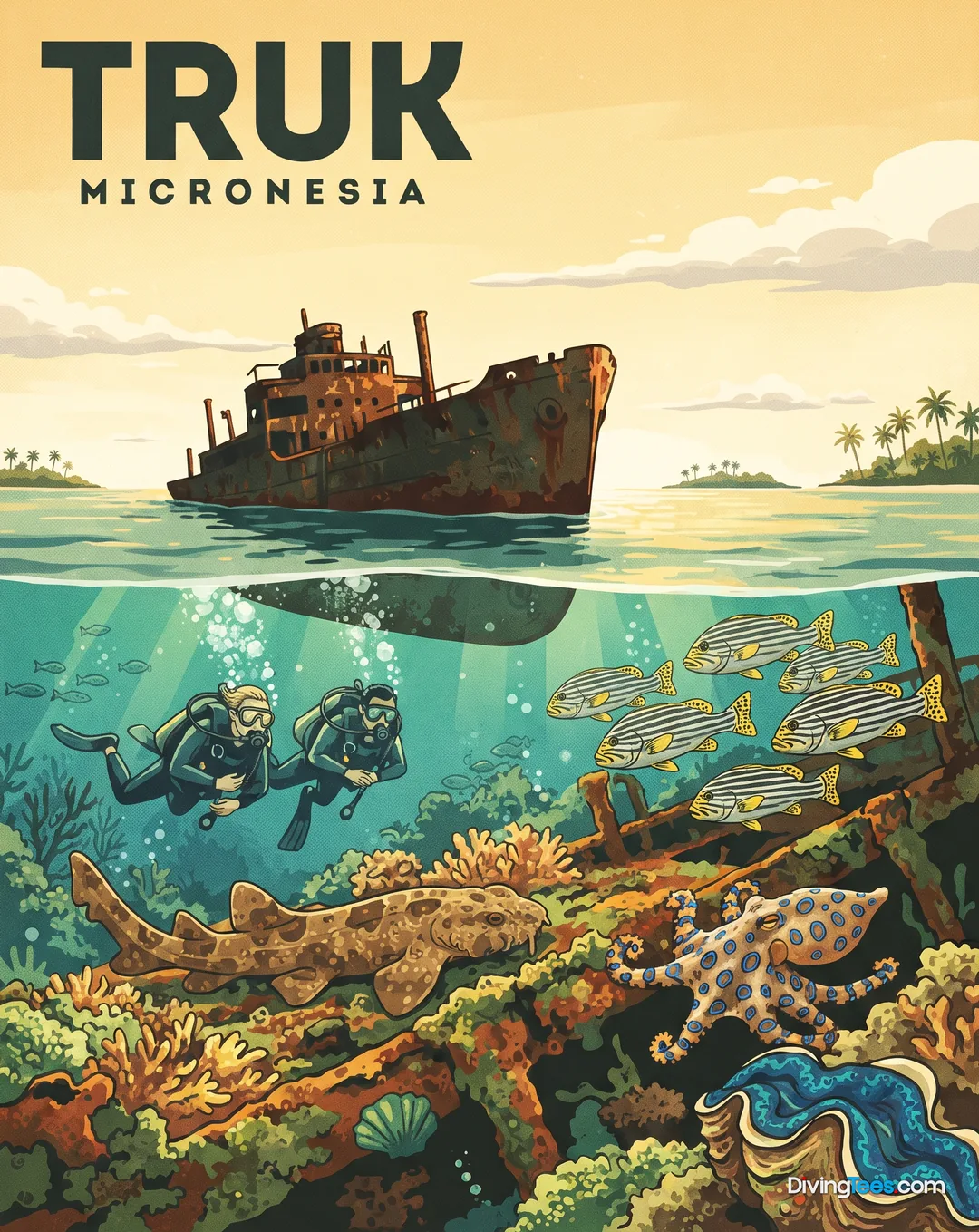
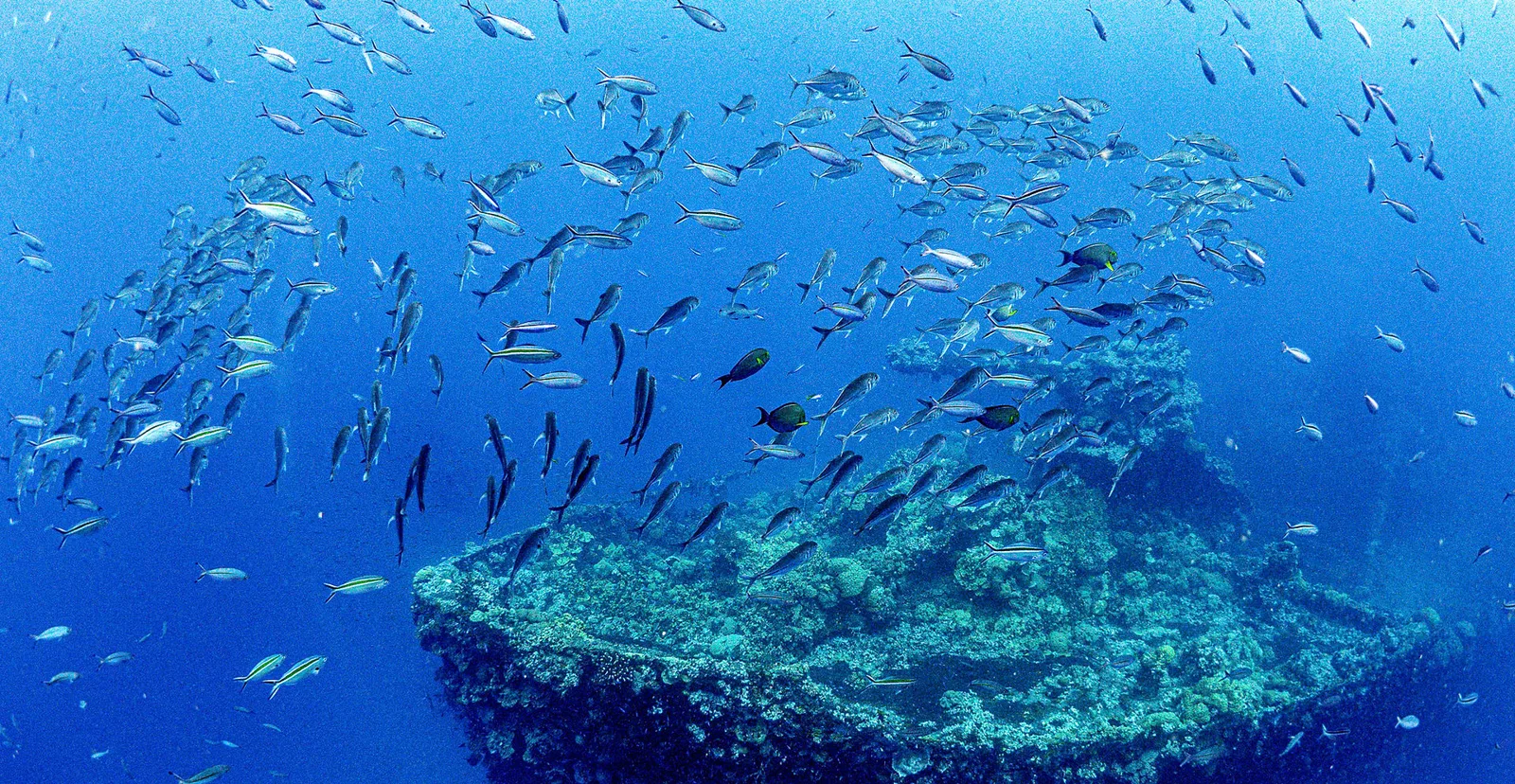
- Fujikawa Maru in the Truk Lagoon
- Jeep Island and Fonomu Island boat stops
- Nan Madol’s basalt ceremonial ruins on Pohnpei
- Yap rai stones beside village roads
- Rotama with taro and coconut in Pohnpei
- Sakau served by rank in Kolonia
For subtitles in English: start the video firstthen click the gearat the top right of the video, select “Subtitles/CC”, then “Auto-translate” and choose “English”.
This country for a diver
Micronesia is less a single island culture than a federation of distinct societies linked by the sea. Chuuk places family loyalty and lagoon life at the centre; Pohnpei expresses status through chefferies and sakau; Yap preserves village rank and rai stones; Kosrae follows a strongly Christian rhythm. For divers, Truk is the practical anchor, with a wreck itinerary centred on the lagoon and sites such as Fujikawa Maru. What the states share is not a uniform culture, but the need to let flights, community life and island pace shape the journey.
How the country divides
For a diving trip, Truk is the clearest geographical choice: the lagoon around Weno, or Moen, keeps the boats, accommodation and shore life within one compact island setting. It suits divers who want their days organised around wreck diving rather than moving between distant islands. The wider country divides culturally in another way. Pohnpei is the island of formal chiefdoms, nahs and sakau ceremonies; Yap is governed by village hierarchy, faluw and the social meaning of rai stones; Kosrae has a particularly strong Protestant rhythm and family life centred on Sunday. The Outer Islands between Yap and Chuuk belong to a more isolated Remathau world of atolls, traditional navigation and irregular links. These are not easy add-ons to a standard Truk stay. Choose Truk for concentration and logistics; choose another state for a deliberate cultural extension, accepting that the journey becomes part of the experience.
Diving destinations
Dive centres


Hotels
Liveaboards
When to go, and where by month
The Micronesian diving calendar is unusually simple for a country spread across distant islands. Truk is in season from May through November. May, June and July fall inside that window, as do August, September and October; November remains suitable before the season closes. January, February, March and April sit outside the Truk season, and December does not reopen it. There is no opposing pattern in which one Micronesian coast replaces another as the months turn, so the choice is not a matter of chasing an alternative seaboard. It is a matter of matching the Truk season to the flight timetable and the length of the stay. A two-week plan built around Truk should therefore keep its diving days together rather than assume that a change of state will solve a seasonal mismatch. Pohnpei, Yap and Kosrae are cultural alternatives, not a second seasonal circuit.
Marine life, coast by coast
Wildlife is not the sensible shortcut for choosing between Micronesian states. The strongest country-wide contrast is between the marine setting chosen for the trip and the life encountered ashore: Truk is organised around a lagoon of historic wrecks, while Yap, Pohnpei and Kosrae offer village customs, ceremonies and food traditions that are not interchangeable. A diver planning around Fujikawa Maru, Jeep Island or Fonomu Island is choosing a very specific lagoon experience, not a general promise of animal encounters across the federation. That distinction matters when an expensive itinerary adds flights: the reward of changing state is cultural texture and a different island society, rather than a simple progression from one wildlife zone to another.
Getting between the areas
Moving between Micronesian states is governed by United Airlines and the Island Hopper rather than by a convenient island network. From Chuuk, Pohnpei and Kosrae sit on the Honolulu–Guam axis, while Yap is reached from Guam; schedules can place a full day between the last dive and the next settled night. A water taxi arranged by an accommodation provider or dive operator is the normal way to reach lagoon islands around Chuuk, not a regular public ferry. Outer Islands services are still more demanding, with irregular boats and crossings that can consume several days. Pohnpei or Yap can be added to a Truk trip, but the transfer is a serious travel day, not a casual change of resort. Combining Chuuk, Pohnpei and Kosrae requires fitting the Island Hopper rotations, while adding the atolls makes a two-week itinerary increasingly fragile.
Take off your mask
Micronesia’s shore life is expressed through places with social meaning rather than a polished tourist circuit. At Nan Madol on Pohnpei, canals run between basalt and coral-built ruins, including ceremonial and mortuary structures associated with the Saudeleur dynasty. On Yap, the Yap Stone Money Bank near Colonia introduces rai stones as social objects whose histories matter more than everyday spending, while coastal villages preserve faluw meeting houses. In Kolonia, a sakau bar offers a very different evening: the drink is pounded from kava root and served according to rank, in a quiet ritual rather than a conventional bar round. Around Weno, shopping is modest, with a small grocery shop, local jewellery and fresh green coconuts. Food is similarly communal. Try rotama in Pohnpei, Mortlock or Kosrae, ko’ko’ in Yap, raw fish with peppery sauce across the states, or Kosraean soup after a Sunday service. Meals are often taken at home, in a nah or faluw, or through the restaurant attached to an accommodation.
What holds true everywhere here
Repeated diving is the practical thread running through a Micronesian itinerary, especially when the plan stays inside one lagoon. Truk’s wreck-heavy schedule can make Nitrox useful: breathing a richer mix helps keep repetitive profiles more conservative than repeated air dives would allow, subject to the diver’s training and the operator’s procedures. The point is not to chase longer bottom time for its own sake. It is to manage several days of similar immersion, leave room for a proper safety stop, and avoid letting an ambitious run of wreck dives dictate the entire trip. This approach suits BSAC, PADI and SSI divers who are comfortable planning profiles rather than treating every day as an isolated dive.
Frequently asked questions about Micronesia
When should you plan a Micronesia trip for Truk Lagoon diving?
You can plan Truk diving from May through November each year. This timing suits an itinerary centred on the lagoon’s historic wrecks, including Fujikawa Maru, while also allowing stops at Jeep Island and Fonomu Island by boat. Outside that period, the destination’s other island cultures and shore experiences remain the main focus.
What can you see while diving in Micronesia?
Micronesia offers a specific lagoon experience around the historic wrecks of Truk Lagoon. Your plans can include Fujikawa Maru, with Jeep Island and Fonomu Island as boat stops. Nan Madol’s basalt ceremonial ruins, Yap’s rai stones, village customs and island food traditions add important experiences ashore beyond the marine setting.
How should you choose between Micronesia’s island experiences?
Choose Micronesia according to the setting you want for your trip. Truk is organised around a lagoon of historic wrecks, while Yap, Pohnpei and Kosrae offer distinct village customs, ceremonies and food traditions. Changing state brings cultural texture and a different island society, rather than a simple progression between wildlife zones.
How should you plan your stay in Micronesia?
Build your Micronesia itinerary around either Truk’s wreck diving or the cultural experiences of Yap, Pohnpei and Kosrae. On Pohnpei, you can visit Nan Madol, see Rotama with taro and coconut, and encounter sakau served by rank in Kolonia. On Yap, rai stones stand beside village roads.