
Truk Blue Lagoon Dive Shop
Google 4.1/5 (202 reviews)
Micronesia · Pacific
Japanese cargo ships, Mitsubishi Zero aircraft, coral gardens and plunging walls give Truk its distinctive blend of submerged history and sheltered lagoon diving.
For subtitles in English: start the video firstthen click the gearat the top right of the video, select “Subtitles/CC”, then “Auto-translate” and choose “English”.
Truk Lagoon is a wreck-diving destination in the fullest sense: Japanese ships, aircraft and associated debris from the Second World War are the main reason to come. The wrecks lie inside a large enclosed lagoon, reached by boat from Weno or by liveaboard. Reef diving adds variety, from Jeep Island’s coral gardens to Fonomu Island’s walls, but this is not primarily a beach-and-reef holiday. It suits divers who would rather examine holds and structure than chase a different reef every day.
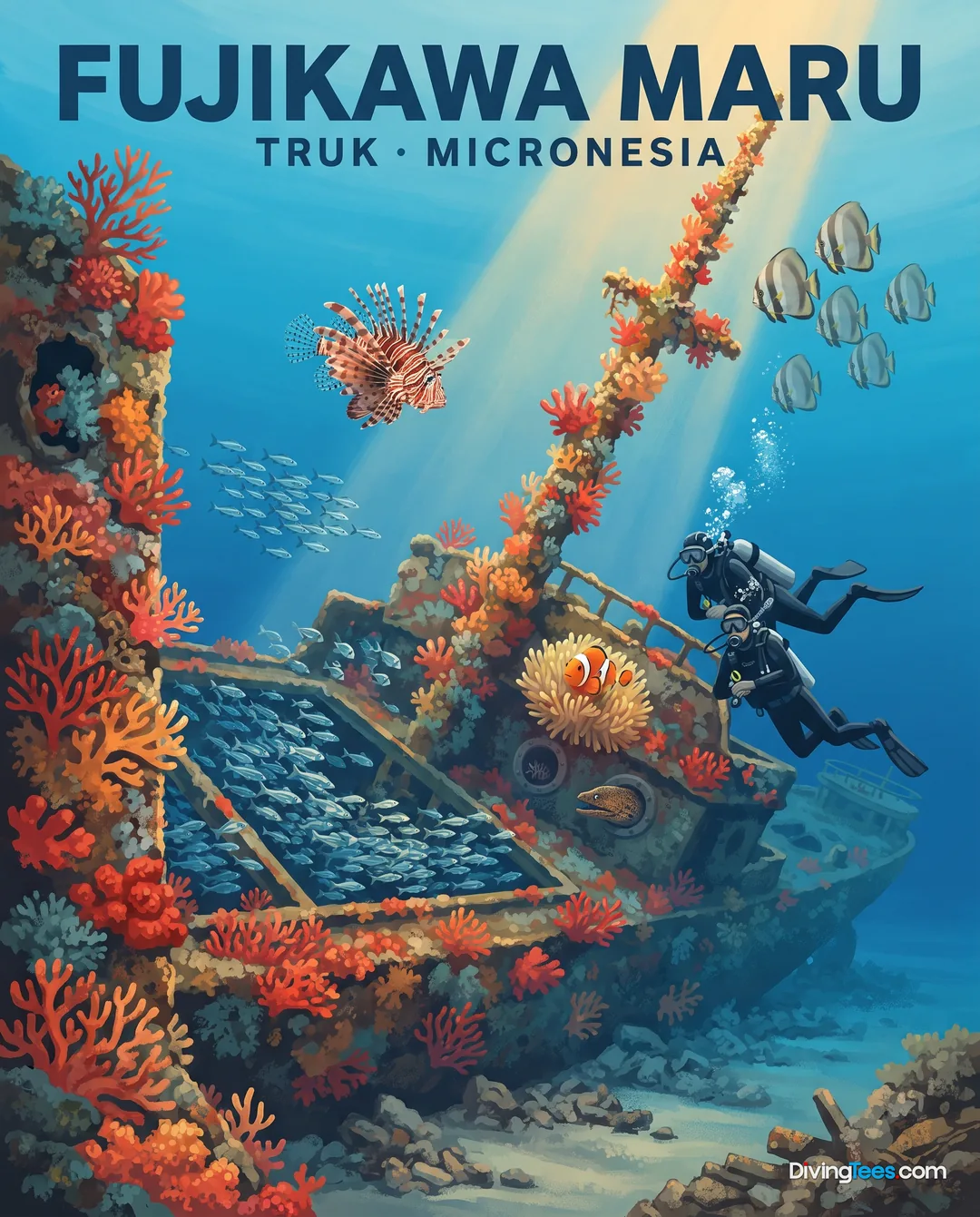
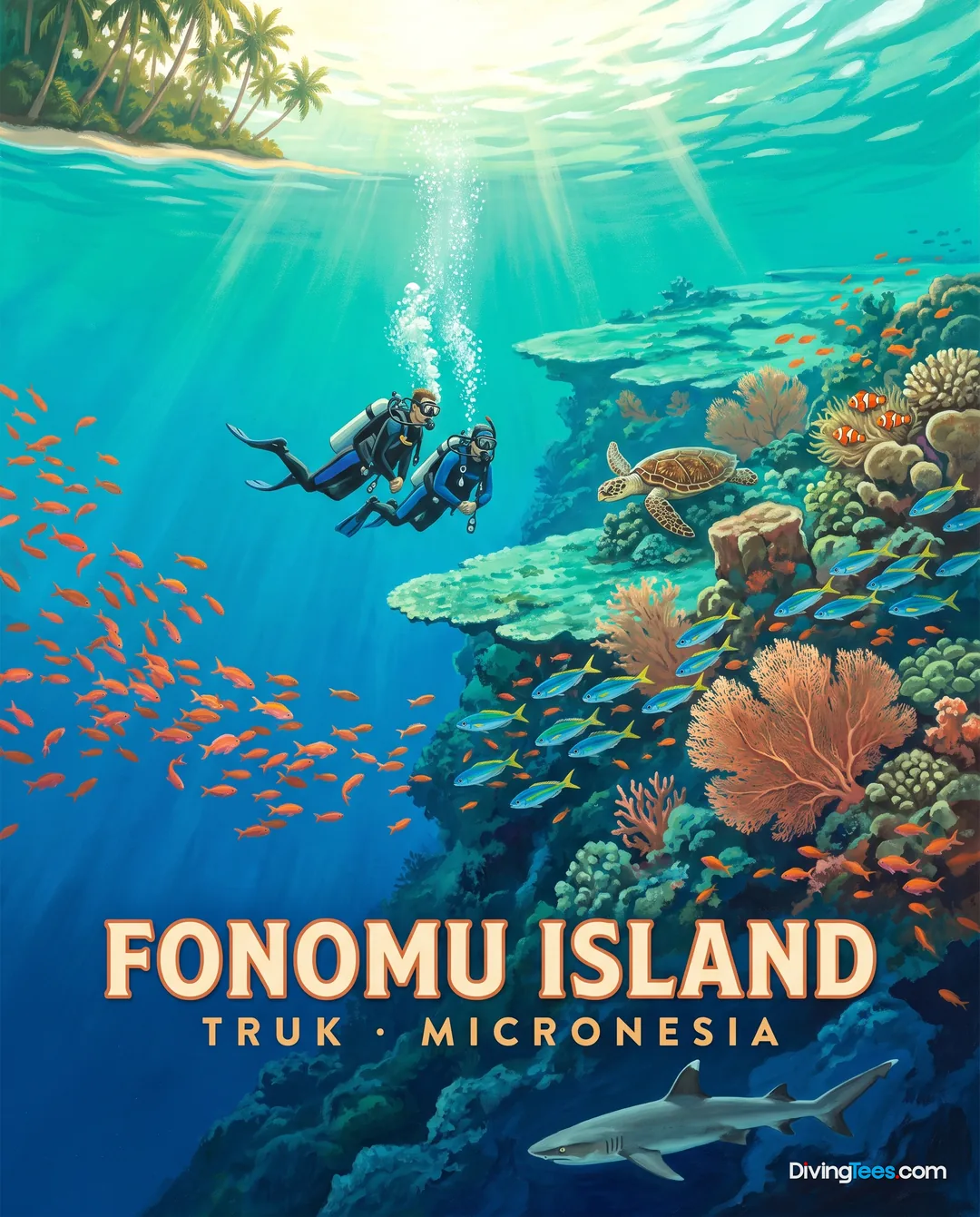
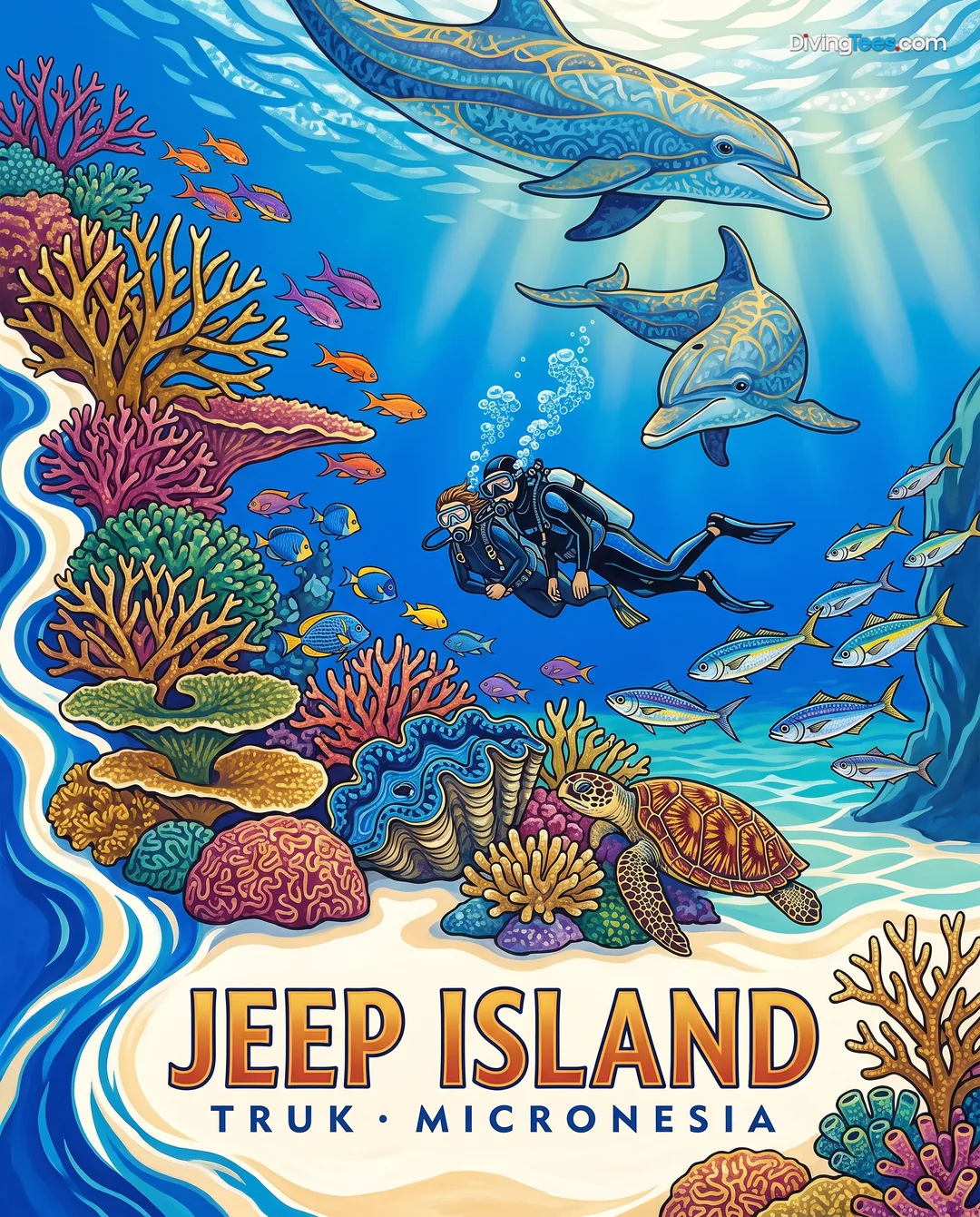
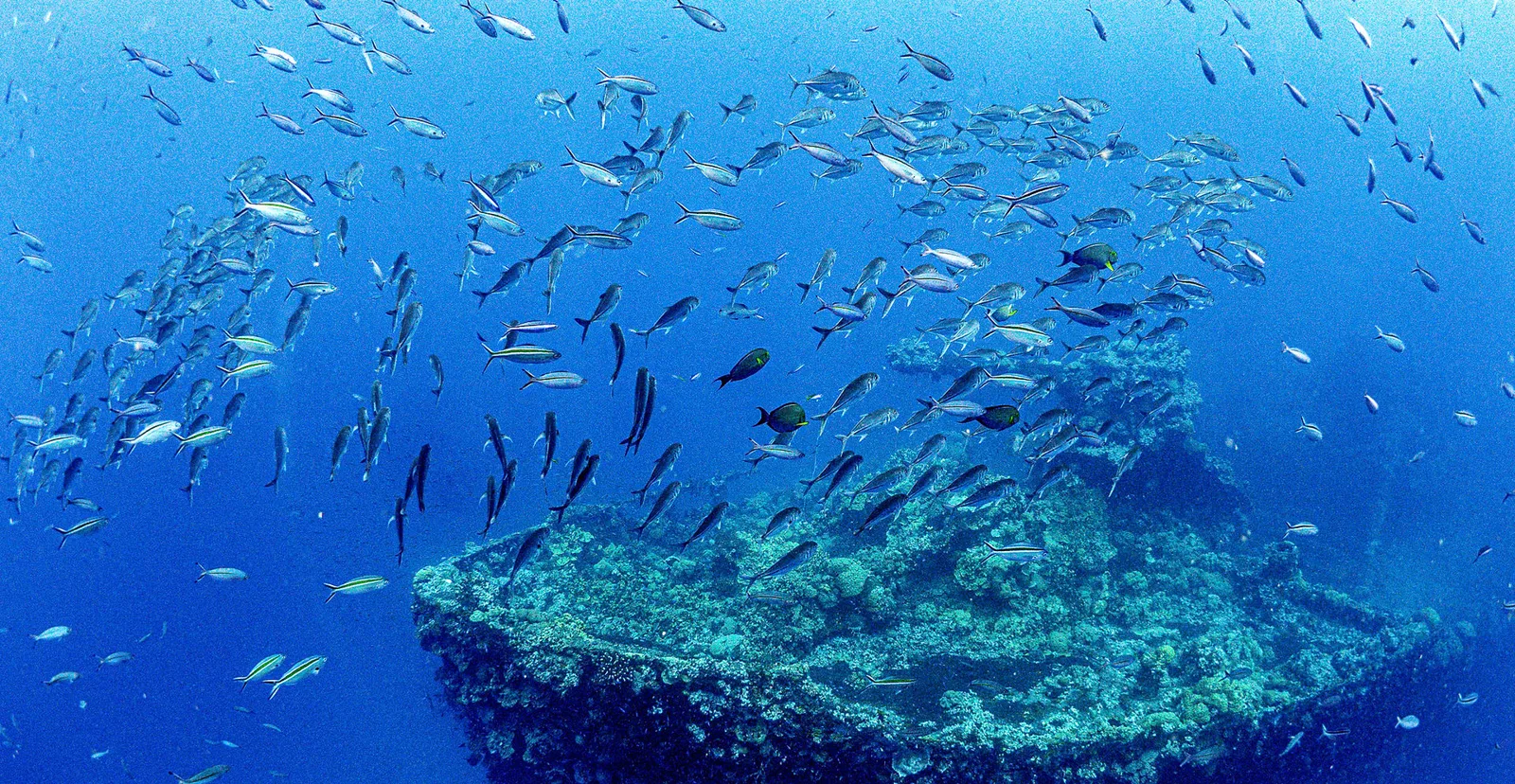
Most dives take place from boats inside the lagoon, with the wreck itself providing the main topography. The Fujikawa Maru rests upright, rising from five metres to thirty-seven metres, so a dive can begin over shallow deck sections before moving towards deeper holds. Its structure remains sufficiently intact to show the scale of a large armed cargo ship, while Mitsubishi Zero aircraft in the holds give the penetration dives a particular focus. Coral growth softens the metal without hiding its outline. Currents are generally light, which makes exterior exploration manageable, although depth and overhead conditions change the nature of the dive. Jeep Island brings coral gardens, while Fonomu Island adds reefs, plunging walls, sandy areas and a swimming hole. Day boats are the usual arrangement from Weno, with liveaboards also practical within the lagoon.
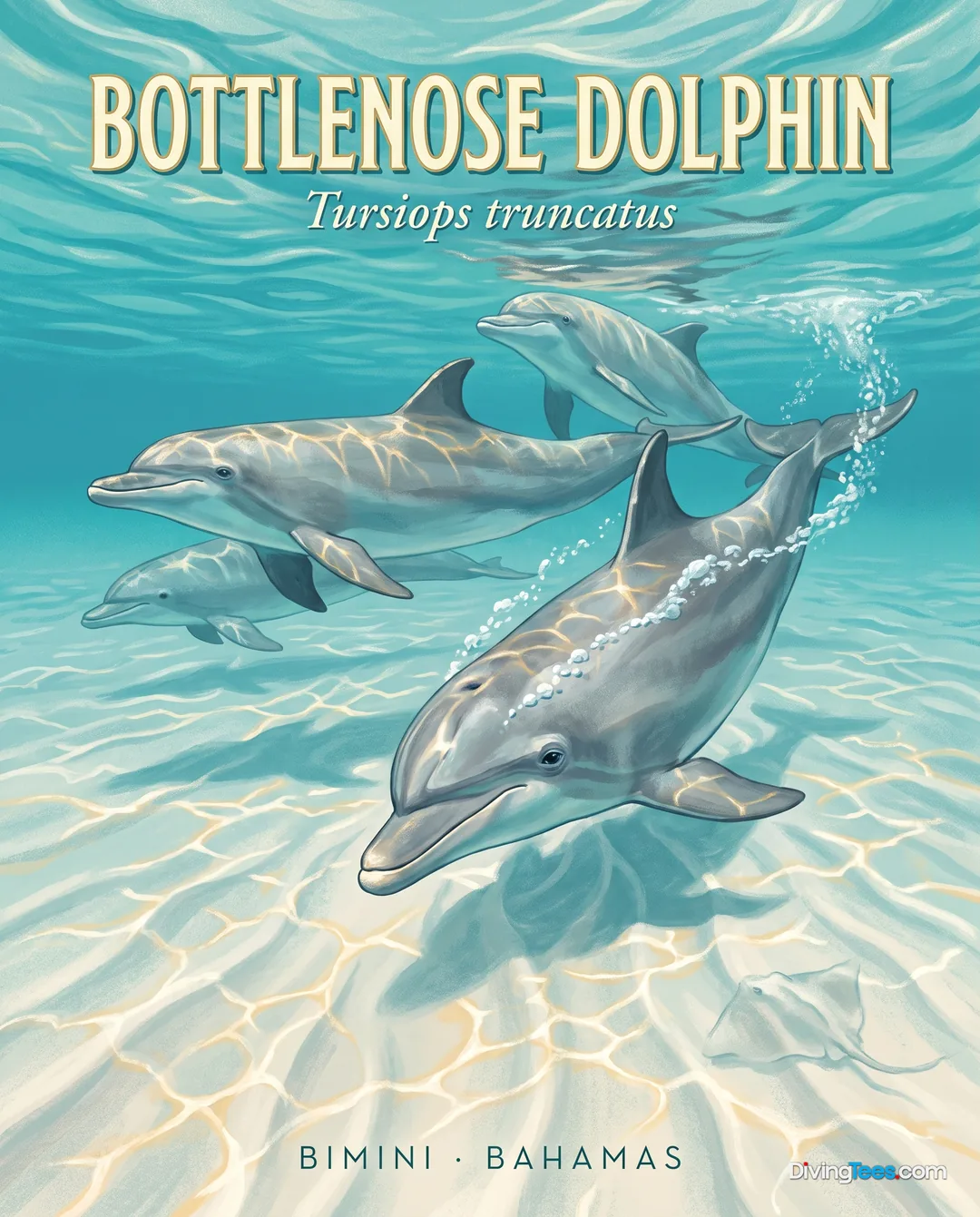
The marine life here is closely tied to the wrecks and reef features rather than to a single headline animal. On the Fujikawa Maru, coral growth covers parts of the upright hull, deck and surrounding structure, giving the metal a living surface to inspect between holds and passageways. Jeep Island offers coral gardens for slower, open-water exploration. Bottlenose dolphins are associated with Jeep Island, with encounters most likely during the summer season. Fonomu Island provides a different view of the lagoon’s underwater life, combining reef systems with walls and sandy areas. The wrecks remain the visual priority: divers come to see ships, aircraft and debris fields, while coral and the occasional dolphin add the natural-history layer.
The measured window for calmer sea conditions runs from May to November, making this the most straightforward period for a wreck-centred itinerary. A calmer lagoon matters here because every principal dive is reached by boat, and the day depends on getting out to the wreck field and returning comfortably. Summer also gives Jeep Island its better chance of bottlenose dolphin encounters. The season does not turn Truk into a reef-resort destination; it simply gives the boat schedule and repeated wreck dives a more reliable setting. A longer stay also leaves room for weather-related flexibility rather than making one crossing or one dive day carry the whole trip.
Truk is open to divers of all levels in principle, and the shallow parts of the Fujikawa Maru can suit an Open Water Diver. The more rewarding wreck work is less universal: Advanced training helps with depth, while a recognised wreck qualification and appropriate overhead experience matter before entering holds or confined sections. BSAC, PADI and SSI divers should match each dive to their actual recent experience, not simply the maximum depth on a card. Nitrox is useful for repeated boat dives, particularly on a wreck-heavy schedule.
From London, departures are from Heathrow or Gatwick; from the north, Manchester is the relevant starting point. Truk is reached by a long-haul itinerary involving at least one long-haul connection and then a domestic or regional onward flight into Chuuk. There is no direct Europe-to-Truk service, so the connection sequence needs to be treated as part of the trip rather than an afterthought. Arrival is at Chuuk International Airport on Weno. From there, the dive base or accommodation is reached by road or short local transport, sometimes on foot depending on the exact location. Once on Weno, diving is not a shore-based affair: boats carry divers into the lagoon, with schedules and site selection shaping each day.
Build in several consecutive lagoon days. Truk rewards repetition: a first dive can establish the scale of a wreck, while later dives allow more time around holds, aircraft, deck details and the surrounding debris. Nitrox is particularly sensible when the plan involves repeated wreck dives, but it does not replace the depth and overhead limits set by training. Take a proper torch; daylight on the deck does not illuminate a hold, and the Fujikawa Maru’s interior details are easily reduced to silhouettes without one. Do not assume that every wreck is available for unrestricted penetration. Exterior routes and shallow sections may be suitable for a wider range of divers, whereas deeper or confined areas require the relevant experience. Finally, avoid making the trip so short that one missed boat day removes a major part of the itinerary. Truk is built around boat access inside one lagoon, not shore-diving flexibility.
A shore-based stay on Weno, with day boats into the lagoon, is the most natural format for many divers. It allows several wreck days, repeat visits to major sites and a reserve day when the boat programme needs adjusting. Liveaboards also make sense because the principal wreck field is concentrated inside the lagoon. Non-diving time is quiet: lagoon sightseeing, short local walks, rest and surface exploration around Weno are more realistic than a packed inland programme. Allow seven to ten days to make the journey worthwhile.
Hello, I'm Marina, DivingDeal.com's AI assistant. I guide you through destinations, areas and countries.
Thinking about the whole trip and the flights? Talk it over with Edith →
Marina is an AI. Some links are affiliate links: DivingDeal may earn a commission, at no extra cost to you. Bookings are made with the partner.
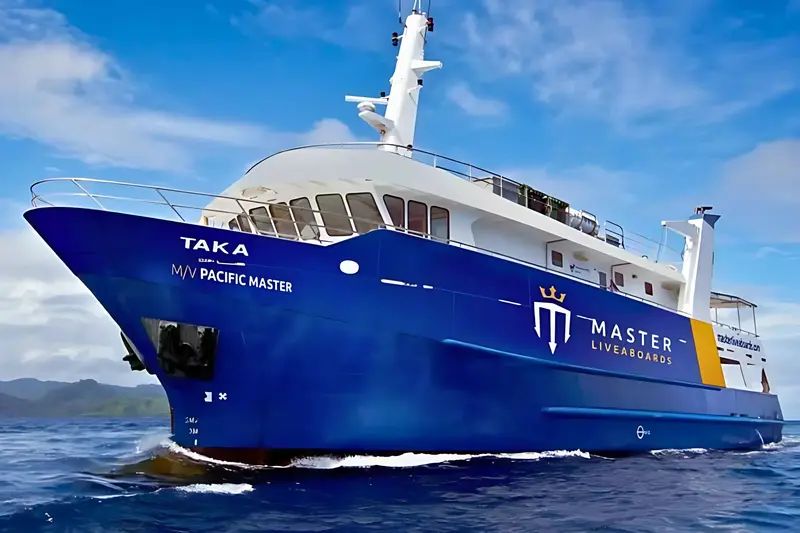
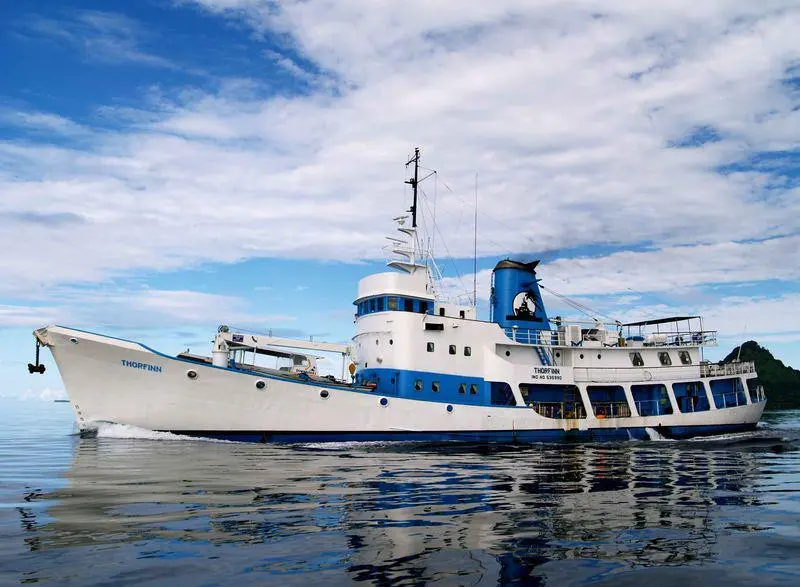
2 liveaboards run trips to Truk.
Plan your Truk trip between May and November, when lagoon conditions are calmer and boat travel to the wreck field is more straightforward. Summer also offers a better chance of seeing bottlenose dolphins around Jeep Island. A longer stay gives your itinerary flexibility if weather affects a boat day.
Truk has dives suitable for different experience levels, and shallow sections of the Fujikawa Maru can suit Open Water divers. Advanced training helps with deeper wreck areas, while recognised wreck training and appropriate overhead experience are important before entering holds or confined sections. Match every dive to your recent experience.
Truk is centred on Japanese cargo ships, aircraft and wartime debris inside a sheltered lagoon. The Fujikawa Maru offers coral-covered structure, deck areas, holds and Mitsubishi Zero aircraft. Jeep Island adds coral gardens and possible summer bottlenose dolphins, while Fonomu Island features reefs, walls, sandy areas and a swimming hole.
Choose a shore-based stay on Weno with day boats into the lagoon, or consider a liveaboard. Build in several consecutive diving days for repeated wreck visits and a reserve day for changing boat plans. Pack a proper torch, and consider Nitrox for repeated dives. Local non-diving time is generally quiet.