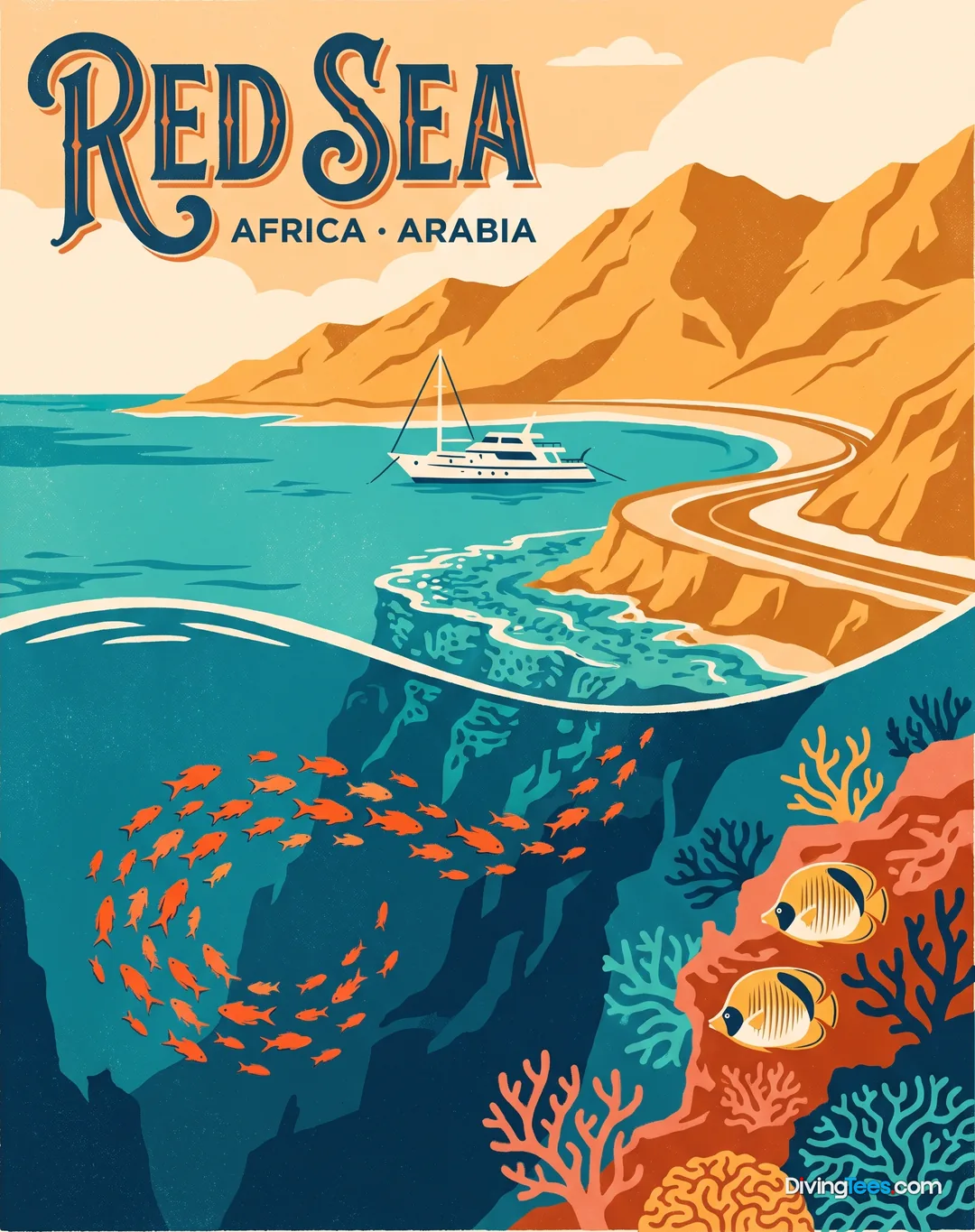
Red Sea
Sudan: preserved reefs and Red Sea history
From Sanganeb and Shaab Rumi to the wreck of the Umbria, Sudan offers a southern Red Sea itinerary shaped by preserved reefs and sharks.
What makes this country unique
- Port Sudan from May to November
- Sanganeb and Shaab Rumi among the Red Sea reefs
- The Umbria, an extraordinary wreck in the Red Sea
- Jumna and its hammerhead shark gatherings
- Précontinent 2 and the legacy of underwater exploration
- Coral-rich reefs prized by sharks
- Sudan’s preserved southern Red Sea reefs
For subtitles in English: start the video firstthen click the gearat the top right of the video, select “Subtitles/CC”, then “Auto-translate” and choose “English”.
This country for a diver
Sudan is a Red Sea destination defined less by a broad choice of coastal regions than by the quality and remoteness associated with its named reefs. Sanganeb, Shaab Rumi, the Umbria and Précontinent 2 give the country a strong sense of place: this is diving tied to landmark sites, exploration history and remarkably preserved coral. Sharks are central to its reputation, with Jumna particularly associated with hammerheads. For a diver, the appeal is concentration rather than variety: one coastal base, a distinctive collection of celebrated sites and a feeling of limited visitation.
How the country divides
Sudan’s diving is organised around Port Sudan, on the Red Sea. It is not a country of several contrasting diving coasts requiring a choice between separate regional identities; Port Sudan is the practical focus for the itinerary described here. That makes the decision relatively clear. Divers drawn to preserved reefs, sharks and famous sites such as Sanganeb or Shaab Rumi should look first at the Port Sudan page, where the individual diving character and logistics belong. The same applies to those interested in the Umbria or Précontinent 2: these names belong to the Port Sudan diving story rather than to a separate inland or opposite-coast circuit. This concentration will suit travellers who prefer to settle into one area and explore its offshore sites, rather than build a multi-region journey. It also means that a Sudan trip should be judged on the depth of experience available around Port Sudan, not on the number of different coastal bases it can combine.
Diving destinations
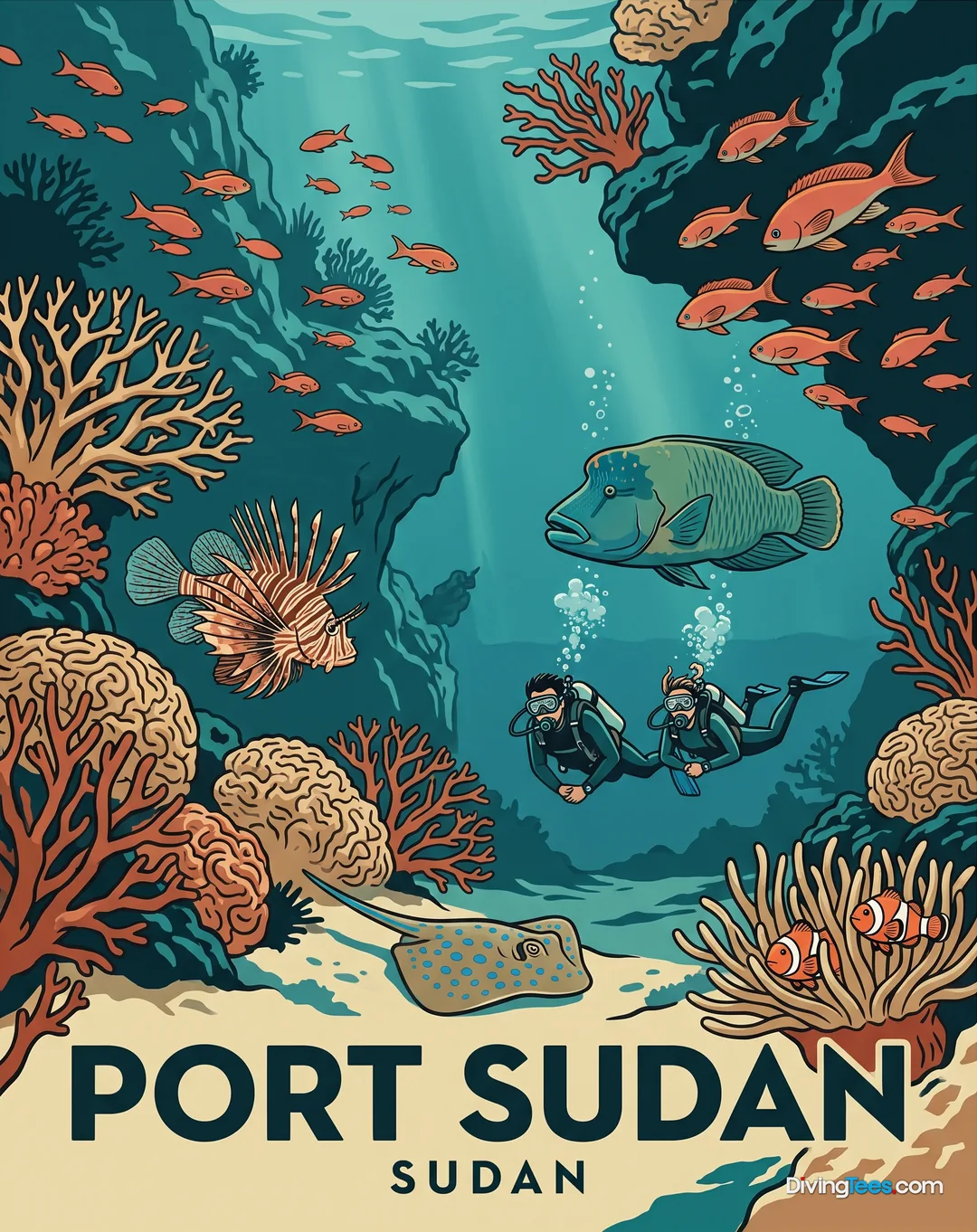
Dive centres

When to go, and where by month
For the diving season given here, Port Sudan runs from May through November. In plain terms, May, June, July, August, September, October and November are the months to associate with Sudan’s diving coast. January, February, March, April and December do not have a diving zone marked as in season in the calendar, so they should not be treated as equivalent planning choices. There is no opposing seasonal coast in the country’s diving pattern: no second facade opens as Port Sudan closes. That makes Sudan easier to read than a destination split between alternating shores, but it also leaves less scope for moving elsewhere within the country when the Port Sudan window is over. The month choice therefore starts with Port Sudan, then moves to the site and trip format described on its zone page.
Marine life, coast by coast
Sharks are the clearest wildlife thread running through Sudan’s diving identity. The reefs are particularly appreciated for them, while Jumna is associated with one of the world’s largest gatherings of scalloped hammerheads. That distinction matters when planning: a diver whose priority is hammerheads should give Jumna particular weight, rather than treating every named site as interchangeable. The wider shark appeal belongs to the preserved Red Sea reef setting represented by Sanganeb, Shaab Rumi and the surrounding Port Sudan itinerary. The available country picture does not attach a separate wildlife signature to another Sudanese coast, so there is no evidence here for building an inter-coastal fauna route. In practical terms, Sudan’s wildlife choice is about how strongly to focus a Port Sudan journey on sharks, especially hammerheads.
Getting between the areas
There is no second Sudanese diving region in this country view to combine with Port Sudan. The journey is therefore not a matter of crossing between opposing coasts or linking distant bases; Port Sudan is the organising point for the named Red Sea diving. That simplifies the geographical decision, but it also means that an itinerary built around several regional identities is not available here. Sanganeb, Shaab Rumi, the Umbria and Précontinent 2 belong to the same broad Port Sudan framework, while Jumna is another site within that diving story. The time cost is consequently the offshore movement required by the chosen programme, rather than a land transfer between zones. For the practical detail of those movements, the Port Sudan page is the relevant place to look.
Take off your mask
Sudan’s above-water character cannot be described responsibly from the place names and diving passages available here. No grounded account is supplied of its towns, regional cultures, historic sights, food, local routines or overland travel, so there is no basis for naming a dish, a market, a monument or a town beyond Port Sudan. What can be said is that the country’s recognisable identity in this context remains closely tied to the Red Sea: Sanganeb, Shaab Rumi, the Umbria and Précontinent 2 are the names through which Sudan is encountered. Précontinent 2 also gives the underwater story a historical dimension, while the Umbria provides a wreck landmark rather than a general portrait of life ashore. Any fuller account of Sudan away from diving would require details not provided here, and adding them would risk turning a practical country page into an invented travel narrative.
What holds true everywhere here
The most consistent idea attached to Sudan is the combination of preserved Red Sea reefs and sharks. That is more specific than simply calling the diving clear or colourful: the country’s appeal is repeatedly tied to reefs that have seen little visitation and to shark encounters, with hammerheads given particular prominence at Jumna. The named landmarks reinforce the same identity. Sanganeb and Shaab Rumi suggest reef exploration, the Umbria adds a major wreck, and Précontinent 2 connects the area with pioneering underwater history. Taken together, these features make Sudan feel coherent as a destination: a concentrated Port Sudan journey built around celebrated reefs, landmark dives and serious shark interest.
Frequently asked questions about Sudan
When should you choose Sudan for diving?
Choose Sudan between May and November, when Port Sudan is highlighted as the base for its southern Red Sea itinerary. This period suits exploring the preserved reefs around Sanganeb and Shaab Rumi, while also allowing time to include the Umbria wreck and other sites associated with the Port Sudan diving route.
What can you expect to see while diving in Sudan?
Sudan offers preserved, coral-rich southern Red Sea reefs associated with sharks, including Sanganeb and Shaab Rumi. You can also explore the Umbria, an extraordinary Red Sea wreck, and visit Précontinent 2, which is connected with the legacy of underwater exploration. The destination’s clearest wildlife theme is sharks.
Where should you focus if hammerhead sharks are your priority in Sudan?
Give Jumna particular weight when planning Sudan if you want to focus on scalloped hammerheads. The site is associated with one of the world’s largest gatherings of these sharks, while Sanganeb, Shaab Rumi and the surrounding Port Sudan itinerary provide the broader preserved reef setting appreciated for shark encounters.
How should you plan a diving stay in Sudan?
Plan your Sudan stay around a Port Sudan itinerary that combines the preserved reefs of Sanganeb and Shaab Rumi with the Umbria wreck. If hammerheads matter most, make Jumna a central part of the plan rather than treating every named site as interchangeable. Précontinent 2 can add an exploration-focused visit.