
Bazaruto Center for Scentific Studies
Google 4.7/5 (30 reviews)
Mozambique · Africa
Coral reefs, sandy channels, sea turtles and humpback whales meet around Bazaruto, with Two Mile Reef offering boat diving to about 30 metres.
For subtitles in English: start the video firstthen click the gearat the top right of the video, select “Subtitles/CC”, then “Auto-translate” and choose “English”.
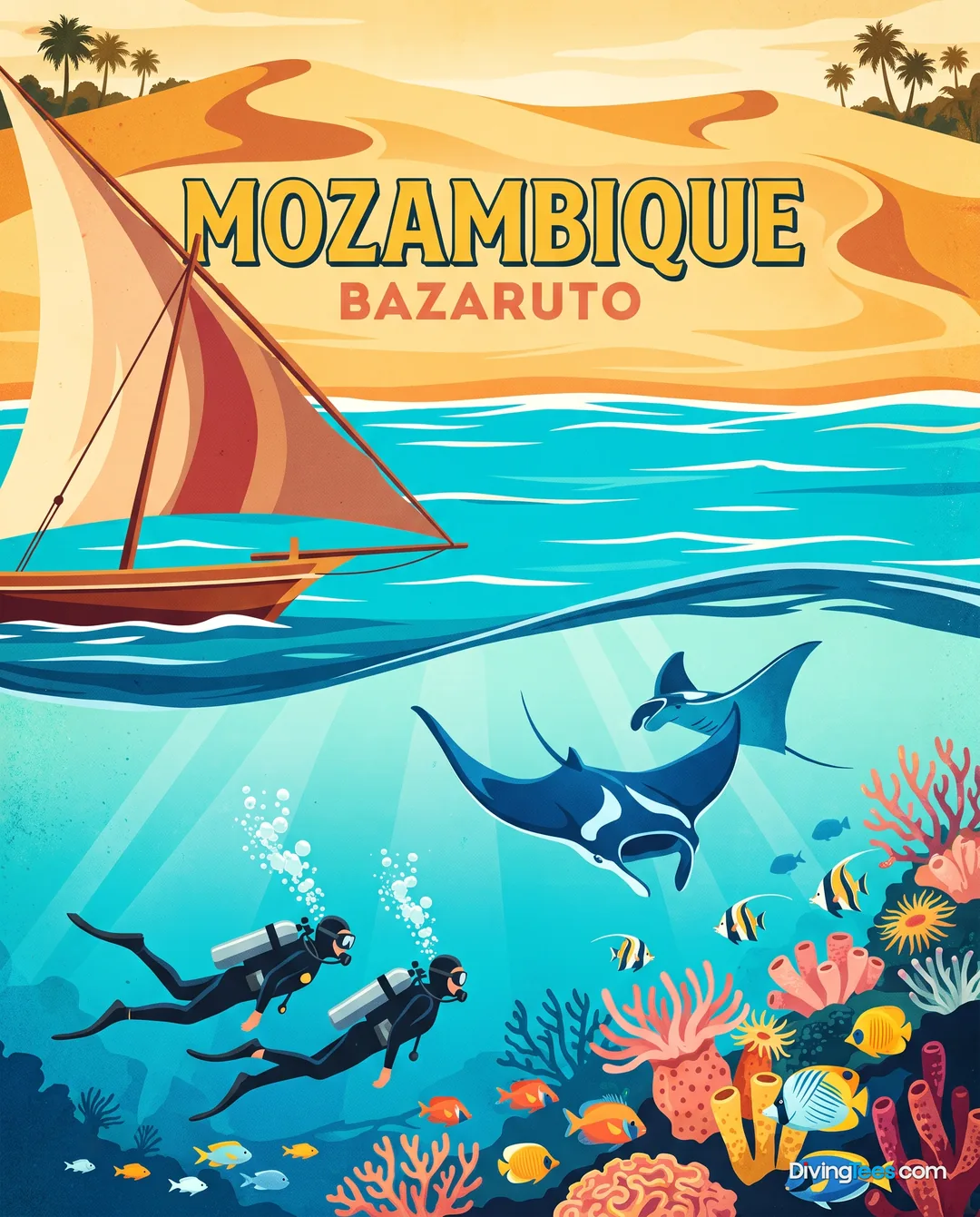
Bazaruto is for autonomous divers who want coral reefs at the centre of an island holiday, rather than a port-based run of quick shore dives. Boats leave from island lodges or Vilankulo for outer reefs and channels, with Two Mile Reef the name most visitors will hear. Hard and soft corals, large shoals, turtles and occasional encounters with manta rays or whale sharks give the diving its pull. It also works for a mixed party: dunes, beaches, dhow trips and sheltered-water activities fill the days when the sea or timetable keeps you ashore.
Most diving is from a boat, heading out from an island lodge or Vilankulo to coral reefs, channels, drop-offs and the exposed outer reefs. Two Mile Reef combines hard and soft corals with dense fish life, and some sites reach about 30 metres. Current strength varies with tide, wind and reef exposure, so a dive can involve a steady swim, a drift dive or careful positioning along a drop-off. This is not a destination built around walking into the water with mask, snorkel and fins. The boat journey, launch and return are part of the outing, and conditions may change between sheltered and exposed sites. Dry-season visibility is commonly 15 to 30 metres, while swell, coastal runoff and plankton can reduce it to roughly 8 to 15 metres during the rainy season. Outer-reef diving rewards calm buoyancy and sensible gas planning, particularly where current and depth combine.
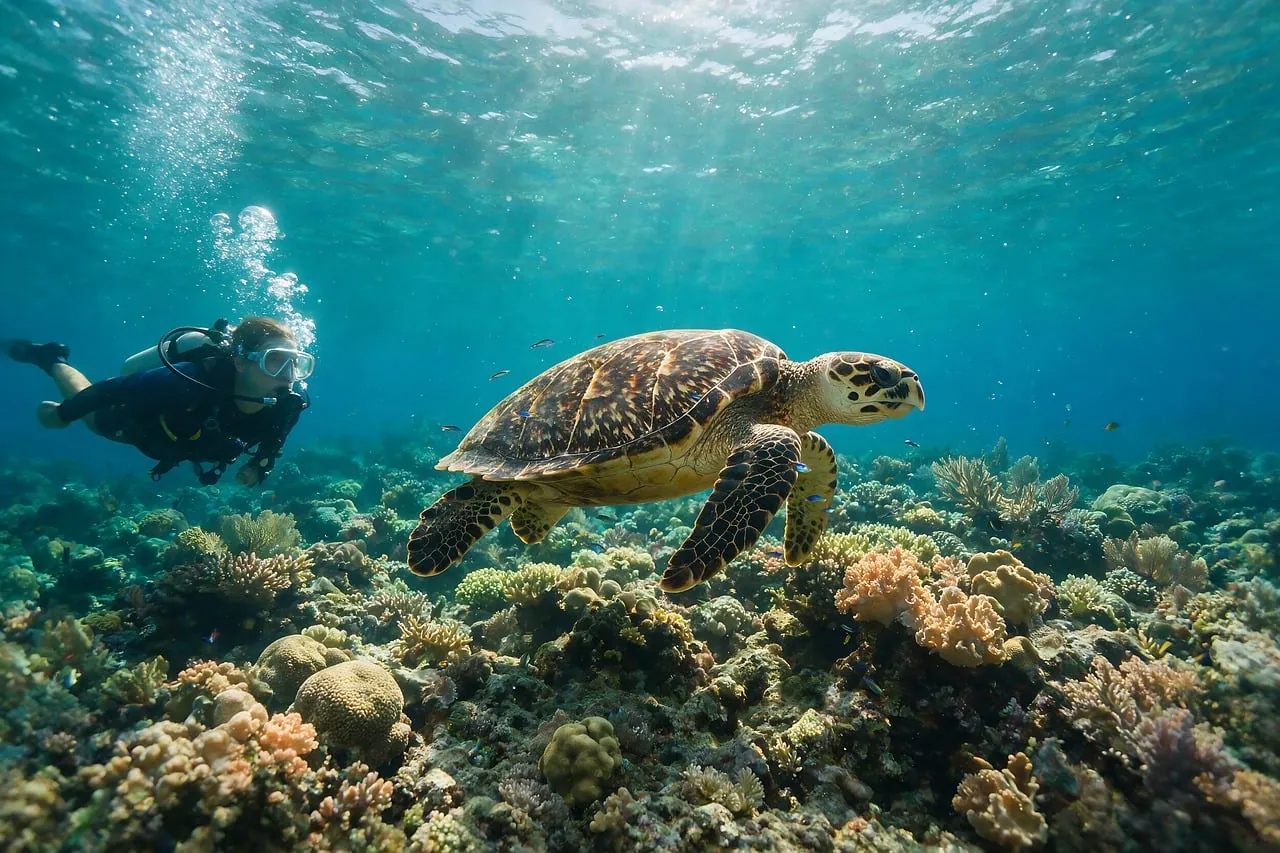
Sea turtles are a regular sight, while large schools of reef fish animate the hard and soft corals around Two Mile Reef and the other protected reefs. Humpback whales pass through during their southern migration, mainly from July to October, and may become part of the wider boat experience as well as the surface interval. Dolphins, manta rays and whale sharks are possible but occasional rather than dependable reasons to book the trip. Dugongs are rare, although the archipelago's shallow coastal habitats are important to them. The attraction is the combination of reef life and open-water possibility: one dive may be about fish over coral, another about the changing water around a channel, with turtles providing a more realistic expectation than a guaranteed large-animal encounter.
May to November is generally the most practical window. The dry season usually brings more manageable seas, steadier conditions and visibility of about 15 to 30 metres, which matters when the boat has travelled to an outer reef. Humpback whales add a seasonal reason to come from July to October. February and March are the least dependable period, with more swell, coastal runoff and plankton reducing visibility to roughly 8 to 15 metres; in February, diving can be interrupted in some areas. Build the trip around a weather margin rather than treating every planned boat departure as fixed.
The destination suits divers from all levels, but the outer reefs are not automatically easy. You need confidence entering and leaving a boat, reliable buoyancy and the judgement to manage changing current, depth and exposure. Advanced Open Water is useful for deeper reefs and drop-offs, with some sites reaching about 30 metres. Nitrox can be worthwhile for busy multi-dive days if it is available locally. Less experienced divers should ask which reef matches the group's ability, rather than assuming that every Two Mile Reef outing has the same conditions.
From London Heathrow, London Gatwick or Manchester, the practical gateway is Vilankulo, reached by air or by road within Mozambique. Regional flights connect Vilankulo with Maputo and Johannesburg, so the onward connection needs to be allowed for when planning an island stay. Inhassoro is another possible mainland starting point. From either mainland gateway, there is no direct land route to the archipelago's dive sites: continue by motor boat, dhow or light aircraft, depending on the island and accommodation. Boat transfers are governed by tide, wind and sea conditions, while the feasibility and timing of a light-aircraft connection depend on the island. Once on an island, the lodge normally arranges the launch from its beach or pontoon. From Vilankulo, a road transfer may be needed to reach the local embarkation point.
Leave slack in the programme. A trip to an outer reef can be postponed by wind, tide or sea state even when activities close to the island can continue, so do not put every dive on a transfer day. Ask specifically which reefs suit the group's experience, especially where depth, current and boat navigation come together. Do not mistake a snorkelling trip among sandbanks for a diving day at the outer reefs: the travel time and purpose are different. Bring a well-fitting mask, your own computer and suitable thermal protection if you feel the cold, because island rental stocks may be limited. At Two Mile Reef, keep your buoyancy exact. The park prohibits contact with coral, gloves, anchoring on or near reefs, feeding wildlife and removing living organisms. Allow the recommended surface interval before flying, remembering that an island return adds another boat or domestic flight connection. The park conservation fee is part of the planning, not an optional extra.
A seven- to ten-day stay gives the weather room to move, allows several boat outings and leaves time for days above water. Island lodges generally organise diving directly, with boats leaving from the beach or a pontoon. Vilankulo-based trips use local embarkation points and may involve a road transfer. Non-divers have genuine alternatives: dhow excursions, snorkelling, dunes, beaches, kayaking, paddleboarding, birdwatching and wildlife trips. Expect an expensive island stay, with the value lying in the complete combination of diving, scenery and time away from the boat timetable.
Hello, I'm Marina, DivingDeal.com's AI assistant. I guide you through destinations, areas and countries.
Thinking about the whole trip and the flights? Talk it over with Edith →
Marina is an AI. Some links are affiliate links: DivingDeal may earn a commission, at no extra cost to you. Bookings are made with the partner.
May to November is generally the most practical period, with drier conditions, more manageable seas and visibility commonly reaching fifteen to thirty metres. Visit from July through October if humpback whales matter to your plans. February and March bring more swell, runoff and plankton, so build weather flexibility into your itinerary.
Bazaruto Archipelago suits divers at different levels, but outer reefs are not automatically easy. You should be comfortable entering and leaving a boat, maintaining reliable buoyancy and managing changing current, depth and exposure. Advanced Open Water experience is useful for deeper reefs and drop-offs, while less experienced divers should request sites matching their ability.
You can expect hard and soft corals, large schools of reef fish and regular sea turtle sightings around protected reefs such as Two Mile Reef. Humpback whales pass through mainly from July to October. Dolphins, manta rays and whale sharks are possible but occasional, while dugongs are rare in the archipelago’s shallow habitats.
Plan for boat diving from an island lodge or Vilankulo, with transfers by motor boat, dhow or light aircraft depending on your base. Leave space for weather delays and avoid scheduling every dive on a transfer day. A seven- to ten-day stay allows several outings, surface time and weather flexibility, while non-divers can enjoy beaches, dunes, snorkelling and dhow trips.