
Maputo Dive Center
Google 5/5 (29 reviews)
Mozambique · Africa
Maputo puts Inhaca’s coral reefs, mangroves and seagrass beds within reach, with wrecks, dolphins and seasonal whale sharks further along the southern coast.
For subtitles in English: start the video firstthen click the gearat the top right of the video, select “Subtitles/CC”, then “Auto-translate” and choose “English”.
Maputo works as an urban base for reaching the bay, Inhaca Island and the southern Mozambique coast. The city itself is not the main attraction for repeated dives from the waterfront. Instead, it gives you a practical starting point for coral reefs, wrecks, mangroves and seagrass beds at Inhaca, or shark-focused boat diving from Ponta do Ouro. It suits a trip that combines diving with Maputo’s culture and an island excursion, rather than a week spent simply ticking off local sites.
The diving changes with the base. Inhaca brings coral reefs, wrecks and a close look at coastal habitats that include mangroves and seagrass beds. Ponta do Ouro is more clearly reef and big-animal territory, with boat dives shaped by the sea state and the chance of shark encounters. Currents are variable, so a dive may involve managing moving water rather than settling into a quiet reef circuit. Visibility is commonly around 10 to 20 metres, with plankton, wind, swell and coastal run-off capable of reducing it. Most outings are organised from a boat, and the crossing to Inhaca makes the island feel like a proper excursion rather than a casual extension of a city dive. The result is a mixed programme, with sheltered-looking coastal scenery on the surface but conditions that still need daily judgement underwater.
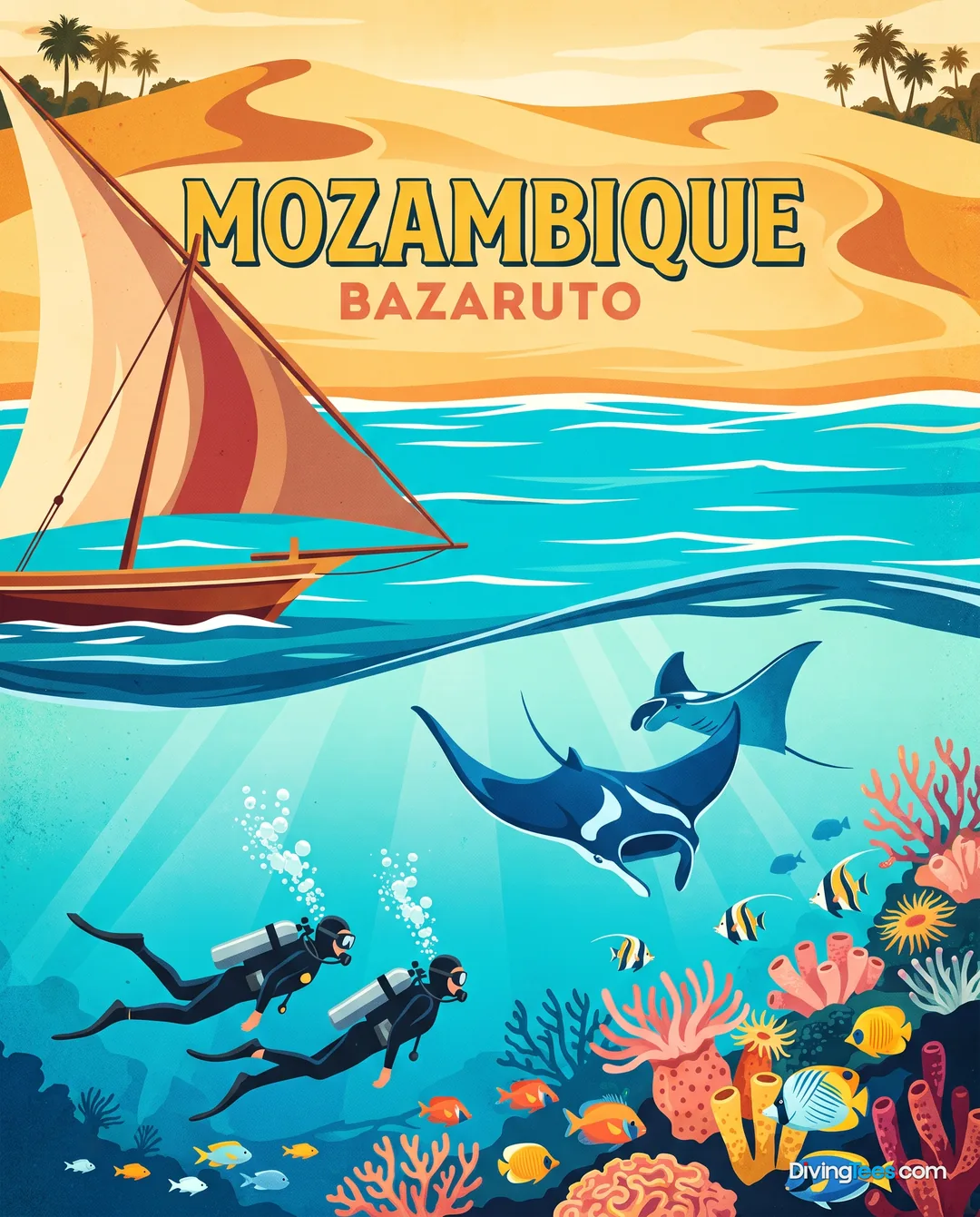
Ponta do Ouro is the place to put sharks at the centre of the plan, while Inhaca broadens the picture with reefs, wrecks and the habitats around them. Whale sharks are associated particularly with the warmer months from October to March, although an encounter remains occasional rather than guaranteed. Manta rays may appear throughout the year, with more reports during the warm season, and dolphins are possible at any time. Humpback whales are occasional visitors from June to November. That gives the calendar two different pulls: the cooler, drier months generally favour clearer diving, while the warmer period offers a better chance of plankton-loving large animals, at the cost of more variable visibility and sea conditions.
April to September is the sensible choice when stable diving conditions matter most. These drier, less windy months generally bring calmer water, better visibility and less marked currents, with visibility commonly reaching 10 to 20 metres. From October to March, warmer water can improve the chances of whale sharks and some other large pelagics, but plankton, wind, stronger currents and occasional cyclonic conditions can make boat plans less predictable. There is no need to dismiss the warm season, but it should be chosen for wildlife possibility rather than assumed clarity. Whichever period you pick, leave room for the sea to have the final say.
There is diving here for all levels, provided the outing matches the conditions. Beginners can use suitable reef and training dives, while variable currents, deeper sites and boat work make experience valuable elsewhere. Advanced Open Water is useful for divers intending to explore deeper or more demanding sites. Ponta do Ouro’s shark diving also deserves calm water skills and comfort with a changing plan. BSAC, PADI and SSI qualifications should all fit the broad level range, subject to the local dive plan.
From London Heathrow or Gatwick, or from Manchester, the international journey ends in Maputo. The structural choice comes afterwards: Inhaca requires a boat crossing of roughly 30 kilometres, so transport, accommodation and diving need to be arranged as one plan. Ponta do Ouro is reached by road from Maputo, with the actual journey depending on the starting point and road conditions. In the city, a taxi or a shuttle arranged through the diving operation is the usual way to reach the departure point. Allow connection time around any island outing, and do not build an international flight around a same-day return from Inhaca.
Treat Maputo, Inhaca and Ponta do Ouro as different bases, not interchangeable names on one itinerary. If Inhaca is part of the trip, protect the crossing with a spare day and keep the day before your international flight clear. Wind or swell can disrupt the boat, and a road journey to Ponta do Ouro also needs practical allowance rather than a fixed assumption. Decide what matters most before booking: April to September for steadier conditions and clearer water, or October to March for a chance of whale sharks with more plankton and weather variability. Bring enough personal equipment flexibility, particularly if you rely on less common sizes or configurations, because availability is not uniform everywhere. If sharks are the main purpose, spend several days at a southern coastal base rather than expecting Maputo’s city waterfront to deliver the same experience. Inhaca deserves planning as an island stay or excursion, not a simple add-on to a city dive.
Allow five to seven days, using Maputo for its urban and cultural side before building in an excursion to Inhaca or a road transfer to Ponta do Ouro. Inhaca adds snorkeling, kayaking, mangrove and seagrass exploration, as well as the marine biology station and museum. Ponta do Ouro makes more sense when several coastal diving days are planned around shark and reef outings. Keep the itinerary flexible enough to absorb a wind-affected boat day.
Hello, I'm Marina, DivingDeal.com's AI assistant. I guide you through destinations, areas and countries.
Thinking about the whole trip and the flights? Talk it over with Edith →
Marina is an AI. Some links are affiliate links: DivingDeal may earn a commission, at no extra cost to you. Bookings are made with the partner.
Choose April to September if steadier conditions, calmer water and clearer visibility matter most. October to March brings warmer water and a chance of whale sharks, but plankton, wind, stronger currents and occasional cyclonic conditions can make boat plans less predictable. Humpback whales are occasional visitors from June to November.
Maputo offers suitable reef and training dives for beginners, provided the outing matches the conditions. Variable currents, deeper sites and boat work make experience valuable elsewhere. Advanced Open Water is useful for deeper or more demanding sites, while Ponta do Ouro shark diving requires calm-water skills and comfort with changing plans.
Around Maputo, you can explore Inhaca’s coral reefs, wrecks, mangroves and seagrass beds, while Ponta do Ouro focuses more on reefs and shark encounters. Dolphins may appear at any time, manta rays are possible throughout the year, whale sharks are associated with warmer months, and humpback whales visit occasionally.
Treat Maputo, Inhaca and Ponta do Ouro as different bases. Arrange Inhaca’s boat crossing, accommodation and diving together, and protect the crossing with spare time. Reach Ponta do Ouro by road for several coastal diving days. Keep plans flexible for wind or swell, and leave the day before your international flight clear.