

Pinda - Nuarro Lodge
★ 4.4/5 (81 reviews)
Nampula · Mozambique · Africa
Explore the varied underwater topography of Baixo do Pinda, from sheltered bay reefs to exposed walls and a compelling shipwreck off Nampula, Mozambique.
Baixo do Pinda, located between Nacala and Memba Bays in northern Mozambique, presents a complex underwater landscape where the continental shelf lies close to shore. This area is not a single dive site but a collection of diverse environments, ranging from extensive fringing reefs to dramatic vertical walls that stretch for kilometres. You'll find colourful pinnacles rising from the seabed, along with swim-throughs and caves that invite exploration, creating varied and often dramatic underwater terrain.
One of the distinct features of Baixo do Pinda is a compelling shipwreck, an artificial reef that has become a thriving ecosystem. As you descend, the vessel's outline gradually sharpens, revealing the skeletal remains of its past. The structure provides immediate shelter and a foundation for coral growth, which clings to the metalwork, creating a textured landscape that contrasts with the surrounding open water. This wreck zone acts as a beacon for resident marine species, with the structure itself functioning as a complex reef system.
Approaching the wreck, the intricate details of its form become clear, whether it's a freighter or a fishing vessel. The main body of the wreck dictates a distinct dive profile, allowing you to trace its length, assess its hull, and observe how marine life has integrated itself into every available nook and cranny. Light filters through the water, casting shifting patterns over the submerged metal, highlighting areas of growth and the occasional flash of a passing tropical reef fish.
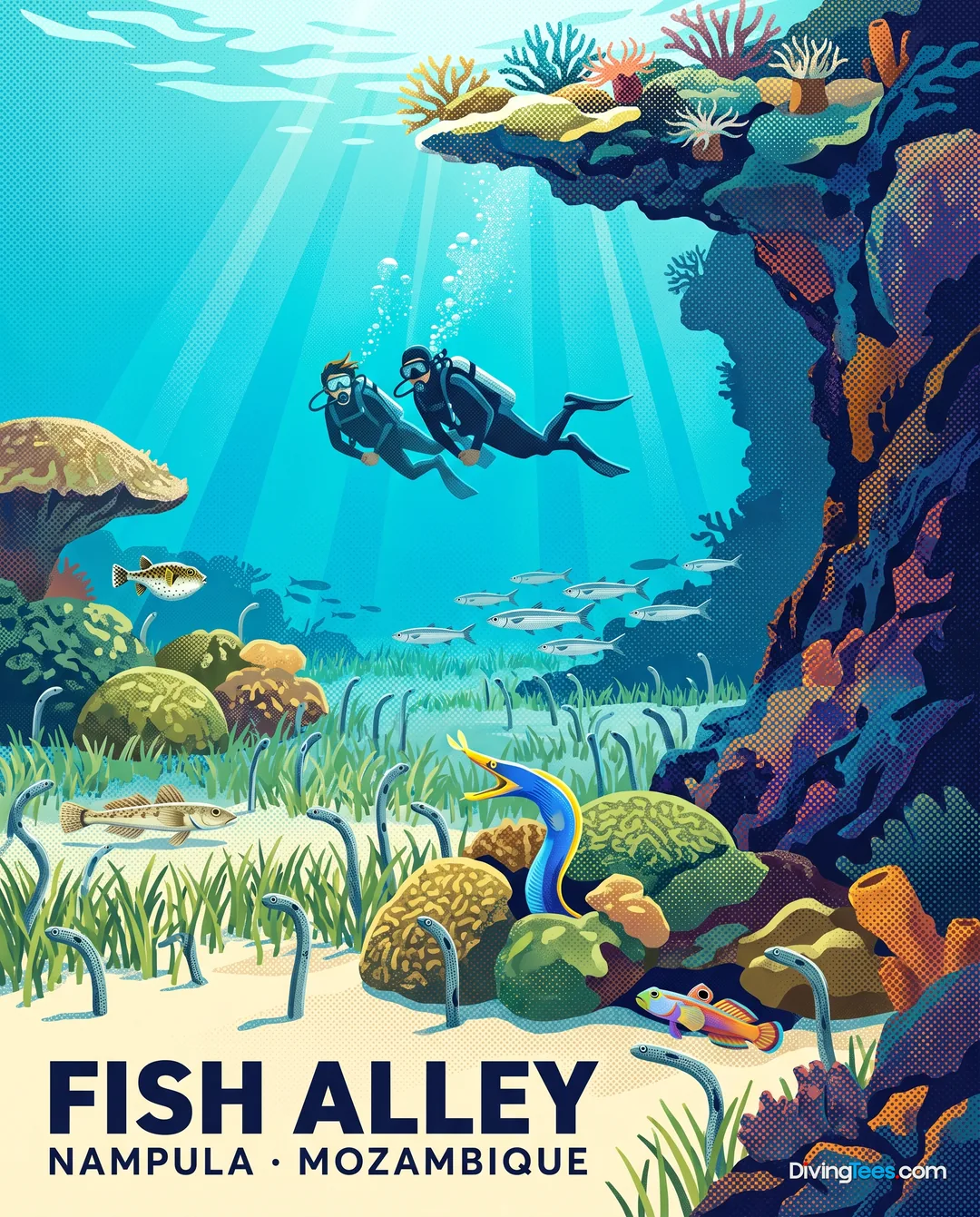
Beyond the wreck, the outer walls of Baixo do Pinda offer a different experience entirely. These long, continuous walls, some extending for around 15 kilometres, are exposed to the Mozambican current. Here, dives are commonly conducted as drift dives, where you move with the flow, observing the abundant reef fish, moray eels, and garden eels that inhabit the wall face. The topography includes drop-offs that plunge into deeper water, providing a sense of scale and exposure to the open ocean.
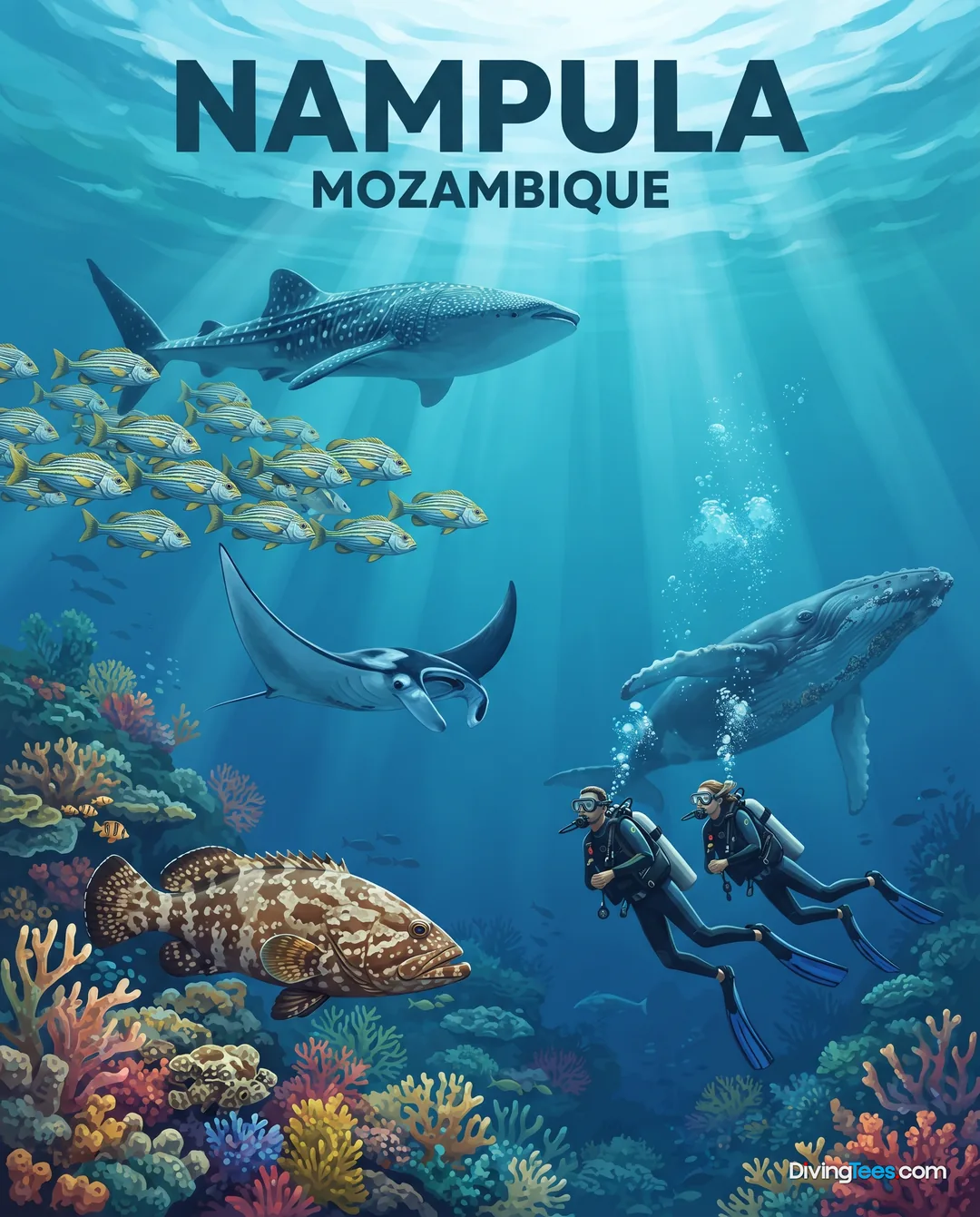
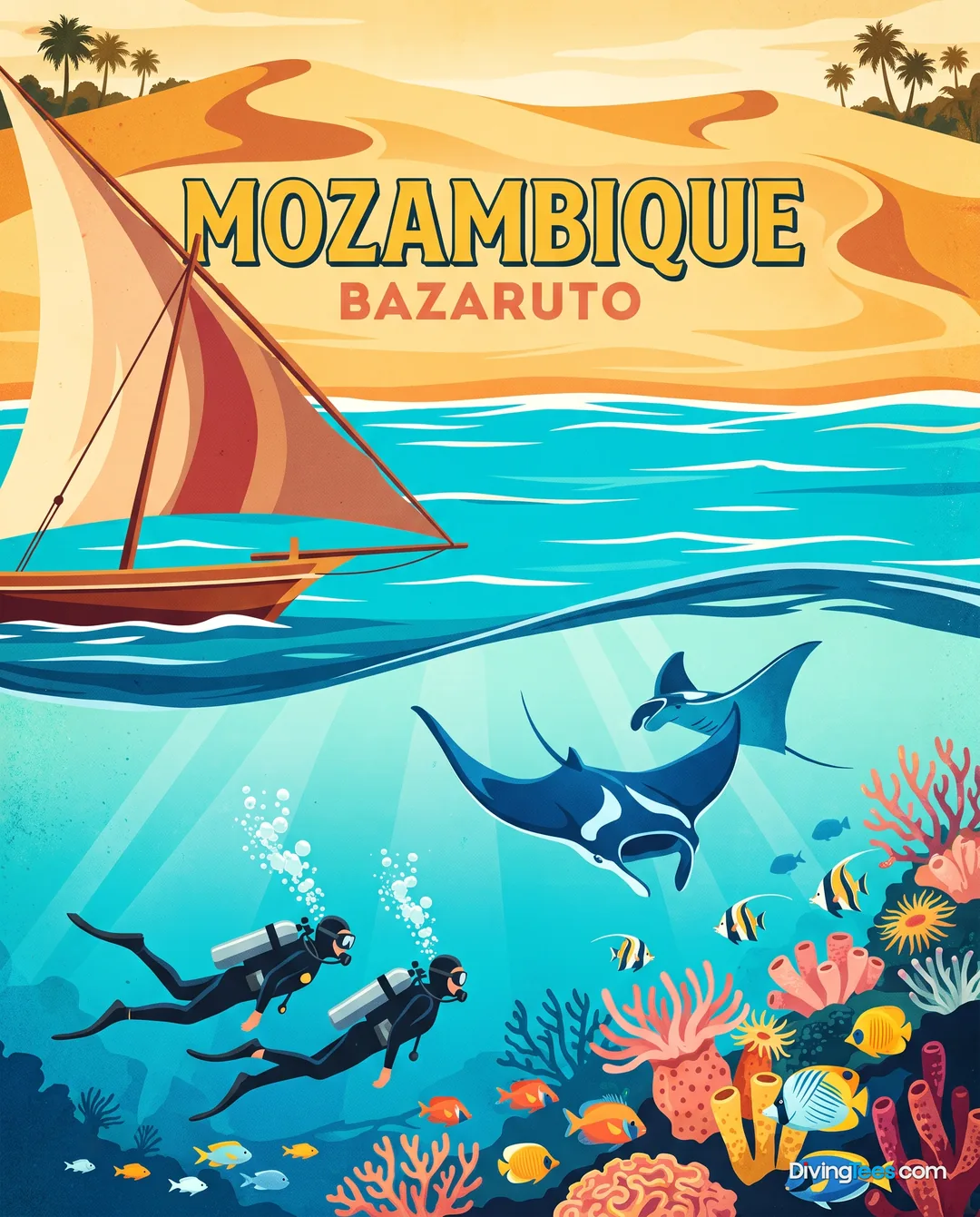
The marine life at Baixo do Pinda is diverse, reflecting the varied habitats. In the sheltered bay areas, you'll encounter numerous tropical reef fish and nudibranchs, often in calmer conditions. Along the more exposed walls, the presence of pelagic fish is common, drawn by the currents and the rich food sources. Sea turtles are also frequently sighted, navigating between the reefs and the open water, adding to the dynamic nature of the underwater environment.
Visibility at Baixo do Pinda can range significantly, from 10 metres to over 40 metres, depending on conditions and location. The protective nature of the bays, such as Nanatha Bay, often provides a natural shield against dominant currents, contributing to calmer diving conditions in these specific areas. This allows for a more relaxed exploration of the reefs and wrecks without significant challenges from strong water movement, making these spots accessible to a wider range of divers.
However, the outer walls of Baixo do Pinda are known for variable and sometimes strong currents associated with the Mozambican current. These conditions require experience in drift diving and a good understanding of current management. The interaction between the decaying remnants of human endeavour on the wreck and the persistent, evolving ecosystem that has claimed it offers a unique perspective on marine adaptation, while the natural reefs showcase the health of the local marine reserves.
Diving at Baixo do Pinda offers varied conditions. In sheltered bay areas like Nanatha Bay, conditions are generally calm and suitable for all levels, including Open Water Divers. For the outer walls and drift dives, more experienced divers are required due to strong and variable currents; a minimum of Advanced Open Water certification and experience with drift diving is advisable. Visibility typically ranges from 10 to over 40 metres. Diving is possible year-round, with water temperatures between 24 and 30°C.