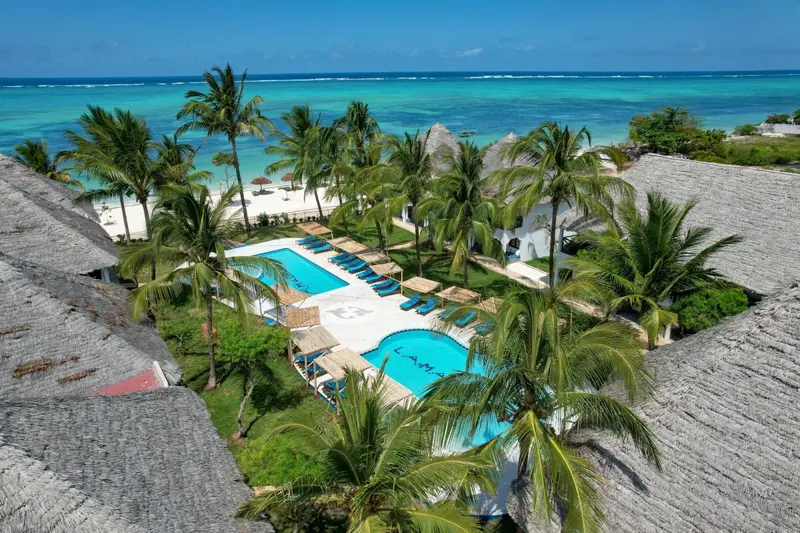
Nest Style Beach Hotel Zanzibar
★★★★
Google 4.5/5 (289 reviews)
Tanzania · Africa
Coral reefs, boat rides from village shores and the exposed Makunduchi Wall make this a beach stay with diving woven into local coastal life.
For subtitles in English: start the video firstthen click the gearat the top right of the video, select “Subtitles/CC”, then “Auto-translate” and choose “English”.
Makunduchi suits divers who want a village base, a sandy beach and boat trips to the coral reefs of Zanzibar's south-east coast. It is not a destination built around a single intensive diving operation. Instead, the day can move between Makunduchi, Jambiani and Kizimkazi, depending on the planned reef and the sea state. That makes it a sensible choice for a seven to ten-day holiday combining diving with local coastal life, rather than a pure immersion-focused trip.
The diving is mainly by boat, with reefs spread between Makunduchi, Jambiani and Kizimkazi. Makunduchi Wall is the named underwater feature, while the wider area is characterised by coral reef terrain rather than a catalogue of dramatic wrecks or deep-water attractions. Currents are variable, so a calm reef outing and a moving-water dive are both possible, but the exact character depends on the site chosen that day. Visibility is commonly around 15 to 35 metres when the sea is settled. Swell can affect exposed sites, particularly around seasonal weather changes, so this is a place for a flexible plan rather than a rigid sequence of dives. Allow time for the boat journey, surface intervals and a proper safety stop, and ask exactly which sector the day's outing will use.
Underwater, the constant is the coral reef environment: reef surfaces, coral formations and the changing light and visibility that come with a boat-based outing along the south-east coast. Makunduchi Wall provides the clearest named setting for seeing the reef in profile, while other departures may take you towards the reefs between Jambiani and Kizimkazi. The experience is less about ticking off a guaranteed list of animals than about exploring Zanzibar's coastal reef scenery in conditions that can change with swell, runoff and plankton in the water. The clearest views are most likely from June through February, once the sea has settled after rain or wind. Snorkelling and additional boat trips offer a useful alternative when diving is postponed.
June to October is the most dependable period, with the dry season generally bringing steadier sea conditions and clearer water. December, January and February can also work well along the south coast. November to March is often a favourable south-coast window, but it sits within a broader monsoon pattern, so the sea can still influence the schedule. April and May are the months to treat cautiously: the long rainy season brings more runoff, swell and interruptions, and visibility can suffer. A flexible itinerary matters more here than chasing a single supposedly perfect month.
The area is suitable for all levels, provided the day's site and current are matched to experience. Newly qualified divers with PADI, SSI or BSAC training can use the local reefs as a straightforward introduction to boat diving, while experienced divers should ask about current, exposure and the planned profile before entering the water. Site-by-site depths and conditions vary, so certification alone is not the whole answer. Comfort with changing plans is as useful as another speciality card.
From London, using LHR or LGW, or from Manchester, travel begins with a flight to Zanzibar, followed by a road transfer south-east to Makunduchi. Allow roughly an hour to an hour and a half for that road journey, depending on traffic and road conditions, and leave room for flight connections before committing to a first boat departure. The alternative is the ferry from Dar es Salaam, which takes about two hours, followed by the same onward road transfer. Once in the area, movement between accommodation and the diving base depends on the exact location. Do not assume that the boat leaves within walking distance: a taxi, arranged transfer or shuttle may be needed, especially when the operation is based in Jambiani or Kizimkazi.
Before booking, establish where the boat actually leaves. A stay sold as Makunduchi may involve a meeting point or transfer in Jambiani or Kizimkazi, and that changes both the start of the day and the time spent on the road. Ask for the planned reef, not simply the destination name, and compare the navigation time with the diving itself. Keep the programme loose enough to move a trip when swell affects an exposed site. April and May are a poor choice for a tightly packed diving schedule because rainy-season runoff and rougher water can disrupt both visibility and departures. Do not book accommodation on the assumption that the centre is walkable. Finally, keep a spare day before an international flight if several boat trips are planned. That buffer is particularly useful when a monsoon-influenced sea has already shifted the timetable.
A typical stay combines morning boat outings with afternoons on Makunduchi's beach or in the surrounding villages. Jambiani and Kizimkazi are part of the practical diving geography, so the accommodation base and the departure point may not be the same place. Keep at least one non-diving day for Jozani Forest, a visit to Kizimkazi, local craftwork using coconut fibre, or a boat and snorkelling trip if the sea allows. Seven to ten days gives the weather and transport plan some breathing room.
Hello, I'm Marina, DivingDeal.com's AI assistant. I guide you through destinations, areas and countries.
Thinking about the whole trip and the flights? Talk it over with Edith →
Marina is an AI. Some links are affiliate links: DivingDeal may earn a commission, at no extra cost to you. Bookings are made with the partner.
You will generally find steadier sea conditions and clearer water from June through October. November through March can also be favourable along the south coast, although monsoon influences may still affect the sea. Treat April and May cautiously, since rainy-season runoff, swell and interruptions can reduce visibility and disrupt departures.
You can dive Makunduchi at any experience level when the chosen site and current match your abilities. Newly qualified divers with PADI, SSI or BSAC training can use the local reefs as an introduction to boat diving. Experienced divers should ask about current, exposure and the planned profile before entering.
You will mainly explore coral reef scenery, including reef surfaces, coral formations and changing light and visibility along Zanzibar’s south-east coast. Makunduchi Wall offers a named reef profile, while boats may visit reefs between Jambiani and Kizimkazi. The experience focuses on coastal reef exploration rather than guaranteed animal encounters or wrecks.
You should confirm where the boat leaves, because a Makunduchi stay may involve transfers to Jambiani or Kizimkazi. Keep your itinerary flexible for swell, runoff and changing sea conditions, and allow time for boat travel and surface intervals. Consider a non-diving day for the beach, villages, Jozani Forest or snorkelling.