RAID
Ohana Dive
Google 5/5 (120 reviews)
Brazil · Americas
Rocky bays, shallow shore entries, island outcrops and boat runs towards Porto Belo give Bombinhas a practical Brazilian diving holiday shaped by wind and tide.
For subtitles in English: start the video firstthen click the gearat the top right of the video, select “Subtitles/CC”, then “Auto-translate” and choose “English”.
Rocky bays are the defining feature of diving around Bombinhas. You can enter from the shore into shallow, sheltered water, then use a boat to reach island formations and sites around Porto Belo. That combination makes the town workable for a first open-water experience without making it irrelevant to experienced divers. The rhythm is coastal and weather-led rather than expeditionary: choose a protected bay when wind or tide turns against an exposed outing, and keep land-based alternatives for days when boats cannot run.
The underwater setting is built around rocky shorelines, sheltered bays, small islands and coastal formations rather than one single offshore reef. Shore dives stay relatively shallow and are the natural starting point for beginners, while boat trips open up more exposed ground around Porto Belo and the nearby islands. Currents are variable, so a downcurrent or drift dive should never be assumed from the map alone. Wind, swell, tide and rainfall runoff can alter both the choice of site and the clarity of the water. Operators generally move to the most protected option available, which is useful here: the practical skill is adapting the plan, not forcing a particular location. There are no liveaboards as a normal part of a Bombinhas stay, so diving is arranged as shore entries and day boats, with a surface interval and safety stop built into ordinary recreational profiles.
Marine life here is tied closely to the rocky coastal habitat: look among the formations, along the edges of the bays and around the island outcrops rather than expecting a named-species spectacle on demand. The character of an encounter changes with visibility, swell, tide and the amount of freshwater runoff after rain. Sheltered sites can offer the more comfortable viewing conditions, while a boat trip may trade that shelter for broader rock formations and a different angle on the coast. There is no dependable seasonal wildlife calendar to plan around, so the sensible expectation is changing coastal life rather than a guaranteed appearance by a particular animal. Snorkelling from the beaches and around the bays gives non-divers a useful taste of the same shoreline habitat.
October to April is generally the more favourable period, with November and March especially practical choices. Spring through autumn usually offers better visibility than the austral winter, when the water is colder and clarity often falls. The interseason months also avoid much of the summer pressure on beaches, boat departures and coastal roads. Rain alone does not automatically cancel a dive, but runoff can cloud a nearshore site, while wind, swell and tide decide whether an island run is sensible. Leave room in the itinerary for that change of plan rather than treating every forecast as a guarantee.
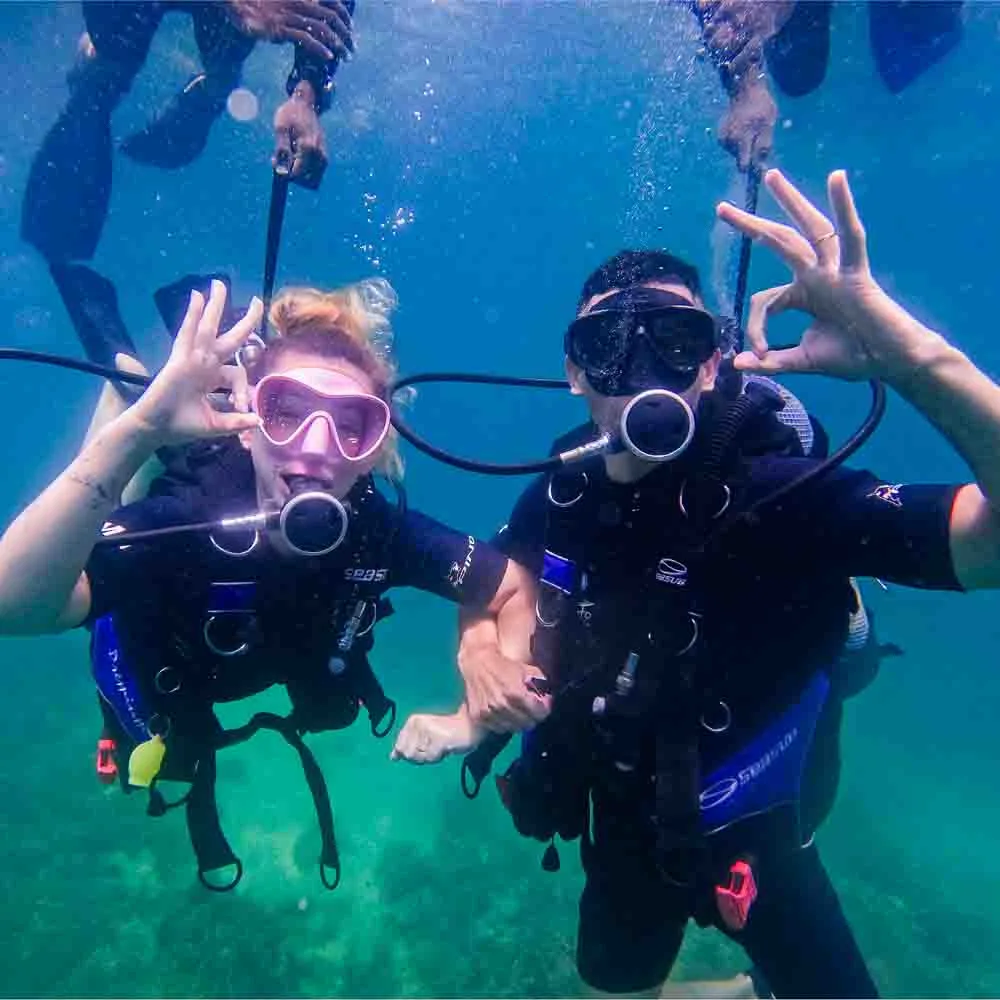
Bombinhas suits all levels, provided the site matches the diver rather than the other way round. A beginner can start in a shallow, sheltered bay with an instructor, whether training through PADI, SSI or BSAC. Certified divers with more experience can use boat trips to explore less sheltered island and Porto Belo areas, where changing wind, swell and current demand sound judgement. It is a poor fit for anyone expecting every dive to run to a fixed offshore plan regardless of conditions.
From London Heathrow, Gatwick or Manchester, arrange the onward journey to Florianópolis or Navegantes, then continue by road to Bombinhas via the BR-101 and local coastal roads. The final approach is entirely land-based, and no compulsory ferry is part of reaching the town. Allow extra time for connections and for the coastal road during the austral summer, when traffic can change the journey substantially. Once in Bombinhas, accommodation near the centre, principal beaches or embarkation points may allow walking access. Elsewhere, use a taxi or local transport, and check in advance whether a boat operator or accommodation provides a shuttle. Island diving itself requires a boat, but reaching the mainland town does not.
Book boat outings early in the stay, not because every departure is fixed, but because wind or tide may require a later move to a more sheltered site. Keep at least one uncommitted day for a missed or redirected trip. Before boarding, ask which replacement site is planned and exactly where the advertised Arvoredo outing lies. The Reserva Biológica Marinha do Arvoredo is a fully protected biological reserve: ordinary tourist visits and landings on its central islands are prohibited, so a recreational trip should not be presented as a dive inside those limits. An Arvoredo reference may instead mean a neighbouring sector outside the reserve. For a first dive, choose a protected coastal bay rather than an exposed island run. In summer, avoid building the whole programme around peak holiday weeks, and use early mornings for busy shore sites. In winter, allow for colder water and reduced visibility, with thermal protection suited to the conditions.
Allow five to seven days on land, combining shore diving with one or two boat outings and keeping spare time for wind and visibility changes. Bombinhas works well for mixed groups: while one diver heads out, others can use the beaches, snorkel, walk the coastal trails of Parque Natural Municipal do Morro do Macaco or take a surface boat trip. Staying close to a main beach or embarkation point simplifies mornings, although the compact coastline still rewards moving between bays when conditions change.
Hello, I'm Marina, DivingDeal.com's AI assistant. I guide you through destinations, areas and countries.
Thinking about the whole trip and the flights? Talk it over with Edith →
Marina is an AI. Some links are affiliate links: DivingDeal may earn a commission, at no extra cost to you. Bookings are made with the partner.
October to April is generally the more favourable diving window, with November and March practical choices. Spring through autumn usually brings better visibility than the austral winter, when water is colder and clarity often falls. Leave flexibility for wind, swell, tide and rainfall runoff, which can change the site or water conditions.
Bombinhas suits all levels when the site matches your experience. Beginners can start with an instructor in a shallow, sheltered bay, while certified divers can choose boat trips around less sheltered island and Porto Belo areas. These outings require sound judgement because wind, swell and currents can change the plan.
Expect rocky shorelines, sheltered bays, small islands and coastal formations rather than one single offshore reef. Marine life is associated with the rocks, bay edges and island outcrops, with encounters changing according to visibility, swell, tide and rainfall runoff. Sheltered sites offer comfortable viewing, while boats reach broader formations.
Plan a land-based stay combining shore dives with boat outings and spare time for weather changes. Book boat trips early, but keep an uncommitted day in case wind or tide causes a delay or replacement site. Stay near a beach or embarkation point, use early mornings for busy shore sites, and choose a protected bay for a first dive.