
新島 桶庄 スキンダイビングスクール
Google 4.4/5 (85 reviews)
Japan · Asia
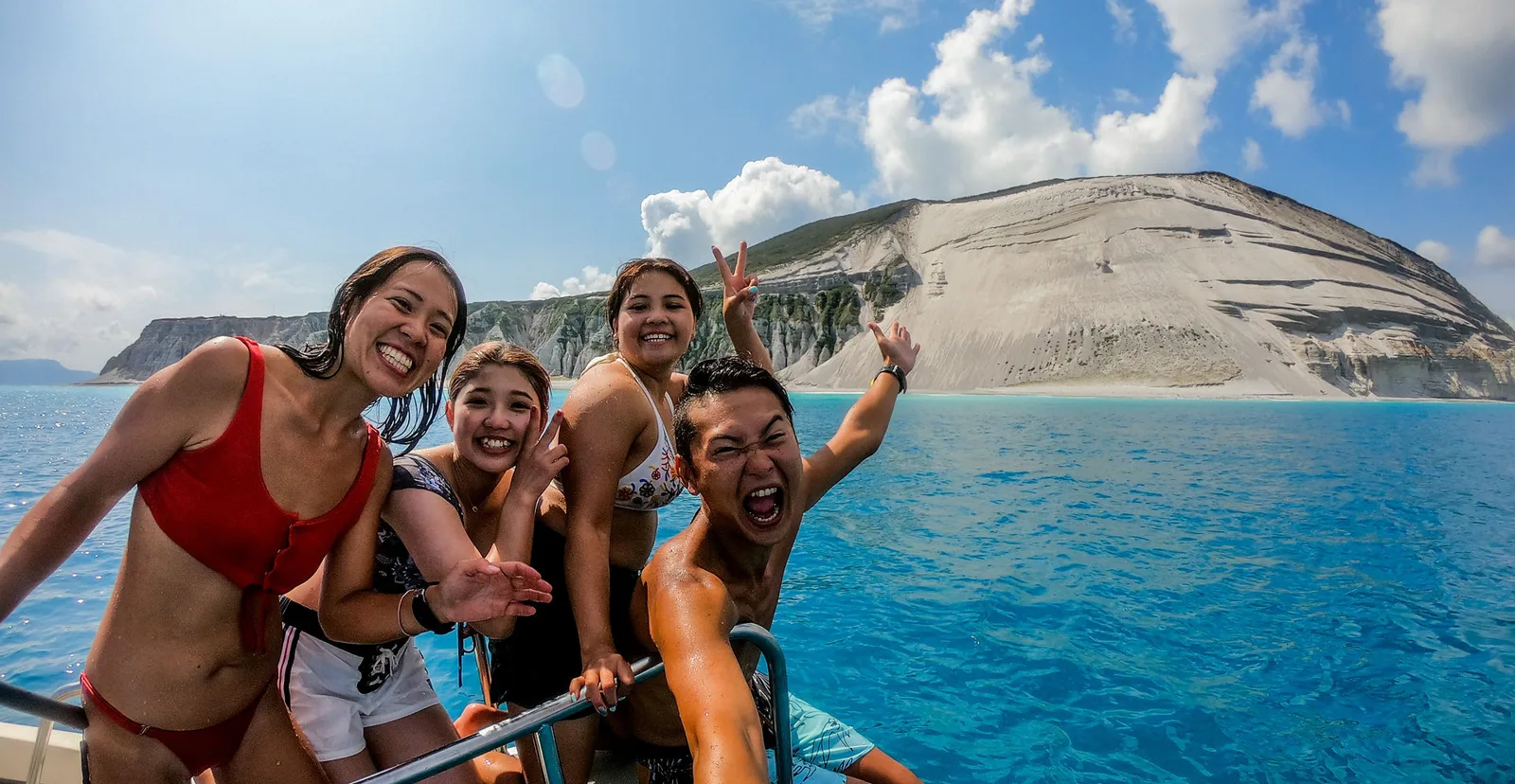
Volcanic coastal relief, clear water shaped by the Kuroshio, beaches and open-air hot springs make Niijima a Japanese island stay with diving at its centre.
For subtitles in English: start the video firstthen click the gearat the top right of the video, select “Subtitles/CC”, then “Auto-translate” and choose “English”.
Volcanic island scenery is the starting point for diving Niijima. Below the surface, coastal relief meets water influenced by the Kuroshio, Japan’s powerful black current, giving the island a character quite unlike a conventional tropical reef holiday. This is a land-based trip rather than a liveaboard itinerary, with diving set alongside beaches, volcanic landscapes, open-air hot springs and the option of crossing to Shikinejima. It suits divers who want the island experience as much as the immersion.
Niijima’s diving is shaped by island coastlines and volcanic underwater relief rather than by a named collection of signature sites. The Kuroshio brings a strong-current character, although conditions are variable, so a dive may feel calm on one outing and more involved on another. Expect coastal and boat-based diving around the island, with the possibility of current-aware techniques such as a drift dive where conditions allow. The water can be strikingly transparent, but swell, weather and coastal run-off can reduce visibility. There is no dependable depth profile to build a rigid plan around, so the day’s sea state matters more than an ambitious itinerary. The attraction is the combination of dark volcanic forms, open water and moving water, with the practical feel of Japanese island diving rather than a predictable resort reef.
Marine life around Niijima reflects the Kuroshio’s influence, with fauna associated with a powerful moving current rather than a fixed tropical-reef cast. That makes the character of a dive responsive to water movement and local conditions. Fish and other marine animals may appear against volcanic coastal relief, while the changing clarity can alter how much of the surrounding terrain is visible. There is no dependable seasonal wildlife calendar to organise the trip around, so Niijima is better approached for its current-influenced island environment than for a guaranteed encounter with one named species. The appeal lies in seeing what the current has brought to the island’s waters, then spending the rest of the day among beaches, volcanic formations or hot springs.
Niijima does not lend itself to a single guaranteed diving window. The sensible time to go is when sea conditions, weather and transport schedules align, with enough flexibility to absorb a change in the crossing. The Kuroshio influences the island’s waters, but that does not remove the effects of swell or coastal run-off on visibility. Sea conditions also determine whether the local link to Shikinejima is running. In practical terms, plan the trip around a forgiving stay rather than a tightly packed sequence of dives. That gives the island’s volcanic scenery and hot springs a proper role if the sea turns awkward.
Niijima is presented as suitable for all levels, but current awareness matters more here than a simple certification label suggests. PADI, SSI and BSAC divers should be comfortable adjusting a dive to changing water movement, and those with little current experience should treat a downcurrent or drift dive as a matter for local briefing rather than assumption. No specialist brevet is required by the destination information. The most useful experience is steady buoyancy, sensible gas management and the judgement to accept a revised plan.
From London or Manchester, Niijima requires reaching Tokyo first, then choosing between three quite different final legs. The fast ferry leaves Takeshiba and takes roughly two hours twenty minutes to three hours. The larger overnight ferry takes about eight and a half to ten and a half hours. A domestic flight from Chofu reaches the island in around thirty-five to forty minutes. Services and ports can change with the season and weather, so allow breathing space rather than building an immediate connection around an advertised arrival. From Niijima, a local sea link reaches Shikinejima in about fifteen minutes when operating, but its landing point is not the same as the ferry ports used for the larger services.
Treat the journey as part of the Niijima plan, not as a transfer to squeeze between dives. Compare the Chofu flight with the fast ferry and the overnight sailing according to how much time and weather exposure you are prepared to accept. Keep a margin after any sea crossing, because both the timetable and the duration can change with conditions. Do not book a tight onward connection. If you are adding Shikinejima, check the local departure point separately: it is not interchangeable with the harbour used by the fast ferry or larger ship. Keep at least one land-based option in the programme, whether that is the volcanic scenery, a beach or an open-air hot spring. The same flexibility applies to diving. Current and visibility are condition-dependent, so avoid treating a planned drift dive as immovable. Niijima rewards an itinerary that can breathe.
Organise Niijima as a base for a mixed island stay, with diving fitted around the sea rather than treated as the only purpose of the visit. Leave room for beaches, volcanic landscapes and open-air hot springs between immersions. When the local service is running, Shikinejima can extend the trip into a two-island itinerary, although the crossing remains weather-dependent. The result is a stay with water activities at its centre and useful alternatives on land.
Hello, I'm Marina, DivingDeal.com's AI assistant. I guide you through destinations, areas and countries.
Thinking about the whole trip and the flights? Talk it over with Edith →
Marina is an AI. Some links are affiliate links: DivingDeal may earn a commission, at no extra cost to you. Bookings are made with the partner.
Choose Niijima when sea conditions, weather and transport schedules align, and keep your stay flexible enough to absorb a change in the crossing. Swell and coastal run-off can affect visibility, while conditions determine whether the local sea link to Shikinejima operates. Leave time for volcanic scenery and hot springs if diving is disrupted.
Niijima is presented as suitable for divers of all levels, but current awareness is important. You should be comfortable adjusting a dive to changing water movement and follow the local briefing before considering a downcurrent or drift dive. Steady buoyancy, sensible gas management and the judgement to revise plans are useful here.
Diving in Niijima combines volcanic coastal relief, open water and Kuroshio-influenced movement. Fish and other marine animals may appear against dark volcanic forms, while changing clarity affects how much terrain you see. The experience is shaped by variable current and local conditions rather than a fixed tropical-reef cast or guaranteed encounter with one species.
Plan Niijima as a flexible island base, fitting dives around the sea and allowing time for beaches, volcanic landscapes and open-air hot springs. You can consider the local sea link to Shikinejima when it operates, but check its departure point separately. Keep breathing space after crossings and avoid tight onward connections or immovable dive plans.