
Inatori Marinesports Centre
Google 4.8/5 (73 reviews)
Japan · Asia
Rocky drop-offs, Atami wrecks, Osezaki’s sheltered bay and summer scalloped hammerheads at Mikomoto shape Shizuoka’s distinctly Japanese diving.
For subtitles in English: start the video firstthen click the gearat the top right of the video, select “Subtitles/CC”, then “Auto-translate” and choose “English”.
At Osezaki, a sheltered bay gives way to open-water routes, while Atami puts wrecks and caves into a Japanese coastal break. Izu suits divers who would rather build a week around different shore and boat outings than live aboard. There are forgiving sites for training, but also exposed southern water where current and swell decide the plan. Between dives, hot springs, volcanic hills and fishing towns keep non-divers occupied.
Izu’s underwater map changes with the coastline. Osezaki offers shore entries inside a sheltered bay, alongside routes facing open water. Around Atami, wrecks and caves add a more confined, three-dimensional feel, while the eastern and southern shores bring rocky drop-offs, swell and current. Some outings are straightforward from land; others leave by boat and depend on the sea state. Mikomoto is the serious end of that range, with current and swell shaping both the launch and the dive. A drift dive qualification is useful there, and a guide may need to alter the plan or cancel the outing. Visibility is often around 10 to 20 metres, with winter commonly offering the clearer water. Plankton, coastal run-off, swell and bad weather can reduce it quickly, so a good forecast never removes the need for a flexible plan and a properly timed safety stop.
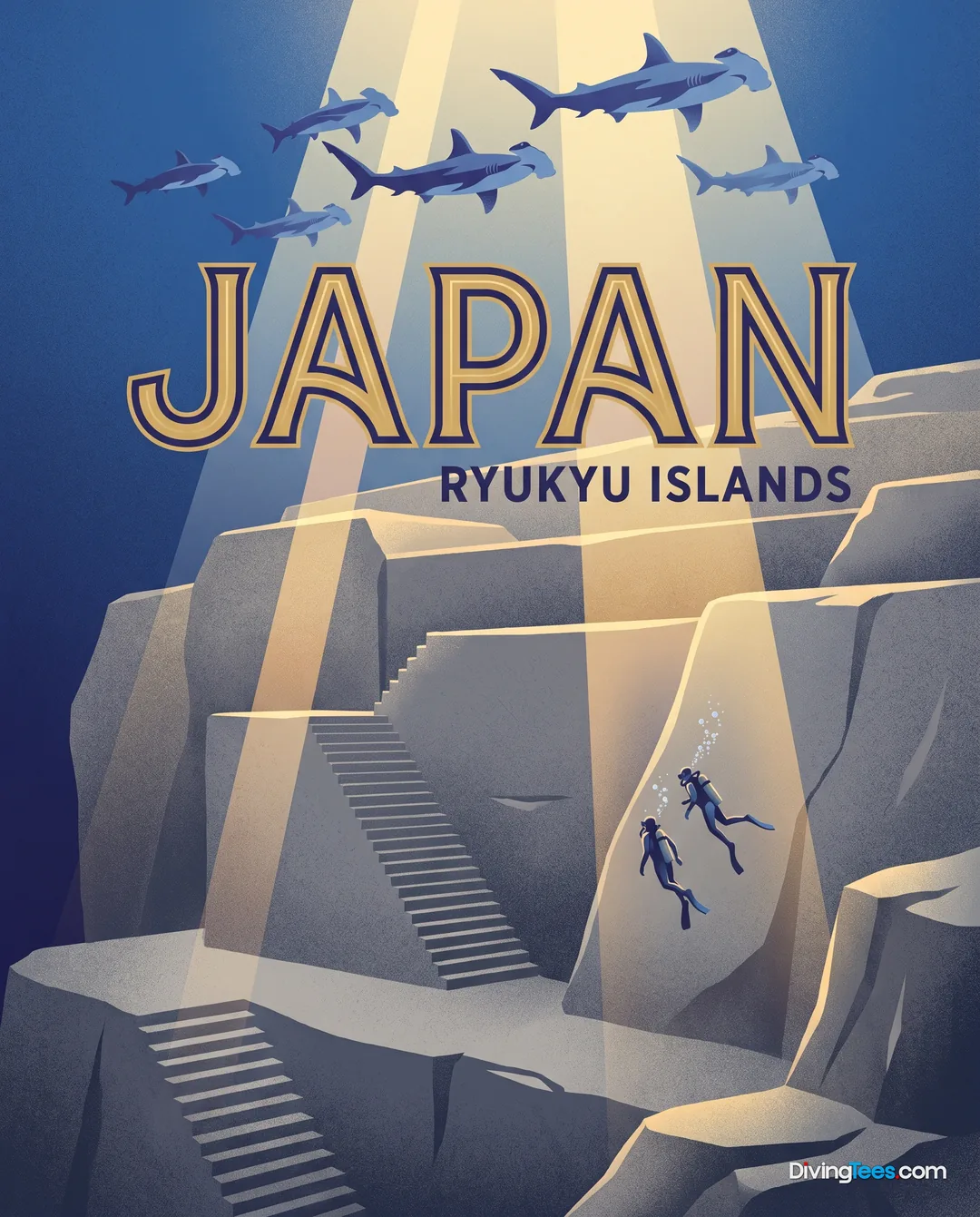
Mikomoto’s main seasonal draw is the scalloped hammerhead shark, with encounters sought particularly from June to October. This is not a guaranteed aquarium-style display: the site is exposed, and current and swell may prevent the boat trip altogether. In summer and autumn, tropical fish carried north by the Kuroshio add a warmer-water note to Izu’s normally temperate and subtropical communities. Squid can be encountered throughout the year, depending on the site. The appeal is the change of cast between sectors and seasons, from the open-water presence of hammerheads to the smaller, less predictable sightings on shore dives. Winter is chosen mainly for visibility and quieter sites, rather than for a single headline species.
October to March is the most dependable period for a quieter trip and generally clearer winter water. Visibility can be good, but plankton, run-off and swell still make conditions changeable from one site to the next. July and September are poor choices for a fixed itinerary, as summer crowds and typhoon-season weather can bring murky water, rough seas and closures. Mikomoto follows a different logic: June to October is the window for scalloped hammerheads, but the exposed crossing needs spare days. Choose winter for shore diving and visibility, or summer for hammerheads, accepting that the sea has more say in the schedule.
Osezaki’s sheltered bay can suit beginners and training dives when conditions allow, making Izu workable for newly qualified BSAC, PADI and SSI divers. The same peninsula also demands more of experienced divers. An Advanced qualification is useful for deeper and exposed sites, Drift for current-affected outings such as Mikomoto, and Wreck for Atami. Do not treat an easy Osezaki entry as evidence that southern Izu will feel similar. Experience in open water, comfort with current and the judgement to abandon an exposed boat dive matter more than simply collecting the relevant card.
From London or Manchester, travel first to Tokyo, then continue by train towards the town or coast chosen for the diving. Atami and parts of the eastern coast are the straightforward rail options. Allow several hours beyond Tokyo when heading for western or southern Izu, where the route continues by road and distances between bases matter. No ferry is needed for the main area, and a domestic flight is neither necessary nor useful for this journey. Once there, some town-based centres and shore sites are reachable on foot from the waterfront or station, but rural Osezaki and the southern sites usually call for a hire car, taxi or centre transfer. The base is therefore part of the transport plan, not just an accommodation choice.
Do not book the whole trip around Mikomoto. Keep a spare day for swell or strong current, and accept that a different site, or no boat dive, may be the sensible outcome. If Mikomoto is the reason for travelling, stay nearby for several days rather than trying to reach it from the far side of the peninsula. At Osezaki, ask whether the day’s route is on the sheltered-bay side or the open-water side, because the two dives do not carry the same demands. For quieter entries and less crowding, use weekdays and consider winter. Check transport before booking a remote room: western and southern sites are not places for spontaneous station-hopping. Keep your certification card and logbook readily verifiable, as Japanese centres normally ask for proof before guided diving. Finally, leave a proper interval after the last dive before a long flight, especially when mountain roads make the return journey longer than expected.
Plan five to seven days on land, grouping the diving around one or two nearby sectors rather than crossing the peninsula every morning. Atami works well with rail access, wreck and cave outings, while Osezaki and southern Izu are better with a car or arranged transfer. Boat days need room to move, so keep a non-diving day available. Outside the water, combine hot springs, volcanic-hill walks, coastal viewpoints, beaches, shrines and seafood towns, giving companions a full reason to enjoy the same base.
Hello, I'm Marina, DivingDeal.com's AI assistant. I guide you through destinations, areas and countries.
Thinking about the whole trip and the flights? Talk it over with Edith →
Marina is an AI. Some links are affiliate links: DivingDeal may earn a commission, at no extra cost to you. Bookings are made with the partner.
Choose October to March for a quieter trip and generally clearer winter water, especially for shore diving. Visit from June to October if scalloped hammerheads at Mikomoto are your focus, but allow spare days because current, swell and weather can prevent the boat outing. July and September can bring crowds, rough seas and closures.
Osezaki’s sheltered bay can suit beginners and training dives when conditions allow, making Shizuoka workable for newly qualified divers. Advanced experience helps on deeper and exposed sites, while Drift is useful for Mikomoto and Wreck for Atami. Comfort with current, open water and abandoning an exposed boat dive matters more than collecting cards.
Shizuoka offers rocky drop-offs along Izu’s eastern and southern coasts, wrecks and caves around Atami, and shore routes at Osezaki. Mikomoto attracts divers seeking summer scalloped hammerheads, while tropical fish carried north by the Kuroshio appear in summer and autumn. Squid may be encountered throughout the year, depending on the site.
Plan five to seven days on land and base your diving around one or two nearby sectors. Atami suits rail access, while Osezaki and southern Izu usually need a car or arranged transfer. Stay near Mikomoto for several days, keep a spare day for sea conditions, and leave time for hot springs, volcanic hills and fishing towns.