
OrcaNation Rawa
Google 4.8/5 (73 reviews)
Malaysia · Asia
Coral reefs, forested islands, turtles and occasional reef sharks shape boat diving reached through Mersing, with Tioman, Besar, Dayang, Aur and Rawa each offering a different outing.
For subtitles in English: start the video firstthen click the gearat the top right of the video, select “Subtitles/CC”, then “Auto-translate” and choose “English”.
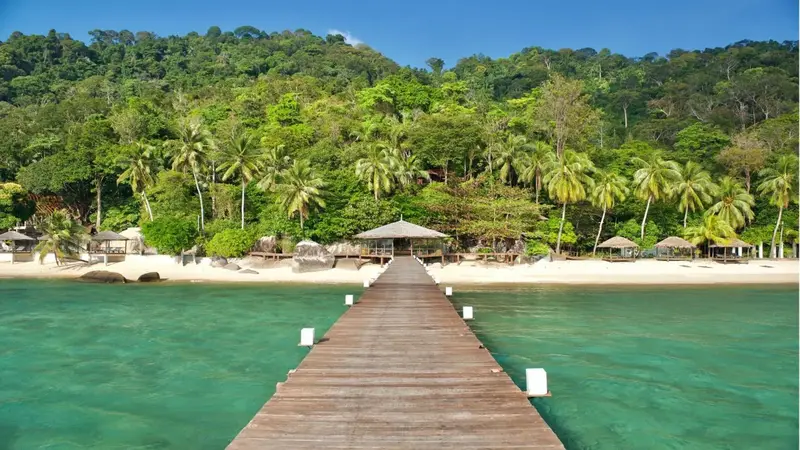
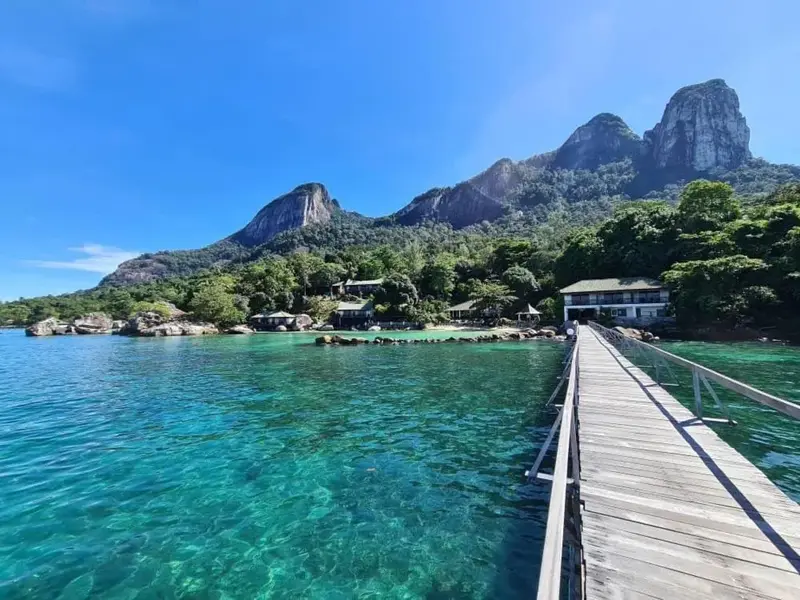
Around Tioman, coral reefs fall into drop-offs and rise again as underwater pinnacles, while Besar, Dayang, Aur and Rawa open different island settings from the same mainland gateway. Mersing itself is mainly where you board, not where the diving happens. Once across, the rhythm is straightforward: stay beside the beach, join boat dives, and return to an island village for the evening. Turtles, reef sharks, barracudas and small macro subjects give the diving range without requiring a liveaboard.
The diving is predominantly from boats, with coral reefs, drop-offs and pinnacles providing the structure. Conditions change noticeably between Tioman, Besar, Dayang, Aur and Rawa, so a sheltered reef one day may be followed by a more exposed wall or pinnacle. Currents are variable rather than a permanent feature, and the local guide’s choice of site matters more than any single reputation. Some dives suit relaxed reef exploration, while others may involve a drift dive and a more attentive descent and ascent. Visibility is changeable too, commonly around 8 to 20 metres in the wider Mersing area and roughly 5 to 30 metres around Tioman. The usual outing is a boat trip from the island where you are staying, with the safety stop made before returning to the boat rather than a shore-based schedule.
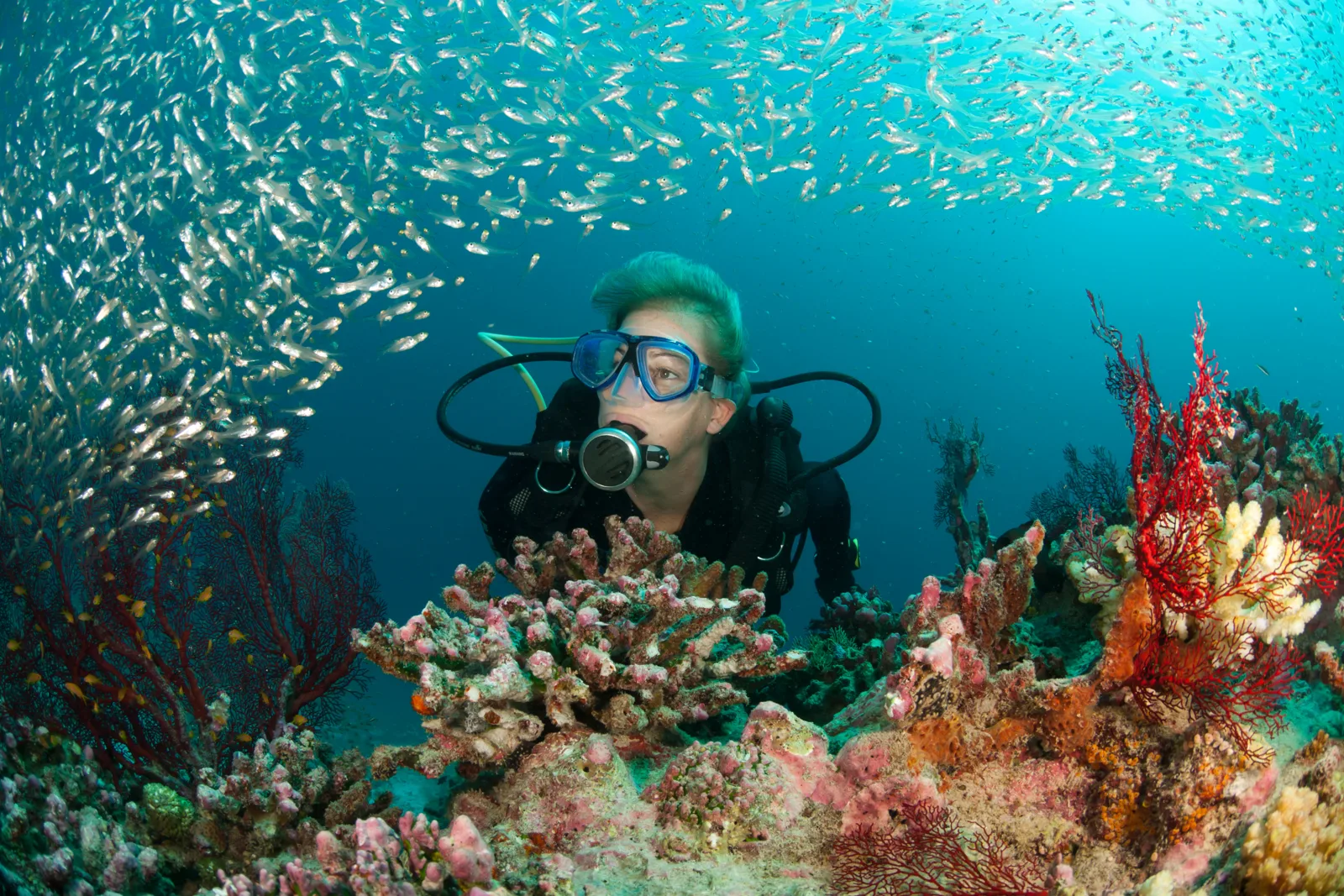
Turtles are one of the dependable encounters during the operating season, from March to October, appearing over reef slopes and around the island sites. Reef sharks and barracudas occur in the same broad window, though neither should be treated as a guaranteed appointment. The reefs also support macro diving, so a day aimed at larger animals can give way to a careful search for smaller subjects on coral and rocky surfaces. Flamboyant cuttlefish or pharaoh cuttlefish may be encountered around February and March, an occasional bonus at the edge of the main season. The combination is what makes the islands useful for mixed groups: one diver can watch the blue for barracudas while another works the reef for small life.
March to October is the practical diving season, because the north-east monsoon brings rougher seas from around November to February and many island operations close. For a good balance between workable crossings, visibility and fewer holiday crowds, March to May and September to October are sensible choices. June to August is easier to book around school holidays and summer travel, but clearer water is not guaranteed, and visibility can fall with swell, coastal run-off or plankton blooms. February and March may add a chance of flamboyant cuttlefish, but the ferry and resort calendar still matters more than chasing a seasonal sighting.
This suits beginners as well as experienced divers, with sites available for all levels, provided the choice is matched to the day’s current, depth and boat conditions. PADI, SSI and BSAC qualifications are all relevant starting points. The important distinction is not a special certification but comfort with boat procedures, open-water descents and changing conditions between islands. Divers who prefer predictable shore entries may find the boat-based format less forgiving, while those happy to follow a guide’s site choice will find plenty of manageable reef diving.
From London Heathrow, Gatwick or Manchester, the journey continues through an Asian connection before the overland leg to Mersing, commonly by road or bus via Kuala Lumpur or Singapore. Mersing Harbour Centre is the main staging point for the ferry, and Tioman crossings generally take about one and a half to two and a half hours, depending on the route and stops. Other islands are reached by boat according to the operator and sea conditions. Tioman also has an internal flight option from Subang, but the ferry remains the usual structure of the journey. Allow a night on the mainland if arrival, road transfer and ferry times do not line up, and do not treat the ferry as a reliable same-day connection to an international flight.
Treat Mersing as the embarkation point, not as the place where you will spend the diving holiday. Check the exact island, jetty and ferry departure before travelling, since services and stopping patterns differ between Tioman, Besar, Dayang, Aur and Rawa. Leave a proper buffer between the road journey and the boat: weather, tide and extra stops can move the timetable. Keep the return day open enough for a delayed crossing, and never pair it tightly with an international flight. For Tioman, compare departures from Mersing with Tanjung Gemok when the latter fits the itinerary better. Arrive with the marine park fee in mind and some local cash for port arrangements. On smaller islands, bring personal small or specialist equipment rather than assuming every rental shelf will cover it. Early boat departures can also reduce crowding at the familiar sites.
Plan seven to ten days, including the continental transfer, to allow several boat-diving days and a margin for a weather-delayed crossing. On the islands, accommodation and dive centres are commonly close together in the same coastal villages, so most daily movement is on foot or by local boat. Tioman is the easiest choice for a mixed stay, with forest walks, viewpoints, village visits, beaches, swimming, kayaking and nearby snorkelling. Mersing works best as a practical overnight stop before or after the ferry.
Hello, I'm Marina, DivingDeal.com's AI assistant. I guide you through destinations, areas and countries.
Thinking about the whole trip and the flights? Talk it over with Edith →
Marina is an AI. Some links are affiliate links: DivingDeal may earn a commission, at no extra cost to you. Bookings are made with the partner.
March to October is the practical diving season, while the north-east monsoon brings rougher seas from around November to February and many operations close. March to May and September to October can balance workable crossings, visibility and fewer crowds. February and March may bring flamboyant cuttlefish, although ferry and resort schedules remain important.
Mersing suits beginners and experienced divers, with sites for different levels depending on the day’s current, depth and boat conditions. PADI, SSI and BSAC qualifications are relevant starting points. You should be comfortable with boat procedures, open-water descents and changing conditions, since some dives may involve drift diving and attentive descents or ascents.
Diving around Mersing leads to coral reefs, drop-offs and underwater pinnacles around Tioman, plus varied island settings near Besar, Dayang, Aur and Rawa. You may encounter turtles from March to October, occasional reef sharks and barracudas, tropical reef scenery, macro life and flamboyant cuttlefish around February and March.
Treat Mersing as the ferry gateway rather than the main diving base. Plan seven to ten days including the continental transfer, several boat-diving days and margin for weather delays. Check your island, jetty and departure, allow a mainland overnight when needed, keep the return day flexible, and remember the marine park fee.