

Kilkee Dive Centre
Google 5/5 (4 reviews)
Ireland · Atlantic
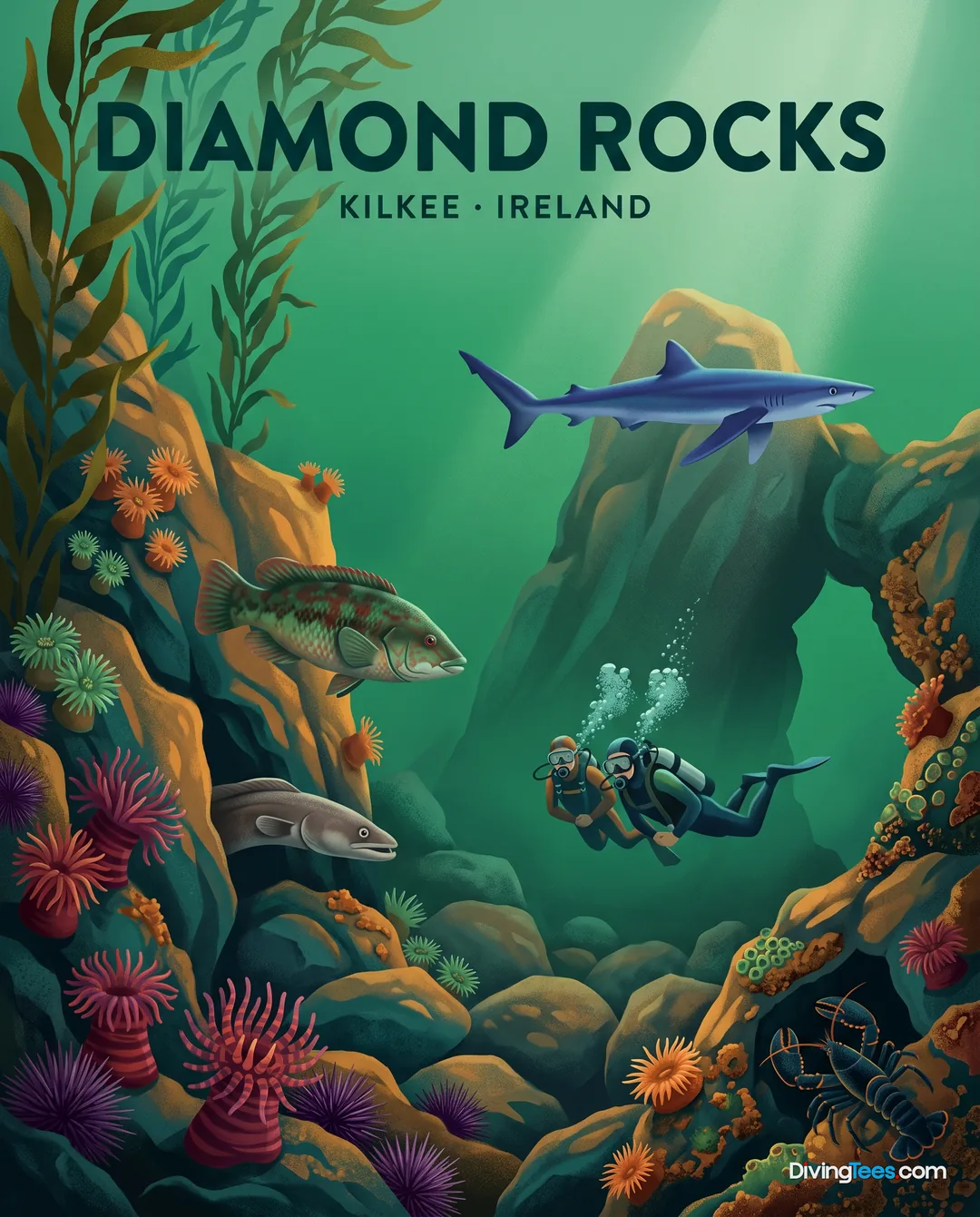
Diamond Rocks combines six-metre rock formations, boulder fields and an underwater valley dropping to forty metres in exposed Atlantic conditions.
For subtitles in English: start the video firstthen click the gearat the top right of the video, select “Subtitles/CC”, then “Auto-translate” and choose “English”.
Diamond Rocks drops from shallow rocky formations at around six metres into a deep underwater valley reaching forty metres. That single piece of terrain captures Kilkee’s character: local Atlantic diving from a coastal base, with canyons, boulder fields and exposed conditions rather than sheltered resort reefs. Kilkee suits divers who enjoy making a plan around the sea state and then seeing what the rock, surge and visibility provide. It is a shore-based stay with local outings, not a liveaboard destination.
The diving is built around rock rather than coral: formations, large boulders, an extensive canyon system and the deep valley at Diamond Rocks. A dive can stay in the shallower six-metre terrain or follow the relief deeper, with the site reaching forty metres. That range allows different profiles, although the deeper sections demand the appropriate training and comfort in open water. Current is variable, while swell and surge can change quickly with wind and Atlantic weather. Visibility is not given a dependable seasonal description, so it should be treated as part of the day’s conditions rather than a fixed feature. These are boat or local coastal outings planned around a workable sea window, with navigation and timing carrying more weight than they would on an enclosed reef. The result is active, physical diving: reading the water, holding position in moving water and following the rock without forcing the plan.
The most dependable wildlife interest described for Kilkee is on the reef itself. Diamond Rocks has abundant invertebrate life spread across its rocky formations, canyon walls and boulder fields. The pleasure is in slowing down over the structure and looking into cracks, across ledges and around the stones as the terrain changes with depth. No particular seasonal animal arrival defines the destination, so Kilkee is better approached for its combination of relief and Atlantic reef life than for a guaranteed species list. Encounters will depend on the conditions, the route chosen and the time available on the bottom. A diver comfortable with a patient search can find plenty to examine in the shallower rock as well as along the deeper valley, without expecting a tropical-style wildlife calendar.
The practical season at Kilkee is defined by the sea rather than by a fixed wildlife calendar. A workable period is one that offers a manageable combination of wind, swell and surge, because exposed Atlantic conditions can decide whether a planned outing is feasible. For that reason, a visit should allow more than a single attempt at the water. The calmer-looking day is not merely more pleasant: it makes navigation, descent, movement around Diamond Rocks and the deeper valley more realistic. Weather windows matter more here than a conventional high season, so the sensible approach is to keep the diving schedule flexible and use Loop Head’s coast when the sea is not cooperating.
Kilkee is broadly suitable for divers of different levels, provided the chosen profile matches their training and experience. The shallow rock at Diamond Rocks offers room for less ambitious plans, but the site’s full depth range is another matter. Reaching forty metres and dealing with swell, surge and changing current requires Advanced-level certification and genuine comfort in variable Atlantic conditions. BSAC, PADI and SSI divers should judge the dive by their qualification, recent experience and ability to manage moving water, not simply by the presence of shallow sections.
From London Heathrow, London Gatwick or Manchester, the journey begins with getting to Ireland and then continuing by road towards Kilkee and the Loop Head peninsula. The final approach is therefore a road transfer rather than a ferry crossing or a further sea passage. Exact arrival arrangements depend on the chosen airport, but the important planning point is the overland leg after landing: allow enough time for the drive and avoid building a tight connection around a same-day dive. Once in Kilkee, local diving is organised from the coastal base, so a car or pre-arranged local transport is more useful than relying on a large resort shuttle system. Keep the travel day separate from the first serious dive plan.
Treat Kilkee as open Atlantic water from the outset. Do not build the trip around one precious diving day: a wind or swell change can remove the useful sea window, while an extra day gives the local plan room to move. Diamond Rocks is not simply a shallow sightseeing reef; its conditions can change quickly, and the forty-metre valley belongs in a plan for an Advanced diver who is comfortable with surge and variable current. Keep the profile conservative if the water is moving, rather than allowing the site’s depth range to dictate the dive. Expect the reef to reward attention to rock detail and invertebrate life, not to deliver a tropical sequence of named animals. Avoid carrying a fixed high-season expectation into the booking. Leave time for the Loop Head coast on a non-diving day, and regard that flexibility as part of the Kilkee experience rather than as a fallback after a failed holiday.
A sensible stay is land-based, with local dives arranged around the sea state and several days available for the weather to settle. Keep the arrival day clear of ambitious profiles, then use the following days for Diamond Rocks or other suitable local outings when conditions allow. On a closed-water day, the Loop Head peninsula provides coastal walking and Atlantic views without pretending that the dive plan can be forced. This works best as a flexible short break rather than a tightly timed single-day excursion.
Hello, I'm Marina, DivingDeal.com's AI assistant. I guide you through destinations, areas and countries.
Thinking about the whole trip and the flights? Talk it over with Edith →
Marina is an AI. Some links are affiliate links: DivingDeal may earn a commission, at no extra cost to you. Bookings are made with the partner.
Choose a period that offers a manageable combination of wind, swell and surge rather than relying on a fixed high season. Exposed Atlantic conditions can close the useful sea window, so keep your schedule flexible and allow extra days. When the sea is unsuitable, Loop Head coastal walks provide an alternative.
Kilkee can suit different levels when you match the profile to your training and experience. Shallower rock offers less ambitious plans, while the deeper valley, swell, surge and variable current require Advanced-level certification and comfort in moving Atlantic water. Judge the dive by your recent experience, not just its shallow sections.
Kilkee offers rocky formations, boulder fields, canyon structure and an underwater valley that descends from shallow terrain into deeper water. Abundant invertebrate life spreads across the relief, walls, ledges and cracks. Expect patient exploration of Atlantic reef structure rather than a tropical wildlife calendar or a guaranteed list of species.
Plan a land-based stay with local dives arranged around the sea state, and leave several days for conditions to settle. Keep your arrival day free of ambitious diving, allow time for the road transfer after landing in Ireland, and use Loop Head coastal walks when wind or swell closes the water.