West Cork Hotel
★★★
Google 4.4/5 (1,440 reviews)
Ireland · Atlantic
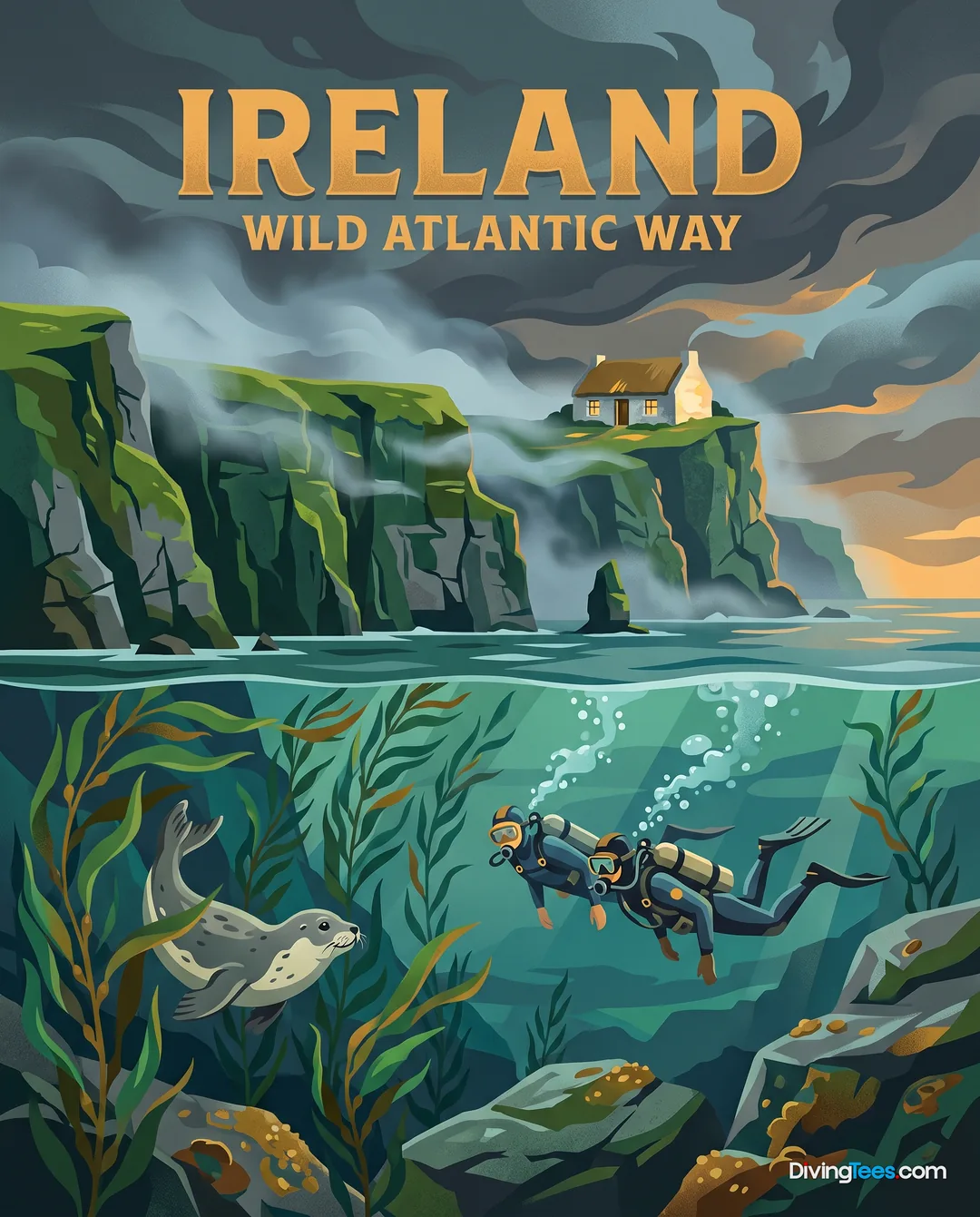
From Cape Clear and Sherkin Island to the deep Kowloon Bridge, West Cork offers kelp forests, seal encounters, tidal channels and Atlantic boat diving.
For subtitles in English: start the video firstthen click the gearat the top right of the video, select “Subtitles/CC”, then “Auto-translate” and choose “English”.
Skibbereen is an inland base for diving West Cork, not a harbour where you walk from the hotel to the boat. The diving lies out of Baltimore and Schull, across Roaringwater Bay and towards Cape Clear and Sherkin Island. From there, a day on the water can mean kelp-covered reefs, steep walls, island coves, wrecks or a seal encounter. It suits divers who prefer a flexible Atlantic itinerary to a single fixed reef, and who are content to let the sea state influence the plan.
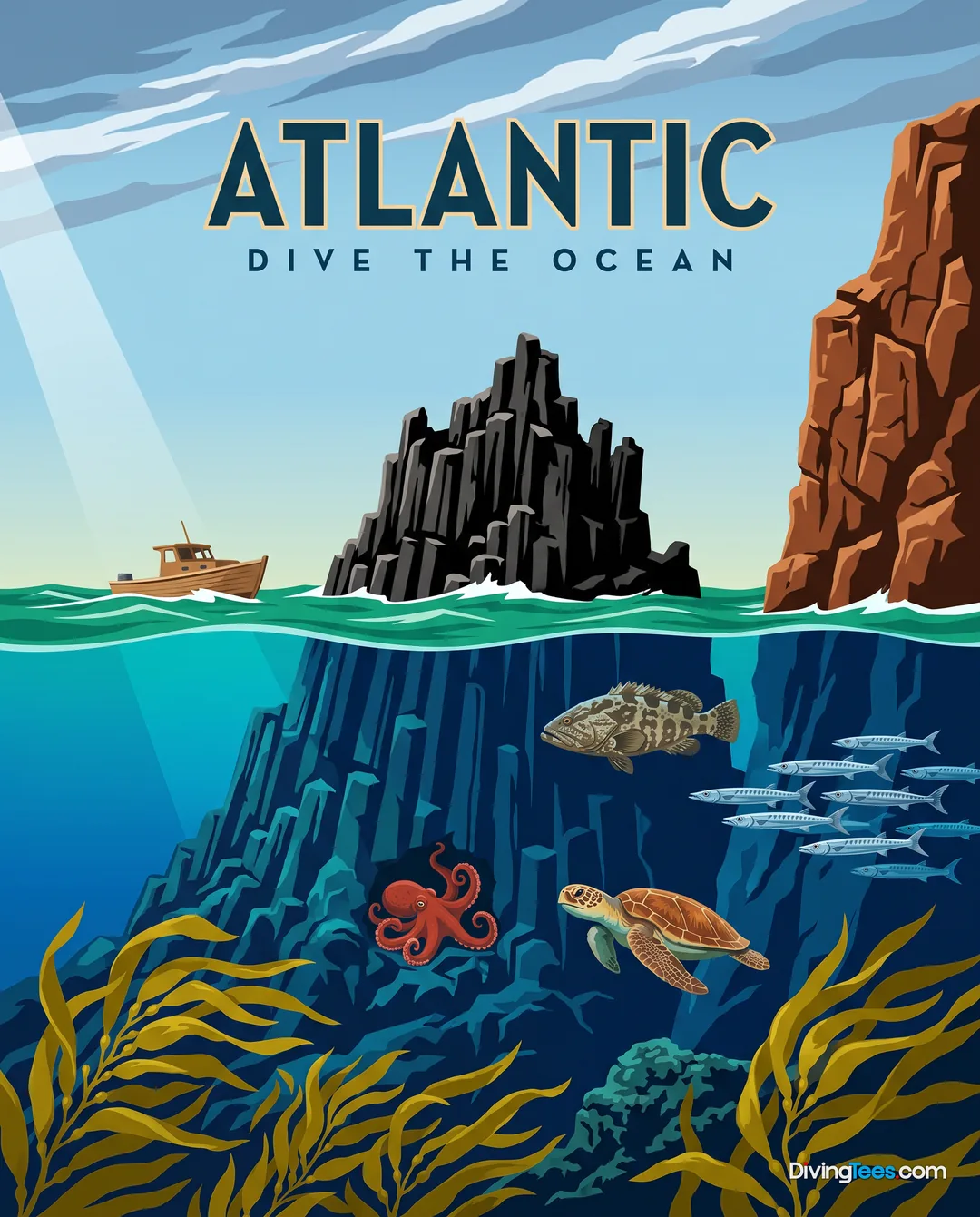
The underwater scenery moves between rocky reefs, kelp forests, drop-offs, sheltered shallows and wrecks. Baltimore opens the way to Cape Clear, Sherkin and the rocks of Roaringwater Bay, while Schull provides another departure point for the wider area. Some island and coastal sites can suit a confident Open Water diver, but the character changes quickly once a site is exposed or tidal. The Stags need proper tide planning, with moving water that is not interchangeable with a sheltered cove. Kowloon Bridge is a deep wreck rather than a casual extension of a reef dive. Expect boat outings planned around conditions, with a drift dive or a changed site possible when the water moves. Visibility is typically 3 to 10 metres, though a settled spell can bring markedly clearer water than swell or plankton blooms.
Grey seals are the most dependable wildlife thread through the year, particularly around the islands and shallow coves, although their appearance is never guaranteed on a particular dive. Dolphins may accompany a boat trip, and whales, including humpback whales, can be seen during feeding periods at sea. Basking sharks are seasonal visitors, while leatherback turtles are occasional rather than expected sightings. Underwater, the Atlantic rock is dressed in kelp, anemones and other invertebrates, giving sheltered sites plenty to examine when visibility closes in. The practical point is to keep the wildlife in perspective: a seal in a cove does not make the sea state benign, and surface sightings depend on the route and day as much as the calendar.
June to September is the most practical window for a diving stay. Summer usually brings the least cold surface conditions and the best general chance of running boat trips, which matters when Cape Clear, Sherkin or exposed wrecks are on the plan. July and August are busier in the harbours and on boats, while the edges of summer can be quieter if the weather allows. There is no guaranteed clear-water month here. Swell, recent storms and plankton blooms can reduce visibility at any time, so a calm period is more valuable than a particular date. Keep reserve days for the Atlantic rather than arranging every day around a single site.
The region can work for all levels because it includes shallow, sheltered sites, but it is not uniformly easy. A confident Open Water diver can use suitable coastal and Sherkin sites with local planning. Advanced training or equivalent experience is sensible for deeper and more exposed locations, and a Wreck qualification is appropriate for the wrecks. Cold-water experience is important, with local practice generally centred on a drysuit. The Stags and other tidal sites require the judgement to turn a dive down when the water is wrong.
From London Heathrow or Gatwick, or from Manchester, allow a full travel day for the flight connections and the final road journey to Skibbereen. The onward travel is by road, and the diving itself is not based in the town. Arrange the boat departure from Baltimore or Schull, then drive from your accommodation to the chosen harbour for each outing. Baltimore is reached by road from Skibbereen, while the exact transfer depends on where you stay and which sector is diving. Island sites are reached by boat, with some local island connections made by ferry. A hire car or other pre-arranged road transport is therefore part of the practical plan, rather than something to solve on foot once in Skibbereen.
Treat Skibbereen as the place to sleep and stock up, then organise the diving around Baltimore or Schull. Do not arrive expecting the boat to leave from the town. Leave weather margin in the programme, because swell or current can replace an exposed site, stop a boat day or make the Stags unsuitable. Keep the deeper wrecks, especially Kowloon Bridge, for a calm day and match the qualification, gas plan and equipment to the site rather than treating it as an ordinary reef dive. A drysuit or genuinely suitable cold-water protection is more than a comfort here. If visibility matters, aim for several settled days instead of betting on a month. Use sheltered or shallow sites as the fallback, but do not mistake a seal-filled inlet for easy diving. Book the harbour departure and the road transfer separately, and check the tide plan before committing to current-affected sites.
A five- to seven-day stay gives the practical shape of this coast: several possible boat days, room for a weather change and time away from the water. Sleep in Skibbereen if the wider choice of land-based accommodation suits you, but expect a drive to Baltimore or Schull on diving mornings. Non-divers can fill days with walking, cycling, golf, gardens, island trips, kayaking, sailing and wildlife watching. The arrangement is a shore-based holiday, not a liveaboard itinerary.
Hello, I'm Marina, DivingDeal.com's AI assistant. I guide you through destinations, areas and countries.
Thinking about the whole trip and the flights? Talk it over with Edith →
Marina is an AI. Some links are affiliate links: DivingDeal may earn a commission, at no extra cost to you. Bookings are made with the partner.
June to September is the most practical period for a diving stay around Skibbereen, with less cold at the surface and a better chance of running boat trips. July and August are busier. Plan reserve days, because swell, storms and plankton blooms can reduce visibility or alter the itinerary.
Skibbereen can suit different experience levels because the area includes shallow, sheltered sites, but conditions vary quickly. A confident Open Water diver may use suitable coastal and Sherkin sites with local planning. Deeper or exposed locations call for appropriate advanced experience, while wrecks require suitable training and cold-water preparation.
Around Skibbereen, boat dives reach kelp forests, rocky reefs, steep walls, drop-offs, sheltered coves and wrecks. Grey seals are the most dependable wildlife encounter, especially near islands and shallow inlets. Dolphins, whales, basking sharks and leatherback turtles may also appear, while anemones and other invertebrates cover the Atlantic rock.
Use Skibbereen as your inland base, then arrange boat departures from Baltimore or Schull and drive to the harbour. A five- to seven-day stay allows for weather changes and alternative sites. Keep reserve days, check tides, and match your equipment, gas plan and qualifications to exposed sites and deeper wrecks.