Liveaboards · Portugal
Water And Wind — a small sailing catamaran built around diving
What makes this boat unique
- This sailing catamaran carries no more than eight guests, with four double cabins and private bathrooms.
- The dive setup includes a shaded dive area, DIN adapters, a compressor, separate camera rinsing and a 3.80-metre RIB tender.
- The crew combines local skippers, SSI instructors, recreational and technical diving experience, and naturalist and snorkelling guides.
- Portuguese and local cuisine is served as full board, with vegetarian options, snacks throughout the day and outdoor dining.
- The boat can be chartered privately for diving, sailing, snorkelling, whale and dolphin watching, or research programmes.
For subtitles in English: start the video firstthen click the gearat the top right of the video, select “Subtitles/CC”, then “Auto-translate” and choose “English”.
The invitation
Water And Wind is for divers who would rather share a small sailing catamaran with seven other guests than disappear into a large liveaboard crowd. The reason to choose it is the scale: the crew can know every diver, every camera setup and every preference without turning the trip into a queue. It is also one of the few liveaboard boats operating in the Azores, with diving at its centre rather than added to a general sailing holiday. The boat suits a group that wants serious access to the water but does not want the day reduced to tank handling and briefings. Non-divers and snorkellers can come too, and private chartering makes sense for a club, family, research team or group of friends. Expect a sailing boat first in its feel, with the practical equipment needed to make it work as a dive platform.
Boarding
Water And Wind arrives as a compact catamaran rather than a floating resort. The two hulls give the boat a broad, open feel, while the low draft suits island waters and the sailing rig keeps the crossing quieter when conditions allow. Under power, twin engines provide the working sound of the boat; under sail, the machinery falls away and the Atlantic becomes much closer. Boarding leads quickly to the cockpit, the shaded dive area and the outside spaces where guests naturally gather between activities. The 2021 renovation matters more than a list of dimensions: it places the boat in the useful middle ground between an older working vessel and a newly launched yacht, with a diving layout already considered rather than improvised. A single tender handles shore and dive transfers. Movement is simple, which is exactly what helps on a small liveaboard.
The atmosphere on board
With eight guests at most, the social shape is close and quickly practical. People learn whose tank needs a different adapter, who is still working on a camera setting and who would rather snorkel than make the next descent. The crew moves through several jobs during the day: skippers handle the boat, instructors manage the diving, a naturalist or snorkelling guide can work with non-divers, and Marta also keeps the food moving. That overlap is an advantage on a small vessel because guests deal with people who are present in the operation, not a succession of departments. The crew speaks English, Dutch, German, French, Spanish and Portuguese. In the evening, the focus can be a meal outside, a review of images, a drink at the bar or simply the sound of the boat after the last activity. The crew’s strongest scores are for food and people; the boat itself is the more modest part of the proposition.
The sites you’ll dive
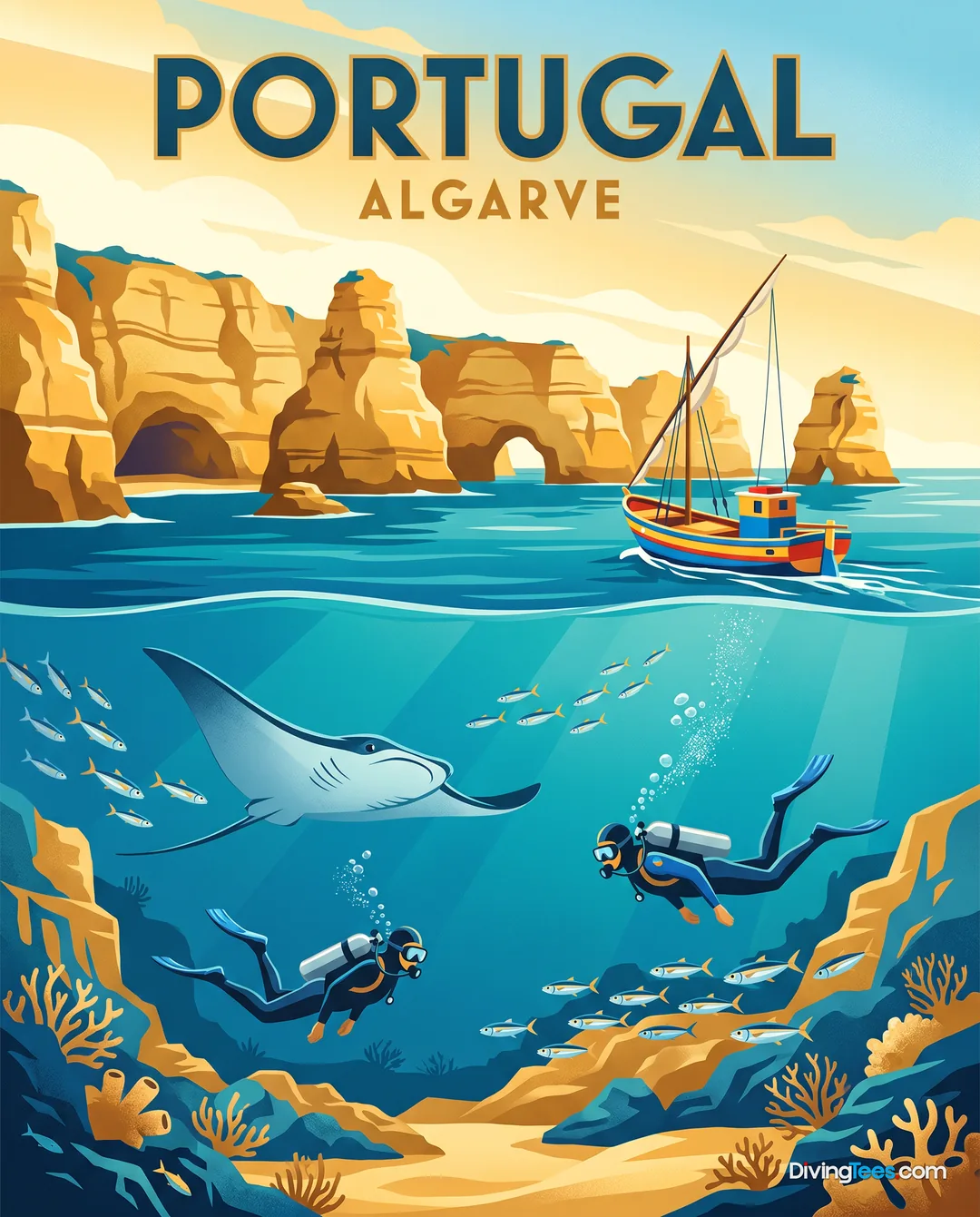
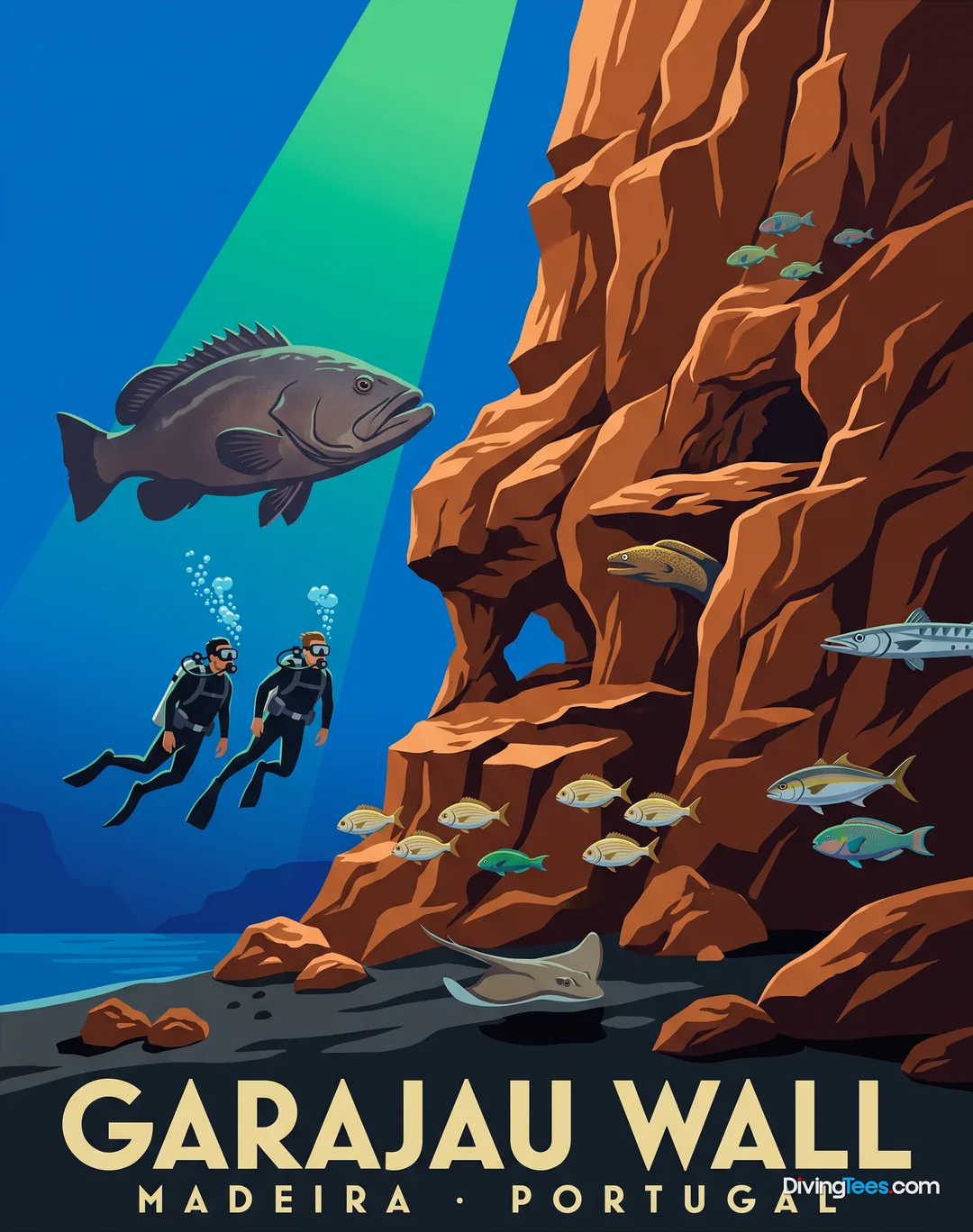
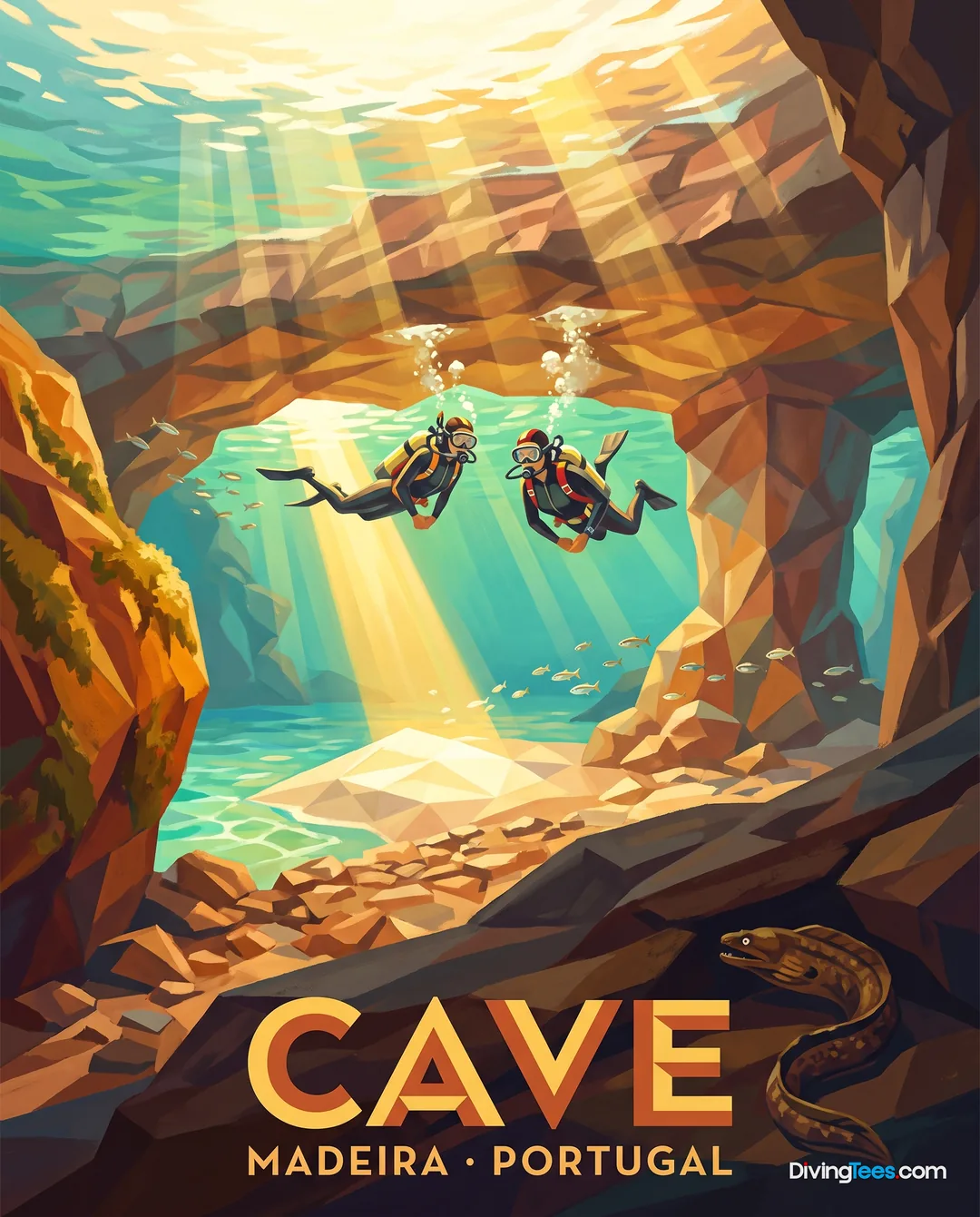
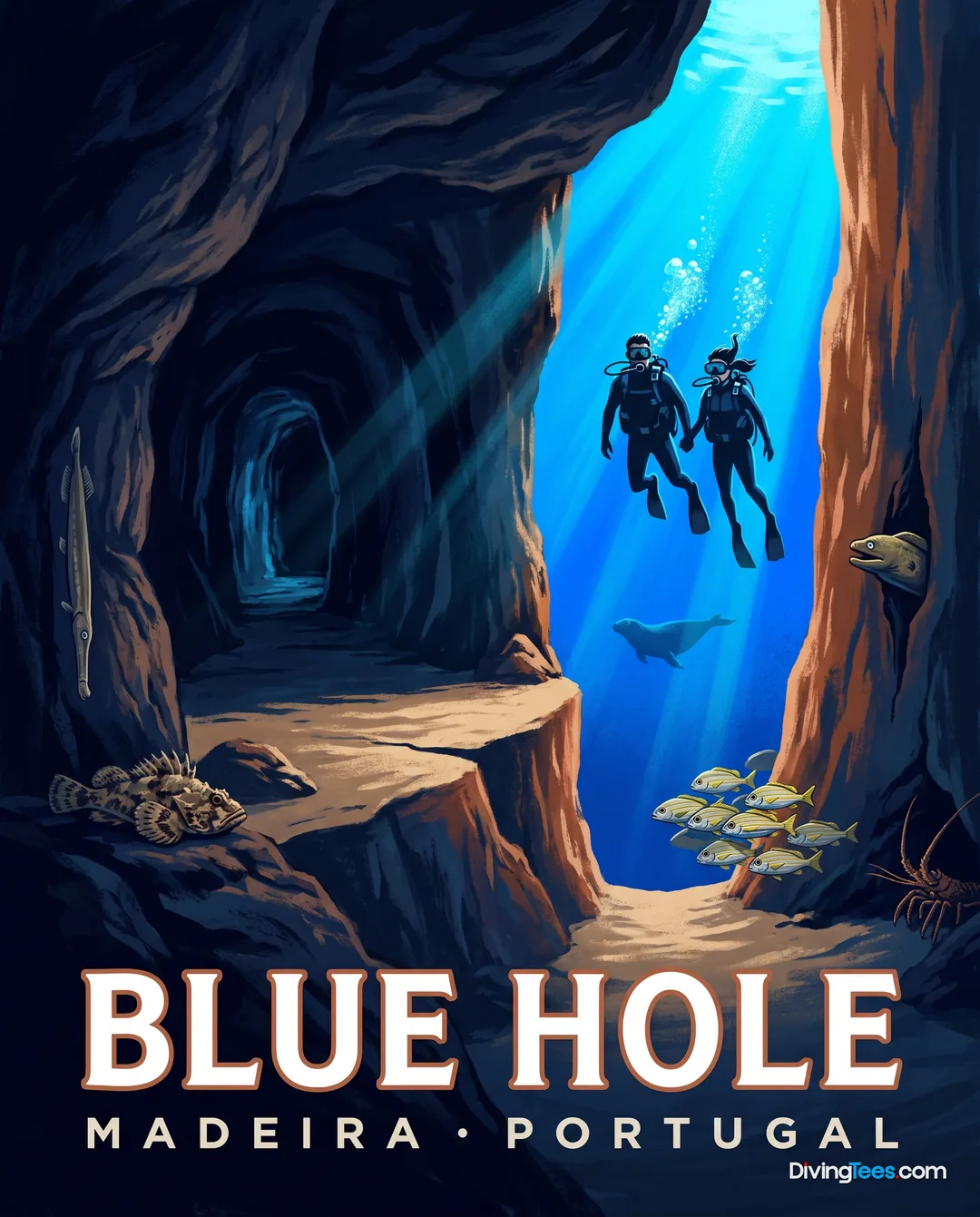
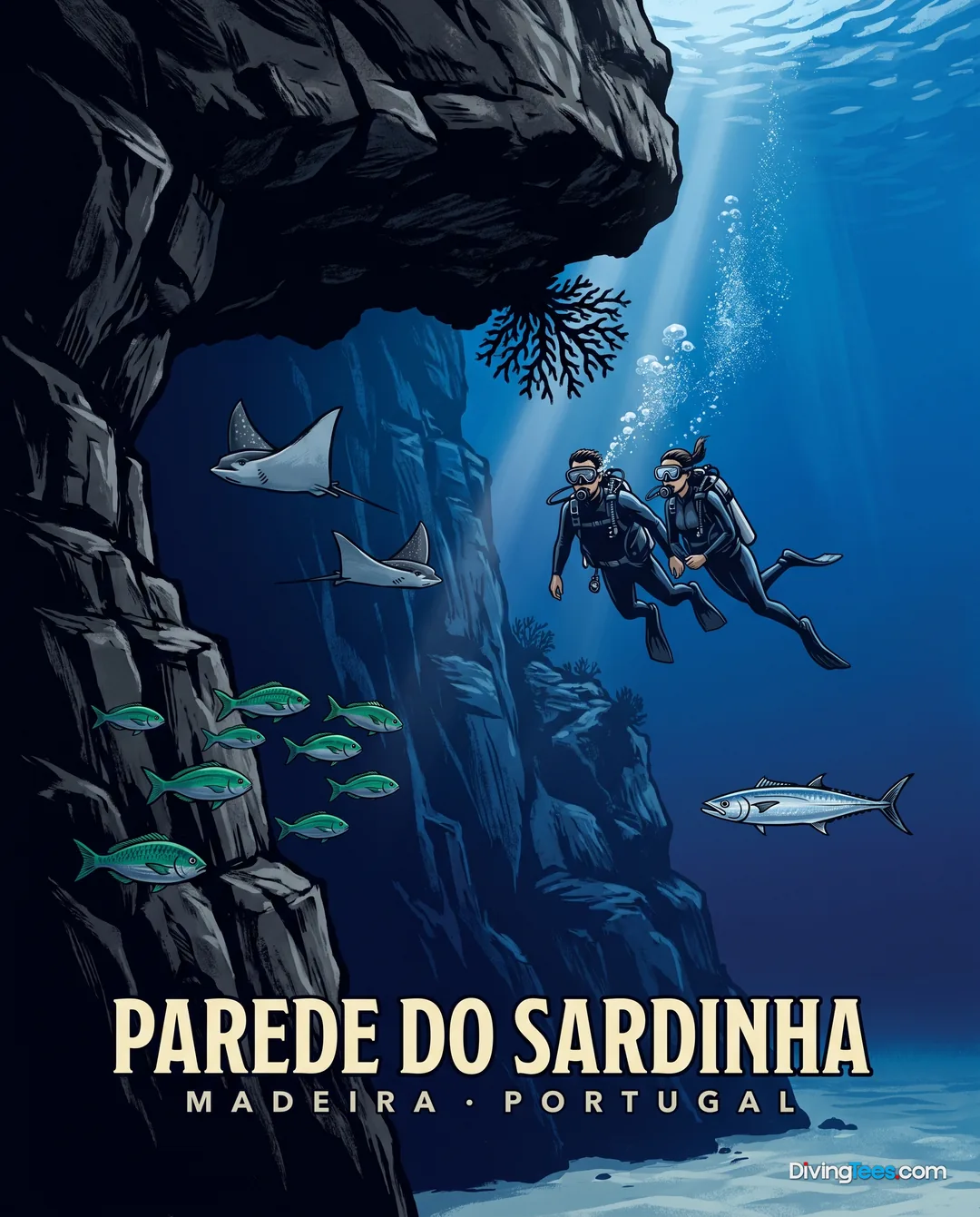
The listed departures run for 8 days and 7 nights, leaving from Vila Franca do Campo on São Miguel Island and returning there. The dive portfolio reaches from shallow volcanic rock to a 40-metre wall. At Ilhéu De Porto Moniz, sheltered water surrounds volcanic formations, with depths from 6 to 25 metres. Garajau Wall drops to 30 metres and brings large dusky groupers into a rich Atlantic wall dive. Cave is a shallow, 10-metre cave-style site at the edge of Madeira’s Underwater Natural Park, useful for divers refining buoyancy in an overhead environment. Blue Hole reaches 19 metres: a narrow tunnel opens onto a wall, turning a simple profile into a passage dive. Parede Do Sardinha is the deep one, descending to 40 metres along the submerged continuation of Ponta de São Lourenço, where black coral and pelagic rays give the site its reason to exist. This is a varied route, not a week of identical reef drops.

Itineraries, dates and prices
Prices per person. Each month shows its lowest price: click a month, or pick an itinerary.
Next departures · 1 departurefrom £2,671$3,571€3,190
August 2027
See dates and prices
If you click these links and make a purchase on the partner site, DivingDeal may earn a commission, at no extra cost to you.
Dates and prices taken from Divebooker and liveaboard.com, updated 24 October 2026
What you’ll meet underwater
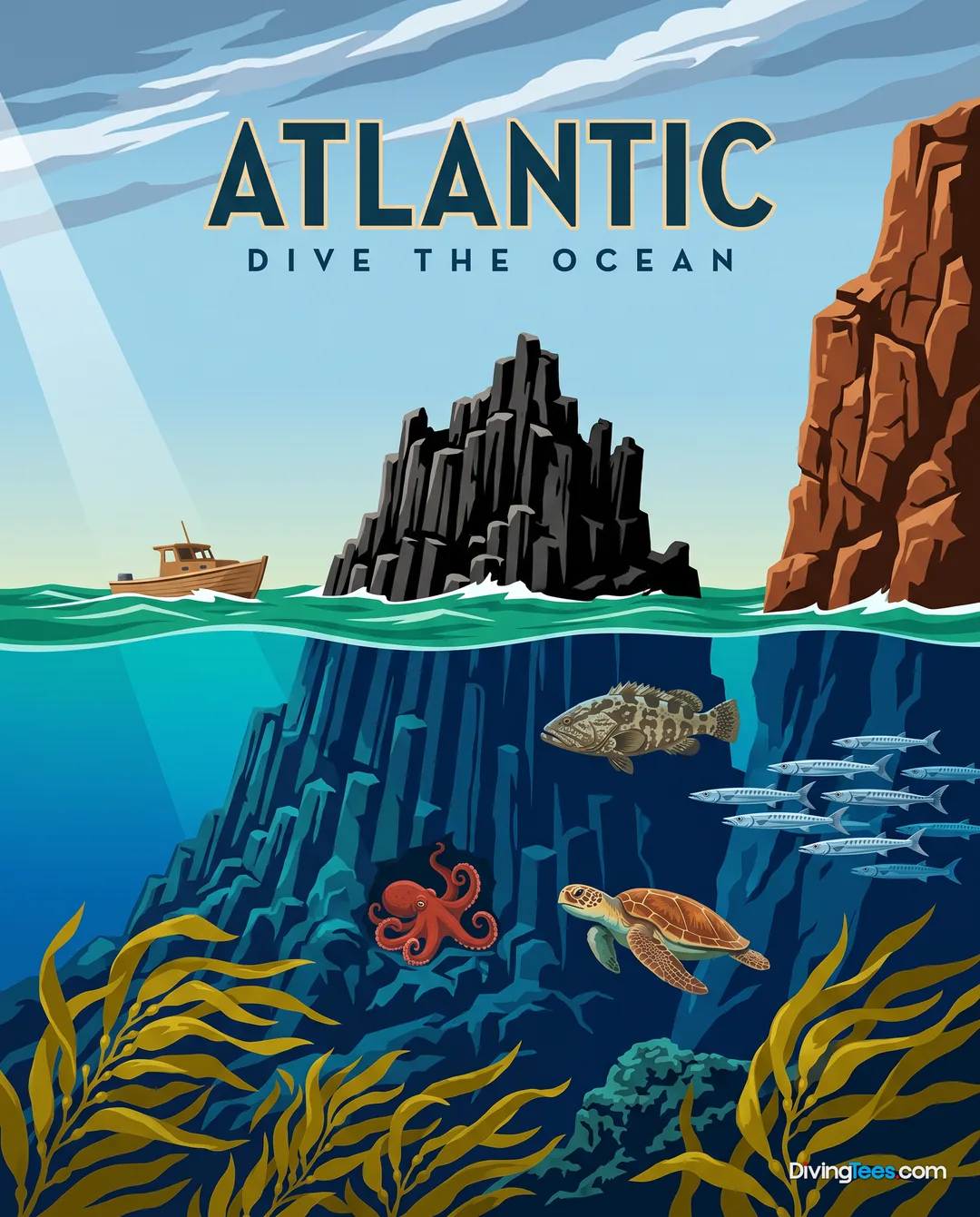
Volcanic rock is the common thread, with morays, octopus, wrasse, salema porgy, parrotfish, amberjack, grey triggerfish, rays and other Atlantic reef life possible across the route. The particular encounters are tied to particular sites. Garajau Wall is the place to look for dusky groupers, barracuda, labrids, octopus, parrotfish and marine turtles among the wall’s sheltering structure. Blue Hole concentrates the more unusual small-life search: trumpetfish, scorpionfish, crabs, prawns, conger eels, sea turtles, lobsters and bream can appear around the tunnel and wall. Parede Do Sardinha is the site for black coral formations, rays, eagle rays and kingfish, with the deeper wall opening the possibility of pelagic movement. The descriptions support possibilities, not guarantees. Divers should expect to spend as much time looking into cracks and along the wall as scanning open water.
Who puts you in the water
The people putting guests in the water include SSI instructors, local skippers and instructors qualified across agencies including PADI, SDI/TDI, CMAS, DAN and SSI. The team covers recreational and technical diving, equipment maintenance, instructor training and hyperbaric-chamber operation, giving the operation a strong technical base. Briefings and group organisation are handled by the dive crew. Courses can be arranged aboard, including PADI and SSI Open Water, Advanced Open Water and Rescue programmes. Languages on the wider crew include English, Dutch, German, French, Spanish and Portuguese. Safety equipment includes oxygen, first-aid kits, marine radios, EPIRB, life rafts, fire alarms and extinguishers, radar, GPS and sonar.
The dive deck and the gear
The dive area is shaded and arranged around a dedicated platform, with rinse tanks and separate camera rinsing. A compressor is carried on board, and DIN adapters are available. The setup supports recreational diving as well as technical diving, rebreathers and sidemount, giving experienced divers more freedom over their configuration. Rental equipment is available as an option. A single aluminium RIB tender takes divers to and from the sites, while the dive platform and access ladders handle water entry and return. Hot-water showers are available on board.
Between dives
Between dives, the boat gives guests a choice that is more useful than a long amenity list: shade over the dive area, sun on the outdoor decks, or the indoor salon when the Atlantic has become tiring. The observation deck and terrace provide room to watch the coast pass without having to leave the boat. Cameras have a separate rinse area and charging stations, so image work can continue without taking over the common space. A library, audio and video entertainment, and free limited Wi-Fi cover the slower stretches, though offshore reception is not dependable. Snorkellers and non-divers are part of the programme rather than passengers waiting for the divers to return. On custom charters, the same boat can spend the gap sailing, looking for cetaceans or stopping for water activities.
A day on board
A day starts with the boat preparing for the first briefing and divers checking equipment before the tender leaves the catamaran. The dive itself is followed by the practical sequence that makes a liveaboard work: return to the platform, rinse gear and cameras, eat, rest, and get ready for the next entry. The timing is shaped by the site and the sea rather than by an invented clock schedule. Between dives, guests can stay under the shade, move to the sun deck, sail, snorkel or let the crew handle the boat while they recover. Meals punctuate the day, with snacks filling the spaces that a diver’s appetite refuses to leave empty. Night dives are available as an optional activity, so the last descent is not automatically part of every programme. Later, the boat settles into dinner, conversation and the quiet work of preparing for the next day.
What you eat aboard
Marta Dias runs the galley as well as working as an SSI instructor and local skipper. Meals draw on Portuguese and local cooking, with Western dishes and vegetarian options where needed. Full board covers the meals, while snacks are available throughout the day; breakfast, lunch and dinner are not competing with the diving but supporting it. That distinction matters on a liveaboard. A diver returning from a wall wants food ready without a long wait, and a group preparing for the next entry benefits from a table that does not become another formal appointment. Dining can move outside, including barbecue arrangements when planned, so the meal is part of the time on deck rather than a break from it. Non-alcoholic drinks, tea, coffee and water are provided; beer, wine and cocktails belong to the paid drinks selection.
Nights at sea
The four guest cabins are double cabins with a standard window, sea views and a private bathroom. Beds can be split into two singles on request, so a shared cabin does not have to mean sharing a bed. The bathrooms also have external access, allowing the crew to use them without passing through a guest cabin. Nights are therefore more private than the boat’s sociable daytime scale might suggest. The space is deliberately limited: this is a 44-foot catamaran, not a ship with corridors and spare rooms. Guests sleep close to the water, with the sounds of rigging, wind and the boat’s systems replacing the silence of a hotel. Cabins are non-smoking, and the interior salon offers a quieter place to read or review the day’s images when the outside deck has lost the light.
Double Cabins
What to know before boarding
Water And Wind is based in Vila Franca do Campo on São Miguel Island, which is both the listed departure and return port for the 8-day, 7-night Azores departures. Transfers are not described as included, so guests should arrange their arrival to the port with the booking details in hand. Arriving the night before is the sensible choice for an island departure: it leaves room for flight delays and avoids turning embarkation into a race from the airport.
Deck plan
What the boat does for the ocean
Water And Wind uses solar power and a wind generator as part of its onboard energy system, supporting quieter sailing and reducing reliance on the diesel generator. The boat also carries a watermaker, giving the crew an onboard source of fresh water during the voyage.
- Year built
- 2016
- Year renovated
- 2021
- Length
- 13.4 m
- Beam
- 7.5 m
- Maximum number of passengers
- 8
- Number of cabins
- 4
- Number of bathrooms
- 4
- Engines
- 2 × 55 hp
- Cruising speed
- 6 knots
- Tenders
- 1
- Website
- waterandwind.eu ↗
Hello, I'm Marina, DivingDeal.com's AI assistant. I answer in detail about hotels, dive centres and liveaboards.
Thinking about the whole trip and the flights? Talk it over with Edith →
Marina is an AI. Some links are affiliate links: DivingDeal may earn a commission, at no extra cost to you. Bookings are made with the partner.