Isle of Man · United Kingdom · Atlantic
Max. depth · 35 mChickens Rock, Isle of Man: Diving strong currents and walls
Descend Chickens Rock and navigate gullies and encrusted walls, home to a diverse array of anemones and wrasse, in the exposed conditions south of the Isle of Man.
What makes this site special
- Explore gullies and encrusted walls from 6 to 35 metres.
- Encounter grey seals, ballan wrasse, and pollack.
- Observe diverse anemones: snakelocks, dahlia, plumose, elegant.
- Strong tidal currents define the dynamic environment.
- Rich sponge and soft coral growth on rock faces.
- Offshore location provides exposed, challenging conditions.
Chickens Rock about the site
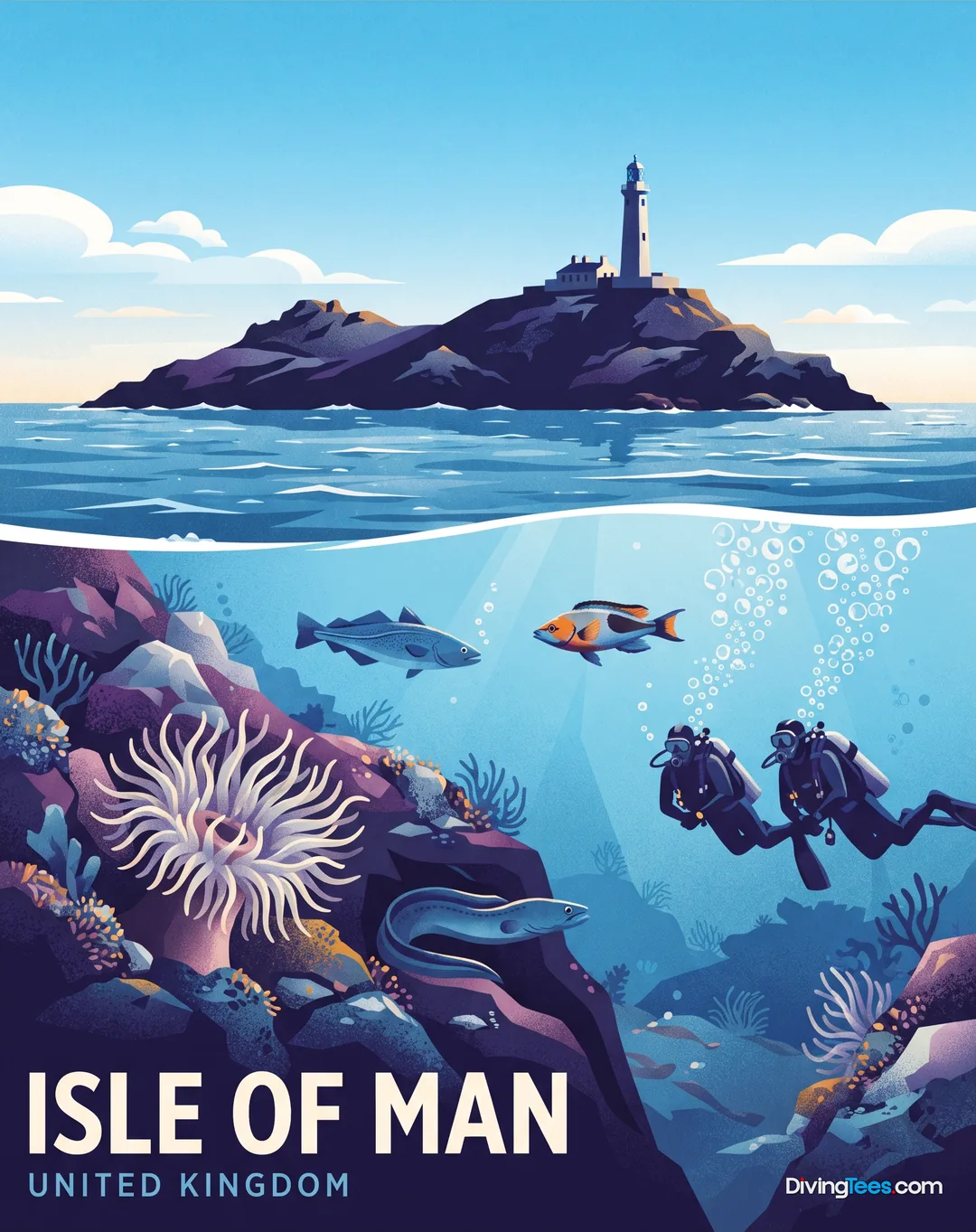
Chickens Rock is a small, exposed islet marking the southern reach of the Isle of Man, breaking the surface before its underwater profile plunges to depths of 35 metres. The rock’s topography is carved by tidal forces, creating a landscape of deep gullies, sheer walls rich with encrusting life, and varied rocky relief. It’s a site where the seabed drops off rapidly from the shallow, kelp-covered zones, providing a range of depths that cater to different dive plans around its flanks.
Approaching Chickens Rock by boat, typically from the south coast of the Isle of Man, you'll find the dive site situated about 800 metres from the Calf of Man. Its offshore position and surrounding deep waters are the primary drivers of the strong tidal currents that characterize this dive. These currents sculpt the underwater environment and dictate dive planning, requiring careful consideration of the tidal window to safely explore the site's extensive features.
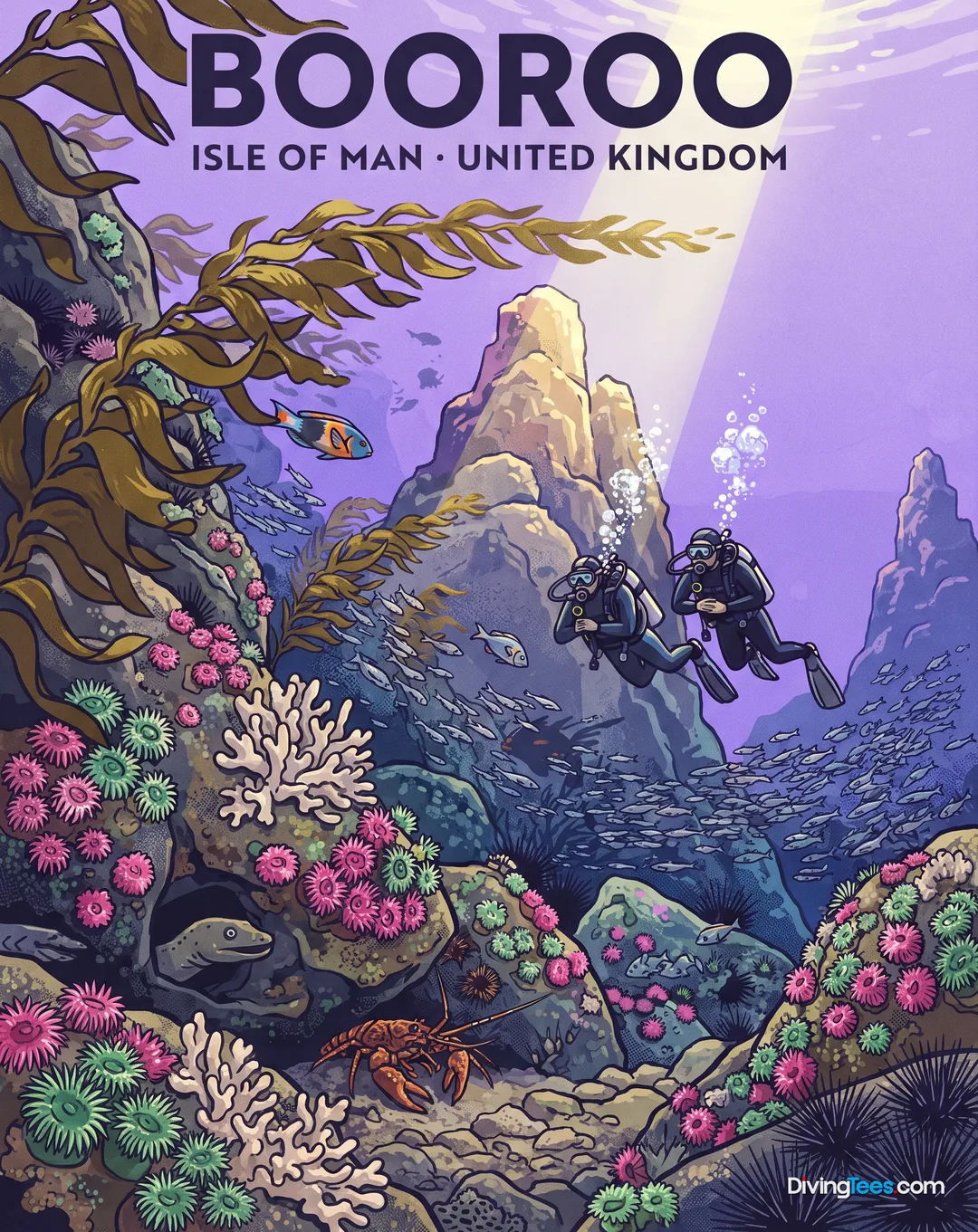
Once submerged, the dive reveals walls adorned with a vibrant array of filter feeders. You'll encounter numerous anemone species, including the striking snakelocks anemone, the robust dahlia anemone, and the elegant plumose anemone, alongside the delicate elegant anemone. These sessile organisms thrive in the nutrient-rich waters brought by the currents, painting the rock faces with colour and providing habitat for smaller invertebrates.
The rocky structures and gullies provide shelter and hunting grounds for various fish species. Ballan wrasse are common, often seen foraging along the kelp lines and rock crevices, while pollack navigate the more open water columns. Crabs and lobsters inhabit the deeper recesses and underhangs, camouflaged against the dark rock, requiring a keen eye to spot them.
Beyond the smaller reef life, grey seals are frequent visitors to Chickens Rock, often curious and interactive. Their presence adds another dynamic layer to the dive experience, as they may approach divers, particularly in the shallower, kelp-fringed areas. Observing them in their natural environment underscores the wild, exposed nature of this site.
The currents, while strong, are also responsible for the rich sponge and soft coral growth that blankets parts of the rock. These organisms filter the passing water, contributing to the site's biodiversity and structural complexity. The interplay between current, light, and topography creates a constantly evolving tableau, where marine life adapts to the energetic flow.
What sets Chickens Rock apart from other sites in the region, such as the nearby Burroo, is its heightened exposure and consistently strong currents. While sharing similar gully and wall formations, the offshore setting of Chickens Rock intensifies the challenge, making it a distinct dive that demands respect for the ocean's power. It's a site for divers who appreciate dynamic conditions and the vibrant life these conditions foster.
Diving Chickens Rock: the marine life you’ll meet

Diving conditions
Chickens Rock is an advanced dive, suitable for divers comfortable in strong tidal currents. Depths range from a minimum of 6 metres to a maximum of 35 metres. Visibility typically ranges between 10 and 25 metres. Plan your dive around the tides, as strong currents are a defining feature, easing somewhat during neap tides but always requiring careful management.