Rebreather Pro Training
Google 5/5 (3 reviews)
United Kingdom · Atlantic
Stoney Cove’s flooded granite quarry, training platforms, wrecks and 36-metre depth give Lutterworth its practical appeal for club divers and trainees.
For subtitles in English: start the video firstthen click the gearat the top right of the video, select “Subtitles/CC”, then “Auto-translate” and choose “English”.
Stoney Cove’s flooded granite quarry, with wrecks, training platforms and depths down to 36 metres, is the underwater reason to base yourself in Lutterworth. The town itself is inland, so this is not a seaside break with dives outside the front door. It is a practical Leicestershire base for club training, equipment sharing and planned drives to quarry sites, the British coast or overseas. Allow two or three days for a focused club stay, and longer only when a course or road trip justifies it.
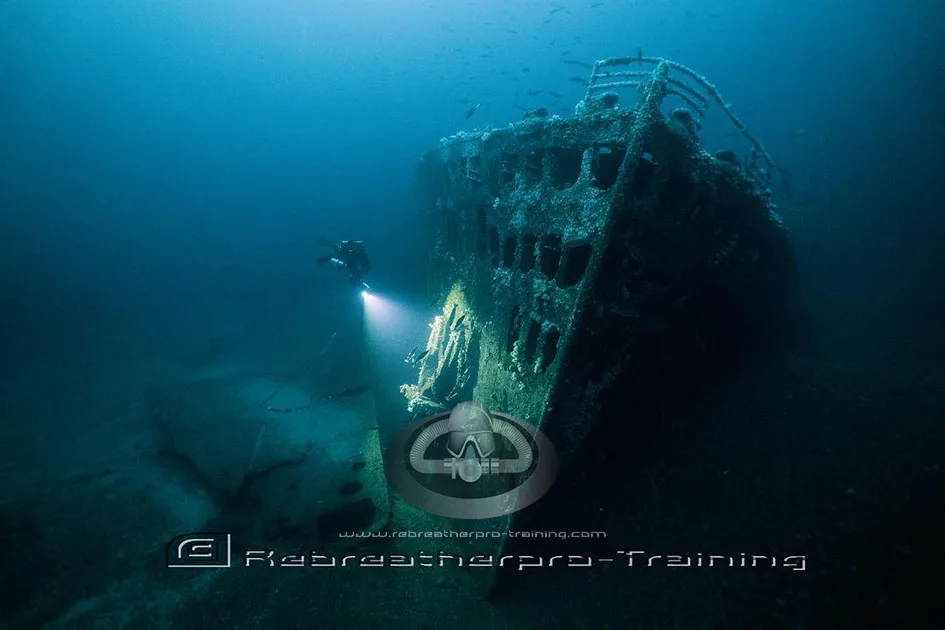
The diving around Lutterworth is built around Stoney Cove’s submerged granite quarry rather than a natural reef. Underwater, the interest lies in working through training platforms, locating wrecks and managing depth, with the site reaching 36 metres. That gives a new diver somewhere structured to learn, while a more experienced diver can use the quarry for skills, practice or a planned wreck dive. Currents are not the feature here, and this is not a drift dive or a downcurrent destination. Visibility is generally kinder from late spring into early autumn, when the water is more pleasant, although no dependable figure should be assumed. The outing is usually organised through a club, with divers travelling by car, sharing equipment and joining a planned session rather than turning up for a sequence of guided dives.
Lutterworth is not a destination to choose for named marine animals or a seasonal wildlife spectacle. There is no coastal reef in the town, and Stoney Cove’s appeal is the flooded quarry itself: granite walls, submerged platforms and wrecks provide the things to look at and navigate around. The underwater experience is consequently about buoyancy, depth, orientation and the changing feel of a training site, not waiting for a particular animal to arrive with the tide. Club excursions can broaden the experience to the British coast or overseas, where wildlife becomes part of the plan, but that is a different trip from diving around Lutterworth.
Stoney Cove operates throughout the year, so Lutterworth can support training outside a conventional holiday season. Late spring to early autumn is the more comfortable window for quarry diving, and visibility is generally better then. That matters when the purpose is practising skills, finding wrecks or working through a deeper profile, because clearer water makes the site easier to read. There is no defined rainy season, monsoon or coastal weather pattern shaping the local diving. The colder months remain workable for a club programme, but they make a short leisure stay less forgiving when the main aim is relaxed inland diving.
Beginners can use Lutterworth as a starting point because local clubs offer try-dives and progressive training. BSAC is particularly relevant to the club structure, while PADI or SSI qualifications can provide a familiar route into the sport. Stoney Cove also suits qualified divers revisiting skills or preparing for more demanding dives. A wreck qualification is useful for the quarry’s wrecks, and appropriate experience is needed before attempting the deeper areas down to 36 metres. The club setting suits divers who are comfortable with planned sessions rather than spontaneous shore diving.
From London, using LHR or LGW as your starting point, or from Manchester, the practical route to Lutterworth is by road across the Midlands. No ferry crossing or domestic flight is needed to reach this inland base. Once in the area, plan on driving between your accommodation, Lutterworth and Stoney Cove, because a regular tourist shuttle or dedicated dive taxi is not part of the arrangement. Club transport may be organised through shared cars and equipment, but it needs to be agreed in advance. Treat the journey as a road-based club trip, not as an arrival followed by walkable dives from the town centre.
The first mistake is to book Lutterworth as a coastal diving holiday. Put Stoney Cove into the plan from the beginning, then decide whether the rest of the stay is for training, quarry practice or a club drive to the coast. Contact a local club before travelling if you need a place on a session, shared kit or a lift, rather than assuming that diving will be available on arrival. Bring or arrange transport between the town and the site, as the connection is not a walk from central Lutterworth and no lasting shuttle service is documented. If wrecks or the 36-metre sections are your aim, sort the relevant qualification and experience before the trip. A two- or three-day stay works for a concentrated programme; add days only for a course or further road outings. Keep the town’s ordinary land-based attractions as a fallback, not as evidence that it is a seaside resort.
A Lutterworth stay is organised around the club calendar. Spend the diving days at Stoney Cove, using its platforms, wrecks and deeper sections for training or leisure, then allow time for equipment handling and the drive back. Longer visits can add a road trip to the British coast or an overseas club holiday. On non-diving hours, explore Leicestershire villages and heritage, cycle or walk through the Midlands countryside, or spend a day around Leicester. Accommodation is in town or nearby, with transport arranged separately.
Hello, I'm Marina, DivingDeal.com's AI assistant. I guide you through destinations, areas and countries.
Thinking about the whole trip and the flights? Talk it over with Edith →
Marina is an AI. Some links are affiliate links: DivingDeal may earn a commission, at no extra cost to you. Bookings are made with the partner.
You can dive at Stoney Cove throughout the year, so Lutterworth supports training beyond the conventional holiday season. Late spring through early autumn is generally more comfortable and usually offers better visibility for reading the quarry, practising skills, locating wrecks and managing deeper profiles. Colder months remain workable for organised club programmes.
Lutterworth suits beginners through local try-dives and progressive training, including BSAC, PADI and SSI routes. Qualified divers can revisit skills or prepare for more demanding dives at Stoney Cove. Wrecks benefit from relevant qualification, while the deeper sections require appropriate experience. The setting favours planned sessions rather than spontaneous shore diving.
Diving in Lutterworth centres on Stoney Cove’s flooded granite quarry, where granite walls, submerged training platforms and wrecks provide the main underwater interest. You can work on buoyancy, depth and orientation rather than searching for named marine animals or seasonal wildlife. Club excursions to the British coast or overseas form different trips.
Base your stay around Stoney Cove and arrange sessions with a local club before travelling if you need shared equipment, transport or a place on a programme. Plan to drive between accommodation, Lutterworth and the quarry, since the dives are not walkable from town. A focused club visit can combine training, practice and equipment handling.