Bloody Bay Scuba School
Google 5/5 (25 reviews)
Cayman Islands · Caribbean
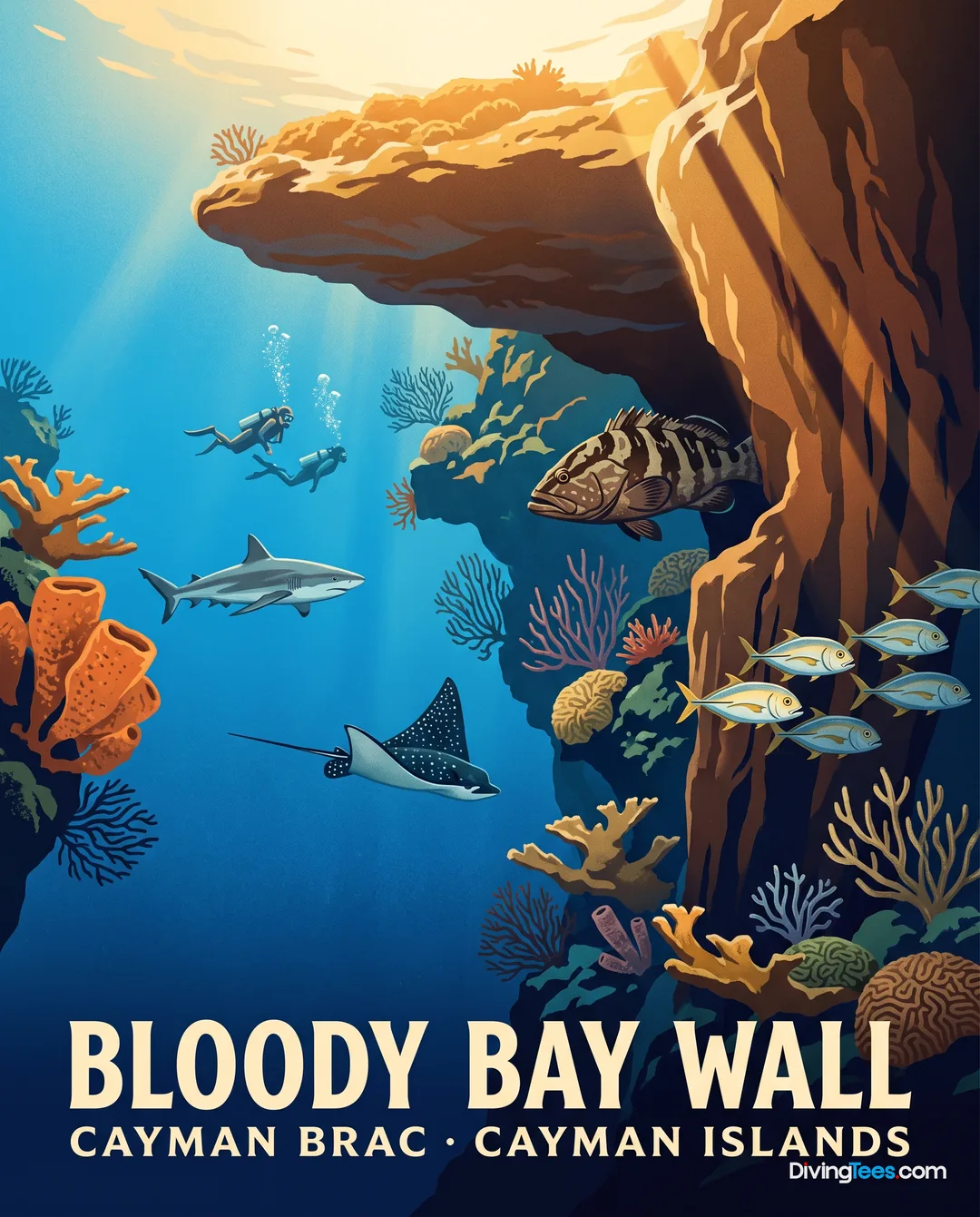
Bloody Bay Wall combines a sheer vertical drop, vibrant reef structure and diverse marine life in a year-round setting suited to many experience levels.
For subtitles in English: start the video firstthen click the gearat the top right of the video, select “Subtitles/CC”, then “Auto-translate” and choose “English”.
Little Cayman is defined underwater by Bloody Bay Wall, where the seabed gives way to a sheer vertical drop alongside a vibrant reef system. The site’s scale provides the main sense of place: divers follow the wall, look into the blue beside it and examine marine life settled across the reef. Bloody Bay Wall is described as suitable for divers of all experience levels, making it a straightforward choice for a group whose members may not all have the same background.
The character of Little Cayman’s diving is set by the wall rather than by a collection of unrelated underwater features. At Bloody Bay Wall, the defining view is a sheer vertical drop running beside a vibrant reef system. The dive is about moving along that profile, keeping the wall in sight and pausing to examine the reef and the marine life occupying it. No particular current pattern is supplied, so this should not be approached as a destination chosen specifically for drift diving. Depth figures are not part of the available site description either. What is clear is the topographical appeal: a large, vertical underwater face that gives the dive a strong visual structure and remains available throughout the year.
Bloody Bay Wall is associated with diverse marine life set against its vertical reef backdrop. Divers can expect the wildlife interest to come from examining the reef face and its surroundings rather than from a named seasonal encounter. No particular species or migration period is identified, so the sensible expectation is a year-round marine-life dive rather than a trip planned around one animal. The wall gives the eye plenty to work with: the reef close at hand, the open drop beside it and changing views as the dive progresses. That combination makes slow observation worthwhile, particularly for divers who enjoy looking closely rather than simply covering distance.
Little Cayman can be considered throughout the year because Bloody Bay Wall is described as accessible year-round, with consistent conditions for exploration. That flexibility matters more here than chasing a narrow seasonal window: the principal attraction is the wall itself, and its vertical profile does not depend on a short-lived event. Planning can therefore follow flight availability, personal timing and the needs of the travelling group rather than a specific month.
This coast is exposed to sargassum strandings, whose intensity varies greatly from year to year. To find out more, see the “Sargassum alert” panel on this page.
Bloody Bay Wall is presented as suitable for divers of all experience levels. Its clear visual structure makes it possible for newer divers to concentrate on buoyancy and orientation beside the reef, while more experienced divers can spend longer reading the wall and watching marine life. BSAC, PADI and SSI divers should use the qualification and experience appropriate to the depth and conditions of their planned dives.
For readers setting out from London Heathrow, London Gatwick or Manchester, Little Cayman should be planned as an island journey rather than treated as a simple direct break. The essential task is to check the complete connection from the chosen UK departure point to Little Cayman, including the final island leg, and to allow sensible margin between linked services. The island destination and the dive operation should be considered together when fixing arrival and departure days. Once on Little Cayman, the local arrangement should be confirmed in advance rather than assumed. The year-round diving window gives some flexibility when building the itinerary.
Make Bloody Bay Wall the reference point when judging the trip, not an imagined list of named animal encounters. The defining experience is the sheer vertical drop beside the vibrant reef, so allow time to settle into the wall’s scale and to look closely at the marine life rather than treating the dive as a quick scenic pass. Because the site is described as accessible throughout the year, there is no need to force the journey into a narrow seasonal plan. That is useful for older divers travelling as a group: the itinerary can be built around comfortable connections and a sensible pace. Keep the travel plan flexible enough to accommodate the complete island connection from London Heathrow, Gatwick or Manchester, and confirm how the final local transfer works before departure. Underwater, stay oriented by the reef face and avoid allowing the open drop to become a distraction from depth control.
A stay on Little Cayman can be organised around repeated exploration of Bloody Bay Wall, using its year-round accessibility to keep the diving schedule flexible. The site’s vertical drop and vibrant reef give the trip its central rhythm: follow the wall, pause over the reef and look for marine life along the profile. The island journey makes a carefully connected arrival and departure plan more important than a rushed short visit.
Hello, I'm Marina, DivingDeal.com's AI assistant. I guide you through destinations, areas and countries.
Thinking about the whole trip and the flights? Talk it over with Edith →
Marina is an AI. Some links are affiliate links: DivingDeal may earn a commission, at no extra cost to you. Bookings are made with the partner.
You can visit Little Cayman throughout the year because Bloody Bay Wall is described as accessible year-round, with consistent conditions for exploration. There is no narrow seasonal window or named migration period to target. Choose timing around flight availability, your personal schedule and the needs of your travelling group.
Little Cayman suits divers of all experience levels at Bloody Bay Wall. Newer divers can focus on buoyancy and orientation beside the reef, while more experienced divers can spend longer reading the wall and observing marine life. Plan each dive according to your qualification, experience, depth and the conditions.
At Little Cayman’s Bloody Bay Wall, expect a sheer vertical drop beside a vibrant reef system, with diverse marine life across the reef and its surroundings. The experience centres on following the wall, looking into the blue and pausing for close observation, rather than planning around named species or seasonal encounters.
Plan Little Cayman as an island journey, checking the complete connection from London Heathrow, London Gatwick or Manchester, including the final island leg. Allow sensible margin between linked services, coordinate arrival and departure days with the dive operation, and confirm local arrangements in advance. Build the stay around repeated exploration of Bloody Bay Wall.