Liveaboards · Cuba
Jardines Avalon Fleet — a spacious, modern base for shark diving in Cuba
What makes this boat unique
- The fleet runs 8-day, 7-night round trips from Júcaro into Jardines de la Reina.
- The boats combine air-conditioned cabins and salon spaces with shaded diving areas, camera rinses, hot showers and a jacuzzi.
- Up to four dives a day are offered from Sunday through Friday, including night dives.
- English- and Spanish-speaking crews welcome divers of all levels, snorkelers and non-divers.
The invitation
Jardines Avalon is chosen for the destination first: Jardines de la Reina, one of the Caribbean's protected marine areas, reached by a fleet built around long stays at sea rather than short resort dives. The boats give divers a comfortable base for a week of shark encounters, reef life and macro photography, while non-divers have space above the water and naturalist excursions to fill their days. This is not a stripped-down expedition boat. It is a modern liveaboard where the diving operation remains central, but the cabin, food and quiet hours are treated seriously too.
Boarding
The arrival impression is of a large, purpose-built diving yacht rather than a converted fishing boat. Cabins and common areas are air-conditioned, the diving space is shaded, and the boat has enough separate areas for divers, photographers and non-divers to move without turning every surface into a gear station. The layout is practical: equipment goes below for preparation, the tenders handle the trips to the reefs, and the upper areas open onto sea views, outdoor dining and a jacuzzi. The fleet dates from 2014 to 2021, with renovation work recorded in 2015. That shows in the clean, modern brief: less nautical nostalgia, more space and easier week-long living.
The atmosphere on board
The atmosphere is helped by a crew that stays available throughout the day and speaks English and Spanish. Requests do not have to travel through a formal chain: special food needs and practical suggestions can be passed to the captain or cruise director and shared with the staff. The result is a service style that feels hands-on without being theatrical. Over a week, divers from different countries tend to meet in the salon, around the outdoor table or after the last dive, while the crew keeps the operation moving in the background. The food and diving are the strongest parts of the experience; the boat supplies the space that lets both work properly.
The sites you’ll dive
The route is Jardines de la Reina, with departure and return at Júcaro, over 8 days and 7 nights. The boats use fast tenders to reach different reef areas and can combine reef walls, coral formations, mangrove channels and shallow water suited to snorkelling. The diving material for this fleet includes sites such as Pipín, Farallón, Vicente, Black Coral I and Black Coral II, but no verified site depth is attached to this specific itinerary here. What can be said with confidence is that the route is built around protected reefs with strong fish life, shark encounters and clear water rather than wreck diving or a single fixed site. The tender-based operation gives the guides room to vary the day's locations.
What you’ll meet underwater
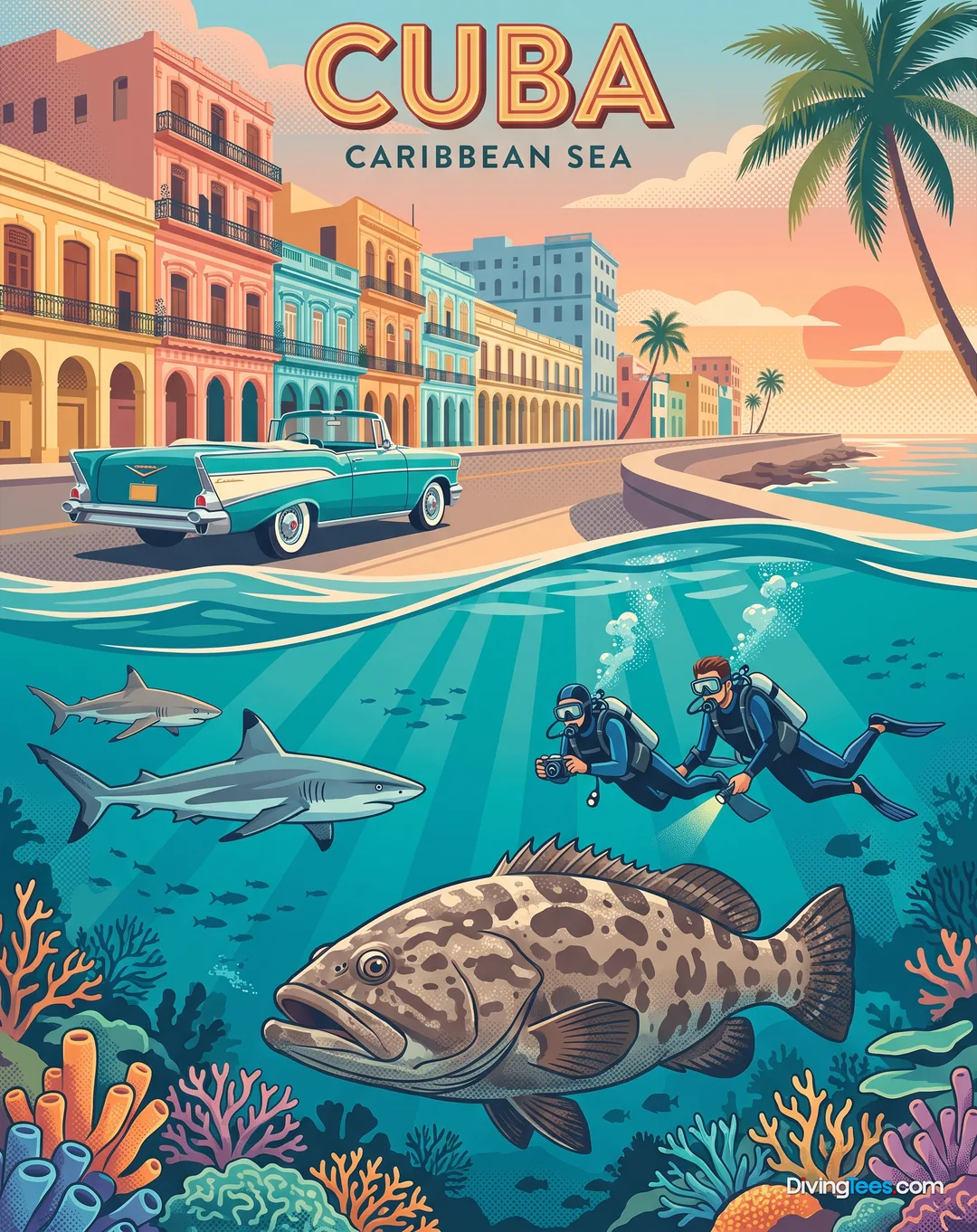
Jardines de la Reina is the place to come for large Caribbean animals as well as the small subjects that reward a slow photographer. Sharks are a central attraction, alongside groupers, snappers, jacks, rays, barracuda, turtles and dense reef fish, with coral, sponges and gorgonians filling the structure around them. The route is also recommended for macro photography and lobster encounters. At 5 Seas, curious Nassau groupers have been known to stay with divers, while the shallow reef offers gorgonians, angelfish, tarpon and unusual coral colonies. The exact mix changes with the site and conditions; the appeal is the combination of protected reefs and unusually abundant life.
Who puts you in the water
English- and Spanish-speaking instructors and dive guides handle the briefings and lead the dives. Before entering the water, they explain the character of the site, what divers may encounter and how to behave around sharks and other marine life. The programme is intended for divers of all levels, with a check dive at the start of the week to confirm equipment and comfort in the water. Crew members are trained in first aid, and oxygen, first-aid kits, life jackets, emergency rafts, fire equipment and marine communications form part of the safety setup. The operation does not publish a fixed guide-to-diver ratio or a minimum logged-dive requirement for this route.
The dive deck and the gear
The diving setup is built for repeated entries rather than one formal dive a day. A shaded dive area leads to a platform, with two tenders taking divers out to the reefs and collecting them after the dive. The Avalon operation uses 12-litre aluminium tanks with INT connections and 12-litre steel tanks with DIN and INT connections; DIN adapters are available. Compressors include two Bauer KAP-15 units and a Coltri compressor, and nitrox is available as an optional extra. Rental equipment is available, with quality Cressi-Sub modules through the dive centre. Cameras get a separate rinse area, while first-aid equipment, oxygen and warm showers are on board. The practical advantage is simple: gear can stay organised, cameras have their own water, and the tenders keep the larger yacht out of the shallow reef work.
Between dives
The gaps between dives are spent where the heat and the wind dictate: under the shaded areas, in the air-conditioned salon, or out on the observation deck with the sea open around the boat. The jacuzzi gives the afternoon a clear ritual after a morning in the water, while the terrace, outdoor dining area and barbecue space keep people outside when conditions are comfortable. Stand-up paddleboards and naturalist excursions offer non-divers something more than waiting for the divers to return. For photographers, the separate camera rinse and photo area make the quiet hours useful rather than merely empty.
A day on board
The day starts with a 7:00 wake-up call, followed by coffee or tea and breakfast at 7:15. The first divers' briefing is ready for 8:00, and the schedule then leaves room for up to four dives across the day, including a night dive. Surface intervals bring divers back to the mother boat for food, showers and time in the shade before the tenders head out again. Lunch and dinner break up the diving without turning the day into a rigid timetable. Between dives, the boat may move through mangrove channels and past beaches, birds and other coastal wildlife. Diving runs from Sunday through Friday, with the boat returning toward Júcaro on Friday afternoon and spending the night in port.
What you eat aboard
Meals cover Cuban cooking, grilled seafood and vegetables, and international dishes, with both buffet and à la carte service. Vegetarian choices are available, and the galley can respond to dietary needs when the crew knows them in advance. Snacks remain available through the day, which matters when four dives are on the plan and lunch cannot be treated as a long restaurant sitting. Dinner brings wine included with the meal; beer, wine and cocktails are also available on board. The table is generous without becoming the point of the trip: divers can eat well, get back to the gear and still have time for the next briefing.
Nights at sea
The Standard Cabins and Suite Cabin give the fleet a hotel-like side without losing the liveaboard setting. Cabins are air-conditioned, have private bathrooms and panoramic windows; some include balconies. After a late return from the tenders, the useful detail is not decoration but the ability to close the door, cool the room and take a proper hot shower before the next meal. The interior salon is another air-conditioned refuge when the sun is hard on deck. Outside, shaded areas keep the boat usable between dives, while the observation deck and sea-facing cabins make the crossing part of the trip rather than time spent waiting for the reef.
Standard Cabins
Suite Cabin
What to know before boarding
The cruise departs from and returns to Júcaro, on an 8-day, 7-night Júcaro-to-Júcaro route. Collective Avalon transfers are available on Saturdays from Camagüey or Havana to the port and back. Travellers coming through Havana should arrive the night before, while Camagüey arrivals are normally arranged for Saturday. The boat returns to port on Friday afternoon, with departure from the vessel on Saturday morning according to the group transfer.
What the boat does for the ocean
The week forms part of Avalon's conservation programme for Jardines de la Reina. Cuban marine biologists work with guests on marine conservation and the protected ecosystem, combining education with a participatory environmental project during the diving schedule. The programme is intended to support the long-term protection and sustainable management of the marine park rather than treating conservation as a shore-side lecture.
- Year built
- 2014 - 2021
- Year renovated
- 2015
- Length
- 35.1 m
- Beam
- 6.4 m
- Maximum number of passengers
- 20
- Number of cabins
- 20
- Number of bathrooms
- 10
- Engines
- 2
- Cruising speed
- 12 knots
- Tenders
- 2
- Website
- cubandivingcenters.com ↗
Hello, I'm Marina, DivingDeal.com's AI assistant. I answer in detail about hotels, dive centres and liveaboards.

Thinking about the whole trip and the flights? Talk it over with Edith →
Marina is an AI. Some links are affiliate links: DivingDeal may earn a commission, at no extra cost to you. Bookings are made with the partner.