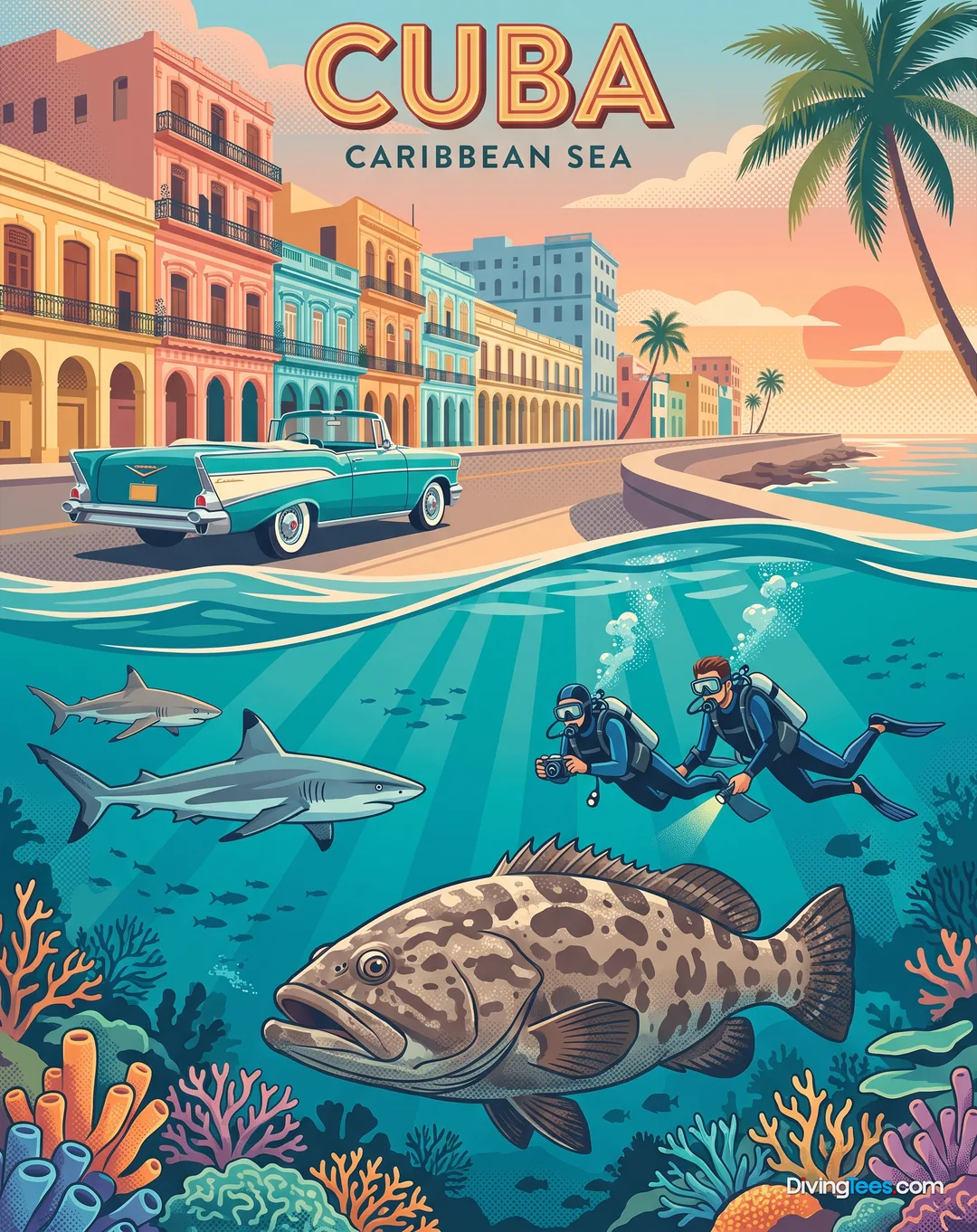
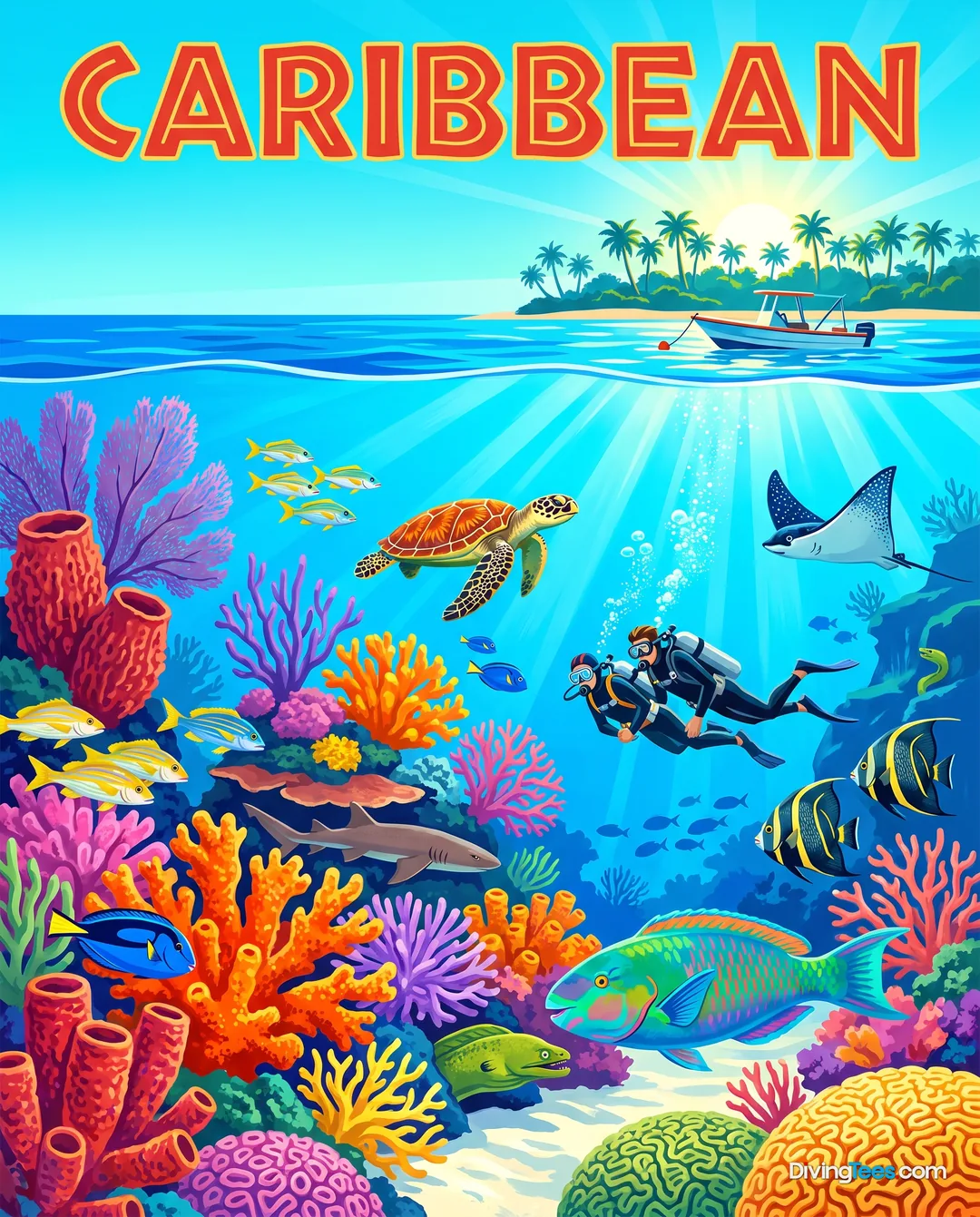
Cuba · Caribbean
Diving Maria La Gorda: walls, caves and park reefs
Boat dives lead to black coral walls, sponge-lined caves, gentle coral slopes and tropical fish beside Guanahacabibes National Park.
What makes this destination special
- El Almirante wall dropping to 27 metres
- Black coral, sea fans and enormous sponges
- Salon de Maria cave with three entrances
- Ancla del Pirata anchor in 10–15 metres
- Paraiso Perdido coral and dense tropical fish
- Light currents on boat-diving routes
- Isolated base beside Guanahacabibes National Park
For subtitles in English: start the video firstthen click the gearat the top right of the video, select “Subtitles/CC”, then “Auto-translate” and choose “English”.
Overview
Maria La Gorda is a fixed, shore-based diving base on the remote Guanahacabibes peninsula. Its reason for being is straightforward: repeated boat trips to walls, reefs and caves along a protected, lightly built-up coast. El Almirante gives the setting its vertical edge, while Salon de Maria brings a more enclosed twenty-metre exploration. This suits divers who would rather spend several days following the same quiet rhythm of boats, dives and rest than combine diving with nightlife, shopping or a busy resort.
Diving here
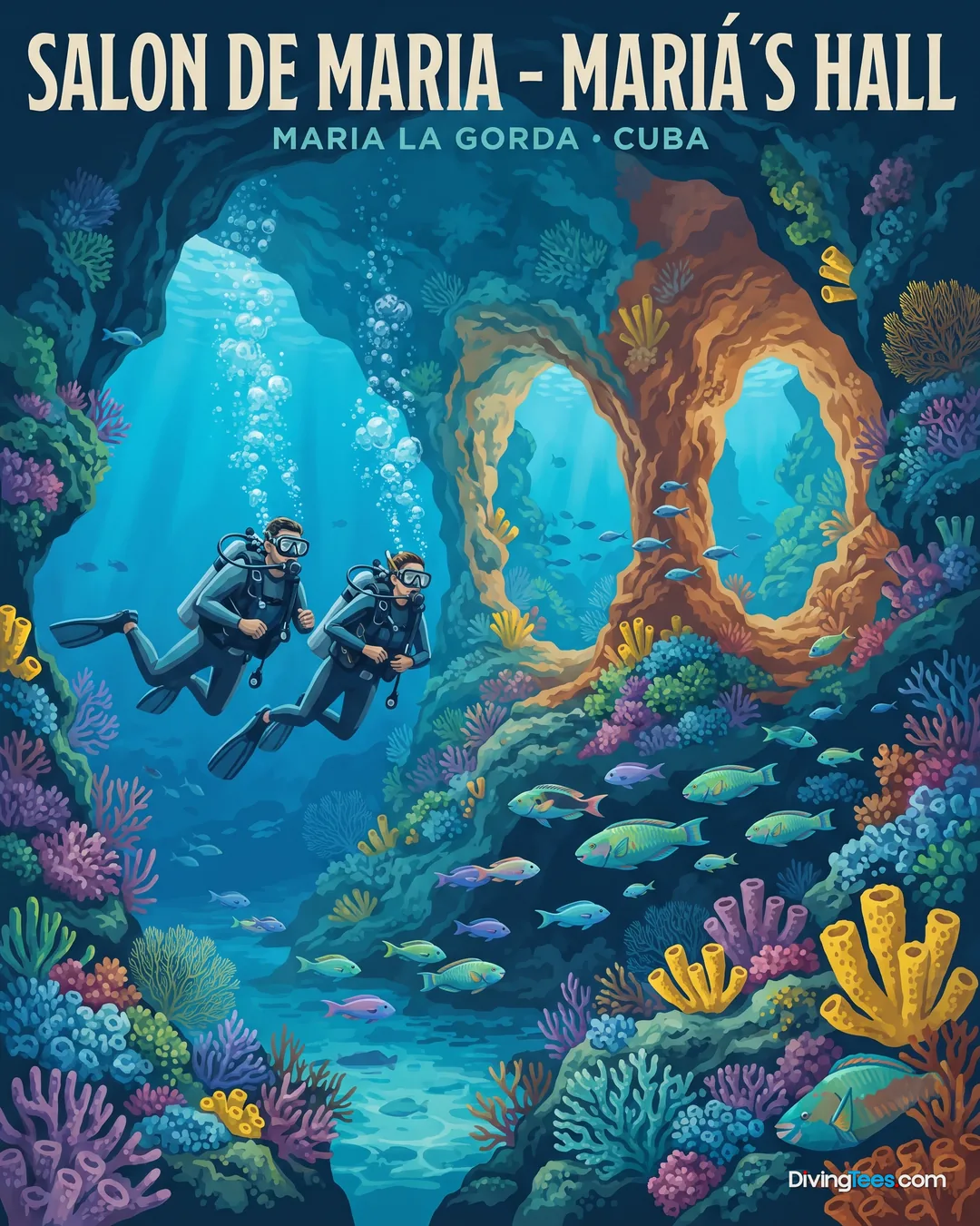
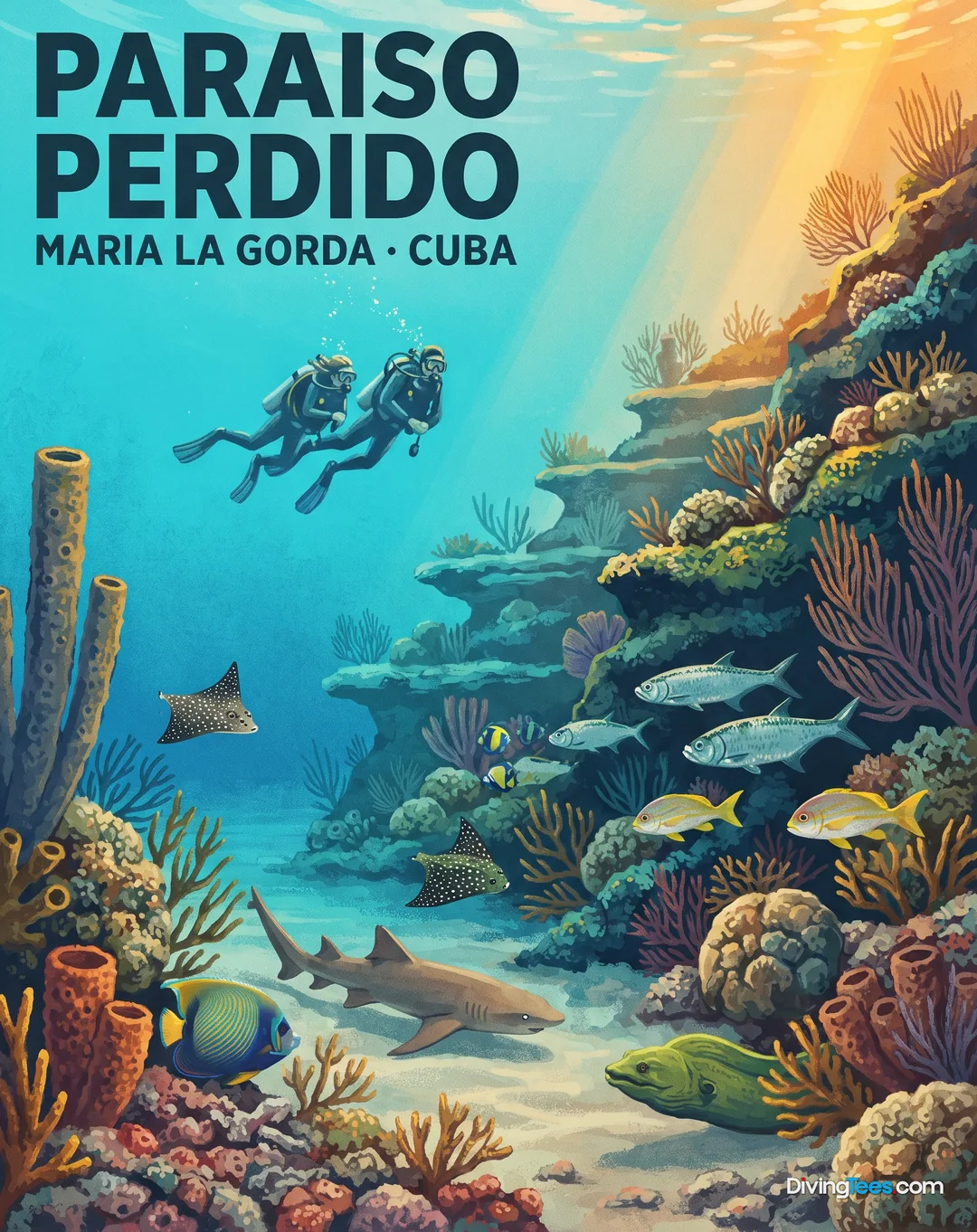
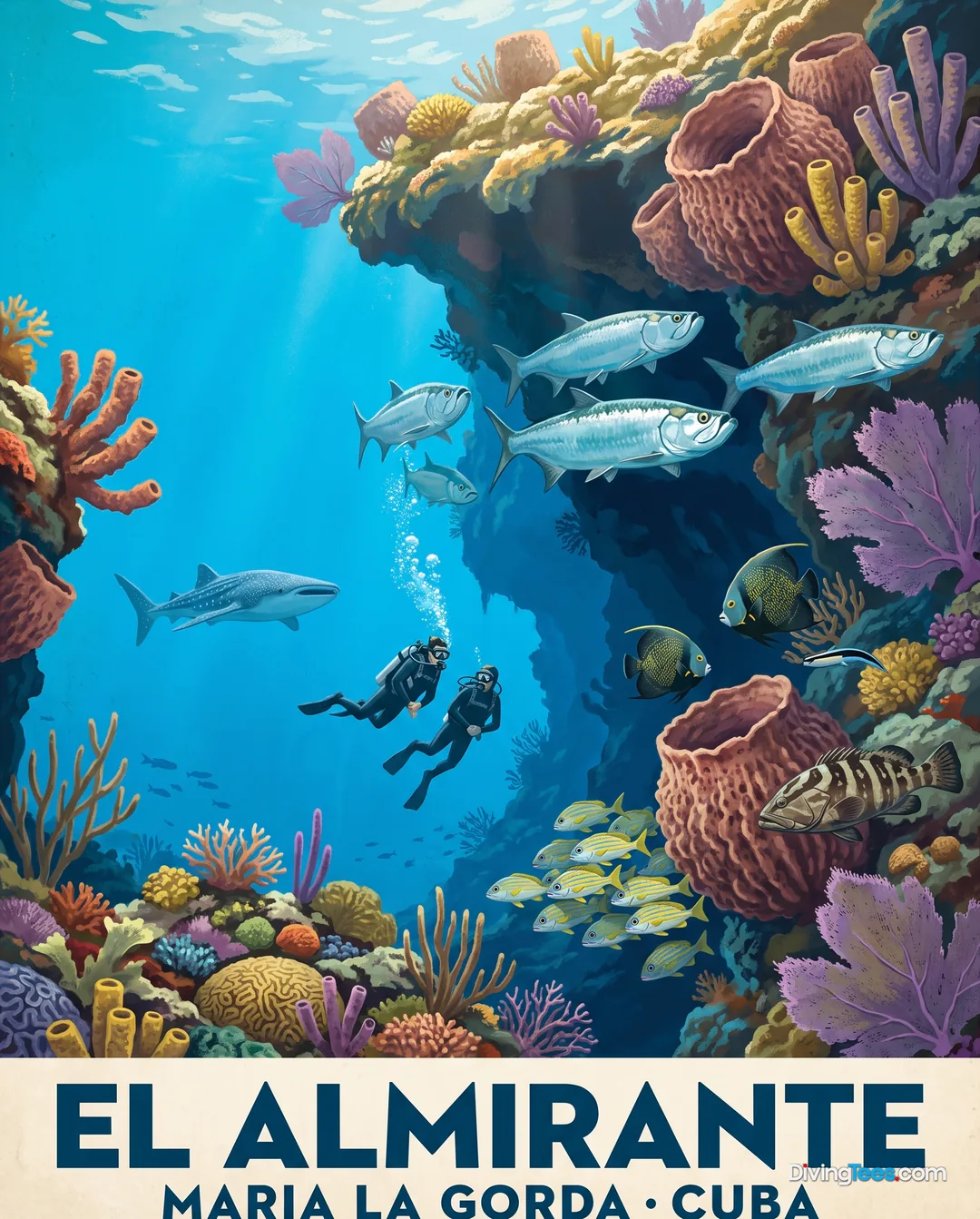
The diving is predominantly from boats, with light currents and profiles ranging from straightforward ten-metre reef work to thirty-metre coral country. At El Almirante, the wall falls to 27 metres, with broad sponges and sea fans leading towards black coral formations; steady buoyancy matters more here than speed. Salon de Maria reaches 20 metres and takes divers through a cave with three entrances, its interior decorated with sponges, corals and tropical fish. Ancla del Pirata is gentler, at 10–15 metres, where a two-ton anchor lies among coral promontories and crustaceans. Paraiso Perdido concentrates corals and tropical fish between 20 and 30 metres. Visibility is described as excellent at El Almirante, although the regional deep-water movement can be unusual, so the boat briefing remains important.
Three dives not to miss
The underwater wildlife
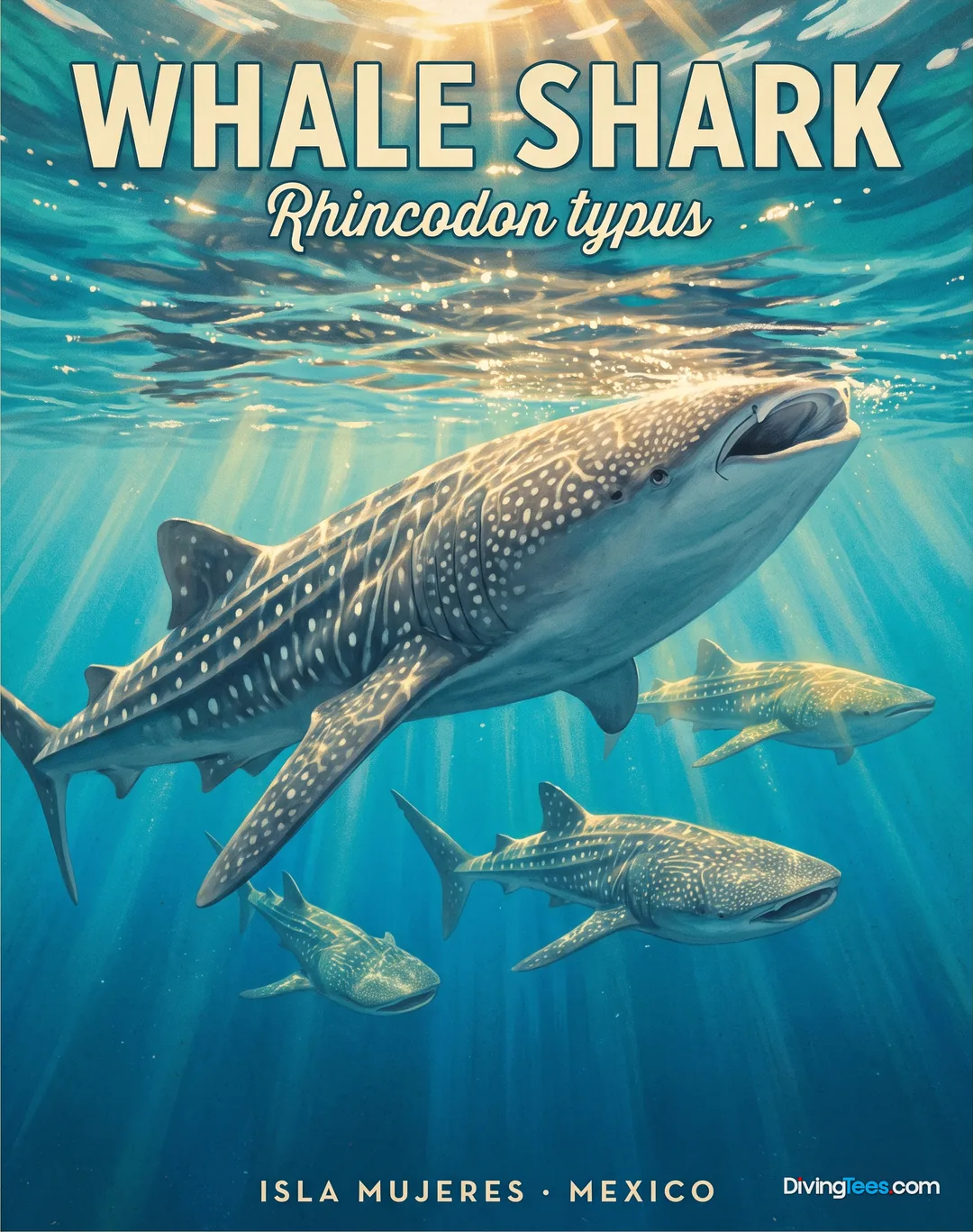
The underwater interest is built around what grows on, shelters beneath and moves through the reef. Large sponges and sea fans cover the wall at El Almirante, with black coral providing a darker, finer structure for close inspection. Salon de Maria places tropical fish inside a cave decorated with sponge and coral growth, while Ancla del Pirata rewards a slow look around the anchor and its coral promontories, where crustaceans are found. Paraiso Perdido brings coral formations and a notably concentrated presence of tropical fish into a 20–30-metre profile. Reef and pelagic species are also associated with the wall diving. No particular seasonal animal event is central to the destination’s appeal; the reliable attraction is the combination of protected reef structure and repeated observation dives.
Possible underwater encounters
When to go
Maria La Gorda is best approached as a dedicated diving stay rather than a short seasonal escape built around one narrow weather window. The available destination information does not establish a measured best-month pattern, so the practical reason to travel is the site itself: a quiet base, repeated boat departures and access to the Guanahacabibes coast. A longer stay gives more opportunity to use calmer boat conditions when they occur and to vary the profiles from Ancla del Pirata’s 10–15 metres to the deeper walls and reefs. The isolated setting also makes the journey more worthwhile when several diving days are planned.
This coast is exposed to sargassum strandings, whose intensity varies greatly from year to year. To find out more, see the “Sargassum alert” panel on this page.
Level required
The area suits all levels, provided the diver is comfortable with boat procedures and the particular demands of the chosen profile. Ancla del Pirata is appropriate from Open Water level, with shallow depths and light current. El Almirante and Paraiso Perdido ask for better buoyancy control, especially around walls, black coral and close-set reef growth. Salon de Maria is a recreational cave-style experience rather than a technical cave programme, but divers should be content entering an enclosed environment. PADI, SSI and BSAC divers should find the level progression familiar. Nitrox is useful for a multi-dive schedule, subject to the available arrangements.
On the ground
From London Heathrow, London Gatwick or Manchester, the journey should be planned as an overland arrival into western Cuba rather than around a ferry or domestic flight to Maria La Gorda. The destination lies on the Guanahacabibes peninsula and is reached by road from localities in western Cuba, with the final approach forming the main logistical constraint. Allow the transfer to be a substantial part of the day and avoid building the itinerary around a tight same-day connection to a boat departure. Once at Maria La Gorda, the base is arranged around the diving operation, so movement between accommodation and diving is likely to be on foot or very short. The useful planning decision is to arrive with enough margin for the first boat outing.
Local tips
Treat Maria La Gorda as a remote diving camp, not as an easy Cuban stopover. The journey earns its keep when the stay is long enough for repeated boat diving, so a five- to seven-day plan makes more sense than trying to squeeze in a couple of outings. Arrange the local boat schedule before travelling; the value of the destination lies in maintaining a run of dives once on the peninsula. Do not assume there will be a full resort programme for a non-diving partner: the documented appeal is the sea, the park and the quiet setting. Build in personal independence for an isolated stay, and keep expectations realistic about evening entertainment and general choice. On the deeper routes, Nitrox can make sense for a series of dives, while good buoyancy is particularly valuable at El Almirante and Paraiso Perdido, where walls, black coral and coral growth reward close but careful viewing.
Planning your stay
A typical stay is organised around the fixed base: boat departures, surface intervals, meals and time to rest in a quiet coastal setting. The diving can be given a natural progression, starting with Ancla del Pirata before moving to the wall at El Almirante, the cave at Salon de Maria and deeper reef profiles such as Paraiso Perdido. Non-divers have fewer documented activities, although light nature walks or quiet time beside the sea may suit those happy with an unhurried, isolated holiday.
Hello, I'm Marina, DivingDeal.com's AI assistant. I guide you through destinations, areas and countries.
Thinking about the whole trip and the flights? Talk it over with Edith →
Marina is an AI. Some links are affiliate links: DivingDeal may earn a commission, at no extra cost to you. Bookings are made with the partner.
Frequently asked questions about Maria La Gorda
When should you go to Maria La Gorda for diving?
Maria La Gorda is best approached as a dedicated diving stay rather than a trip built around a particular seasonal event. The available information does not establish a measured best-month pattern. Plan several diving days so you can use suitable boat conditions and vary your dives from shallow reefs to deeper walls and coral sites.
What diving level suits Maria La Gorda?
Maria La Gorda suits divers at different levels, depending on the site. Ancla del Pirata offers shallow diving with light current for Open Water divers. El Almirante and Paraiso Perdido require stronger buoyancy control around walls and coral growth. Salon de Maria is a recreational cave-style dive, not a technical cave programme.
What can you see while diving in Maria La Gorda?
In Maria La Gorda, you can see black coral, sea fans and large sponges on El Almirante’s wall. Salon de Maria contains sponges, corals and tropical fish inside a cave with three entrances. Ancla del Pirata has an anchor, coral promontories and crustaceans, while Paraiso Perdido features coral formations and tropical fish.
How should you plan a diving stay in Maria La Gorda?
Plan Maria La Gorda as a remote, shore-based diving stay reached by road through western Cuba. Allow substantial time for the final transfer and avoid a tight connection to your first boat departure. Arrange the boat schedule before travelling, stay several days for repeated dives, and bring expectations suited to limited evening entertainment and an isolated setting.