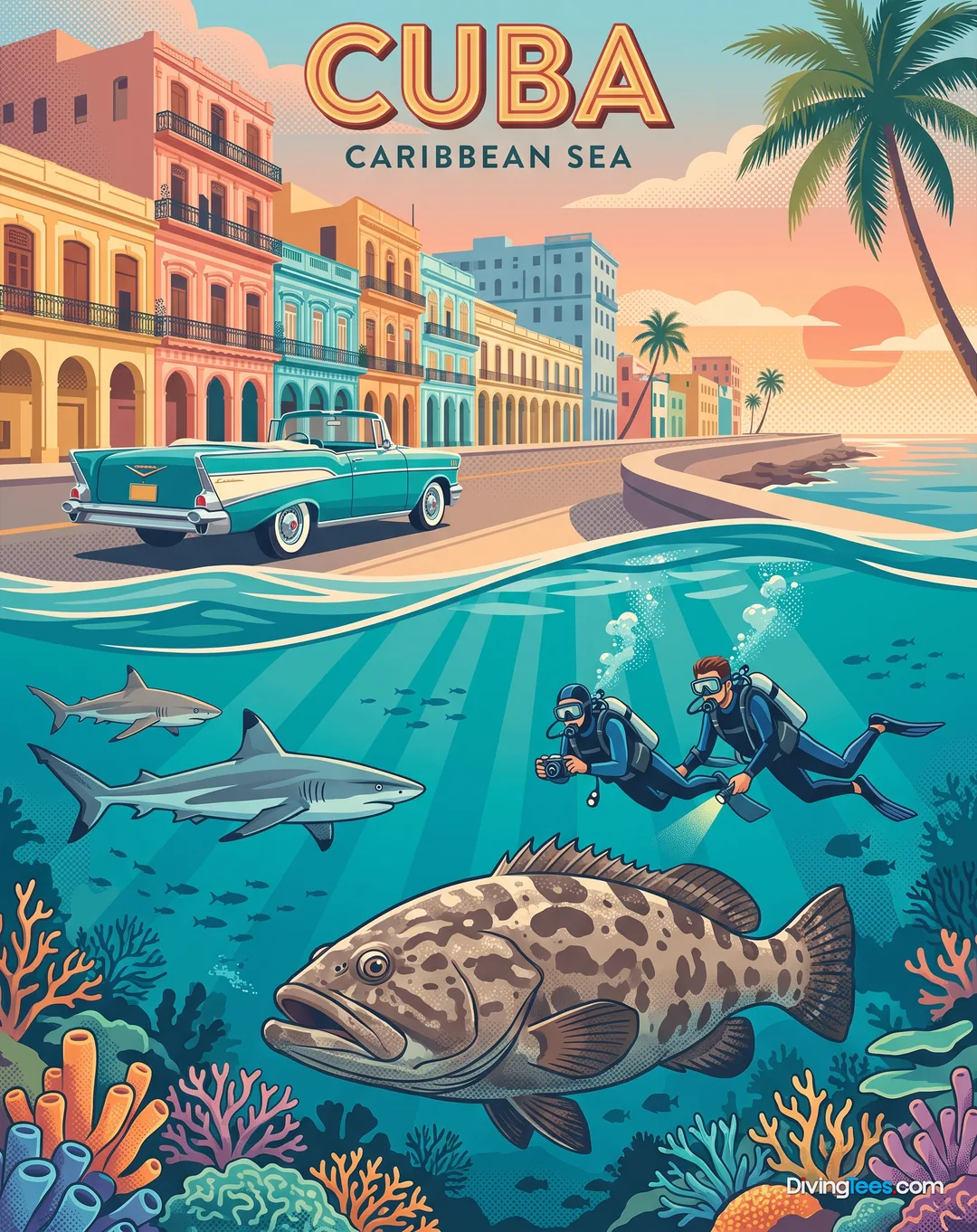
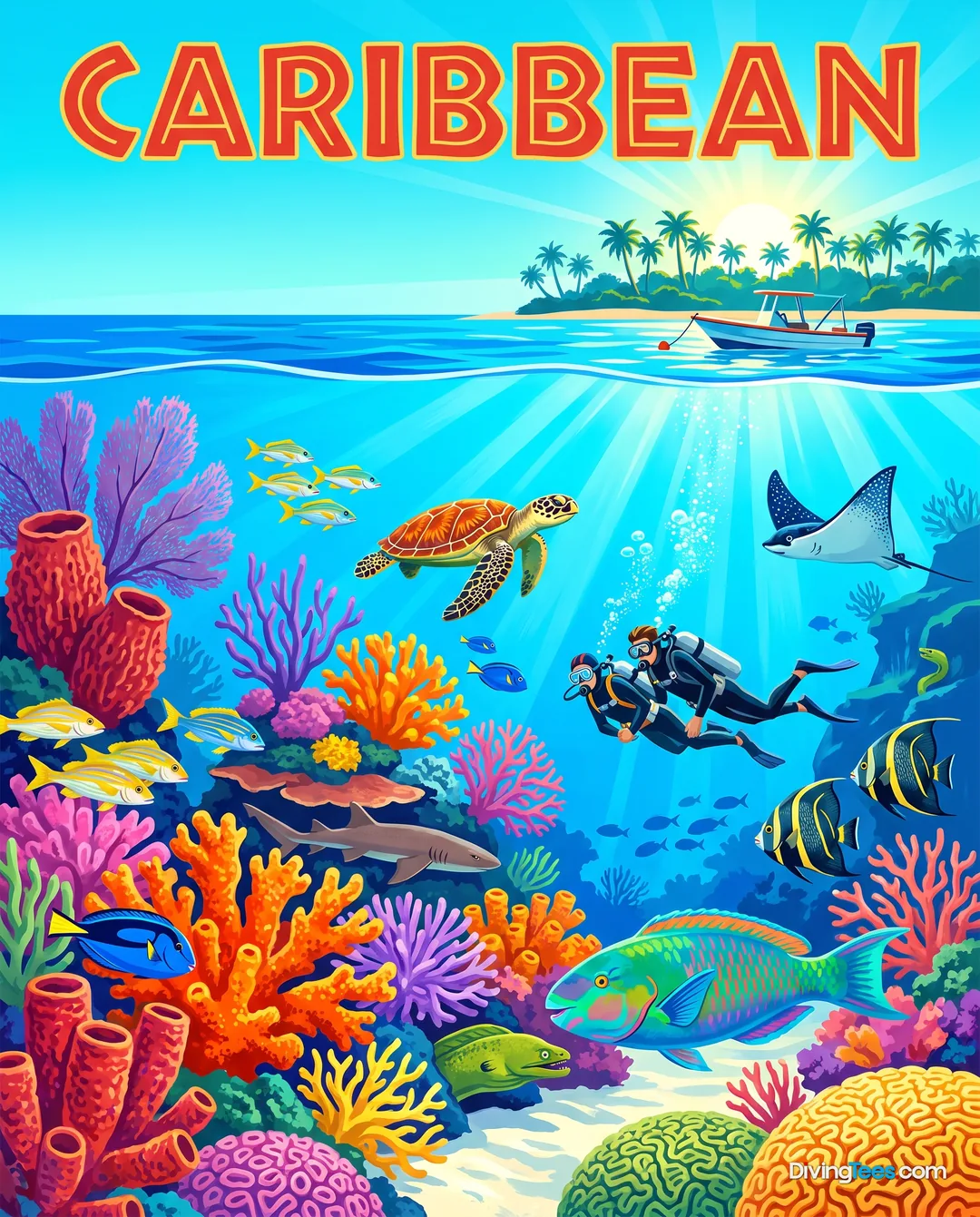
Cuba · Caribbean
Diving Playa Larga: Bay Walls, Reefs and Swim-throughs
Walls, shallow reefs, swim-throughs and cenotes with haloclines give Playa Larga a varied run of clear-water dives from a straightforward coastal base.
What makes this destination special
- Bay of Pigs walls dropping through clear Caribbean water
- Shallow reefs suited to calm, uncomplicated diving
- Swim-throughs that reward careful buoyancy and a torch
- Cenotes with visible haloclines and changing water layers
- Visibility exceeding 30 metres on favourable dives
- Light currents across the main coastal sites
- December to April as the recognised diving window
For subtitles in English: start the video firstthen click the gearat the top right of the video, select “Subtitles/CC”, then “Auto-translate” and choose “English”.
Overview
Playa Larga is a shore-based diving base for exploring the Bay of Pigs, locally known as Bahía de Cochinos, and nearby coastal sectors. Short boat trips reach walls, reefs, swim-throughs and cenotes, so the underwater interest lies in changing scenery rather than one signature type of dive. It also works well for a mixed holiday: non-divers have the bay, beaches and the Ciénaga de Zapata to explore while divers make relatively simple local outings.
Diving here
The Bay of Pigs is a stretch of coast rather than one uniform underwater landscape. Walls and reefs provide the main structure, while swim-throughs add short passages where a diver can slow down, check buoyancy and look through the rock rather than simply follow a flat seabed. The cenotes bring a different experience, with distinct haloclines creating visible changes between water layers. Diving is generally conducted on short boat trips from the coast, keeping the daily logistics uncomplicated. Currents are generally light, and some sites have calm conditions suitable for beginners. Visibility is described as consistently exceeding 30 metres, giving the walls, reef contours and swim-through entrances plenty of definition. This is not a place to build a trip around strong drift diving or deep wreck profiles; its appeal is the ability to repeat clear, varied local dives without a liveaboard routine.
One dive not to miss
The underwater wildlife
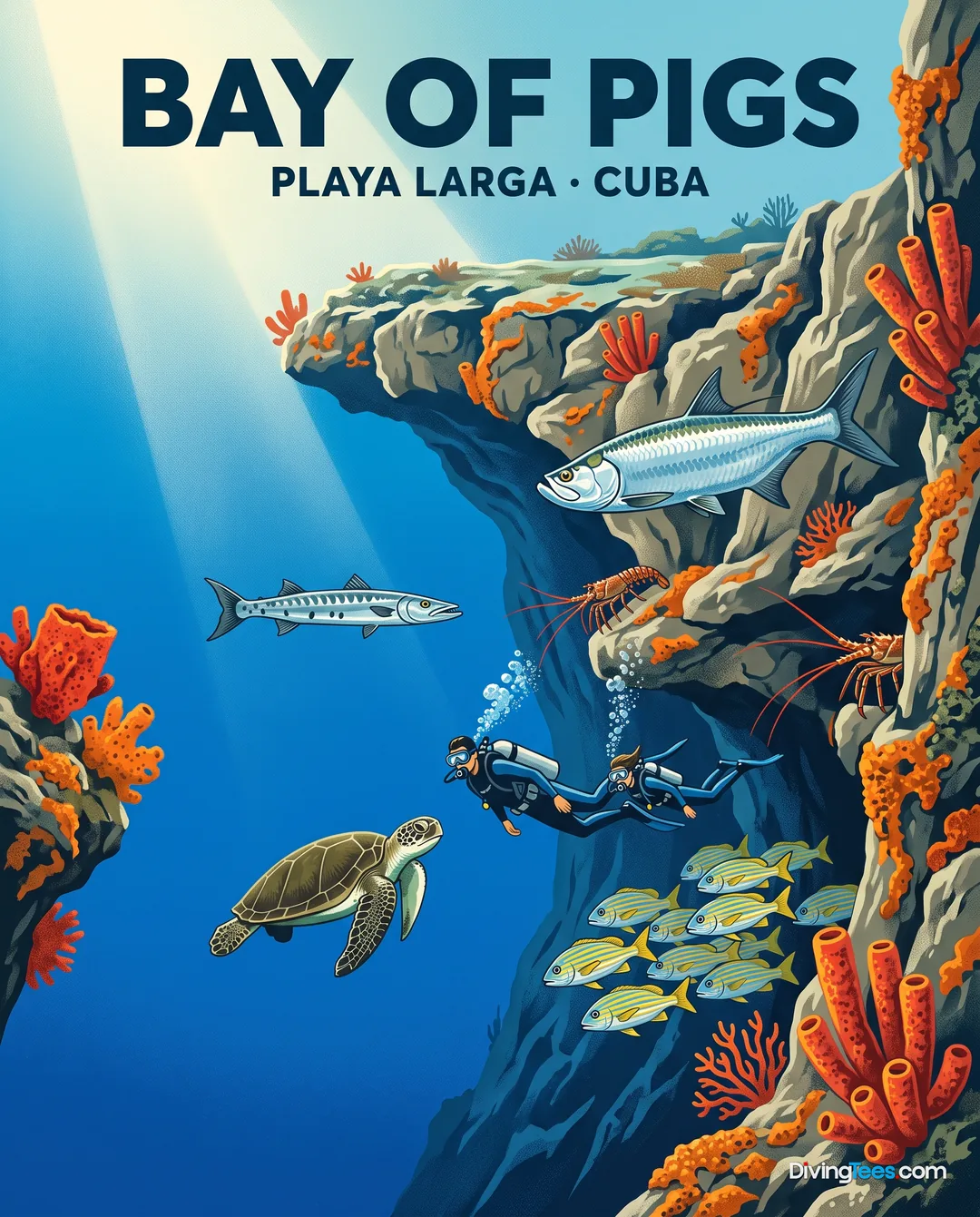
Marine life is encountered around the reefs, walls and swim-throughs, but Playa Larga is better approached as a place for underwater scenery than as a destination built around a named seasonal animal. In clear water, the useful habit is to look beyond the first reef face: walls reveal their contours, swim-throughs invite a slower inspection, and the cenotes add the unusual sight of haloclines shifting across the view. The same light-current conditions that make the diving approachable also make it easier to spend time observing rather than managing a drift. December to April is the recognised period for diving here, so that is the sensible window for combining the clearest underwater views with repeated local outings.
Possible underwater encounters
When to go
December to April is the stated best period for diving the Bay of Pigs. The reason to favour it is practical rather than speculative: this is the established window associated with clear water, light currents and calm conditions at suitable sites. The destination does not need a complicated seasonal strategy; the main benefit is planning several consecutive days when the underwater visibility can show the walls, reef shapes, swim-throughs and cenote haloclines properly. Outside that window, a trip may still be possible, but the case for travelling specifically for the diving is less straightforward.
Level required
Playa Larga suits a broad range of experience, including Open Water divers and those holding BSAC, PADI or SSI qualifications at an equivalent level. Beginners can use the calmer, simpler sites, while more experienced divers have enough variation in walls, swim-throughs and cenotes to keep the dives from becoming repetitive. The important distinction is expectation: this is a light-current coastal destination, not a qualification requiring deep wreck or strong-drift experience. Nitrox is useful for divers planning several consecutive outings.
On the ground
From London Heathrow, Gatwick or Manchester, the journey begins with an international arrival in Cuba followed by a road transfer to Playa Larga. There is no ferry or domestic flight requirement built into reaching the area; the structural constraint is the overland leg after landing, so the transfer should be treated as part of the itinerary rather than an afterthought. Once in Playa Larga, accommodation and the dive operation are generally close enough to connect on foot or by a short road transfer. That keeps the local routine simple: reach the base, board for a short coastal outing, and return without the daily transfers associated with a dispersed island or liveaboard programme. Exact arrangements depend on the chosen Cuban arrival point and should be settled before the road journey.
Local tips
Playa Larga rewards a run of consecutive diving days. A single immersion does not make much sense when the character of the area lies in moving between reefs, walls, swim-throughs and the cenotes; the coastal base is most useful when it can send divers out again the following day. Keep the profiles straightforward at first, then use the local conditions to decide whether more time in the swim-throughs or a cenote adds something to the day. Do not arrive expecting a strong-current destination, a deep-wreck programme or a liveaboard-style sequence of major sites. Those expectations fit the wrong kind of Cuban trip. Allow time for the road journey on arrival and avoid building an itinerary around a rushed transfer followed by one isolated dive. The Ciénaga de Zapata is not a filler for bad weather: it is one of the reasons to stay ashore for part of the visit. Non-divers will find the bay, beaches, snorkeling and wetlands more rewarding than sitting through a dive schedule.
Planning your stay
Three to five days gives Playa Larga room to work as a proper stay rather than a rushed stop. Divers can arrange repeated short boat outings, with simpler reef and wall dives alongside swim-throughs or cenote visits, while keeping time for the Ciénaga de Zapata and the bay. It is particularly suitable for couples or mixed groups, because snorkeling, swimming and nature excursions fill the non-diving days without requiring a separate base.
Hello, I'm Marina, DivingDeal.com's AI assistant. I guide you through destinations, areas and countries.
Thinking about the whole trip and the flights? Talk it over with Edith →
Marina is an AI. Some links are affiliate links: DivingDeal may earn a commission, at no extra cost to you. Bookings are made with the partner.
Frequently asked questions about Playa Larga
When should you go to Playa Larga for diving?
Plan your Playa Larga diving trip from December to April, the recognised diving window. This period is associated with clear water, light currents and calm conditions at suitable sites. It also gives you a practical opportunity to schedule repeated local outings and appreciate the walls, reefs, swim-throughs and cenote haloclines.
What diving experience do you need for Playa Larga?
Playa Larga suits a broad range of experience, including Open Water divers and equivalent BSAC, PADI or SSI qualifications. You can begin with calmer, simpler sites, while more experienced divers explore walls, swim-throughs and cenotes. Expect light-current coastal diving rather than deep wrecks or strong drift conditions. Nitrox can help with consecutive outings.
What can you see while diving in Playa Larga?
In Playa Larga, you can explore Bay of Pigs walls, shallow reefs, swim-throughs and cenotes. Clear water shows the contours of the walls and reef shapes, while swim-throughs reward careful buoyancy and a torch. Cenotes add visible haloclines, where changing water layers create a distinct underwater view. Marine life is present around these features.
How should you plan your stay in Playa Larga?
Plan Playa Larga as a shore-based stay with repeated short boat outings rather than a liveaboard schedule. Allow for the road transfer after arriving in Cuba, then keep accommodation and diving close to the local base. Several days give you time for varied dives, the Ciénaga de Zapata, beaches, snorkeling and other bay activities.