Caribbean
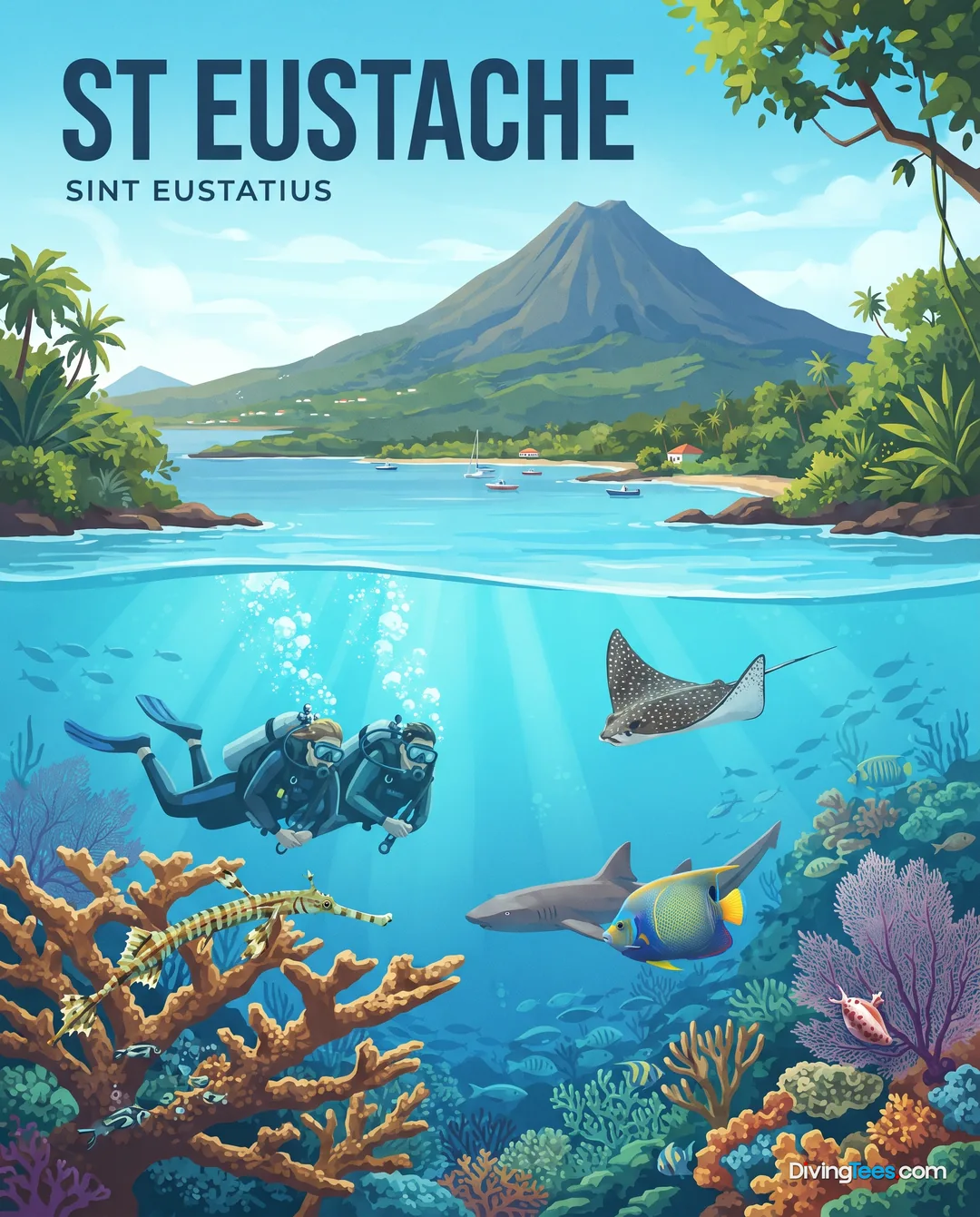
Saint Eustache: volcanic history above protected reefs
Saint Eustache pairs Oranjestad’s historic waterfront with The Quill, while Gibraltar and Aquarium sit within a tightly protected marine landscape.
What makes this country unique
- Oranjestad’s Lower Town ruins beside Gallows Bay
- The Quill rising above Golden Rock trails
- July evenings across Statia Carnival in Oranjestad
- Conks and dumpling at Statia Day
- Fort Oranje and the old Dutch waterfront
- Gibraltar and Aquarium within St Eustache’s marine park
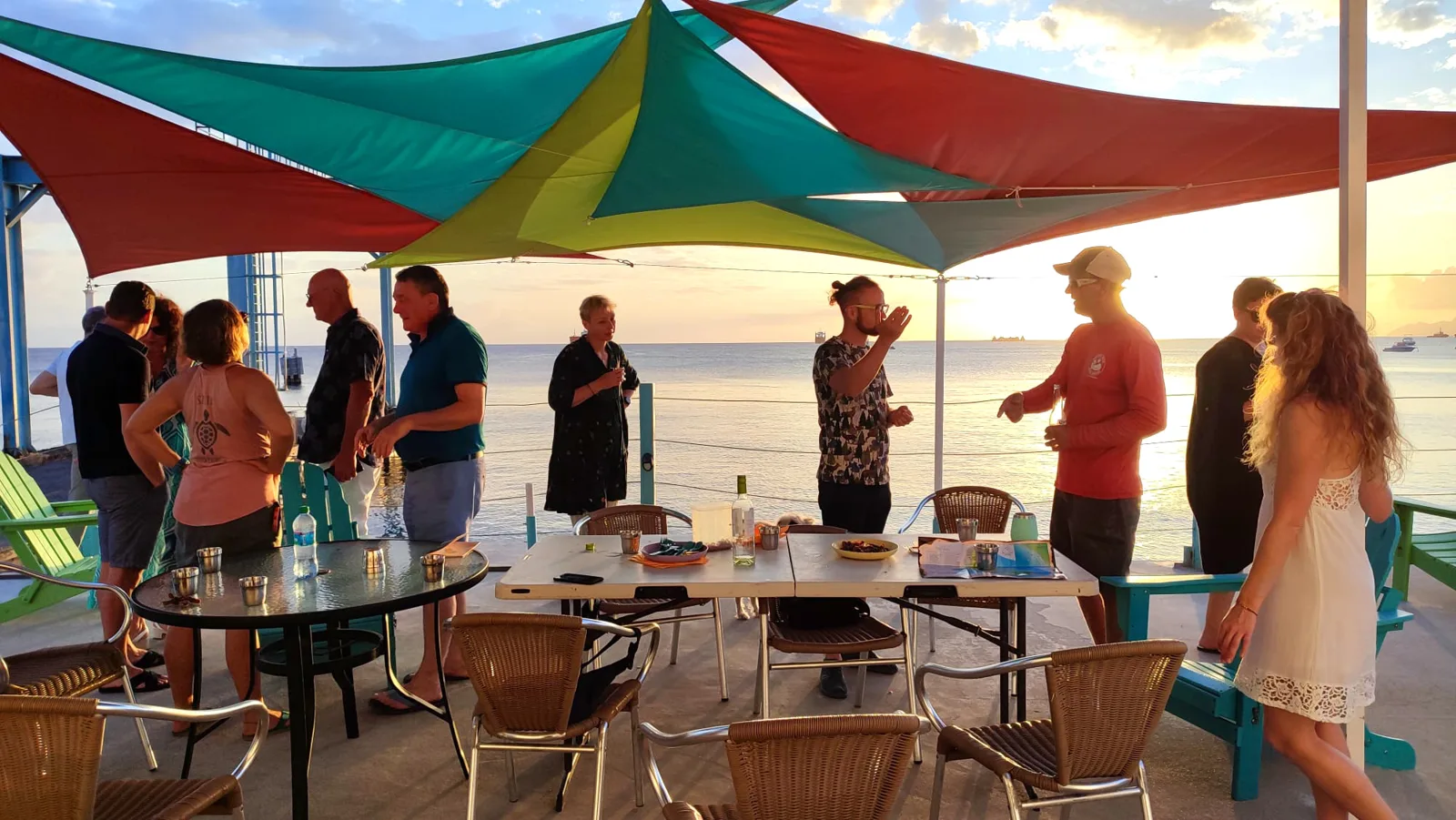
- Blue Bead Bar overlooking Gallows Bay
For subtitles in English: start the video firstthen click the gearat the top right of the video, select “Subtitles/CC”, then “Auto-translate” and choose “English”.
This country for a diver
For a diver, Saint Eustache is a compact Caribbean island where a strictly protected marine park meets the remains of a major eighteenth-century trading port. Its deliberately limited tourism gives the diving a quieter, more structured character than neighbouring islands, with departures organised through the centres in Oranjestad. The shared theme across St Eustache is the meeting of volcanic reef scenery and maritime history: a name such as Gibraltar, Aquarium or Stenapa Reef belongs to an island-wide itinerary rather than a separate coastal resort.
How the country divides
St Eustache is treated as one diving area, but the island divides naturally into useful bases on land. Oranjestad, including Upper Town and Lower Town, is the practical centre for dive departures, meals, historic walks and access to the waterfront around Gallows Bay. The Quill and Golden Rock form the greener, more elevated counterpoint, suited to visitors who want a day on the volcano between excursions and a stay closer to nature. The rural north adds quieter roads, viewpoints and access towards more isolated parts of the marine park, rather than a separate holiday hub. For choosing the area page, the question is therefore not which coast has a different diving season, but which island setting suits the trip: town and history in Oranjestad, volcanic walking around The Quill, or a more remote feel in the north. A hire car makes the distinctions practical rather than merely geographical.
Diving destinations
Dive centres

Hotels
When to go, and where by month
Saint Eustache is a year-round destination in the simplest possible sense: January, February, March, April, May and June all belong to the season, as do July, August, September, October, November and December. There is no opposing coastal pattern here in which one side opens as another closes, and no need to build an itinerary around a seasonal handover between shores. The choice of month is more closely tied to island life than to a change between diving areas. July brings Statia Carnival, when Oranjestad becomes busy with parades, concerts and food stands. November brings Statia Day on the sixteenth, with celebrations centred on the town and Fort Oranje. Easter has its family beach picnics, while December brings the Christmas White and Red Parade. These occasions can alter the feel, availability and rhythm of a stay, but the diving area itself remains the same throughout the calendar.
Marine life, coast by coast
Saint Eustache does not divide its wildlife experience into contrasting regional signatures. The marine park surrounds the island, so the natural setting belongs to the same protected island-wide framework whether the boat leaves Oranjestad for a reef or an historic wreck. Caribbean reef fauna colonises the volcanic formations and the remains of ships, while the most distinctive underwater encounters are often archaeological: canons, anchors, bottles, submerged walls and traces of hulls. That changes how a wildlife-focused itinerary is read. Rather than selecting a coast for a named animal, a visitor moves between reef and wreck environments within St Eustache’s compact circuit. The Quill provides the land-based ecological counterpoint, with tropical forest inside its crater.
Getting between the areas
There are no separate St Eustache diving regions to combine, so internal travel is straightforward in principle: Oranjestad, The Quill, Golden Rock and the northern hills fit into a short island itinerary. The practical limitation is transport rather than distance. There is no regular public bus network, making a hire car the flexible choice for linking dive centres, trailheads and northern viewpoints; taxis and walking cover shorter movements. Inter-island travel is a different proposition. Flights from St Maarten take about twenty-five minutes, while the Makana ferry takes roughly an hour and a half to St Maarten and less to Saba. St Kitts is also linked by ferry according to the published programme. Each connection can consume much of a day once schedules and transfers are allowed for.
Take off your mask
Saint Eustache’s history is easiest to read on foot around Oranjestad. Fort Oranje looks over the Lower Town, where old warehouses, walls and cannon remain part of the shoreline around Gallows Bay. The old port’s story continues beneath the surface, but the town itself provides the clearest sense of Statia’s former trading importance. The Quill National Park offers a different day out, with trails into the forested volcanic crater and views from the slopes around Golden Rock. Eating is concentrated in Oranjestad and a few nearby establishments. Park View Restaurant is associated with goat stew, salt fish dishes and ox-tail stew; local plates also appear at Franky’s Place and Local Restaurant. West Indian fried fish and stewed chicken with peas ’n rice suit simpler meals, while conks and dumpling is especially tied to Statia Day food stands. At Golden Rock, Chocolate Restaurant serves local Creole plates. The Old Gin House provides breakfast in a historic former cotton mill, and Blue Bead Bar & Restaurant overlooks Gallows Bay.
What holds true everywhere here
The rule that shapes every St Eustache itinerary is the marine park. The protected area surrounds the entire coast, and diving is organised through a centre rather than treated as unrestricted self-guided access. That makes the briefing part of the landscape: visitors need to understand the park’s zones and follow the centre’s procedures before entering the water. Good buoyancy matters particularly here, because accidental contact with a protected reef damages the very setting that distinguishes the island. The same restraint applies ashore on The Quill, where marked trails and the volcanic forest reward a slower pace. Fort Oranje, the Lower Town ruins and the wreck sites also call for care: St Eustache’s attraction lies in the coexistence of living marine habitat and fragile history.
Frequently asked questions about Sint Eustatius
When should you visit Sint Eustatius for more than diving?
July offers evenings across Statia Carnival in Oranjestad, adding a cultural experience to time on the island. You can also combine diving with visits to Fort Oranje, the old Dutch waterfront, Oranjestad’s Lower Town ruins beside Gallows Bay, and The Quill’s Golden Rock trails.
What kind of diving can you plan around Sint Eustatius?
Sint Eustatius suits an itinerary that moves between Caribbean reef environments, volcanic formations, and historic wreck remains. The marine park surrounds the island, so you can explore reef and wreck sites within a compact, protected island-wide setting rather than choosing between contrasting regional diving areas.
What can you see while diving around Sint Eustatius?
You can encounter Caribbean reef fauna living around volcanic formations and ship remains. Archaeological features are central to the underwater experience, including canons, anchors, bottles, submerged walls, and traces of hulls. Gibraltar and Aquarium are named marine park locations, while The Quill offers tropical forest above water.
How should you plan a stay in Sint Eustatius?
Base your visit around Oranjestad’s historic waterfront and the marine park’s compact island-wide diving circuit. Allow time for Lower Town ruins, Fort Oranje, The Quill’s Golden Rock trails, and Blue Bead Bar overlooking Gallows Bay. You can also try conks and dumpling at Statia Day.