
Radama Islands Resort Sarlu
Google 4.7/5 (49 reviews)
Madagascar · Indian Ocean
Coral reefs, wall dives, wrecks and turtle encounters lead from a quieter Nosy Be beach to Tanikely, Sakatia and Komba.
For subtitles in English: start the video firstthen click the gearat the top right of the video, select “Subtitles/CC”, then “Auto-translate” and choose “English”.
Ambondrona is a base on Nosy Be for divers who want to sleep ashore, walk to the beach and spend the day exploring by boat. The local pattern is straightforward: morning departures, two dives, then a return in the early afternoon. From this quieter stretch of coast, the itinerary can range from nearby coral reefs and drop-offs to Nosy Sakatia, Nosy Komba, Tanikely and, on longer days, Nosy Iranja. It also leaves room for beaches and inland Nosy Be.
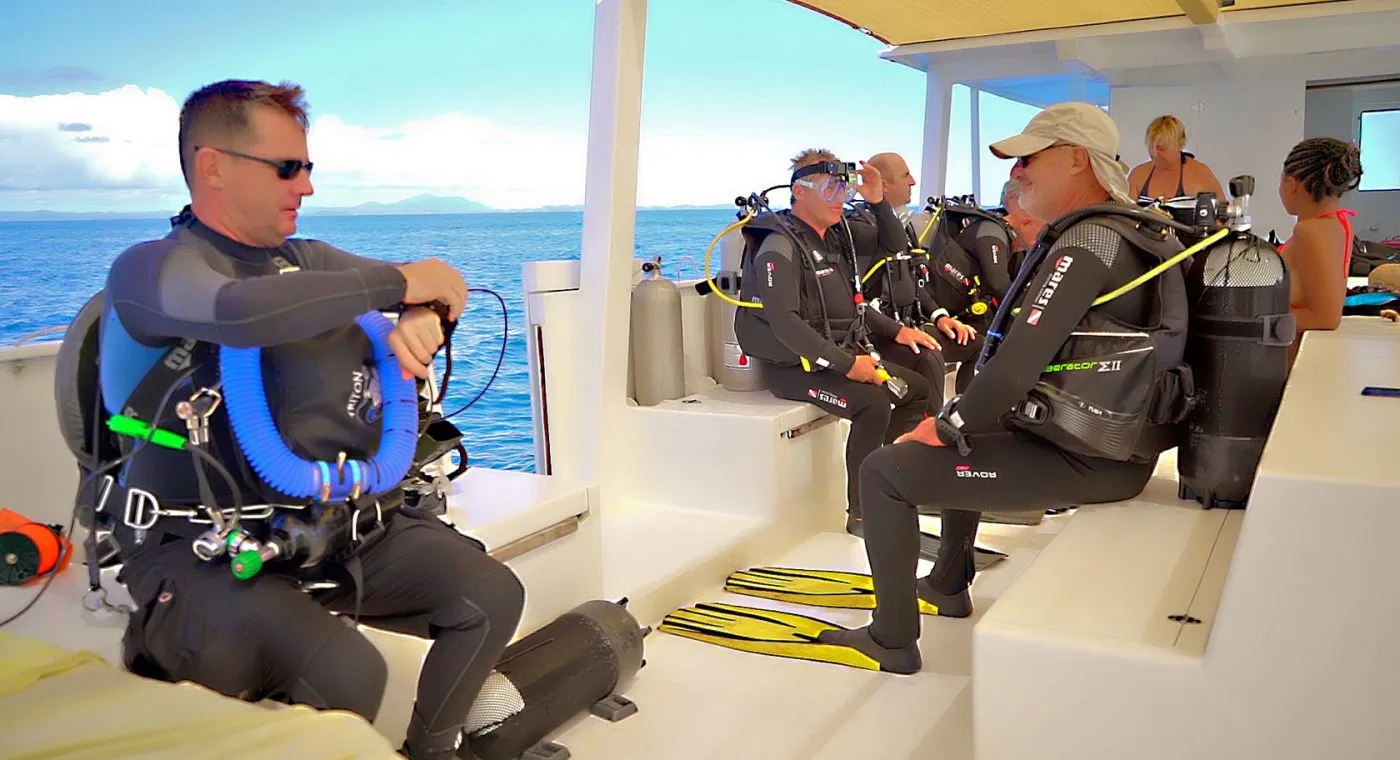
This is predominantly boat diving, with coral reefs, plateaux, drop-offs and wrecks spread around Nosy Be and its neighbouring islands. The closest sites involve a short run from Ambondrona, while Tanikely, Nosy Sakatia and Nosy Komba turn the day into an island outing. Nosy Iranja is reserved for longer trips. Currents are variable rather than a defining constant, so the character of a dive depends on the chosen sector and the conditions on the day. Visibility is similarly changeable, affected by plankton, runoff and the state of the sea, with May to November generally the more favourable period. Expect organised morning departures, usually two dives, followed by an early-afternoon return. The result is less about repeating one local reef than moving through different underwater terrain across the archipelago.
Green and hawksbill turtles are a regular possibility around the reefs, while the wider archipelago also brings seasonal encounters with larger animals. Humpback whales pass during the austral winter, making whale-watching a natural addition to a non-diving day rather than something to assume on every dive. Whale sharks are seen occasionally in the warmer season, particularly around October and November, when plankton productivity can also draw manta rays and other rays into the area. These are opportunities, not fixtures. A programme built around one species is likely to disappoint if weather, plankton or the day’s boat route changes. The dependable underwater interest lies in the combination of coral reefs, drop-offs, plateaux and wrecks, with turtles adding a regular wildlife thread.
May to November is the sensible window for a diving stay, because the drier period generally brings more settled sea conditions and more dependable boat operations. October and November are also the useful months to discuss whale-shark possibilities, while humpback whales belong to the austral winter. From December to March, cyclones and spells of poor weather can interrupt outings, even though diving does not stop everywhere throughout that period. Leave room in the schedule rather than treating every day as fixed. The calmer months make it easier to reach different islands and keep a reserve day for a longer trip if the sea allows.
Ambondrona suits beginners as well as experienced divers. Local operations cater for different levels, with easier sites for training and more demanding sectors available when a diver has the appropriate experience. PADI, SSI and BSAC divers should find the format familiar, although the relevant question is less the agency than comfort with boat procedures, changing sites and variable current. Newer divers benefit from starting on nearby reefs before committing to a longer island outing. No specialist certification is presented as essential for the general programme.
From London Heathrow, London Gatwick or Manchester, the usual journey runs via Antananarivo, followed by a domestic flight to Nosy Be. Allow time for the connection, as the exact routing depends on the flights selected. Ambondrona itself is on Nosy Be, so there is no compulsory ferry for the final approach. After arriving on the island, continue by road from the airport or Hell-Ville. Nearby accommodation can be reached on foot from the beach-based diving operation, while a taxi is the practical option from Ambatoloaka or Madirokely. Boats may also collect divers from those neighbouring beaches, but that is part of the day’s diving arrangements, not a requirement for reaching Ambondrona.
Keep a weather day in reserve. It matters particularly when the plan includes Tanikely, Nosy Komba or Nosy Iranja, because those are boat days rather than quick local dives. Do not put every dive back-to-back, and do not build the holiday around whale sharks, humpback whales or manta rays appearing on cue. Ask for the programme that matches the season, then retain flexibility. Early departures and the more distant sectors are the practical way to reduce time around the busiest, easiest-to-reach sites. Treat Tanikely and the other islands as full outings, with navigation time included. Ambondrona is close to Ambatoloaka and Madirokely, but it is not the same base: its quieter beach changes the feel of the stay, while the neighbouring beaches remain reachable by taxi, on foot or by boat. Finally, check rental availability for any specialised equipment before travelling, rather than assuming it will be waiting locally.
A typical stay lasts seven to ten days, enough to spread diving across several sectors and keep days free for weather or land activities. The usual rhythm is two morning dives, followed by an early-afternoon return to Ambondrona. Between outings, non-divers have beaches, boat trips, Nosy Be’s interior, Hell-Ville and wildlife excursions to occupy the day. The fixed base suits couples or groups who want diving without committing to a liveaboard, although cruises remain possible for wider archipelago itineraries.
Hello, I'm Marina, DivingDeal.com's AI assistant. I guide you through destinations, areas and countries.
Thinking about the whole trip and the flights? Talk it over with Edith →
Marina is an AI. Some links are affiliate links: DivingDeal may earn a commission, at no extra cost to you. Bookings are made with the partner.
May to November is the sensible window, as the drier period generally brings more settled seas and more dependable boat operations. October and November are useful for discussing whale-shark possibilities, while humpback whales pass during the austral winter. From December to March, cyclones and poor weather can interrupt outings, so keep flexibility.
Ambondrona suits beginners and experienced divers. Local operations offer easier sites for training alongside more demanding sectors for divers with suitable experience. Newer divers can begin on nearby reefs before choosing longer island outings. PADI, SSI and BSAC divers should find the format familiar, although comfort with boat procedures and variable currents matters.
Diving from Ambondrona can include coral reefs, plateaux, drop-offs and wrecks around Nosy Be and neighbouring islands. Green and hawksbill turtles are a regular possibility. Seasonal encounters may include humpback whales during the austral winter, plus occasional whale sharks around October and November, when manta rays and other rays may also appear.
A typical Ambondrona stay lasts seven to ten days, with organised morning departures, usually two dives and an early-afternoon return. Spread outings across Nosy Sakatia, Tanikely and Nosy Komba, keeping a weather day available for longer boat trips. Stay flexible, and check specialised equipment rental before travelling rather than assuming it is available.