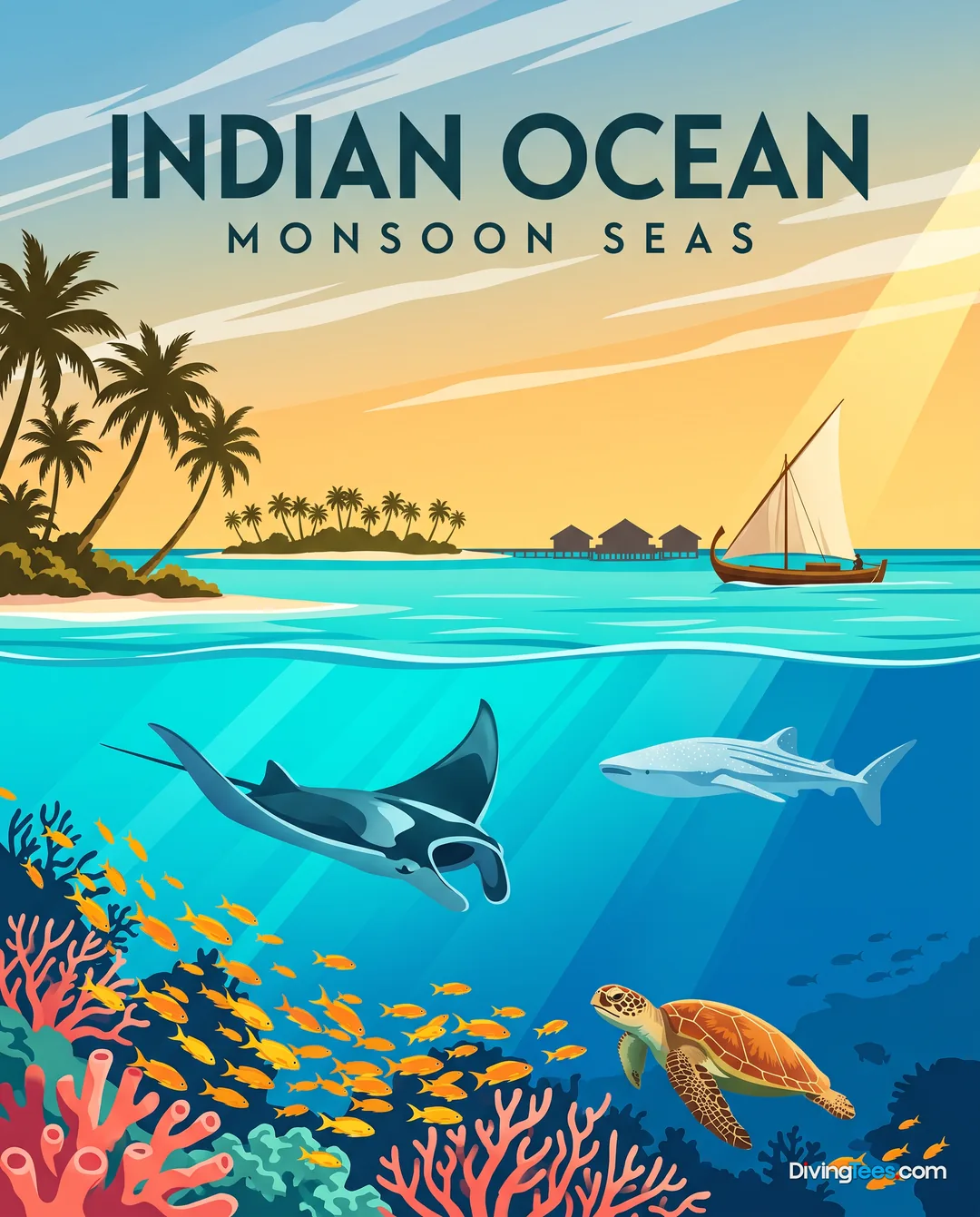
Indian Ocean
Madagascar: island circuits and long horizons
From Antananarivo’s royal hill to Marodoka’s Sakalava memory, Madagascar joins Central Highlands history to the boat-bound islands of Nosy Be and Mitsio.
What makes this country unique
- March to July: Mitsio’s maritime season
- Nosy Be through November, including Manta Point
- Marodoka and its Sakalava island history
- Ambohimanga’s royal Merina hill and fortifications
- Romazava with brèdes and plenty of rice
- Grilled langouste on the north-west coast
- Boats between Nosy Be and the Mitsio
For subtitles in English: start the video firstthen click the gearat the top right of the video, select “Subtitles/CC”, then “Auto-translate” and choose “English”.
This country for a diver
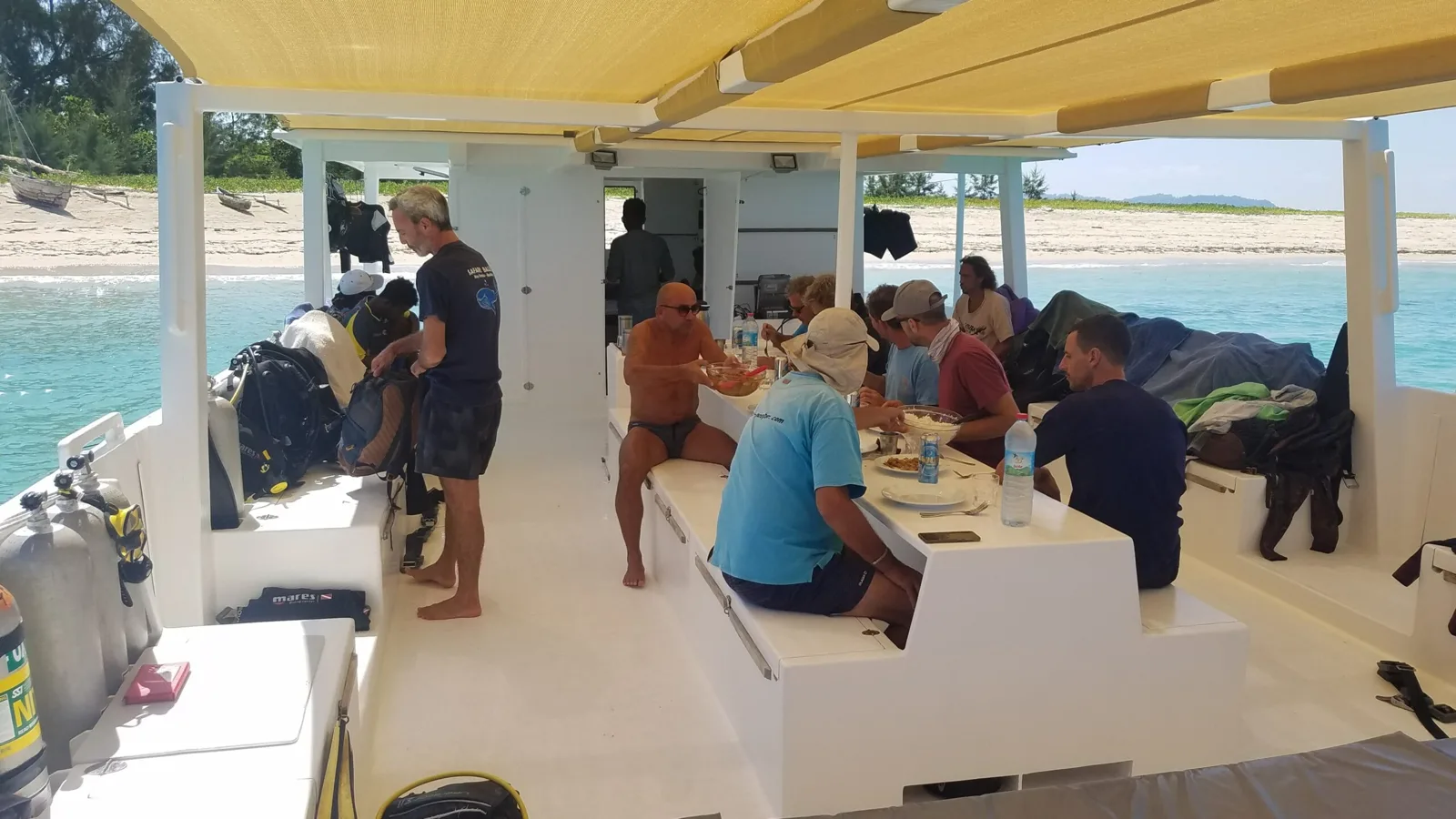
Madagascar gives diving a distinctly island-built shape: boat-led trips, changeable currents and a sharp contrast between the serviced island of Nosy Be and the more isolated Mitsio archipelago. Unlike mainland Africa across the water, its maritime character is tied to Malagasy, Sakalava and insular histories. All levels are represented, but the practical experience is shaped by conditions rather than certification: current is variable, and boats are the dominant way to reach the diving. It suits divers who value a changing itinerary over a single compact resort base.
How the country divides
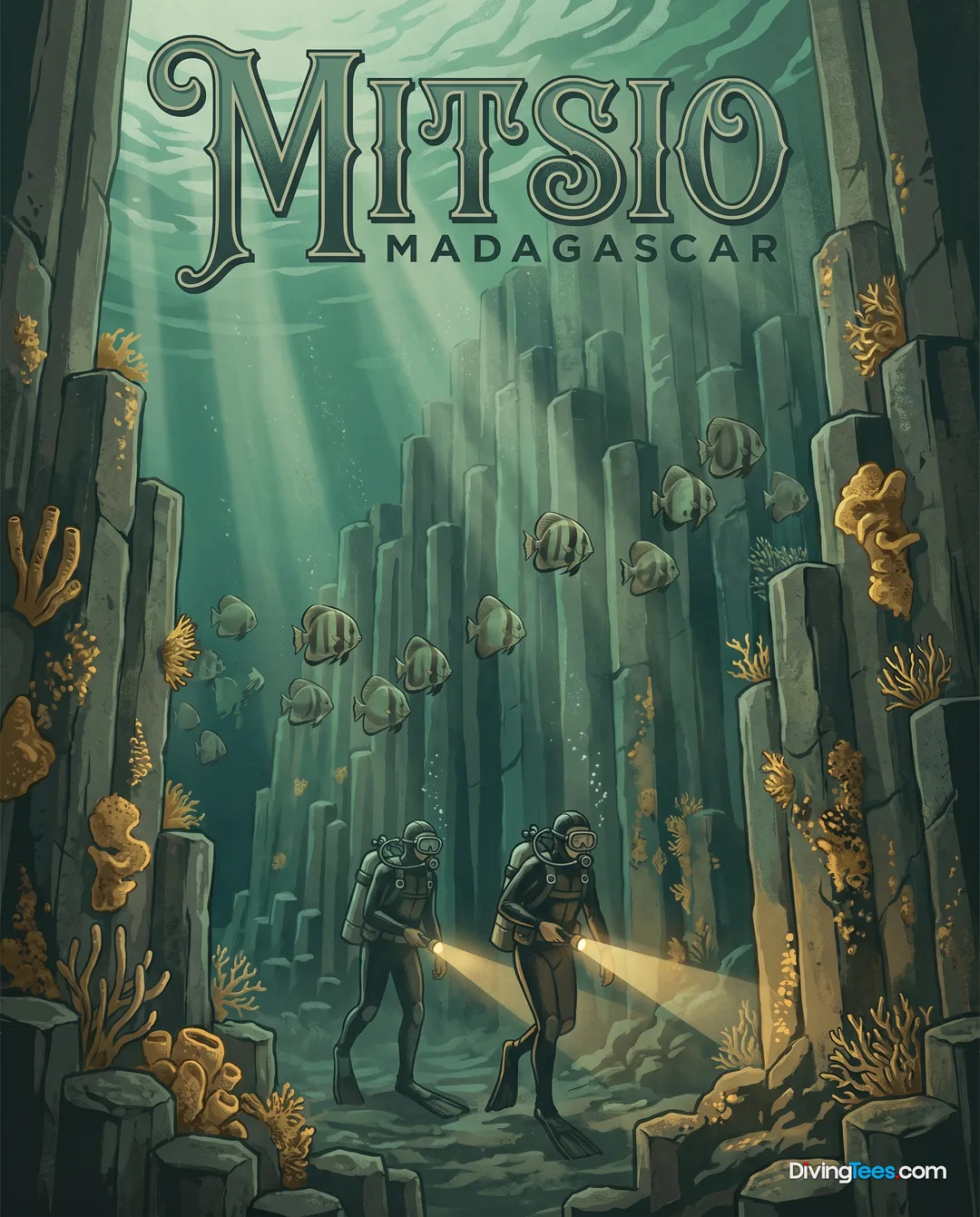
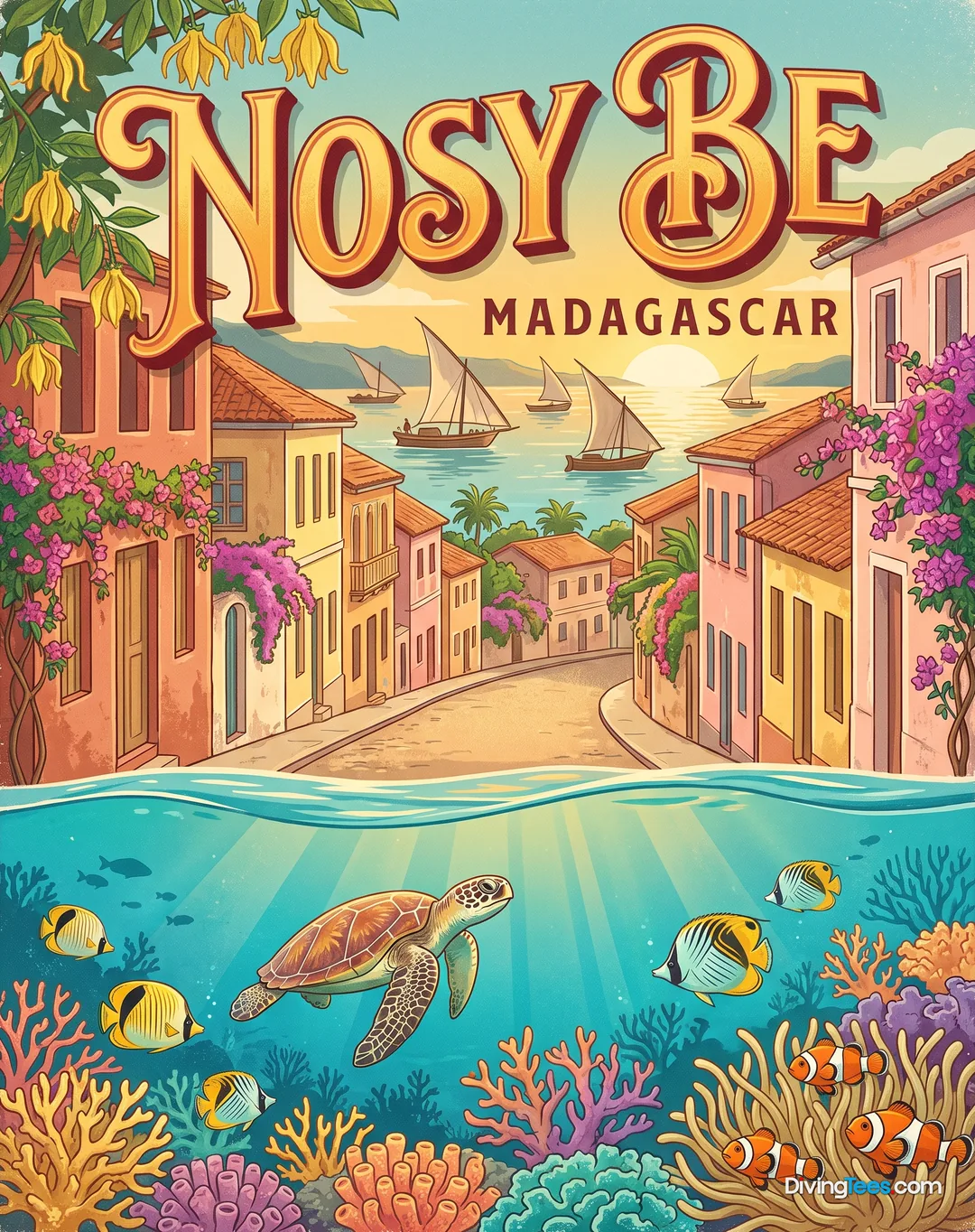
The country’s northern diving divides naturally between Nosy Be and Mitsio. Nosy Be is the coastal-island base: it has the stronger tourist infrastructure, moderate visitor pressure and a longer operating season, from March to November. Its diving can sit within a wider stay that includes Marodoka, local markets and the north-western coast. Mitsio is an archipelago rather than a simple add-on, with volcanic islets, inter-island navigation and low tourist pressure. It is for divers who want the journey itself to be part of the experience and who are comfortable giving a maritime circuit several days. The distinction matters when choosing an area page: Nosy Be offers the more straightforward island framework, while Mitsio rewards a dedicated boat programme. They can be linked, but Mitsio should be treated as a sea-going destination, not as a casual excursion from a coastal hotel.
Diving destinations
Dive centres



Hotels
Liveaboards
When to go, and where by month
March is the first month in which both Nosy Be and Mitsio are in season, and that shared window continues through April, May, June and July. This is the period to consider when the aim is to combine the island base with a proper Mitsio circuit rather than choose between them. After July, the calendar separates: Nosy Be remains in season through August, September, October and November, while Mitsio no longer forms part of that window. The practical effect is a longer late-season option around Nosy Be and a more concentrated season for the outer archipelago. January, February and December sit outside the stated diving season for both areas. The difference is therefore one of planning rhythm as much as geography: Nosy Be can carry a longer coastal stay, whereas Mitsio needs its maritime block placed inside the March-to-July period.
Marine life, coast by coast
Madagascar’s marine wildlife is best attached to a route rather than treated as a single countrywide checklist. In Nosy Be, Manta Point is associated with manta rays and coral bommies used as cleaning stations. Shark Point is identified with reef-shark encounters, giving the island a different large-animal focus from a purely reef-and-macro itinerary. Nosy Be is also associated with whale-shark encounters in October and November, a late-season possibility that can influence when a visitor chooses the island. The useful distinction is geographical: the named wildlife anchors sit around Nosy Be, while Mitsio’s appeal is tied more broadly to isolation, navigation and the character of its island chain.
Getting between the areas
Nosy Be and Mitsio are close enough to combine, with roughly fifty kilometres between them, but the sea crossing is part of the trip rather than a minor transfer. Mitsio is reached by boat, and its value increases when the itinerary allows several days to work with a weather window instead of treating the archipelago as a single outing. That makes a direct link more demanding than moving between coastal bases. Allow time for a buffer: conditions can alter the order of excursions, and a tightly packed international itinerary leaves little margin for a delayed return. For divers planning repetitive days, Nitrox has practical value in reducing fatigue, while the wider point is simple: build the journey around the boat, not around a road map.
Take off your mask
Madagascar’s landward identity changes markedly between the Central Highlands and the north-west. Around Antananarivo, the Rova and the royal hill of Ambohimanga introduce Merina history, political memory and ceremonial landscapes. Andasibe-Mantadia offers humid forest and lemurs within reach of the capital, while Ranomafana, Isalo and Ankarafantsika show very different versions of the island’s terrain. Near Nosy Be, Marodoka brings Sakalava history and the older maritime life of the island into view. Food keeps a strong national thread. Romazava is a meat-and-breeds stew served with rice; ravitoto uses pounded cassava leaves, often with pork; and akoho sy voanio brings chicken together with coconut milk on the coast. Nosy Be and the north-west are places for grilled langouste, while masikita appears as street-side zebu skewers. Meals are found in hotelys, market tables, neighbourhood gargotes and beach restaurants. THB, tropical fruit juice and ranon’apango belong to the local table as much as the food itself.
What holds true everywhere here
Across Madagascar’s northern diving areas, boat time is not a decorative extra: it determines what can be reached and how much slack the itinerary needs. A block of several days is more sensible than an isolated outing when the plan includes Mitsio, because a weather window can matter more than a fixed departure sequence. The same logic makes a spare day valuable around an international connection. Divers repeating boat dives may find Nitrox more useful than collecting another headline speciality, particularly when the schedule involves several consecutive days. Current remains variable, so a drift dive, a downcurrent and a disciplined safety stop belong to the practical conversation rather than the sales pitch.
Frequently asked questions about Madagascar
When should you choose Madagascar for diving around Nosy Be and Mitsio?
Choose Madagascar according to the marine experience you want. Mitsio’s maritime season runs from March to July, while Nosy Be is associated with diving through November. October and November are linked with possible whale-shark encounters around Nosy Be, alongside manta rays at Manta Point and reef sharks at Shark Point.
What marine wildlife can you see around Madagascar’s Nosy Be?
Around Nosy Be, you may encounter manta rays at Manta Point, where coral bommies serve as cleaning stations. Shark Point is associated with reef-shark encounters. Whale-shark encounters are a possibility in October and November, giving Nosy Be a varied large-animal focus beyond a purely reef-and-macro itinerary.
How should you plan your Madagascar stay if you want both Nosy Be and Mitsio?
Plan Madagascar as a route rather than a countrywide wildlife checklist. Base part of your stay around Nosy Be for Manta Point, Shark Point and possible whale sharks, then use boats between Nosy Be and the Mitsio islands. Mitsio adds isolation, navigation and the character of its island chain.
What else can you include in a Madagascar diving trip beyond the islands?
A Madagascar itinerary can combine island diving with cultural and food experiences. Visit Marodoka for Sakalava island history, Ambohimanga for its royal Merina hill and fortifications, and Antananarivo for its royal hill. You can also try Romazava with brèdes and rice, or grilled langouste on the north-west coast.