Diego Diving Plongee Mario Matteo
Google 4.6/5 (15 reviews)
Madagascar · Indian Ocean
Coral reefs in Diego Suarez Bay, the Emerald Sea, Nosy Hara islets and seasonal humpback whales shape diving around Antsiranana.
For subtitles in English: start the video firstthen click the gearat the top right of the video, select “Subtitles/CC”, then “Auto-translate” and choose “English”.
Antsiranana, also known as Diego Suarez, is a northern Madagascar base for boat diving around a broad bay, nearby island waters and the protected Nosy Hara area. The appeal lies in combining coral reefs and drop-offs with time on the coast and at sea, rather than spending every day on a concentrated resort reef network. It also suits a mixed group: divers can head out by boat while non-divers explore the bay, beaches, Emerald Sea and landscapes around the northern islets.
Diving is organised mainly from boats, with coral reefs and drop-offs around Diego Suarez Bay and the island sectors beyond it. Currents are variable, so a seemingly calm surface can still mean a moving dive and a need to follow the briefing closely. Visibility is shaped by swell, weather and coastal run-off, rather than being a fixed feature of every outing. Nosy Hara offers a protected marine setting, although the exact character of each trip depends on the route and conditions. The Emerald Sea belongs in the wider holiday plan, but its usual format is a boat excursion with swimming, snorkelling and underwater discovery, not a conventional network of bottle-diving sites. Allow time for a proper safety stop and expect the day at sea to be part of the experience, not simply transport to a reef.
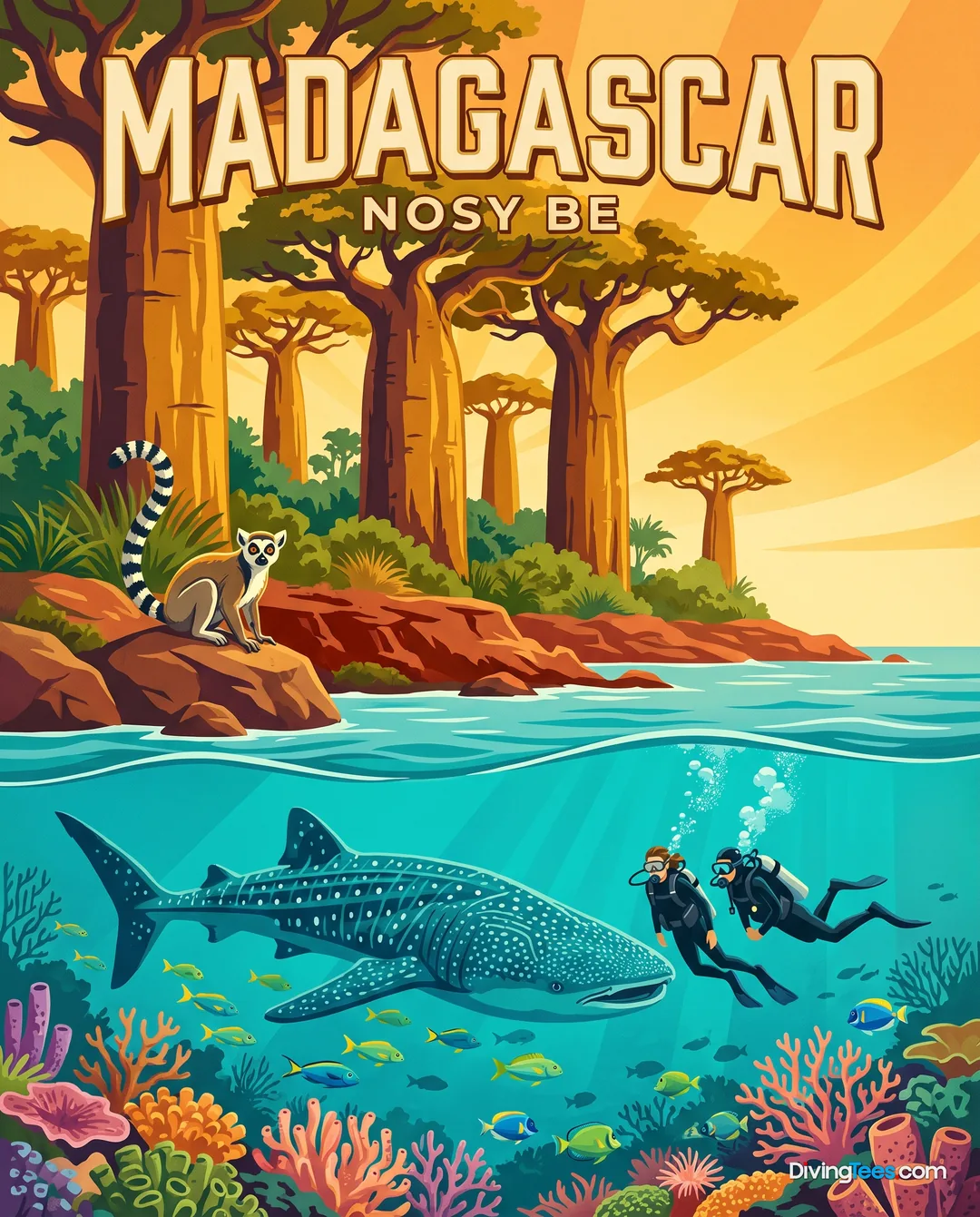
The reliable seasonal draw is the humpback whale, present in the wider northern Madagascar region from July to December. Seeing one is never guaranteed on a particular outing, but the timing gives a whale-watching dimension to a diving holiday. Whale sharks are reported from September to January, again as an occasional encounter rather than a promised feature of every trip from Antsiranana. Underwater, the setting is defined by coral reefs, drop-offs and the changing conditions of bay and island waters, with seasonal pelagic life adding interest beyond the reef itself. Ask whether a planned day is aimed at Nosy Hara or the Emerald Sea, because the landscape, time on the water and expectations for underwater wildlife are different.
May to December is the most practical period, when the weather is generally drier and sea conditions are more favourable for boat outings and visibility. January to March is the rainy season and usually brings the greatest disruption risk, particularly when cyclonic weather affects the north. The humpback window runs from July to December, while whale sharks are reported from September into January. That makes the latter part of the dry period attractive for divers hoping to combine reef days with seasonal wildlife, but neither whale encounter should be treated as a certainty. April can be a useful shoulder month only if the sea allows the planned programme.
The area is suitable for all levels, provided the diver is comfortable with boat procedures and accepts that currents can vary between reef and island sectors. No particular advanced certification is identified as essential. BSAC, PADI and SSI divers should concentrate on current management, entries and exits, and the possibility that a planned outing may be changed by sea conditions. Beginners may find the setting workable with a suitably conservative briefing, while experienced divers should not assume that a northern Madagascar boat day will resemble the more standardised operation found around Nosy Be.
From London Heathrow, Gatwick or Manchester, reaching Antsiranana means planning an air itinerary around the available connections rather than assuming a simple direct journey. Check the complete routing before fixing dive days, and leave room for changes between flights, as the precise connection pattern and total travel time can vary. Once in the destination, diving is arranged as boat outings from Antsiranana or the nearby coast, so movement on the water is built into each diving day. Treat Nosy Be and Antsiranana as separate destinations when arranging the journey, even when an itinerary or activity description uses the wider Antsiranana province.
Keep one uncommitted day in the programme. January to March can interrupt boat outings, and even outside the rainy season a poor sea state can rearrange plans. Group the diving and surface excursions so that a cancelled day does not remove the only chance to visit Nosy Hara or the Emerald Sea. Confirm exactly which sector the boat is visiting: Nosy Hara and the Emerald Sea are not interchangeable excursions. For a distant island outing, check in advance that the boat supplies the complete equipment you need, rather than assuming every item will be available locally. Do not use Nosy Be visibility figures to set expectations for Diego Suarez. Finally, book whale-focused days within the July to December humpback period or the September to January whale-shark window, while treating both animals as possibilities, not guarantees.
A land-based stay is the clearest way to organise Antsiranana. Use the town or nearby coast as a base for boat diving, then keep separate days for Nosy Hara, the Emerald Sea and coastal sightseeing. Combining diving with surface excursions gives companions something substantial to do and leaves room to absorb a weather cancellation. The bay, beaches, northern landscapes and whale-watching opportunities provide natural alternatives when the sea prevents a planned dive.
Hello, I'm Marina, DivingDeal.com's AI assistant. I guide you through destinations, areas and countries.
Thinking about the whole trip and the flights? Talk it over with Edith →
Marina is an AI. Some links are affiliate links: DivingDeal may earn a commission, at no extra cost to you. Bookings are made with the partner.
May to December is the most practical period, with generally drier weather and more favourable sea conditions for boat outings and visibility. January to March is the rainy season and may bring disruption, especially with cyclonic weather. Humpbacks are present from July to December, while whale sharks are reported from September into January.
Antsiranana suits divers of all levels who are comfortable with boat procedures and changing currents. No particular advanced certification is identified as essential. Beginners should follow a conservative briefing, while experienced divers should manage current, entries and exits carefully and avoid assuming every boat outing will resemble a standardised operation.
You can explore coral reefs and drop-offs around Diego Suarez Bay, island sectors and the protected Nosy Hara area. Seasonal wildlife adds interest, with humpback whales from July to December and whale sharks reported from September to January. The Emerald Sea offers boat excursions with swimming, snorkelling and underwater discovery.
Use Antsiranana or the nearby coast as a land-based base for boat diving, and allow separate days for Nosy Hara, the Emerald Sea and coastal sightseeing. Check your full flight routing, leave room for changes, keep an uncommitted day for weather disruption, and confirm the boat’s sector and equipment before distant outings.