Madagascar · Indian Ocean
Diving Nosy Iranja: Offshore walls, pelagics and shifting sand
Two coral islands, an ebbing sandbank, deep walls and reef sharks make Nosy Iranja a serious day offshore from Nosy Be.
What makes this destination special
- Two islands joined by a sandbank at low tide
- Offshore walls and canyons descending towards 80 metres
- Reef sharks, leopard sharks and circling barracuda
- Trevally, tuna and pelagic action along exposed drop-offs
- Green turtles around beaches and the shallow lagoon
- Whale sharks possible in November and December
- Humpback whales passing from July to September
For subtitles in English: once the video has started, click the gearat the top right of the video, select “Subtitles/CC”, then “Auto-translate” and choose “English”.
Overview
Nosy Iranja is two coral islands off Madagascar, joined by a roughly two-kilometre sandbank that appears only at low tide. Above water, there are pale beaches, a shallow lagoon and very little of the everyday bustle found around Nosy Be. Below it, the attraction is different: boat dives on offshore walls and canyons, with reef sharks, occasional leopard sharks and pelagic fish in the blue. It suits divers who are happy to spend much of a day travelling for a more exposed island setting, rather than those looking for a walk-in dive centre or a week based on the island itself.
Diving here
The diving is mainly along walls and canyons reached by boat, with profiles ranging from manageable depths to dramatic drop-offs of about 70 to 80 metres. The deeper terrain is where an Advanced Open Water qualification and sound deep-diving experience become useful, although shallower options can suit less experienced divers. Currents are variable. On the right day, a wall can become a genuine drift dive, while other descents may call for careful positioning and a controlled return to the boat. Visibility can reach roughly 30 metres, but swell, rain and plankton blooms can reduce it. Those blooms are not simply a nuisance, since they may draw larger predators. A dedicated diving boat gives more time underwater than a general beach excursion, whose crossing and sandbank stop can otherwise take over the day.
The underwater wildlife
Reef sharks are a year-round possibility around the walls, with occasional leopard sharks adding interest to the blue-water encounters. Tuna, trevally and barracuda are the more mobile cast, often encountered along the drop-offs and in passing schools rather than posed on the reef. Gorgonians contribute the structure on deeper sections. Green turtles are regular in the area and remain present outside their November to March nesting period, when the beaches also become part of the story. Humpback whales are an occasional July to September bonus, while whale sharks are most associated with November and December. Plankton-rich water can mean less clear views, but it can also bring the large animals many divers travel here hoping to see.
When to go
April to November is the sensible window for a Nosy Iranja trip. The dry season usually brings more settled conditions for the 1.5 to two-hour crossing and better visibility, which matters when the dive plan depends on exposed walls. From December to March, the rainy season and monsoon weather make both the sea journey and the return less predictable. November and December have a compensating attraction, with occasional whale sharks reported in the wider region, but that wildlife opportunity does not remove the need for spare days. July to September also brings a chance of humpback whales, alongside the generally more workable dry-season conditions.
Level required
This is not reserved for technical divers, but it is not a place to accept an unknown depth or current plan without asking questions. Less experienced divers can be matched to moderate sites, provided they are comfortable with a long boat outing and an open-water descent. Advanced Open Water is useful for the deeper walls, while anyone considering 70 to 80 metres needs qualifications and experience well beyond a standard recreational profile. BSAC, PADI and SSI divers should check that the proposed site matches their certification, recent practice and comfort in variable current.
On the ground
From London Heathrow, London Gatwick or Manchester, fly to Nosy Be, then make the local road transfer to the departure point and continue by boat. Nosy Iranja has no airport, so the final approach is necessarily maritime, usually taking about 1.5 to two hours from the Nosy Be area depending on the boat, departure point and sea conditions. If travelling overland from Madagascar's mainland, the structural route is a road journey to Ankify, the ferry to Hell-Ville on Nosy Be, then another boat to Iranja. Keep generous space around onward connections: the return crossing can lengthen with swell or rain. Once on Nosy Be, getting to the boat involves the operator's local road transfer rather than an island-based dive operation.
Local tips
Treat Nosy Iranja as a full boat day from Nosy Be, not as a beach trip that happens to include a quick dive. Check that the booking is for diving, because many excursions concentrate on the lagoon, beaches, sandbank and snorkelling. Ask for the planned maximum depth before boarding, since the same area includes moderate profiles and walls reaching roughly 70 to 80 metres. Leave early, ideally around 7.30, so the crossing does not consume the useful part of the day. Take your own computer, mask, snorkel and fins, plus a suitable wetsuit, because local availability of every item is not assured. Keep a spare day in the itinerary for a weather-related postponement, and never place a flight connection immediately after the return by boat. The sandbank is a low-tide feature, not a permanent link between the islands.
Planning your stay
Most divers base themselves on Nosy Be for seven to ten days, combining nearer archipelago diving with a dedicated full-day run to Nosy Iranja. That length allows a reserve day when the crossing is disrupted and avoids making the whole holiday depend on one sea state. A liveaboard can also include Nosy Iranja with the Radames. Non-divers have plenty to do during a land-based stay: the beaches, shallow lagoon, snorkelling, turtle watching and the low-tide walk across the sandbank.
Hello, I'm Marina, DivingDeal.com's AI assistant. I guide you through destinations, areas and countries.
Thinking about the whole trip and the flights? Talk it over with Edith →
Marina is an AI. Some links are affiliate links: DivingDeal may earn a commission, at no extra cost to you. Bookings are made with the partner.
Map of hotels, dive sites and dive centres in Nosy Iranja
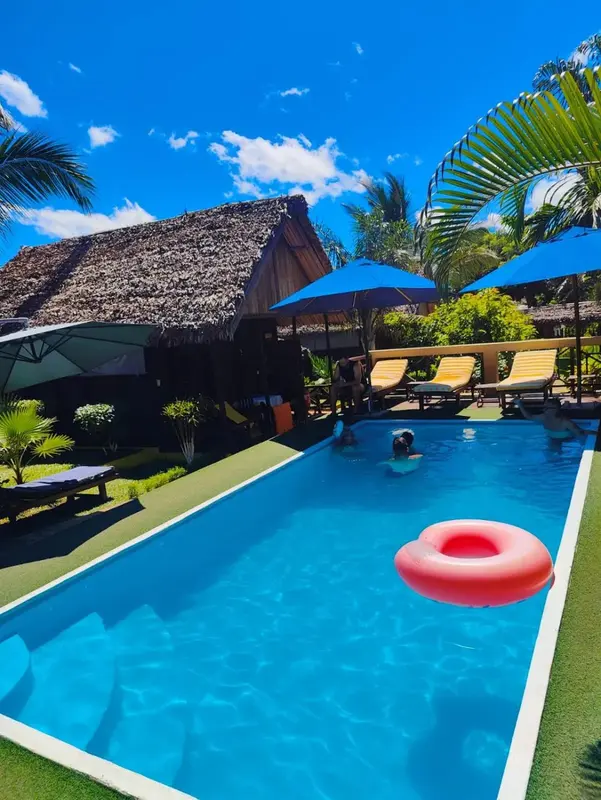
Hotels in Nosy Iranja


Frequently asked questions about Nosy Iranja
When should you go to Nosy Iranja for the best diving conditions?
April to November generally offers more settled conditions for the boat crossing and better visibility along exposed walls. July to September may bring passing humpback whales, while whale sharks are most associated with November and December. From December to March, rain and monsoon weather make sea travel and returns less predictable.
What diving experience do you need for Nosy Iranja?
Nosy Iranja suits divers who are comfortable with a long boat outing, open-water descents and variable currents. Less experienced divers can be matched to moderate sites. Advanced Open Water training is useful for deeper walls, while the deepest drop-offs require qualifications and experience well beyond a standard recreational profile.
What can you see while diving at Nosy Iranja?
Diving at Nosy Iranja focuses on offshore walls and canyons, where reef sharks are possible year-round and leopard sharks may appear. Barracuda, tuna and trevally move along exposed drop-offs, while gorgonians structure deeper sections. Green turtles are regular, with possible whale sharks in November and December and humpback whales from July to September.
How should you plan a stay that includes Nosy Iranja?
Base yourself on Nosy Be and treat Nosy Iranja as a full boat day rather than a beach excursion. Confirm that your booking is for diving, ask about maximum depth, leave early, and bring your own core equipment. Keep a spare day for weather disruption and avoid placing a flight immediately after the return crossing.