
Ile Maurice – Ticabo Diving Centre
Google 4.8/5 (237 reviews)
Mauritius · Indian Ocean
Volcanic arches, coral gardens, wrecks, turtles and 20 to 30 metres of visibility shape diving from Flic-en-Flac on Mauritius’s west coast.
For subtitles in English: start the video firstthen click the gearat the top right of the video, select “Subtitles/CC”, then “Auto-translate” and choose “English”.
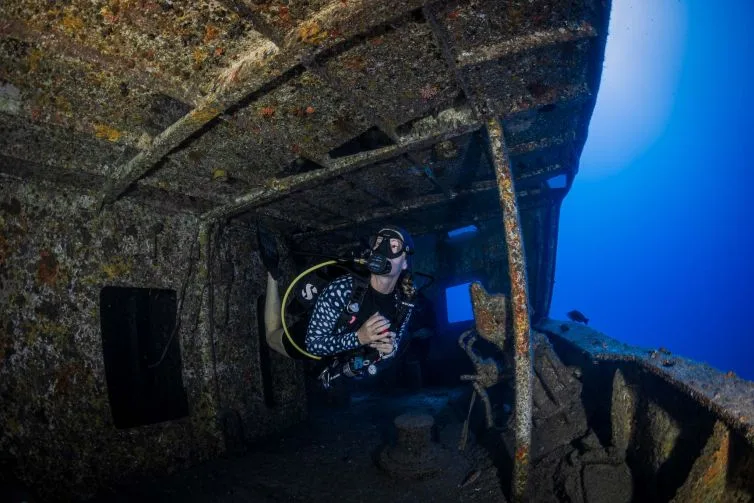
Flic-en-Flac is a shore-based base for exploring Mauritius’s west coast by boat. One day can mean shallow coral gardens at Wolmar; another can lead to the arches and cavities of La Cathédrale, Snake Reef’s volcanic reliefs or a wreck such as Stella Maru. That spread suits a week-long stay, especially when a non-diving partner wants a beach, lagoon or inland excursion rather than a liveaboard routine.
Most diving is from a boat, with the coast offering a useful change of scene between shallow coral gardens, reefs, volcanic arches and cavities, drop-offs and wrecks. Wolmar is the gentler end of the scale. La Cathédrale and Snake Reef bring more depth, enclosed relief and variable current, so the character of a dive can change noticeably between an exposed site and sheltered water. Visibility is commonly around 20 to 30 metres from May to November, although swell, rain, coastal run-off and periods of heavier plankton can reduce it. This is not a destination where every outing starts from the beach: the recognised wrecks and outer formations require a boat journey. Morning departures are generally the practical choice, with calmer conditions often helping both visibility and comfort before the sites become busier.
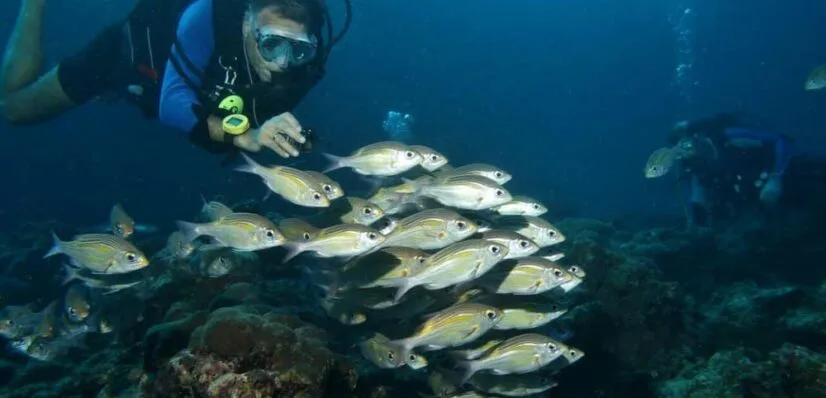
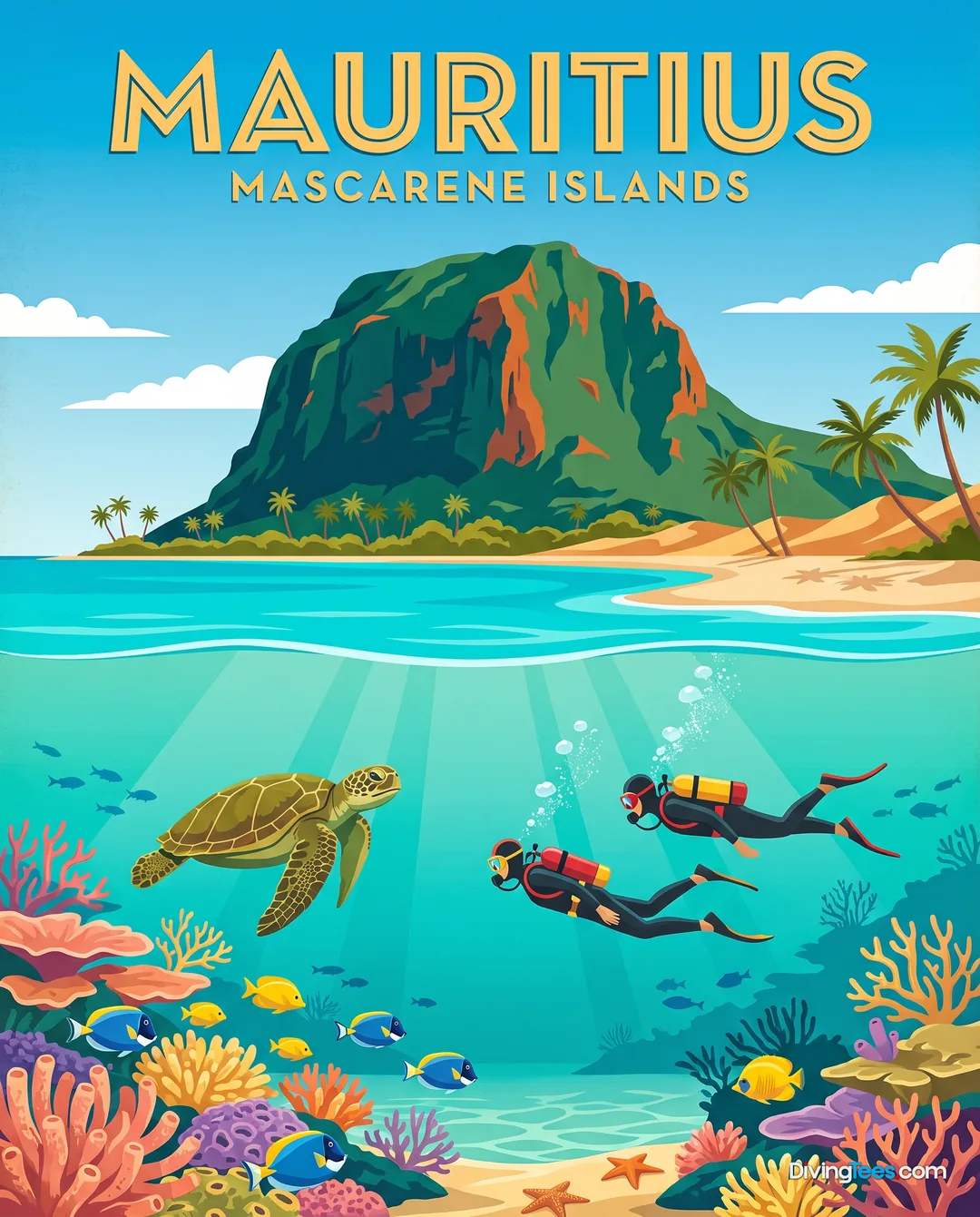
Turtles and reef fish are the dependable encounters, with moray eels also present throughout the year. Look into cracks and volcanic cavities rather than only scanning the blue water, as the terrain gives morays and smaller reef life places to disappear. Lionfish and barracuda may turn up in any season, while reef sharks are a rare sight rather than a reason to book the trip. The west coast is therefore better suited to divers who enjoy the combination of structure and everyday tropical fish life than to anyone expecting a guaranteed pelagic spectacle. Turtle sightings are possible year-round, but no particular month should be treated as a promise of one animal or another.
May to November is the sensible window, when the west coast generally has calmer seas and clearer water. Visibility is often at its most useful then, which matters at La Cathédrale and the outer volcanic formations where the shape of the site is part of the dive. January to March falls in the rainy season and is more exposed to cyclonic weather, swell and run-off from the coast. Those conditions can lower visibility and cancel boat outings, so the warmer part of the year is not automatically the easier choice. The cooler months call for a full 3 to 5 mm suit for many divers, while less chilly swimmers may prefer lighter protection in the austral summer.
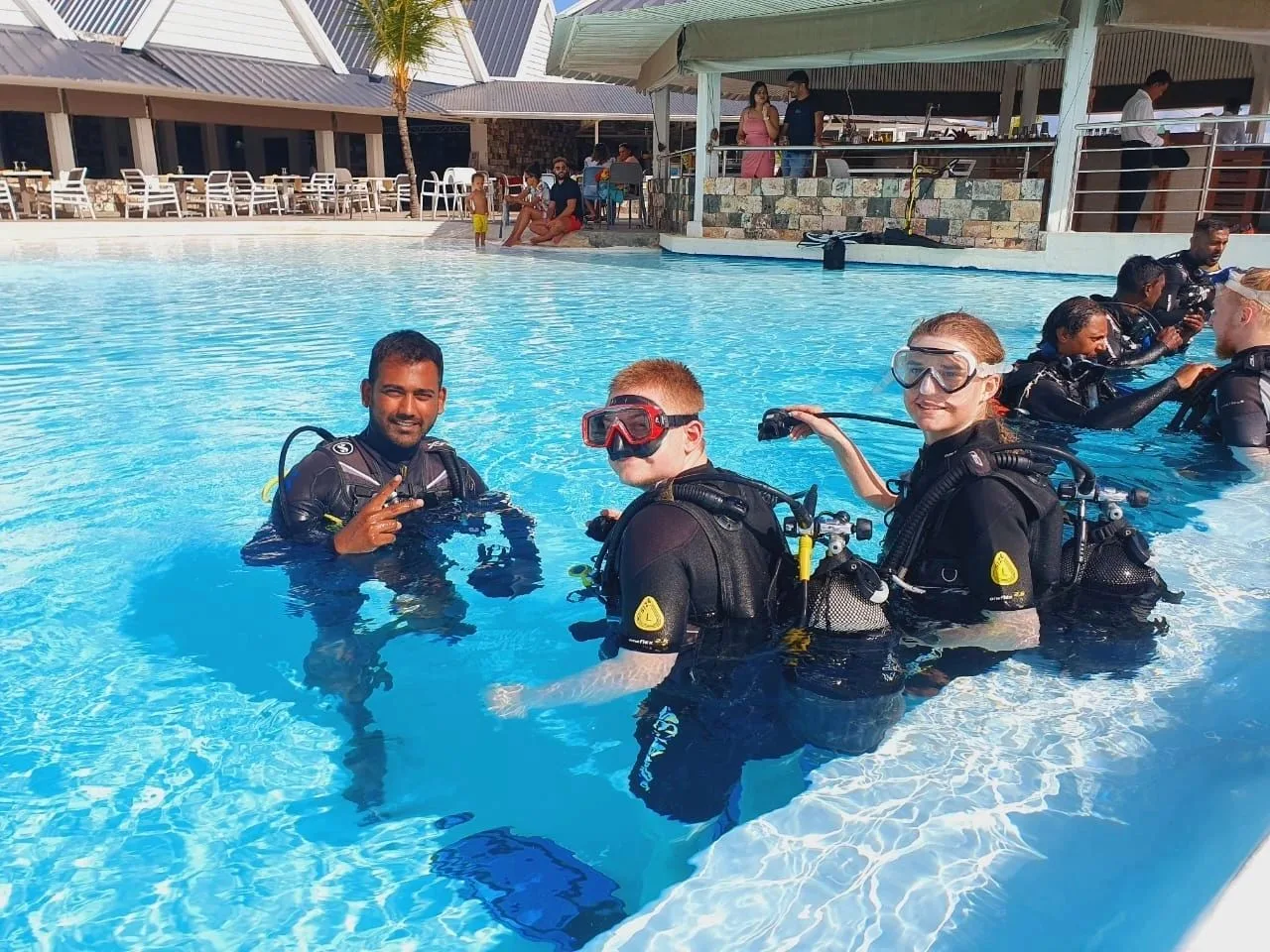
Flic-en-Flac works for beginners at Wolmar, including first dives, but not every west-coast site belongs in a novice programme. La Cathédrale and Snake Reef suit certified divers who are comfortable with greater depth, changing current and passing through or around volcanic relief. An Advanced Open Water qualification is useful for the deeper sites, while Nitrox can be worthwhile on days involving several dives. Experience matters more than the label on the qualification when overhead-looking arches and cavities are involved.
From London, use LHR or LGW, or set off from Manchester, for the journey to Mauritius. Allow roughly 14 to 18 hours overall, depending on the routing, and expect a connection from many departure points because European services vary by season. Once you reach Mauritius’s international airport, Flic-en-Flac is reached by road, with no ferry, domestic flight or sea crossing to arrange. At the resort, accommodation around the centre and seafront may be close enough for straightforward access to diving, while places farther away usually need a taxi or a shuttle if the diving service provides one. The boat departure comes afterwards from the coast, not directly from every stretch of beach.
Keep several diving days flexible rather than fixing every outing in advance. La Cathédrale, Snake Reef and the outer formations depend on sea state and current, and a sheltered site may be the better call on the day. Ask whether the boat is heading for exposed or protected water, then leave room to move the plan without losing the whole trip. Before La Cathédrale, be honest about depth and comfort around arches and cavities; check buoyancy and equipment configuration before entering terrain where a fin or cylinder can damage coral. Do not assume that the beach gives direct access to the wrecks or headline sites. Take the first morning departure where possible, and keep a full day between the last dive and the flight home. Avoid touching, feeding or chasing animals, and never stand on the coral.
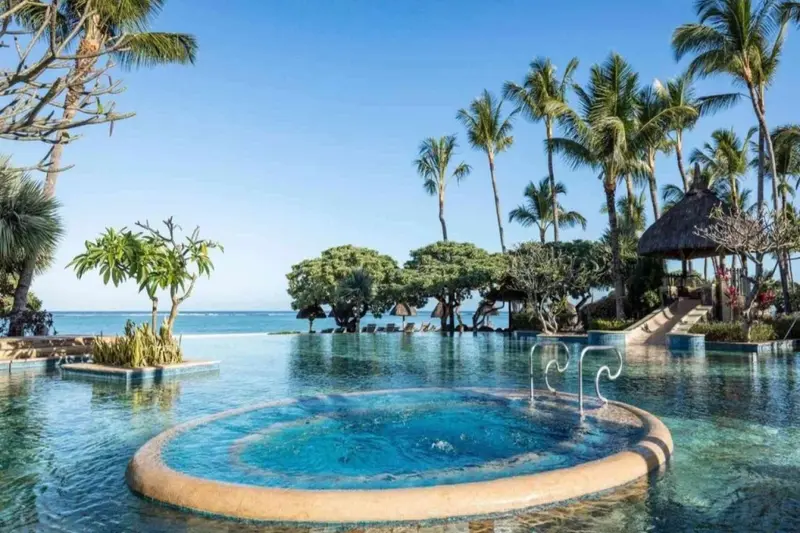
Allow seven to ten days for a land-based stay, with several boat-diving days separated by weather margin and time ashore. Flic-en-Flac makes it easy to mix Wolmar’s shallower gardens with deeper volcanic sites and wrecks, rather than repeating one type of outing. Non-divers can use the beach and lagoon, go snorkelling, join a wildlife trip or explore the south-west and inland landscapes. Accommodation near the seafront may simplify morning departures; elsewhere, plan around a taxi or available shuttle.
Hello, I'm Marina, DivingDeal.com's AI assistant. I guide you through destinations, areas and countries.
Thinking about the whole trip and the flights? Talk it over with Edith →
Marina is an AI. Some links are affiliate links: DivingDeal may earn a commission, at no extra cost to you. Bookings are made with the partner.
May to November is the sensible window for Flic-en-Flac, with generally calmer seas and clearer water. Visibility is commonly around 20 to 30 metres then, although swell, rain, coastal run-off and plankton can reduce it. January to March brings rainy-season conditions, with greater exposure to cyclones, swell, run-off and cancelled boat outings.
Flic-en-Flac works for beginners at Wolmar, including first dives, where shallow coral gardens offer a gentler introduction. La Cathédrale and Snake Reef suit certified divers comfortable with greater depth, changing current and volcanic relief. An Advanced Open Water qualification is useful for deeper sites, while experience and buoyancy control matter around arches and cavities.
Diving in Flic-en-Flac combines shallow coral gardens, volcanic arches and cavities, drop-offs, outer formations and west-coast wrecks such as Stella Maru. Turtles and reef fish are present throughout the year, with moray eels in cracks and cavities. Lionfish and barracuda may appear, while reef sharks are a rare sight rather than a booking reason.
Plan a land-based stay in Flic-en-Flac with several flexible boat-diving days, allowing weather margin and time ashore. Mix Wolmar’s shallow gardens with deeper volcanic sites and wrecks, and consider morning departures for calmer conditions. Accommodation near the seafront can simplify access, while farther locations may require a taxi or available shuttle.