
 Dive centre in the hotel
Constance Belle Mare Plage
★★★★★
Google 4.6/5 (2,787 reviews)
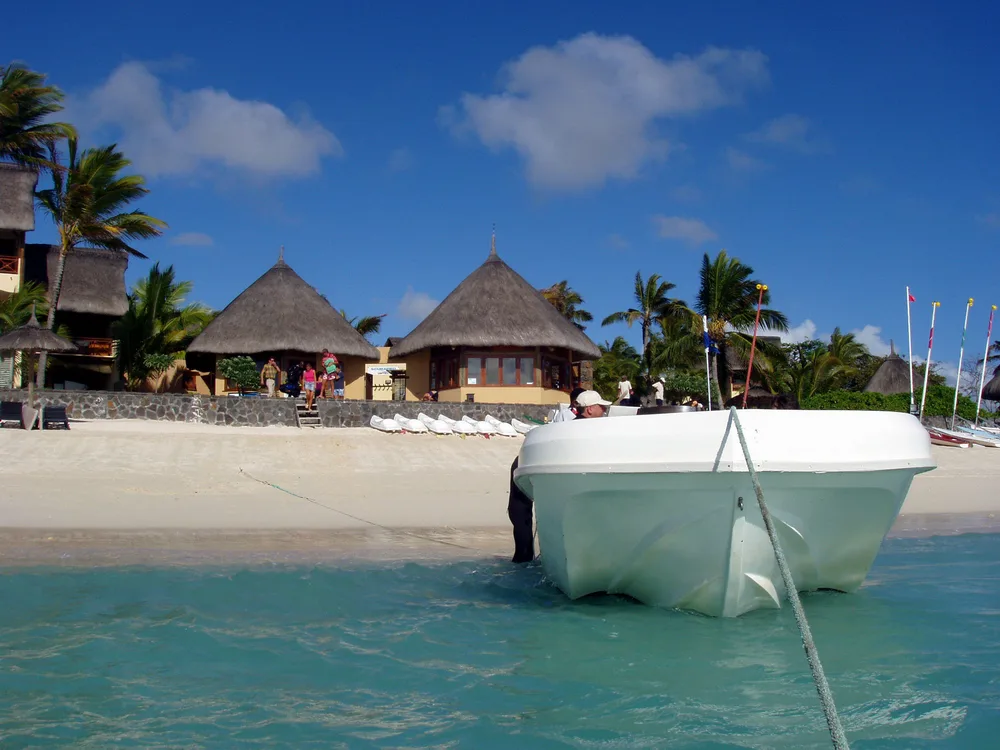
The dive centre
BLUES DIVING
PADI
Google 4.8/5 (48 reviews)
Mauritius · Indian Ocean
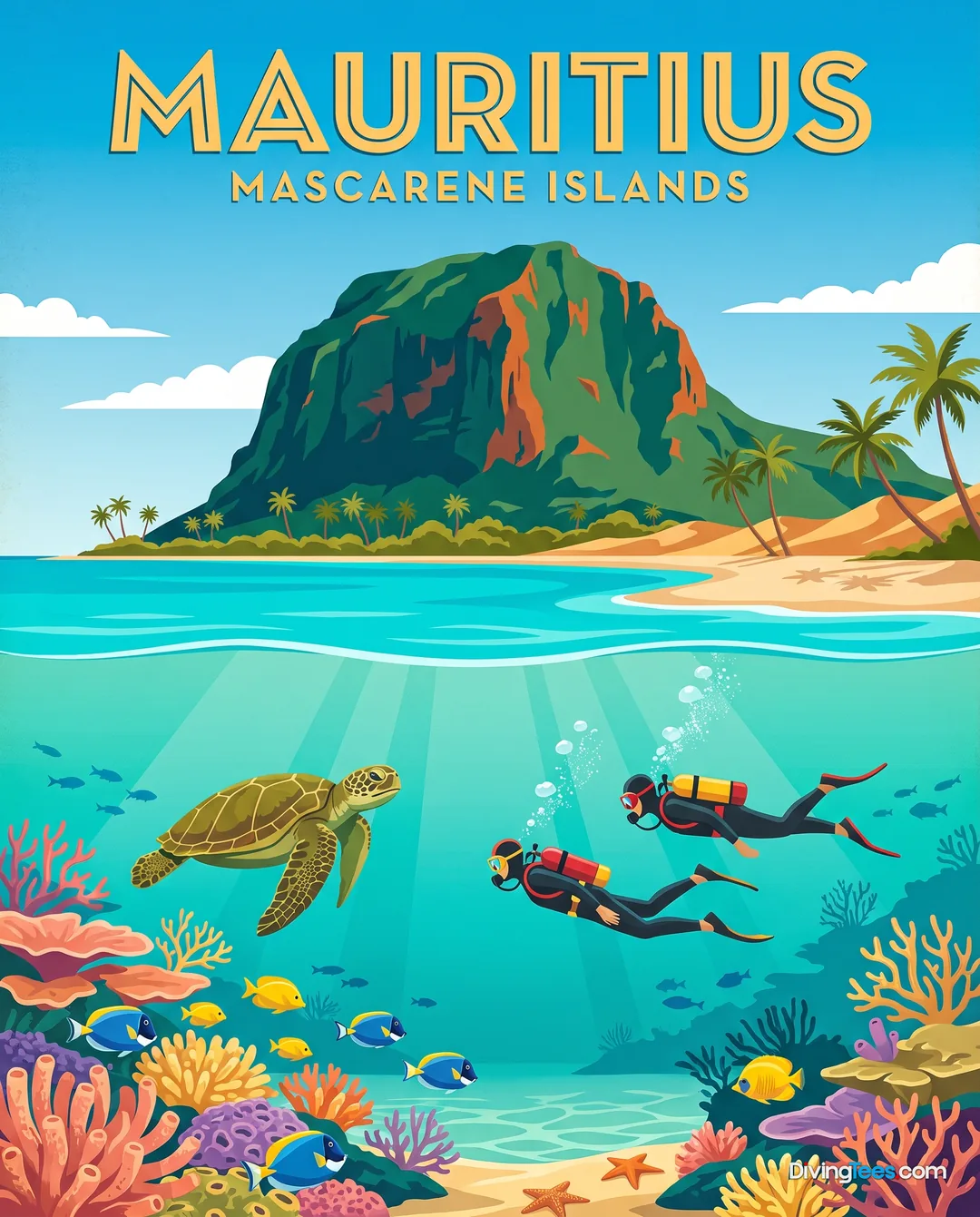
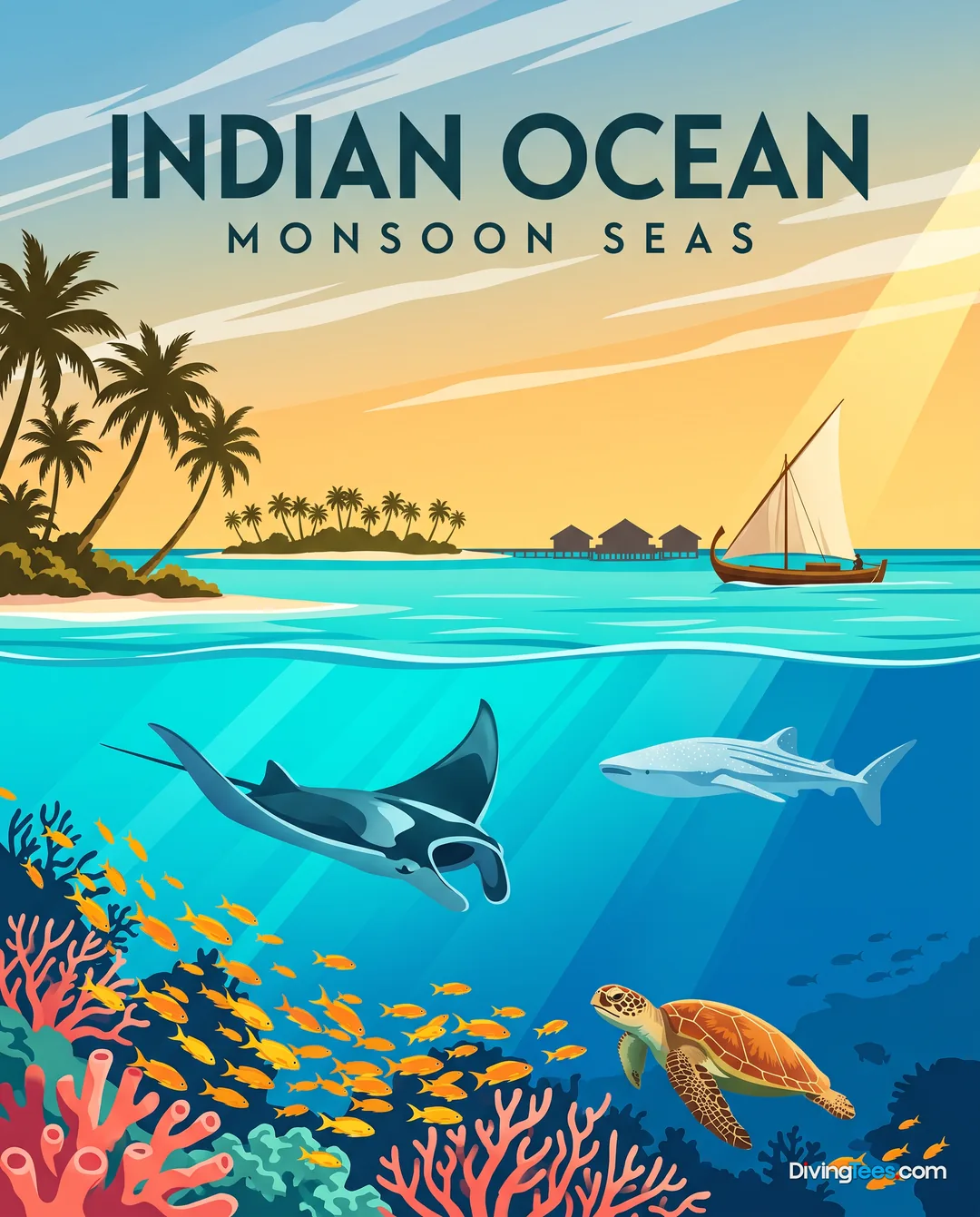
Shallow acropora in Belle Mare Lagoon, gorgonian forests, coral canyons and eagle rays shape a day-boat diving base on Mauritius’s east coast.
For subtitles in English: start the video firstthen click the gearat the top right of the video, select “Subtitles/CC”, then “Auto-translate” and choose “English”.
Belle Mare is a beach-based gateway to Mauritius’s east and north-east coast diving. The normal arrangement is a land holiday with boat trips from the coast, rather than a liveaboard itinerary. Underwater, the setting ranges from the shallow acropora of Belle Mare Lagoon to coral walls, channels and gorgonian-covered slopes. That gives beginners somewhere calm to start, while experienced divers can look towards Belle-Mare Pass and Sea Fan Forest when current, depth and drift experience make those sites appropriate.
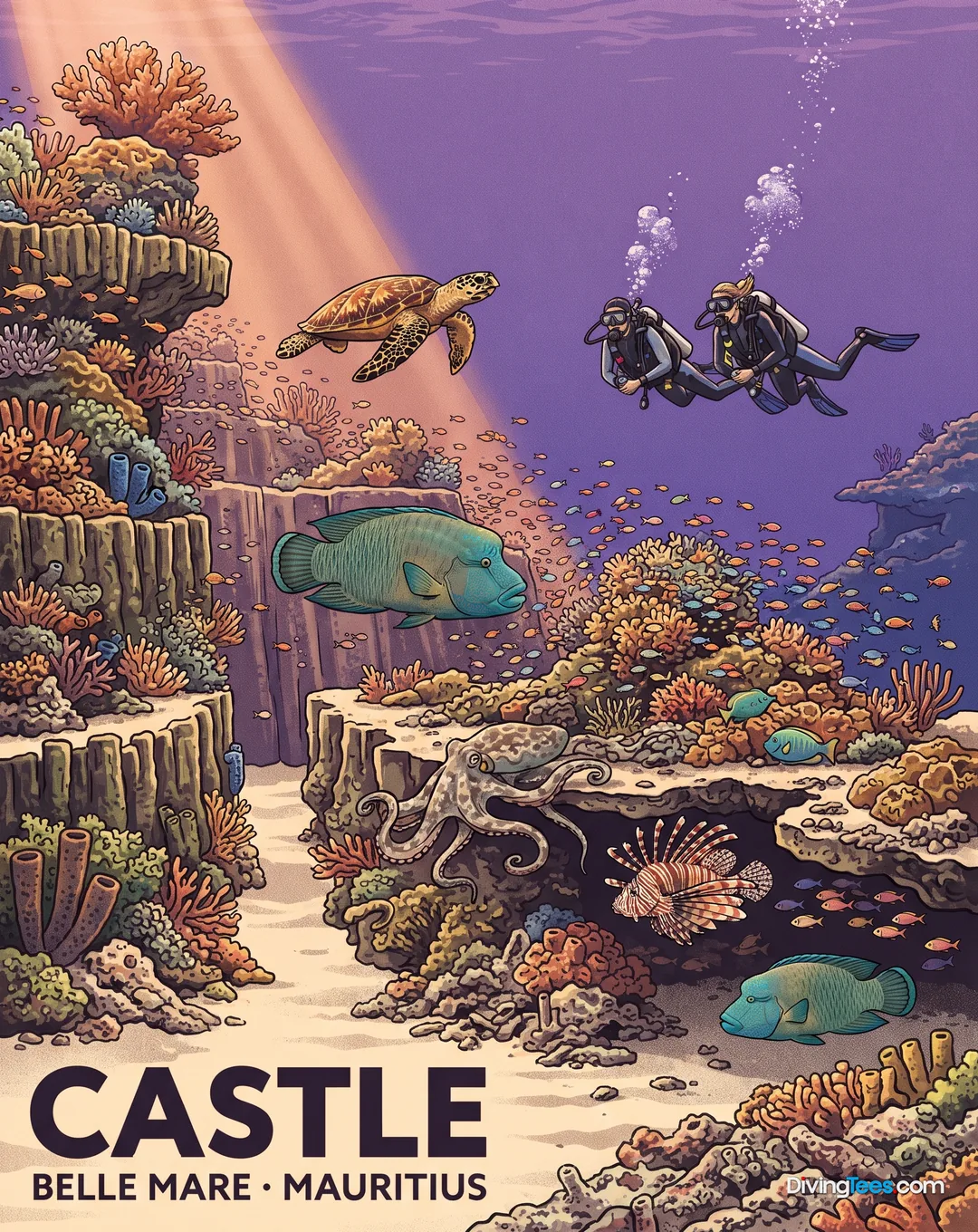
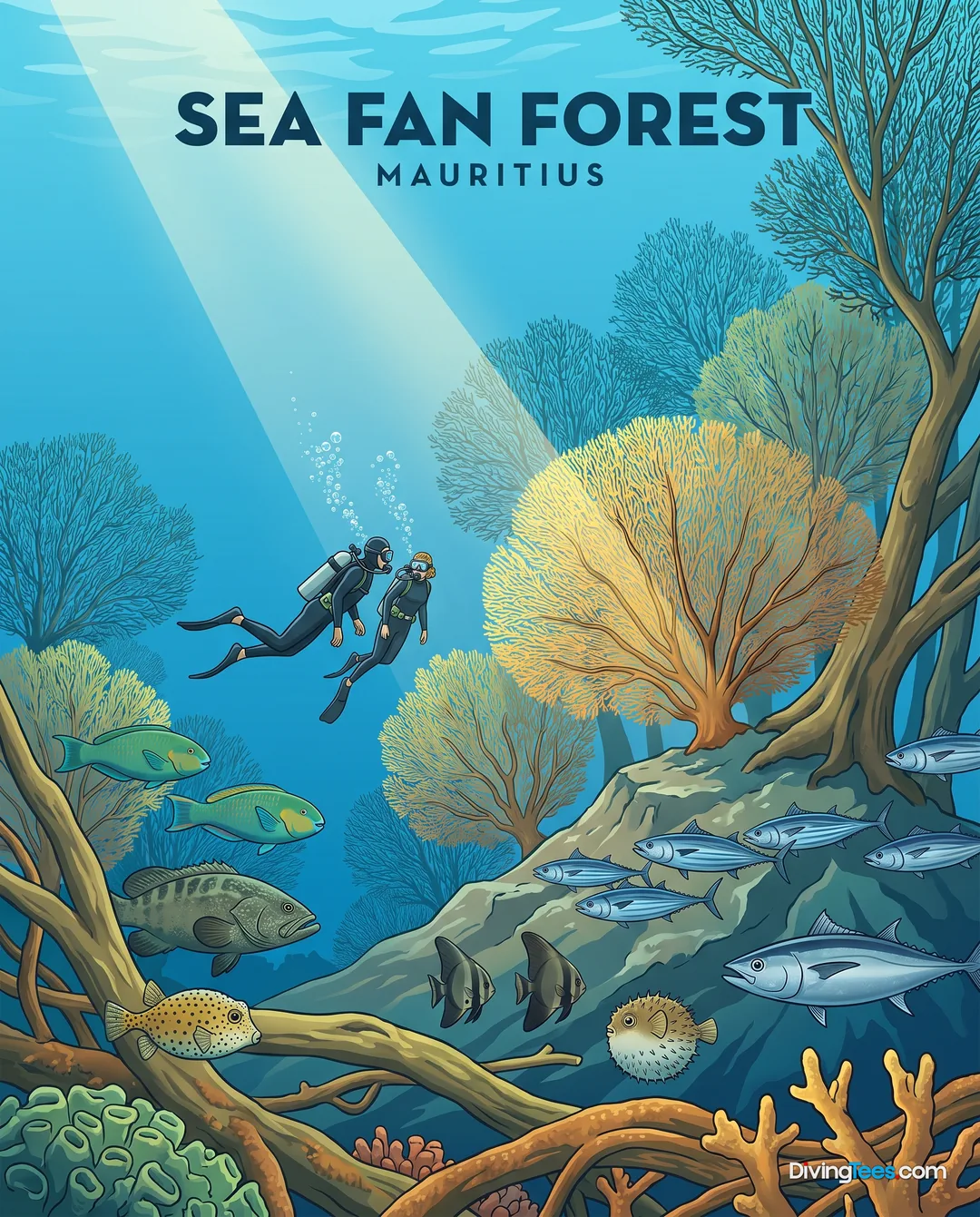
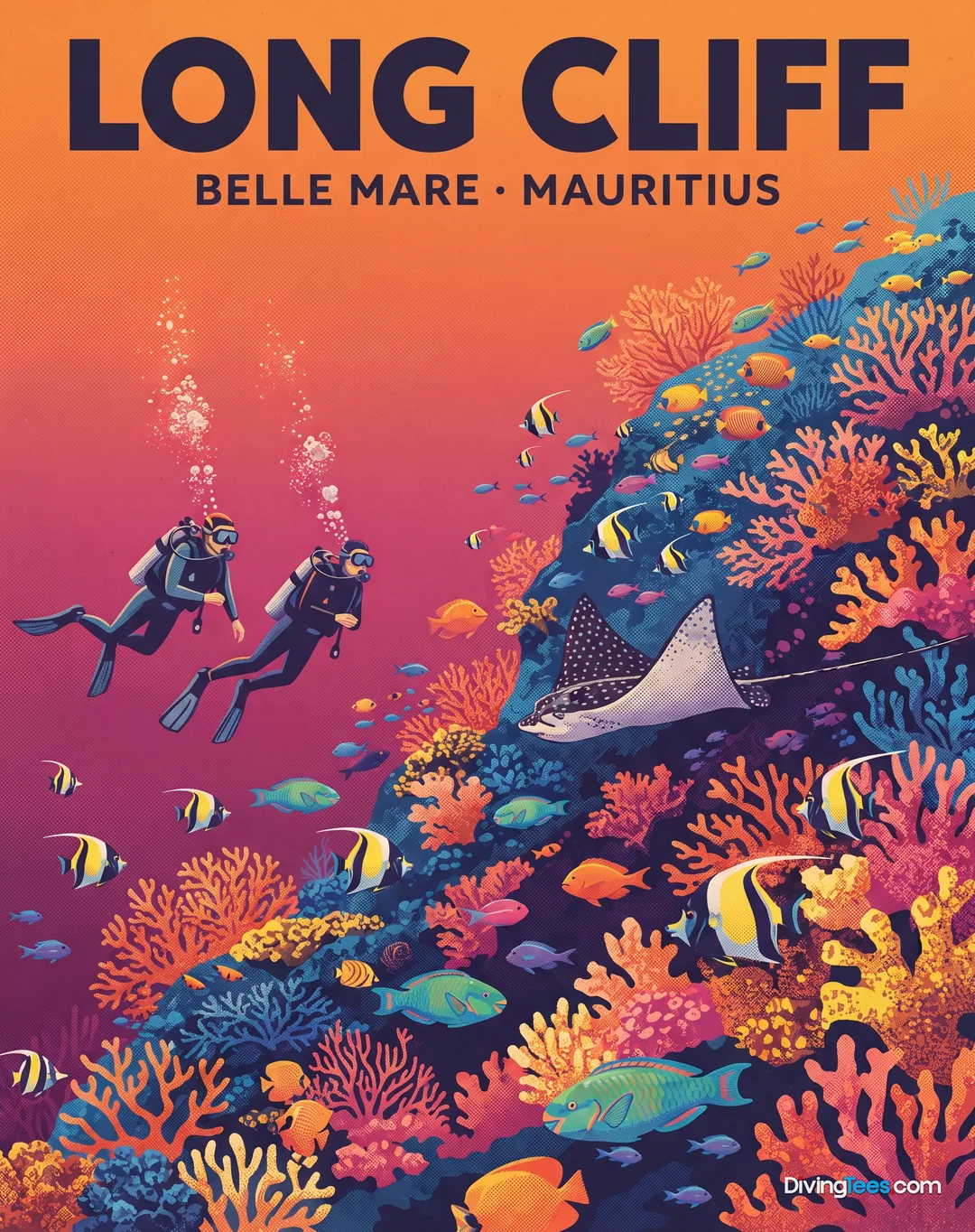
The diving is built around reef structure rather than wrecks: sloping walls, natural corridors and channels, with coral and reef fish filling the spaces between them. Canyon cuts through the reef in a series of distinct passages, while Castle offers a more enclosed route through coral walls. Japanese Garden sits between 19 and 24 metres, and Long Cliff drops from 17 to 27 metres. Current is variable. Belle-Mare Pass is the clear exception to any assumption of gentle water, with strong, sometimes fast flow and drift profiles from 10 to 28 metres. Sea Fan Valley can also become a drift along gorgonian walls, while Sea Fan Forest reaches 33 metres and calls for a steadier, more experienced approach. Reported visibility ranges from 10 to 30 metres at the pass, with 20 to 25 metres noted at Canyon and generally good conditions at several deeper sites.
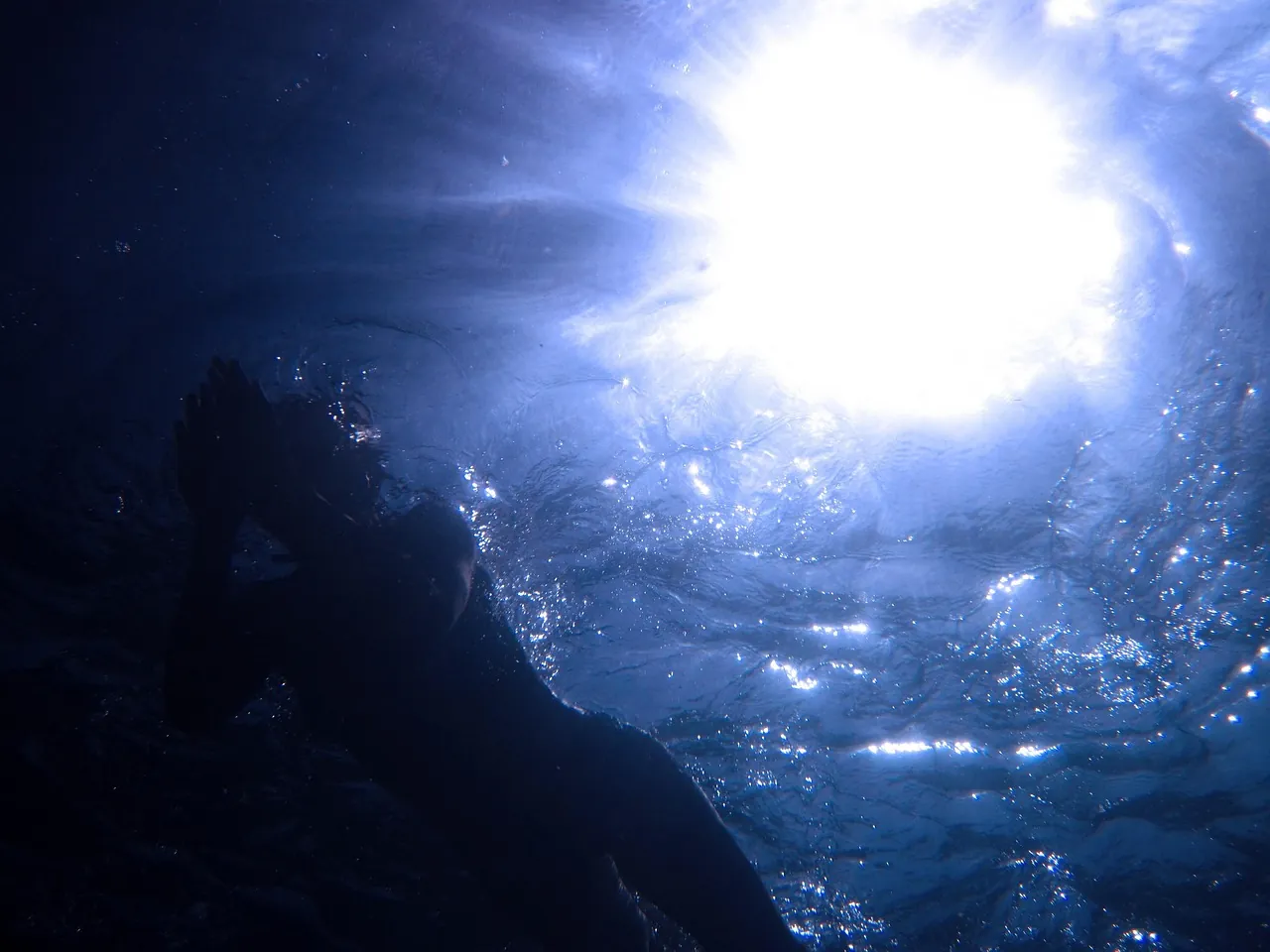
Reef fish are the dependable backdrop: butterflyfish, triggerfish, groupers and other tropical reef fish move through the coral at Belle Mare Lagoon, Japanese Garden and Castle. Castle is particularly associated with turtles, while the more open sites offer a chance of larger passing animals. Belle-Mare Pass is where the scenery starts moving, with schools of jacks, reef sharks and solitary barracuda carried along in the current. Sea Fan Valley and Sea Fan Forest add the possibility of lobsters, bonitos and dogtooth tuna among the gorgonians. Eagle rays are also part of the area’s wildlife picture. The site material points to December to May as the measured best period, but it does not establish a separate, reliable calendar for individual species.
The measured diving window runs from December to May, when the destination’s recorded conditions are most favourable for diving. May to October brings the lowest rainfall, which can make a land-based holiday easier to organise and leaves more useful days for beach time and island excursions. That does not remove the need to watch the sea: boat departures remain dependent on swell and wind, and current-sensitive sites may still require a flexible plan. For a week-long visit, the practical answer is to keep the schedule adjustable rather than treating one fixed month or departure slot as guaranteed.
Belle Mare suits all levels, provided the site is matched to the diver. Belle Mare Lagoon, Castle and Canyon offer straightforward profiles, although recent comfort at 20 to 25 metres is sensible for Canyon. Japanese Garden and Long Cliff work for divers with ordinary recreational experience. Belle-Mare Pass demands intermediate drift-diving experience, and some passes are reserved for advanced or confirmed divers. Sea Fan Forest reaches 33 metres and is for experienced divers. PADI, SSI and BSAC qualifications fit the same practical distinction: the card matters less than recent depth and current experience. Nitrox is useful for repeated recreational days.
From London Heathrow, Gatwick or Manchester, the journey begins with a flight to Mauritius using connections or services offered by airlines such as Air Mauritius, Emirates, Air France, British Airways or Condor. Belle Mare itself is reached by road from the international airport; there is no compulsory ferry crossing or domestic flight for this area. Once at the resort, divers normally reach the coastal departure point on foot if their accommodation is adjacent, or by taxi or an arranged transfer. The final leg is therefore straightforward but not entirely fixed: boat times may move with wind, swell and the selected site. Keeping the first diving days early in the holiday leaves room to absorb a postponed or rearranged outing.
Treat the boat programme as weather-dependent from the outset. Put the first planned dives near the beginning of the stay, so a change caused by swell or wind does not consume the only opportunity to get underwater. Do not build the week around one departure slot: day-boat diving allows the schedule to move with sea conditions and available places. It is also worth separating the calm introduction from the current work. Belle Mare Lagoon, Castle or Canyon can settle a diver into the local conditions before a decision is made about Belle-Mare Pass, where the flow may be strong and fast. Keep recent drift experience in mind rather than relying only on certification. On repeated diving days, Nitrox can be useful for recreational profiles, particularly when the boats are running successive reef dives. Finally, do not plan Belle Mare as a liveaboard destination; the practical rhythm is accommodation ashore, daily boat trips and spare time for the coast.
A seven- to ten-day stay gives Belle Mare enough room to combine several boat days with weather flexibility. Diving can be mixed between sheltered reefs, walls and current-dependent passes rather than forced into a rigid sequence. Non-divers have the beach and lagoon, while land excursions across Mauritius provide a useful change of pace. Keep the final day for terrestrial activities rather than a late immersion, especially before the flight home.
Hello, I'm Marina, DivingDeal.com's AI assistant. I guide you through destinations, areas and countries.
Thinking about the whole trip and the flights? Talk it over with Edith →
Marina is an AI. Some links are affiliate links: DivingDeal may earn a commission, at no extra cost to you. Bookings are made with the partner.
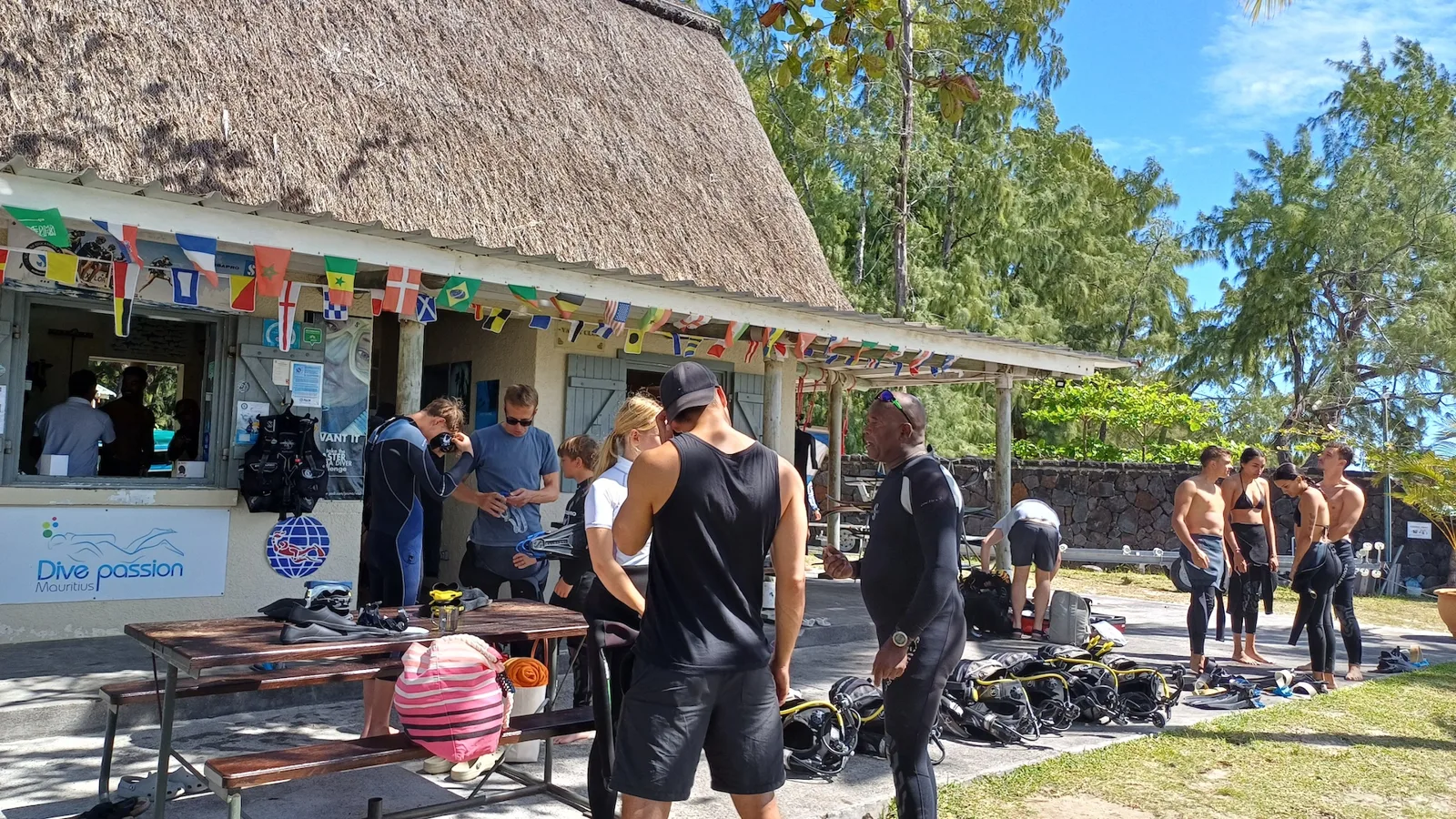
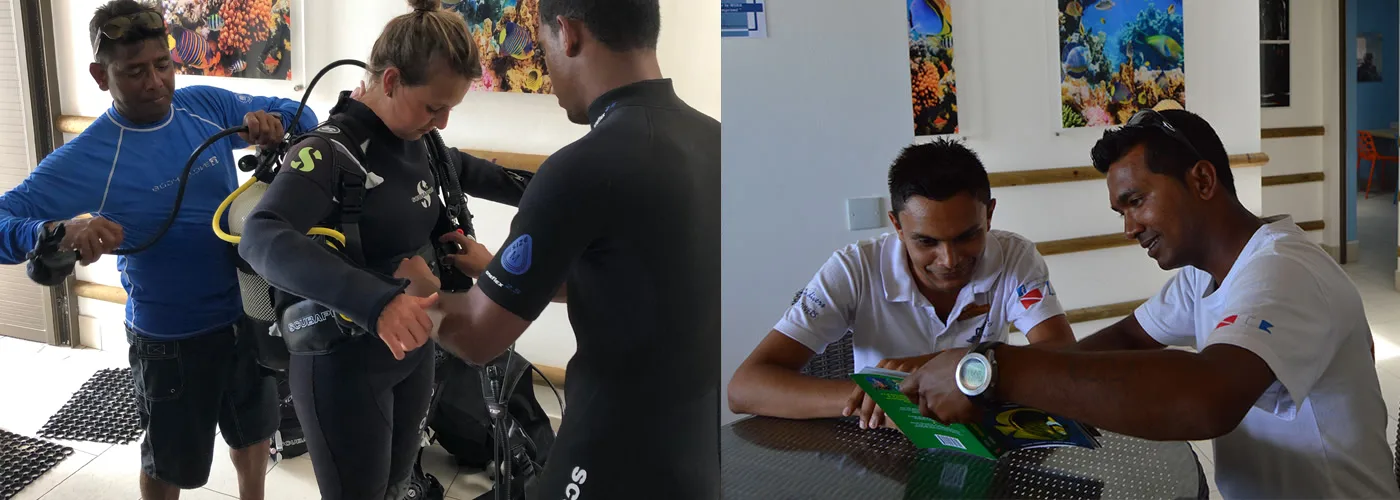
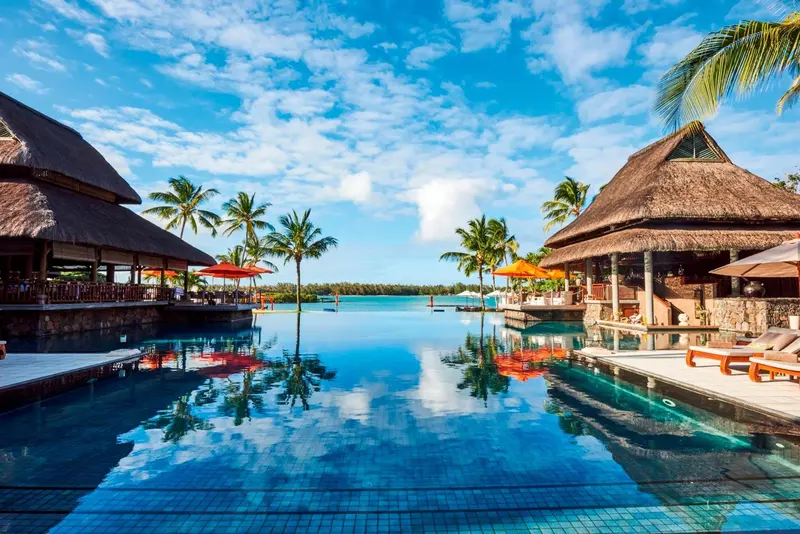
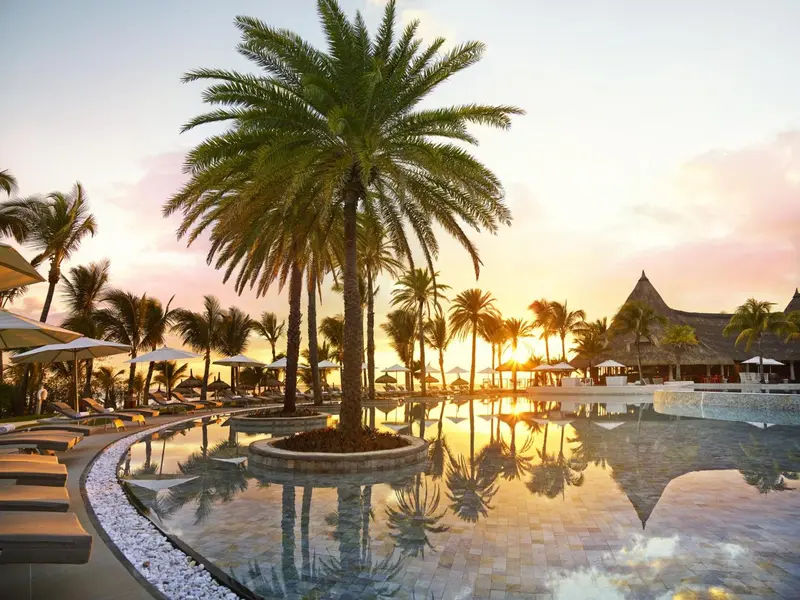
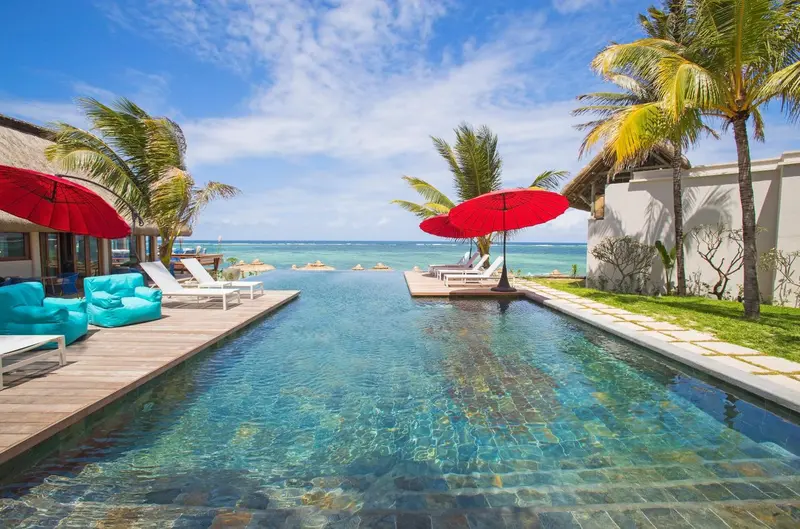
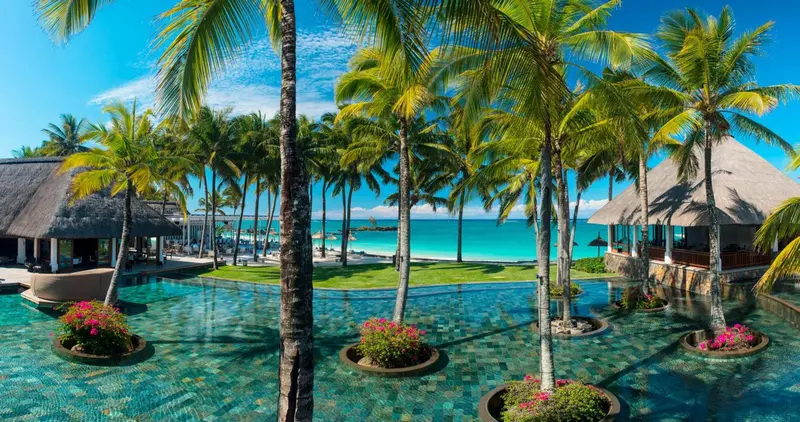
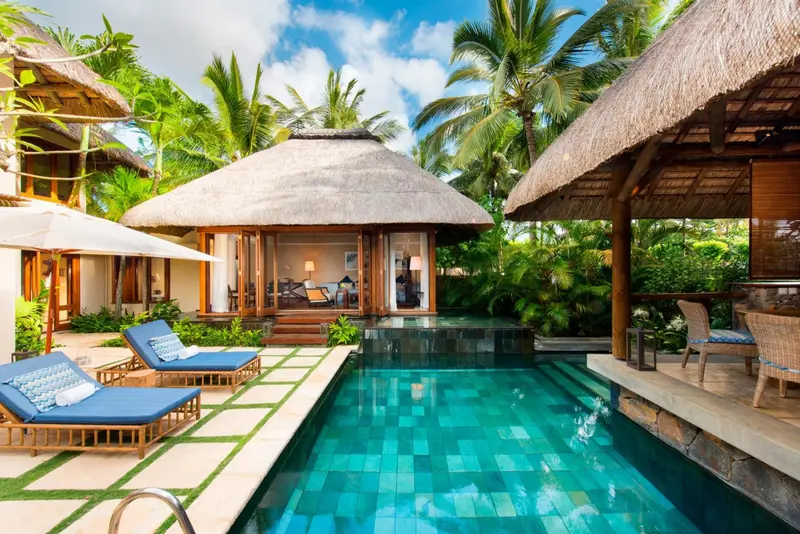
In each one, the dive centre is inside the hotel: step out of your room and go diving.
Dive centre in the hotel★★★★★
Google 4.6/5 (2,787 reviews)
The dive centre
BLUES DIVING
PADI
Google 4.8/5 (48 reviews)
Your last day stays dry: no diving in the 18-24 hours before a flight, the perfect window to see the destination from another angle.
Ratings and reviews collected by Viator and Tripadvisor.
December to May is the measured period when Belle Mare’s recorded diving conditions are most favourable. From May to October, rainfall is lowest, which can make a land-based holiday easier to organise and leave more time for beaches and excursions. Boat departures still depend on wind, swell and site conditions.
Belle Mare Lagoon, Castle and Canyon suit straightforward profiles, although Canyon is more comfortable with recent experience at 20 to 25 metres. Japanese Garden and Long Cliff fit ordinary recreational experience. Belle-Mare Pass requires intermediate drift experience, while Sea Fan Forest reaches 33 metres and calls for experienced divers.
Belle Mare combines shallow acropora, coral walls, channels and gorgonian-covered slopes rather than wrecks. Reef fish include butterflyfish, triggerfish and groupers. Castle is associated with turtles, while Belle-Mare Pass may bring jacks, reef sharks and barracuda. Sea Fan sites can feature lobsters, bonitos, dogtooth tuna and eagle rays.
Plan Belle Mare as a land-based holiday with daily boat trips, not a liveaboard itinerary. Put diving early in the stay and keep the schedule flexible for wind, swell and changing boat times. Start with calmer sites before current work, consider Nitrox for repeated recreational days, and leave the final day for land activities.