
Bluassoluto Diving
Google 5/5 (213 reviews)
Italy · Mediterranean
Red-rock walls, sandy-bottomed canyons, pinnacles, caverns, lobsters and moray eels shape boat dives from Isola Rossa along Sardinia’s Costa Rossa.
For subtitles in English: start the video firstthen click the gearat the top right of the video, select “Subtitles/CC”, then “Auto-translate” and choose “English”.
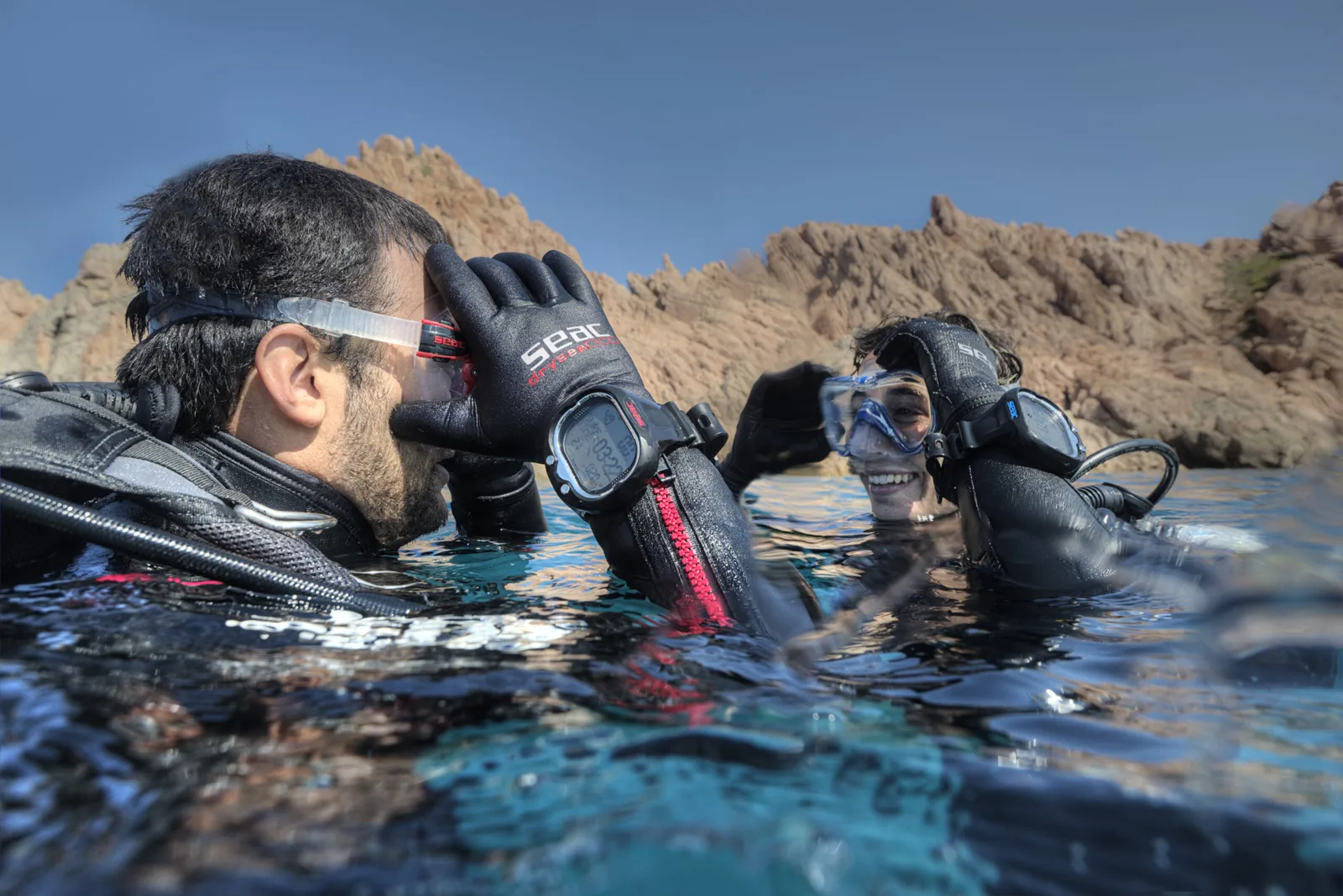
Isola Rossa is a shore-based Sardinian diving base where semi-rigid boats leave a small harbour for red-rock walls, pinnacles, sandy-bottomed canyons and caverns. The closest sites are only a short run from the port, while outings can reach Punta Canneddi, Cala Tinnari, Porto Leccio and Costa Paradiso. It suits a few days of diving from one base, with beaches, coastal walking and boat trips for non-divers.
Underwater, Isola Rossa is about following rock rather than searching for wrecks. Walls carry Mediterranean flora, pinnacles rise from the seabed, and sandy-bottomed canyons bring a change of scale and colour. The local programme also includes caverns, including Camelot and Tana di Gavino, where the distinction between a lit cavity and a true penetration matters. Currents are variable, so a site can feel quite different according to the day and the skipper’s plan. Visibility is generally described as good, although it can change with conditions and depth. Most dives are reached by semi-rigid boat from the harbour, with the nearest runs taking only minutes. Further outings towards Punta Canneddi, Cala Tinnari, Porto Leccio and Costa Paradiso can involve up to about half an hour on the water.
The rock provides the setting for regular encounters with lobsters and moray eels, particularly around walls, cracks and sheltered sections of the reef. A sting ray or another unidentified ray is an occasional bonus rather than the reason to book the trip. Mediterranean flora is a constant part of the scenery, coating the walls and making the relief worth examining at close range. The most rewarding approach is therefore a slow, observant one, looking into cavities rather than racing from one feature to the next. Marine life is best regarded as part of a rocky landscape of walls, pinnacles and canyons, rather than as a destination built around one headline animal. The June to September diving season is the practical period for seeing it underwater.
June to September is the established window for diving at Isola Rossa, because the local centres and guides organise their boat programme chiefly during these months. It also matches the period when a diving holiday can be planned around regular departures rather than relying on limited off-season availability. Summer is likely to be the busier period, especially during holidays, so the small harbour and boats may feel less relaxed then. A thermocline can bring noticeably cooler water below it, making sensible thermal protection worthwhile even in the warmer months.
The destination works for beginners on sites classified for all levels, provided the day’s route is matched to experience. Advanced Open Water, or an equivalent level of practical experience, is useful for deeper walls, canyons and more complex relief. Caverns need a separate conversation: a lit cavity is not automatically a cave dive, and genuine penetration calls for the appropriate qualification, equipment and briefing. PADI, SSI and BSAC divers should confirm the exact site requirements before boarding.
From London, via Heathrow or Gatwick, or from Manchester, the journey continues to northern Sardinia and then by road. The regional approach is through Olbia, Alghero or Porto Torres, followed by a drive to Isola Rossa. A ferry from mainland Italy is another option, but it does not take you directly to Isola Rossa, since the final leg is still by road. Allow time for the road connection when matching transport with the first boat departure. A hire car is usually the most practical arrangement for linking the arrival point, accommodation and different parts of the Costa Rossa. In the village, accommodation near the port may allow you to walk to the boats; properties spread around the coast generally require a car or a local transfer.
Book the boat with your actual level in mind, not simply the name of the site. Ask for the precise programme before leaving the harbour, since the day may stay close to Isola Rossa or run towards Punta Canneddi, Cala Tinnari, Porto Leccio or Costa Paradiso, with a noticeable difference in time on the water. Do not assume that a site reached from a small coastal base is a shore dive: the documented local format is predominantly semi-rigid boat diving. If your accommodation is outside the village, arrange transport rather than assuming a permanent shuttle. Bring thermal protection that can cope with a cooler layer below the thermocline. Before entering Camelot, Tana di Gavino or another cavity, establish whether it is a simple illuminated recess or a genuine penetration, then check the qualification and equipment requirement. Finally, do not book Isola Rossa as a liveaboard destination. Its logic is a land-based stay with day boats.
Three to five days gives a sensible shape to a first stay: use the shorter runs near the harbour, then set aside a day for sectors towards Punta Canneddi, Cala Tinnari, Porto Leccio or Costa Paradiso. Staying in or near the village makes morning departures simpler, while a car opens up the wider Costa Rossa. Non-divers have beaches, coastal walks, surface boat trips and sightseeing around the red rock, so the base works for a mixed travelling party.
Hello, I'm Marina, DivingDeal.com's AI assistant. I guide you through destinations, areas and countries.
Thinking about the whole trip and the flights? Talk it over with Edith →
Marina is an AI. Some links are affiliate links: DivingDeal may earn a commission, at no extra cost to you. Bookings are made with the partner.
Plan your diving holiday in Isola Rossa from June to September, when local centres and guides mainly organise regular boat departures. Summer may feel busier around the small harbour and boats, especially during holidays. Bring thermal protection for a cooler layer below the thermocline, even during warmer months.
Isola Rossa has sites suitable for beginners when the route matches your experience. Advanced Open Water or equivalent practical experience helps with deeper walls, canyons and complex relief. Caverns require careful clarification: a lit cavity is not automatically a cave dive, and genuine penetration needs suitable qualification, equipment and briefing.
Diving in Isola Rossa follows red-rock walls, pinnacles and sandy-bottomed canyons covered with Mediterranean flora. You can explore caverns such as Camelot and Tana di Gavino, while lobsters and moray eels shelter in cracks and rocky sections. Rays may appear occasionally, but the main attraction is the varied rocky landscape.
Plan Isola Rossa as a land-based stay with day boats from the harbour, rather than a liveaboard trip. Staying near the port simplifies departures, while a hire car helps with accommodation and the wider Costa Rossa. Confirm each day’s programme, arrange transport from outlying lodging, and match the route to your level.