
Kairos Diving Center
Google 5/5 (538 reviews)
Italy · Mediterranean
Tavolara’s drop-offs, Molara’s rocky shallows, caves, scree slopes and seagrass meadows make Olbia a boat-based gateway to protected Sardinian diving.
For subtitles in English: start the video firstthen click the gearat the top right of the video, select “Subtitles/CC”, then “Auto-translate” and choose “English”.
Tavolara’s rocky island slopes and the protected waters around Molara are the reason to base a diving holiday in Olbia. This is not primarily a shore-diving town: the worthwhile underwater ground lies offshore, reached by boat from Porto San Paolo, San Teodoro, Golfo Aranci and nearby coastal bases. Expect a land-based stay with outings towards drop-offs, scree, caves and seagrass meadows, using Olbia as the transport and accommodation hub rather than as one universal departure point.
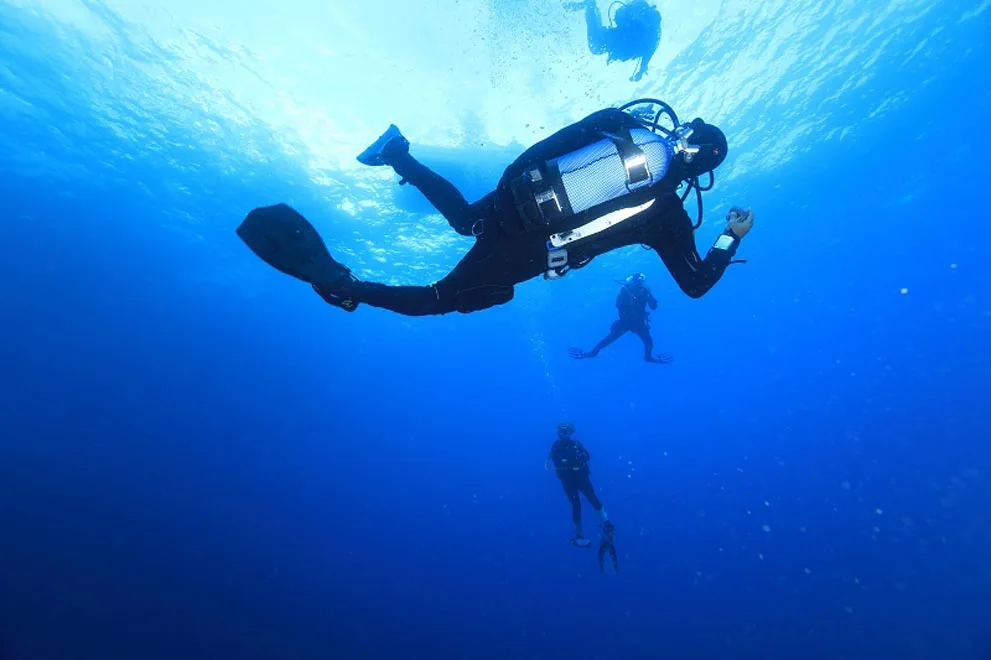
The diving is shaped by island terrain rather than a single house reef. Boat routes reach rocky drop-offs, boulder-strewn slopes, caves and seagrass meadows around Tavolara, Molara and Capo Coda Cavallo. Currents are variable, so a calm-looking plan can become a different site or sector when wind and sea conditions change. Visibility is likewise condition-dependent, affected by wind, swell, boat traffic and local water movement, rather than something to assume from one visit to the next. Most outings are organised around authorised sites and moorings inside the Tavolara–Punta Coda Cavallo Marine Protected Area. The practical rhythm is a boat trip, a planned descent, a controlled route over rock or grass, then a safety stop before returning to the boat. Shore diving from central Olbia is not the normal arrangement.
Here, marine life is closely tied to the structure of the seabed. Seagrass meadows offer a very different setting from the bare faces and broken rock of a drop-off, while caves and scree create shaded edges and irregular surfaces to examine at a slower pace. Around Tavolara, Molara and Capo Coda Cavallo, the protected setting also changes how you dive: anchoring is restricted, moorings concentrate boats over authorised ground, and touching the bottom is prohibited. That makes buoyancy and trim particularly relevant when moving above grass or through rocky terrain. The destination is not built around a guaranteed seasonal animal encounter. Its appeal is the succession of habitats, island scenery and protected underwater ground encountered during boat-diving days.
Plan around the established seasonal diving period and keep the itinerary flexible rather than treating one month as guaranteed calm weather. High season brings more visitors and more boats, while wind and swell can still move a planned outing to another site or sector. This is a destination where the best day is the one that matches the sea state and the permitted sites, not simply the date on the calendar. A five to seven-day stay gives room for a changed boat plan, a quieter day on land and several departures from different coastal bases.
The area suits all levels, including divers still building experience, because local centres offer training and outings for different qualifications. The qualification that matters on a particular day is the one that supports the planned depth and site limits, whether your background is BSAC, PADI or SSI. Less experienced divers should expect the guide and the marine-park rules to shape the route. Experienced divers should not assume that a familiar certification makes autonomous exploration acceptable inside the regulated zones.
From London Heathrow, Gatwick or Manchester, travel is by air to Olbia, with connections needing to be allowed for when a suitable routing is not direct. The alternative is a ferry from one of several Italian mainland ports, usually an overnight crossing or a journey lasting several hours, followed by the road transfer to the coast. Olbia is the arrival and transport hub, but the diving bases are spread between Olbia, Porto San Paolo, San Teodoro, Golfo Aranci and nearby villages. A car is often the simplest way to reach the chosen departure point and change sectors. Depending on the base, taxis or an arranged shuttle can replace a hire car.
Do not book an Olbia hotel on the assumption that every boat leaves from the town centre. Match the accommodation to the departure base if your priority is Tavolara, Molara or the San Teodoro sector, and ask exactly which sector the boat will use. Before a zone B dive, establish who handles the marine-park authorisation and which buoyed sites are permitted. Zone A is not open to ordinary recreational diving, and an improvised autonomous dive in the regulated areas is a poor fit for the local rules. Take certification documents so depth limits can be checked for the group. In high season, reserve the sector you want rather than only a number of dives. Never anchor where it is prohibited, touch the bottom or rely on a named site surviving unchanged when weather forces a different plan.
A five to seven-day land-based stay works well, with boat diving arranged from the nearest suitable coastal base and spare time for weather changes. Sleeping near that base cuts out repeated road journeys from central Olbia, although staying in Olbia leaves more choice for town visits and shore excursions. Non-divers have beaches, island trips, walking, archaeological and historical sights, and marine-wildlife outings from Olbia or Golfo Aranci. Tavolara, Molara and Capo Coda Cavallo also suit boat trips or snorkelling days.
Hello, I'm Marina, DivingDeal.com's AI assistant. I guide you through destinations, areas and countries.
Thinking about the whole trip and the flights? Talk it over with Edith →
Marina is an AI. Some links are affiliate links: DivingDeal may earn a commission, at no extra cost to you. Bookings are made with the partner.
Plan your Olbia diving holiday within the established seasonal diving period, while keeping your itinerary flexible. High season brings more visitors and boats, but wind and swell can still change the planned site or sector. Choose outings according to sea conditions and permitted sites rather than relying on a particular calendar date.
Olbia suits divers of different experience levels, including those still building experience, because local centres provide training and outings for various qualifications. Your qualification must match the planned depth and site limits. Guides and marine-park rules shape routes for less experienced divers, while certified divers must not assume autonomous exploration is permitted.
Diving around Olbia reveals rocky drop-offs, boulder-strewn slopes, caves, scree and seagrass meadows around Tavolara, Molara and Capo Coda Cavallo. Each habitat offers different surfaces and shaded edges to examine. The appeal is the changing combination of island scenery, protected underwater ground and marine habitats, rather than a guaranteed animal encounter.
Treat Olbia as a land-based transport and accommodation hub, then arrange boat diving from the coastal base that suits your chosen sector. Match accommodation to the departure point when possible, confirm the boat’s sector and marine-park authorisation, and keep spare time for weather changes. A car, taxi or shuttle can connect you with departures.