
Capo Murro Diving Center
Google 4.9/5 (503 reviews)
Italy · Mediterranean
Rocky walls, volcanic shallows, caves and brown grouper meet around Plemmirio, with Ortigia’s historic streets close by for a properly varied Sicilian stay.
For subtitles in English: start the video firstthen click the gearat the top right of the video, select “Subtitles/CC”, then “Auto-translate” and choose “English”.
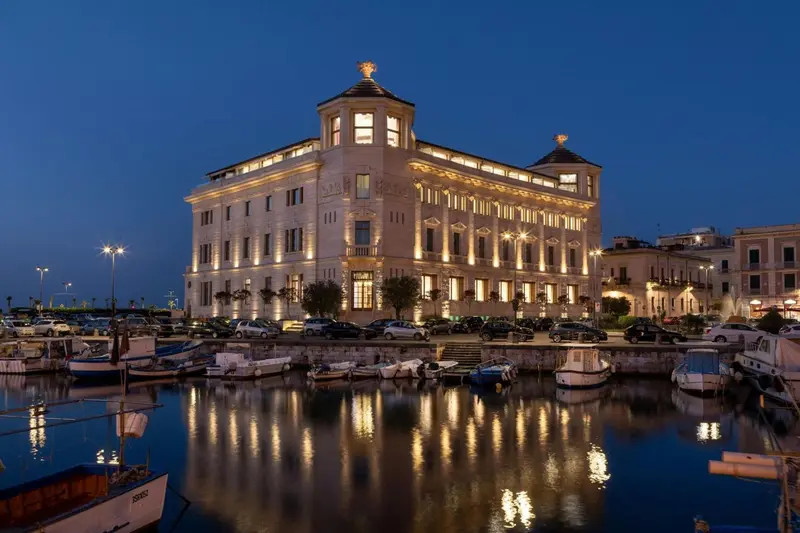
At Siracusa, diving begins with the Area Marina Protetta Plemmirio, a protected stretch of coast where rocky walls, caves and volcanic or limestone reliefs sit within reach of the city. Capo Murro di Porco and the Maddalena peninsula provide both shore entries and boat outings, so the day can involve a straightforward coastal dive or a more committed wall and cave descent. Above water, Ortigia and the archaeological remains of Siracusa make this a stay rather than a purely dive-led base.
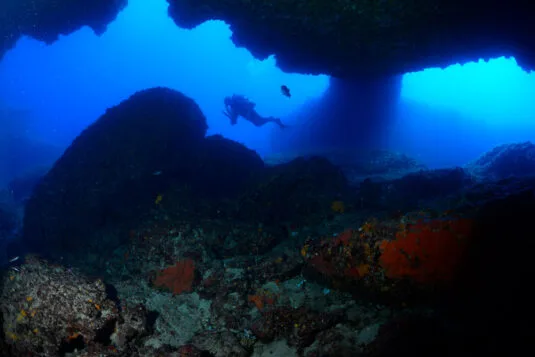
The underwater landscape is built from walls, rocky shelves, caves and low volcanic or limestone outcrops. Some sectors are reached directly from shore, while boat trips open different parts of the Plemmirio coastline, including the waters around Capo Murro di Porco and the Maddalena peninsula. Currents are variable rather than a constant feature, but they can strengthen locally beside exposed walls, so the shape of the dive may change with the day’s wind and sea state. Visibility is commonly around 15 to 25 metres, with summer plankton, surface chop and local conditions able to reduce it. This is not a liveaboard destination or a single fixed itinerary. It is a shore-based series of morning or afternoon outings, with the local plan adjusted between protected coastal entries and boat dives.
Rocky habitats in the Plemmirio bring the sort of Mediterranean encounters that reward a slow look into cracks and along the wall. Brown grouper and amberjack are regular possibilities, while tuna are occasional visitors rather than a dependable seasonal feature. Cetaceans are rare, so they belong in the category of fortunate extras, not a reason to build the trip around sightings. Summer can bring more plankton into the water, which may soften the clarity even as the coast is busiest. By September and October, the reduction in summer plankton commonly helps the water look cleaner. The appeal here is therefore the combination of fish holding around rock, changing relief and the chance of larger passing animals, rather than a guaranteed wildlife spectacle.
May to October is the practical diving season, with September and October the strongest choice when clear water matters most. The summer months can bring plankton, more surface activity and greater pressure on easy coastal access, so August is not automatically the most rewarding time underwater. In spring and early summer, conditions can still be very suitable, particularly if the aim is to combine shore and boat diving without the height of the holiday crowds. Build some flexibility into the week because wind and local sea state can make an exposed wall a poor choice on a particular day. The most useful seasonal plan is to keep the site open to adjustment, then use the calmer or clearer window for the more committed outings.
Siracusa suits beginners and experienced divers, provided the site is matched honestly to the conditions. Shore diving gives newer divers a practical way into the Plemmirio, while walls, caves and deeper profiles demand more control and planning. Advanced Open Water is useful for the deeper wall dives. Any cave or wreck work should be backed by the relevant speciality and organised within the local rules, rather than treated as an ordinary sightseeing dive. Currents can vary beside exposed walls, so comfort in changing conditions matters as much as the qualification printed on the card.
From London Heathrow, London Gatwick or Manchester, reach Sicily by air and continue overland to Siracusa. There is no ferry or domestic flight required to reach the destination itself. The onward road journey from Catania airport generally takes around an hour to an hour and a half, depending on traffic, so allow time for the transfer when arranging a first dive. Once in Siracusa, the dive coast is spread between the city, Ortigia and Plemmirio. A taxi, hire car or organised transfer is normally needed for Plemmirio shore entries, while some outings leave from the harbour by boat. Staying near Plemmirio cuts those daily road transfers; staying in Ortigia puts the historic centre first but makes transport part of each dive day.
Do not treat Plemmirio as one unrestricted stretch of coast. Check whether the planned entry lies in zone A, B or C before setting out, because access, navigation and diving rules change between them. Zone A is the most tightly controlled, and group dives or particular sites may require an authorised organisation and an arranged slot. Ask specifically who is handling that permission rather than assuming it comes with every local dive. Let the day’s wind decide between a shore entry, Capo Murro di Porco and a boat outing, and keep a reserve day for an exposed wall that becomes impractical. Early starts are sensible on popular coastal sectors, before traffic on the water builds. Choose accommodation with the dive map in mind, not just the evening atmosphere of Ortigia. Leave a no-diving day before flying, especially if the programme includes repeated or deeper dives. Finally, take nothing from the rock or seabed, and do not assume an access point legal in zone C is legal elsewhere.
A four- to seven-day stay gives enough time to move between Plemmirio, the Maddalena peninsula and Capo Murro di Porco without forcing every dive into one weather window. A sensible rhythm mixes shore entries with boat outings and keeps one day available for wind or sea-state changes. Ortigia works well for history, architecture and evening walks, while accommodation nearer Plemmirio reduces transfers. Non-divers can spend the same days in Ortigia, at Neapolis, on the coast or in the Val di Noto.
Hello, I'm Marina, DivingDeal.com's AI assistant. I guide you through destinations, areas and countries.
Thinking about the whole trip and the flights? Talk it over with Edith →
Marina is an AI. Some links are affiliate links: DivingDeal may earn a commission, at no extra cost to you. Bookings are made with the partner.
The practical diving season in Siracusa runs from May to October. September and October often bring cleaner-looking water as summer plankton decreases. Summer can also mean more plankton, surface activity and pressure on coastal access. Keep your plans flexible, because wind and local sea conditions may change which sites are suitable.
Siracusa suits beginners and experienced divers when the site matches your ability. Shore dives in Plemmirio offer a practical introduction, while walls, caves and deeper profiles require stronger control and planning. Advanced Open Water is useful for deeper wall dives. Cave or wreck diving requires the relevant speciality and local organisation.
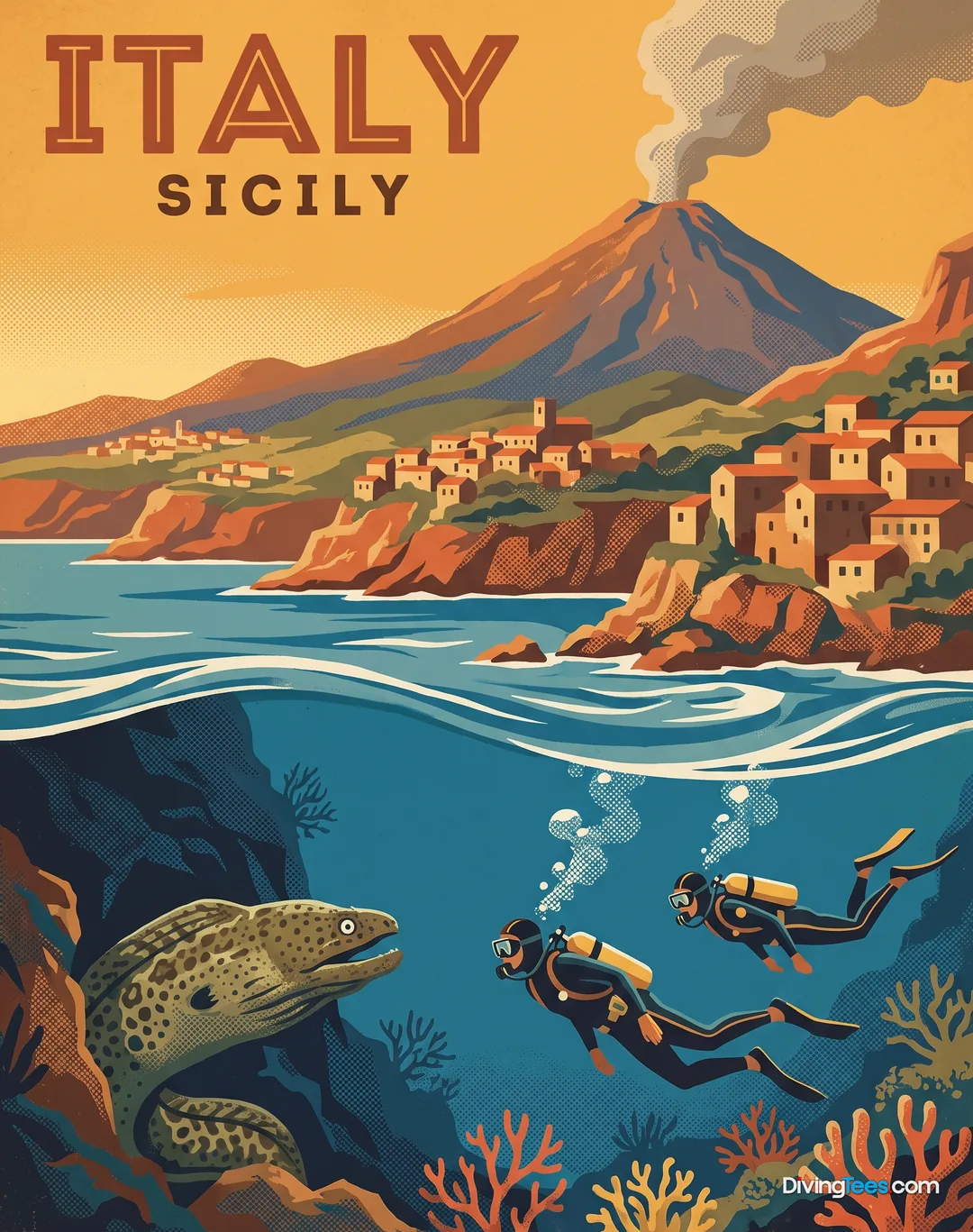
Around Siracusa, expect rocky walls, shelves, caves and volcanic or limestone reliefs, with brown grouper and amberjack possible around the rocks. Visibility is commonly fifteen to twenty-five metres, though plankton and local conditions can reduce it. Tuna may pass occasionally, while cetacean sightings are rare extras rather than a planned focus.
Base your plan around shore entries and boat outings between Plemmirio, the Maddalena peninsula and Capo Murro di Porco, keeping time available for wind or sea-state changes. Check the rules for the relevant Plemmirio zone, arrange authorised access where required, and choose between Ortigia or Plemmirio accommodation according to sightseeing and transfer priorities.