

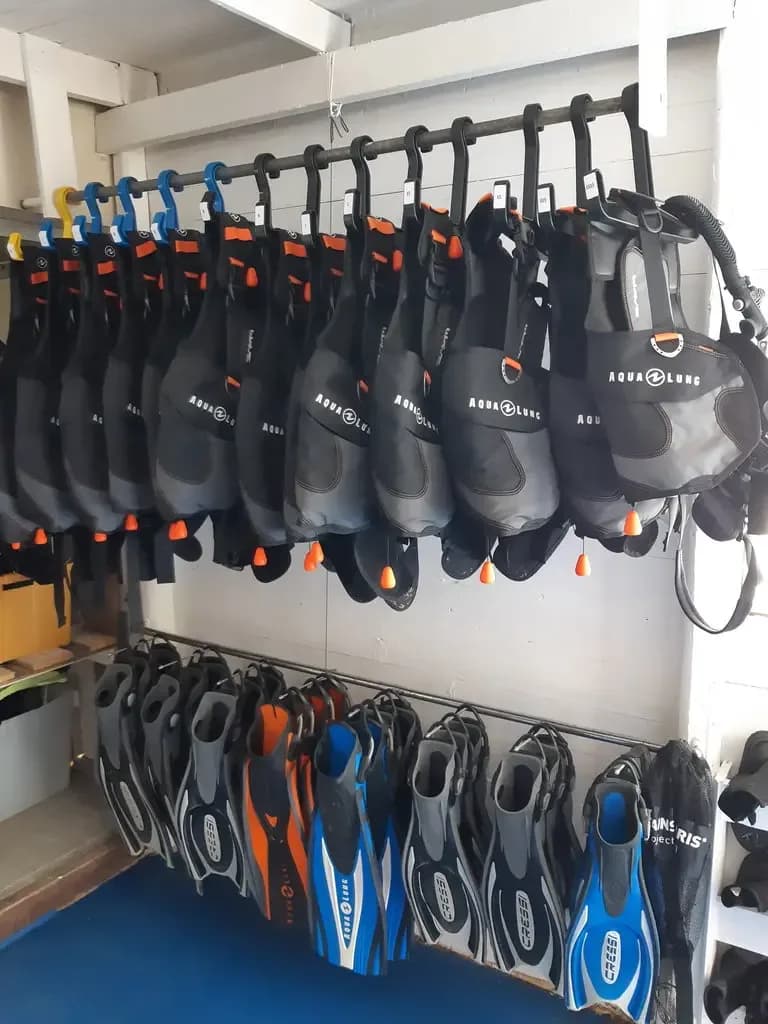

Jonio Pro-Dive Catania
★ 5/5 (636 reviews)
214 km away as the crow flies
Italy · Mediterranean
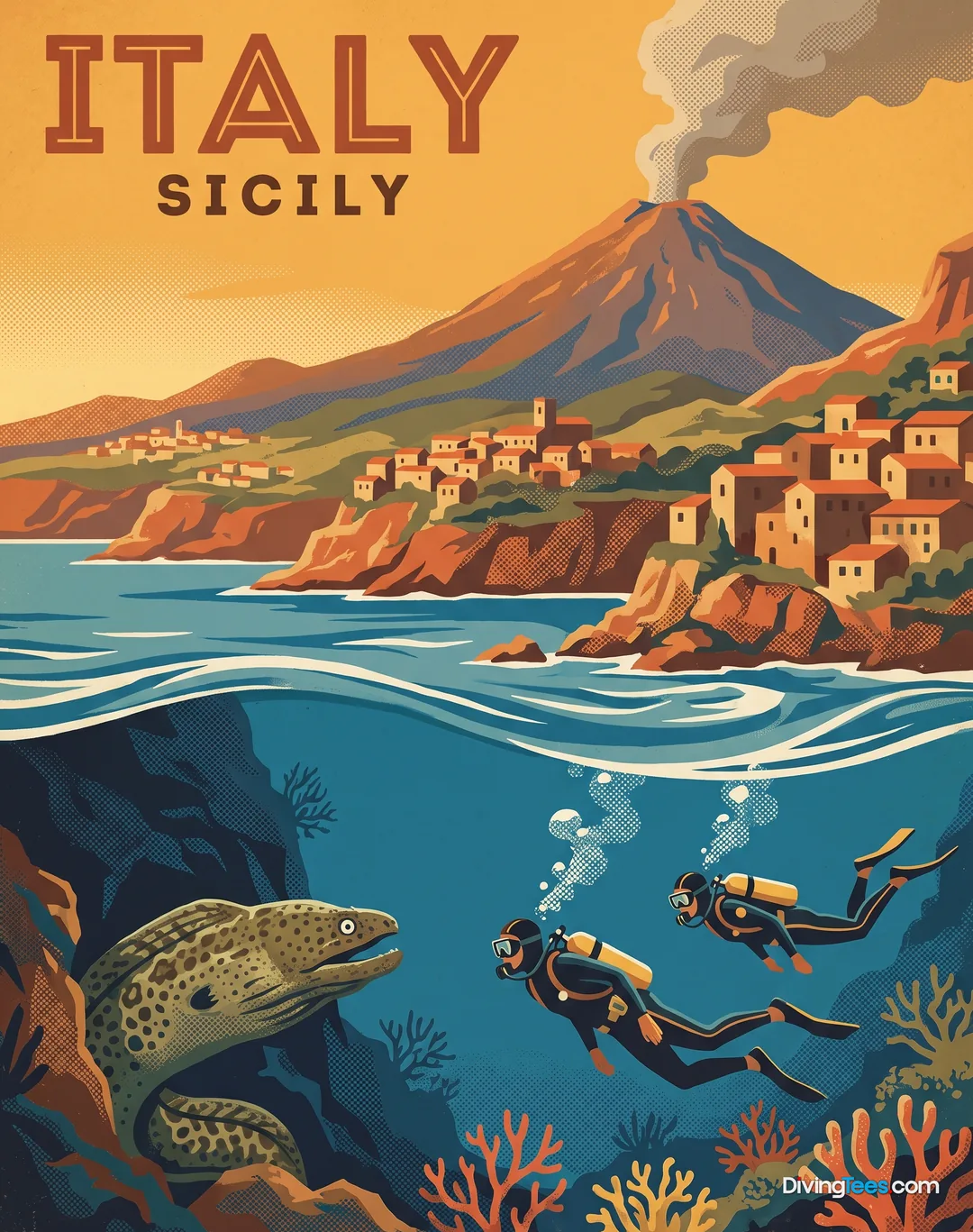
Ustica’s pinnacles, shrimp-filled caves and 45-metre walls sit alongside Sicilian reserves, coastal rock, wrecks and islands shaped for boat-based diving.
For subtitles in English: start the video firstthen click the gearat the top right of the video, select “Subtitles/CC”, then “Auto-translate” and choose “English”.
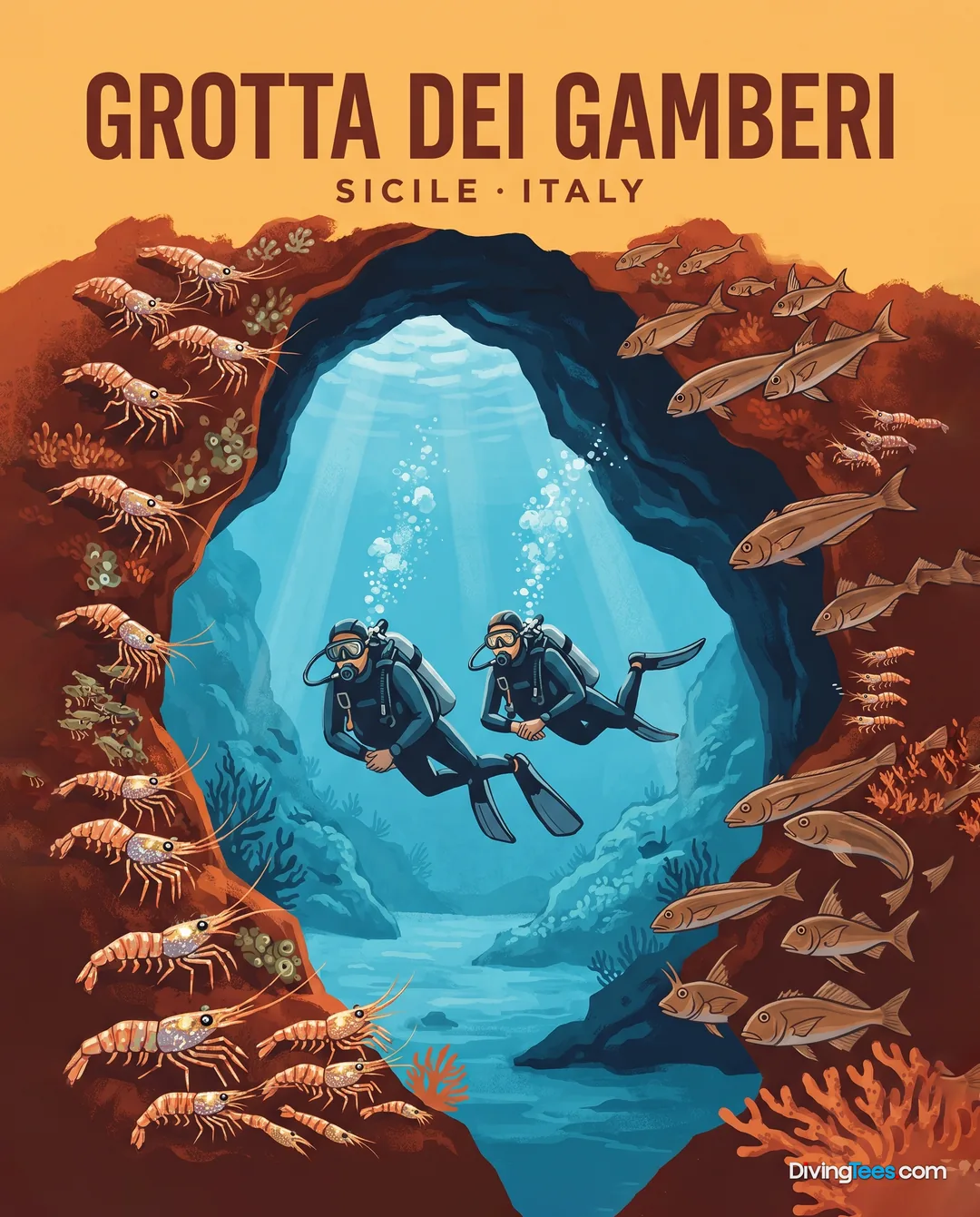
Around Ustica, a diver can work along a pinnacle, enter the sheltered cave system at La Pastizza or look into the shrimp-filled darkness of Grotta dei Gamberi. That is Sicily in miniature: volcanic and limestone coast, marine reserves, offshore islets, caves, walls, wrecks and rocky reefs spread around a large island rather than gathered in one resort strip. It suits a shore-based holiday built around one coastal sector, or a more ambitious itinerary linking Sicily with its satellite islands.
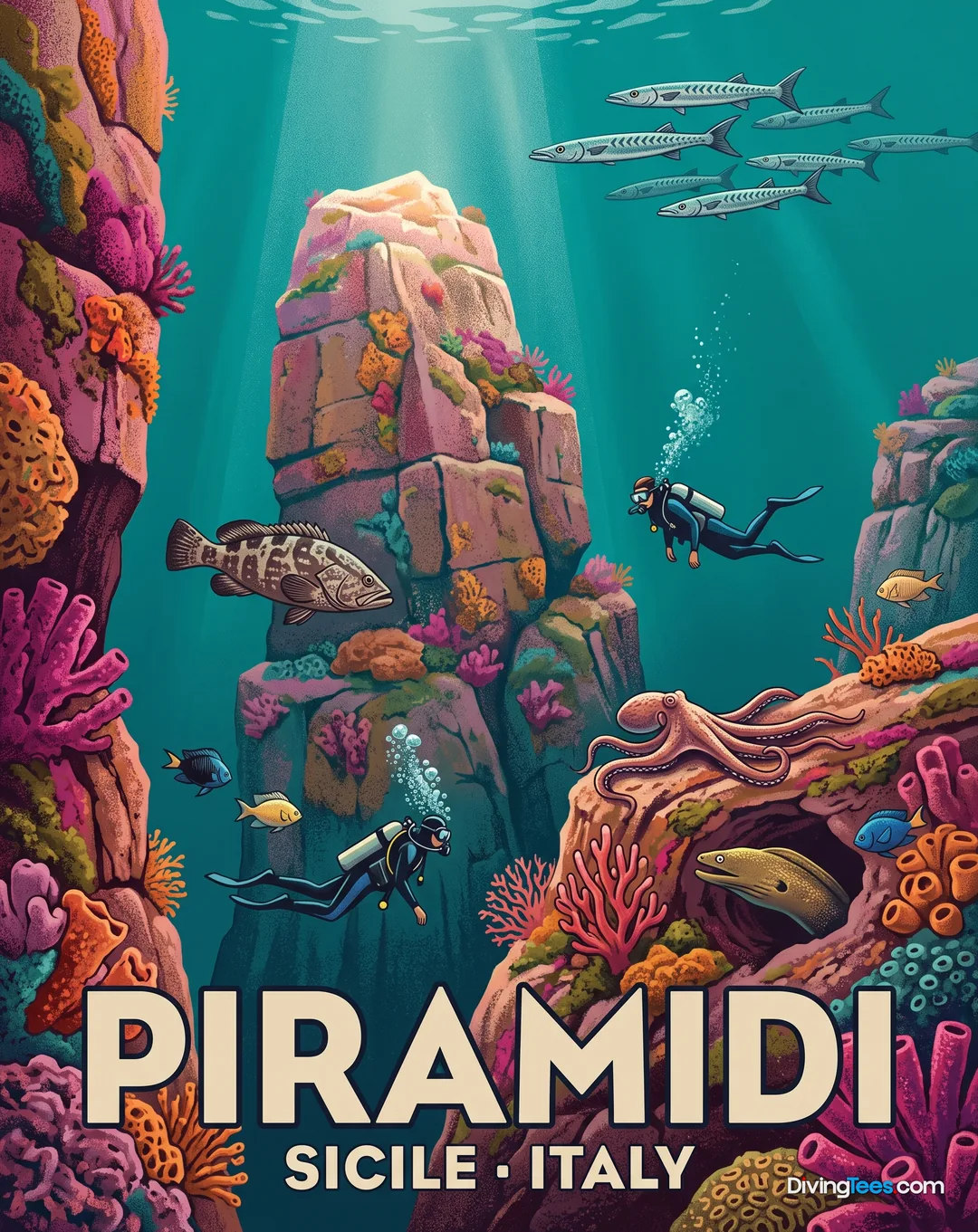
The diving is shaped by rock. Pinnacles and underwater high ground provide the most recognisable profiles, while caves, walls and coastal reefs add variety between boat trips. Secchitello drops from the upper part of the pinnacle into a 45-metre dive and is exposed to significant current; it is a site for divers who are comfortable holding position and managing a drift. Colombara offers a shallower pinnacle profile, while La Pastizza is sheltered, current-free and reaches 25 metres. Grotta dei Gamberi is a very different proposition: a long, deep cave penetration, with the interior beginning around 13 metres and the dive reaching 44 metres. Visibility depends heavily on wind, swell and, in some areas, port influence or mobile sediment. Most outings are by boat, although selected sectors offer shore diving.
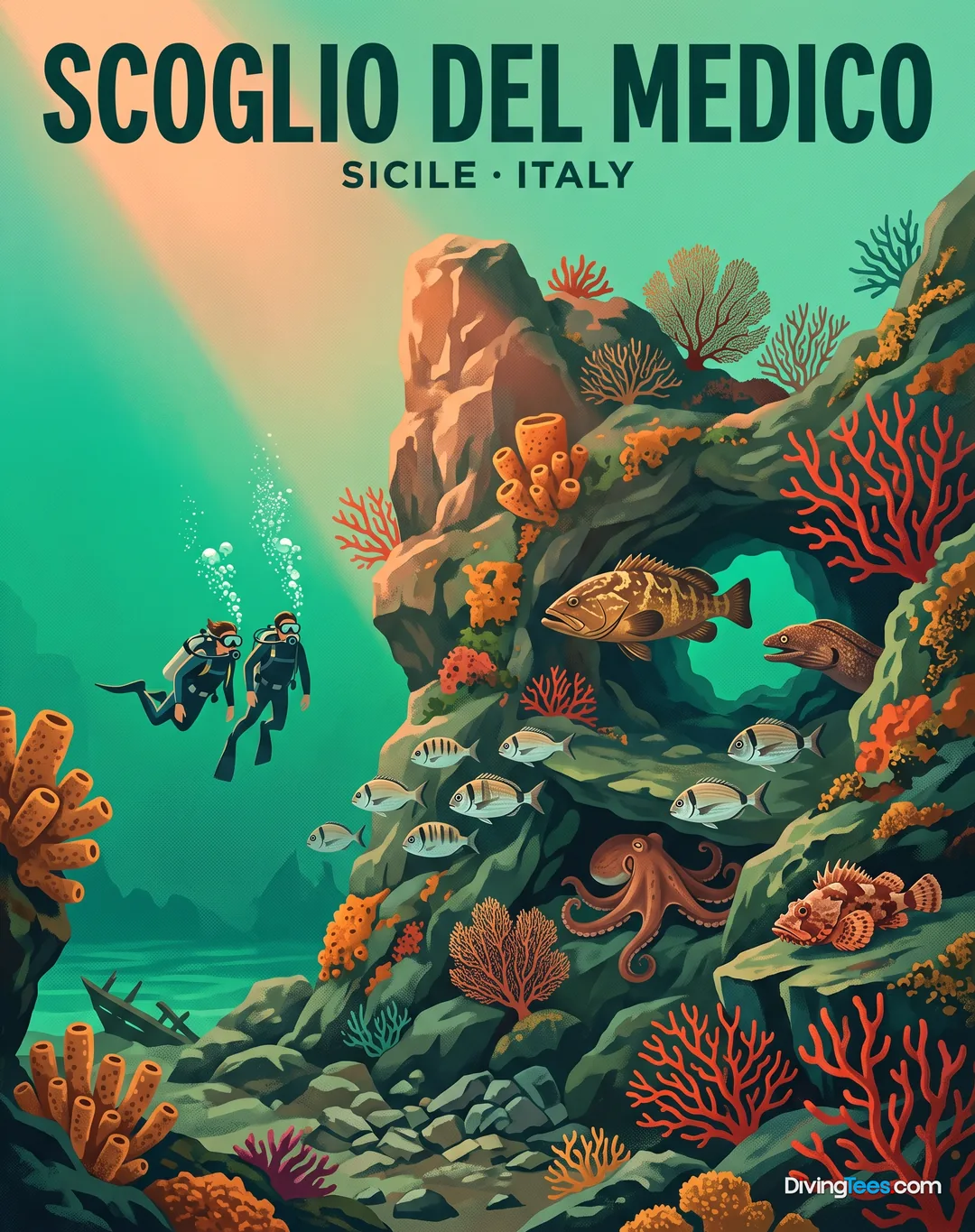
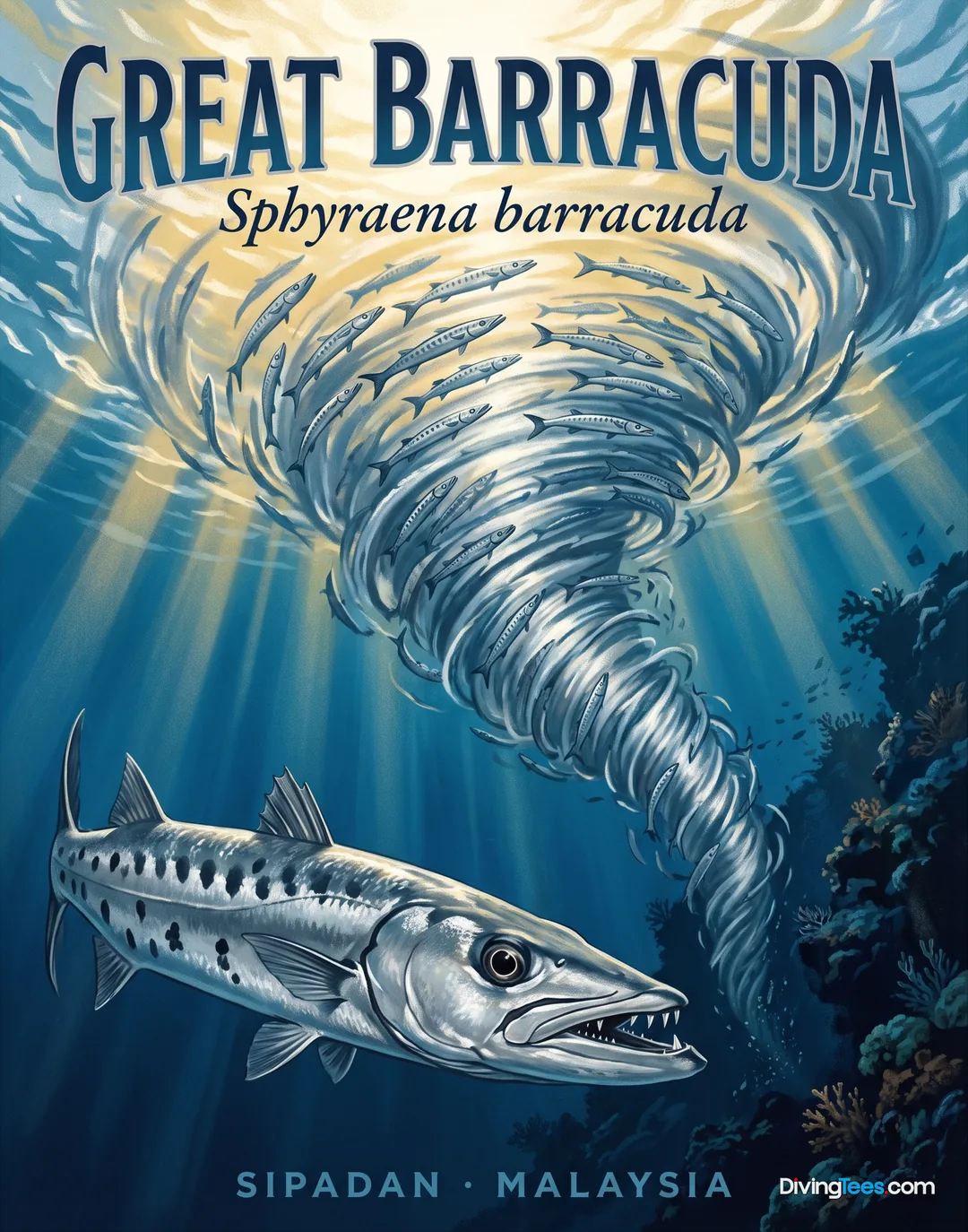
The attraction is Mediterranean life gathered around hard relief rather than a single guaranteed encounter. Moray eels and conger eels suit the cracks and darker recesses, while amberjack, greater amberjack and great barracuda add movement around the pinnacles and open rock. Marbled groupers belong to the more substantial rocky-reef encounters. At Grotta dei Gamberi, the subject is more intimate: dense groups of shrimp in a cave environment, where the diver slows down and uses the light carefully rather than covering distance. The April-to-October diving window is the practical period for looking for this mixture of reef and pelagic life.
April to October is the measured period when the sea is generally at its calmest, with the lowest rainfall from April to September. May, June, September and October are the most attractive compromise months: conditions are usually more manageable, the coastal bases are less busy than in high summer, and the Sicilian towns remain useful places to stay between dives. July and August can work, but popular reserves and islands see more pressure. November through February is a poor fit for a dive-led trip because winter weather and sea state make the operating pattern less dependable. A flexible plan matters more than trying to protect one particular site in the calendar.
Sicily covers all levels, provided the site is matched to the diver and the day’s sea conditions. La Pastizza can suit an Open Water Diver or equivalent, with cave entry reserved for appropriately trained divers. Secchitello is a different matter: Advanced or Deep Diver training, at least 50 logged dives and confidence in current and drift management are expected. Grotta dei Gamberi belongs to experienced deep-cave divers, with relevant deep or technical training and proven penetration experience. Nitrox, Wreck and Advanced qualifications are useful additions for a mixed programme, alongside BSAC equivalents to PADI or SSI awards.
From London Heathrow, Gatwick or Manchester, the practical starting point is an airport serving the Sicilian sector selected for the trip. ITA Airways, easyJet, Ryanair, Wizz Air, Volotea and Lufthansa are among the airlines serving the island, but the arrival point should follow the diving plan: Palermo, Catania, Trapani and Syracuse lead to different ports, roads and marinas, while the Aeolian and other satellite islands add a ferry or further sea connection. Sicily is too large for casual daily crossings between unrelated coasts. Once based in the right town, accommodation is commonly near the port or marina, with the dive departure reached on foot, by local shuttle or by taxi. Island schedules and weather-sensitive crossings need building into the itinerary rather than treated as minor details.
Choose the coast before choosing the room. A base near the relevant port saves repeated inland transfers, and crossing Sicily for one day’s diving rarely makes sense. If Ustica or another island reserve is central to the plan, leave room for a weather change: a calm day is more valuable than a rigid promise to dive one emblematic site. Check whether the intended sector operates inside a marked marine reserve or on open coastline, since navigation, moorings and the shape of the outing differ. In protected areas, follow the local non-removal rules and use the designated moorings; anchoring may be restricted. A computer capable of handling Nitrox is useful when several boat dives are planned, while a small personal equipment kit is worthwhile on smaller island bases. The main mistake is assuming that every Sicilian departure works in the same way.
Seven to ten days allows a sensible combination of one or two diving sectors without turning every non-diving hour into a transfer. A fixed base works well around a selected port, with daily boat departures and shore alternatives where available. An itinerary becomes worthwhile when it deliberately links distant coasts or islands, rather than moving simply to collect different names. Non-diving days can cover historic coastal centres, fishing villages, volcanic shore walks, boat excursions and Sicilian food in port towns, making the destination workable for a non-diving companion.
Hello, I'm Marina, DivingDeal.com's AI assistant. I guide you through destinations, areas and countries.

Thinking about the whole trip and the flights? Talk it over with Edith →
Marina is an AI. Some links are affiliate links: DivingDeal may earn a commission, at no extra cost to you. Bookings are made with the partner.
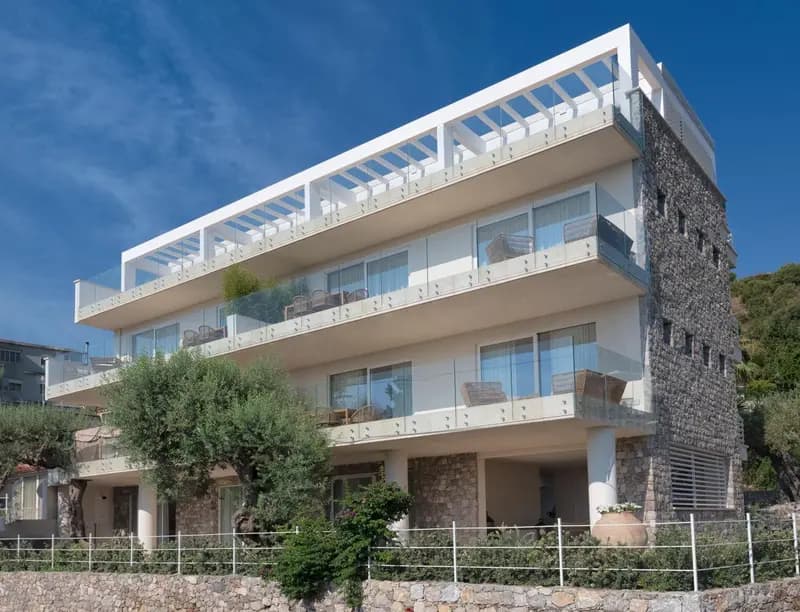
★ 9.7/10 (489 reviews)
208 km away as the crow flies

★★★
★ 9.3/10 (1,333 reviews)
79 km away as the crow flies
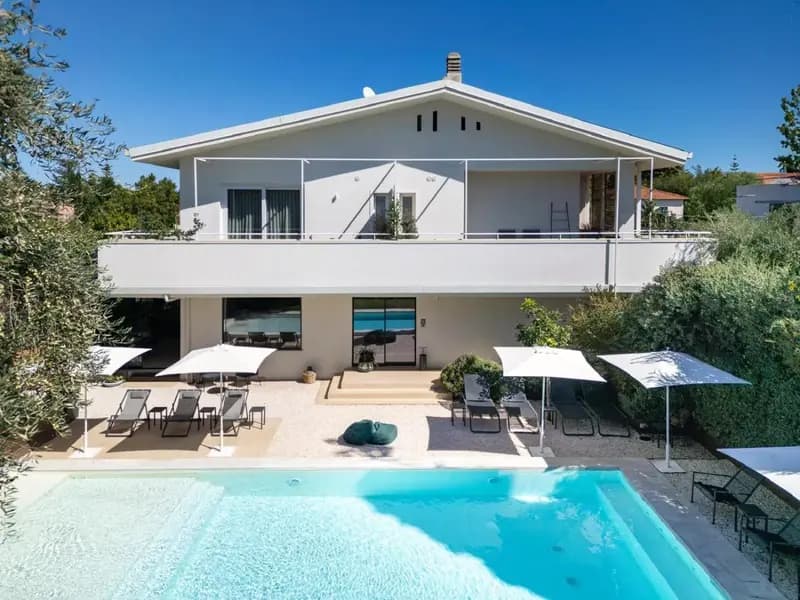
★★★★
★ 9.7/10 (285 reviews)
58 km away as the crow flies

★★★★
★ 9.4/10 (453 reviews)
215 km away as the crow flies