
Freetime Diving
Google 4.3/5 (11 reviews)
Italy · Mediterranean
Adriatic shoals and wrecks lie beyond Lido’s beaches, with boat dives, shore entries and Venice’s vaporetto stops close at hand.
The wrecks and offshore shoals beyond Venezia Lido are the reason to bring diving kit to this Venetian beach island. This is a shore-based stay, not a liveaboard proposition: local boats head out from the Lido, while beaches, promenades and Venice’s cultural attractions occupy the surface interval. The diving offer ranges from recreational trips to technical training. It suits a diver who wants Adriatic wreck and high-point diving without giving up a proper city-and-seafront holiday.
The underwater menu combines shore entries from the Lido’s beaches with boat trips towards shoals and wrecks. The shoals provide the high-point terrain, while wreck dives add structure and a clear objective to the outing. Currents are variable, so a calm-looking plan on paper still needs a proper briefing on the day, particularly where a boat dive leaves the shelter of the island. Some wreck profiles are offered to Open Water divers, while deeper or more demanding options sit within the wider recreational and technical programme. Treat this as Adriatic boat diving rather than a predictable tropical reef circuit. Visibility, depth and sea conditions should be confirmed for the specific trip, not assumed from the destination name. Shore diving gives the Lido a useful second option when the planned offshore profile does not suit the conditions.
Marine life here is encountered against wrecks and shoal ground rather than presented as a species-led destination. The things to look at are the hard edges of the wreck, the relief of the high points and whatever has settled into those structures. There is no reliable seasonal wildlife calendar to build a trip around, so the reason to dive in summer is the operating season, not a promise of a particular animal encounter. That makes the Lido a sensible choice for divers who enjoy finding interest in underwater structure and changing Adriatic conditions. Ask whether the planned outing is a wreck or a shoal, then judge the likely marine-life interest from that terrain.
Plan the diving between June and September, when the Lido’s local activity follows the beach season. The usual operating window runs from early June to roughly mid-September, so this is not a destination to book on the assumption of a permanent winter service. Summer also makes the wider island work properly as a holiday base, with its beaches, waterfront walks and easy access to Venice. September can be especially practical for a combined city and diving trip, but confirm the operating dates before fixing travel. The key seasonal question is not a particular wildlife event, but whether boat and shore diving are running during your stay.
The Lido can work for a broad range of recreational divers, including Open Water divers on suitable wreck profiles. Do not assume that every wreck requires Advanced certification, but do ask for the depth, current and full profile before booking. A Wreck qualification is useful, especially for divers who intend to make wreck structure the focus of their stay. Recreational, speciality and technical training are available, so experienced divers can ask about a more demanding plan without treating every local outing as technical diving.
From London or Manchester, plan the journey around reaching Venice first, then allow time for the compulsory final water crossing to the Lido. ACTV vaporettos connect the island with Venice, while the ferry-boat from Tronchetto carries vehicles and also links onwards towards Punta Sabbioni. From Marco Polo airport, Alilaguna provides a direct water link to Lido S.M.E., avoiding an automatic detour through Venice’s railway station or Piazzale Roma. Check sailing times and tickets before travelling, and leave a margin for connections. Once on the island, the seafront dive locations can be reached on foot or through the local network, depending on where you stay.
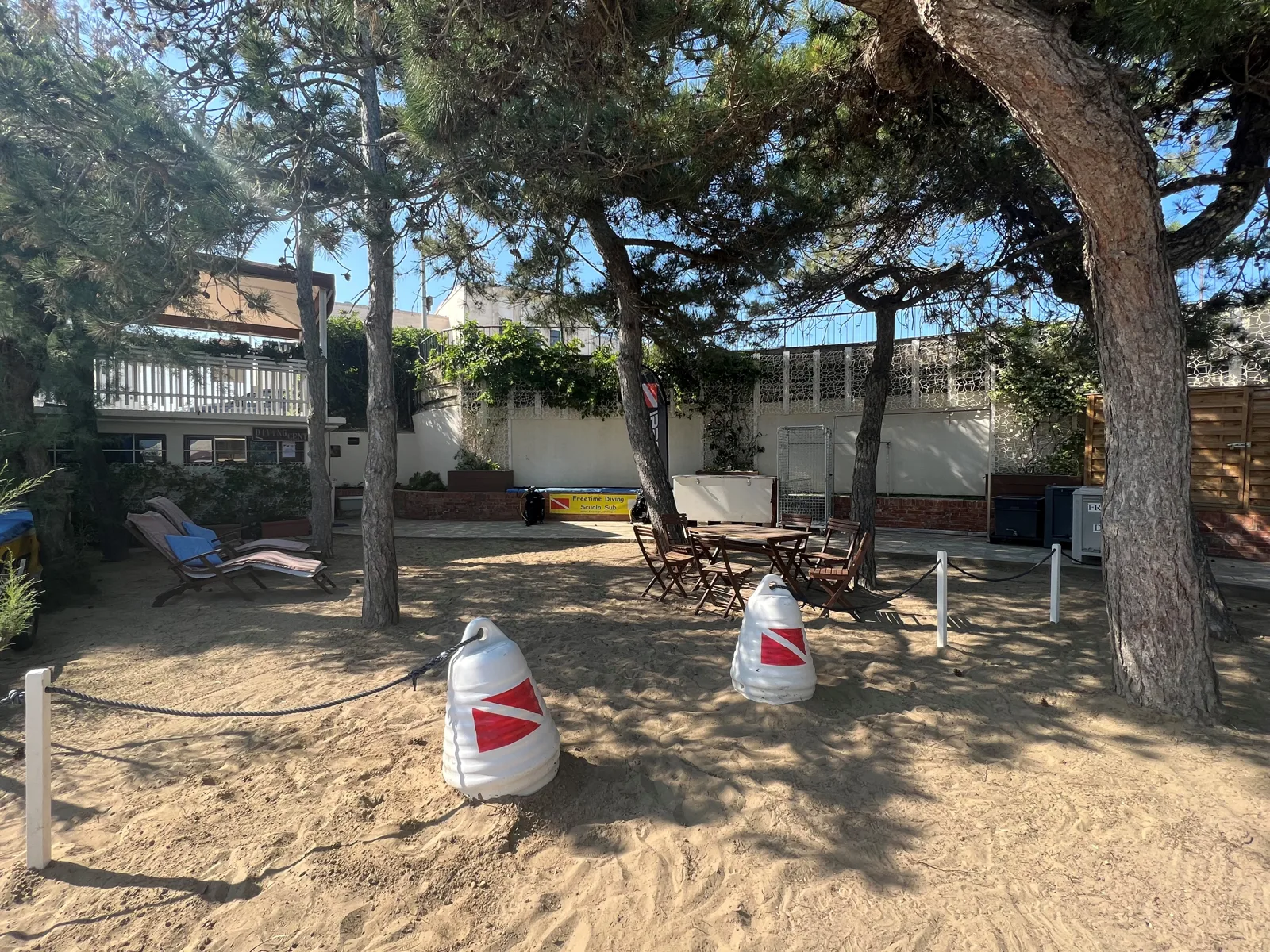
Book inside the local summer operating window rather than assuming that a winter visit will produce regular diving. Before paying a deposit, ask whether the planned outing is a wreck or a shoal, its depth and current profile, and whether it is genuinely suitable for your qualification. Open Water may be enough for some wrecks, so Advanced certification is not an automatic requirement, but the exact site still matters. Staying on the Lido makes sense if diving from the Excelsior or Des Bains beaches is central to the plan. If bringing a car, use the ferry-boat from Tronchetto and check the crossing details. Without a car, allow extra time for ACTV or Alilaguna connections. Do not confuse Lido departures with diving advertised from Cavallino, Jesolo or Caorle, and do not build the trip around a centre that is only operating at another coastal base.
Organise the stay around a base on the Lido, with diving fitted between beach time and crossings to Venice. Accommodation near the seafront reduces daily transfers to the Excelsior or Des Bains area, while the island’s waterfront and cycling routes provide an easy surface interval. Venice itself is reached by boat, and the surrounding lagoon islands are also suitable for excursions. This is a land-based holiday, with local boat dives rather than a documented liveaboard pattern.
Hello, I'm Marina, DivingDeal.com's AI assistant. I guide you through destinations, areas and countries.
Thinking about the whole trip and the flights? Talk it over with Edith →
Marina is an AI. Some links are affiliate links: DivingDeal may earn a commission, at no extra cost to you. Bookings are made with the partner.
Plan your diving between June and September, when local activity follows the beach season. The usual operating window runs from early June to roughly mid-September, so confirm dates before fixing travel. Summer also suits a combined diving and city holiday, with beaches, waterfront walks and access to Venice available around your dives.
Venezia Lido can suit a broad range of recreational divers, including Open Water divers on selected wreck profiles. Ask about the depth, current and complete dive plan before booking, because sites vary. A Wreck qualification is useful for structure-focused trips, while recreational, speciality and technical training are also available.
Diving in Venezia Lido focuses on Adriatic wrecks and offshore shoals rather than a species-led wildlife experience. You can explore wreck structure, shoal relief and marine life settled into those hard surfaces. Variable currents shape the experience, so ask whether the planned outing visits a wreck or a shoal and confirm conditions.
Base yourself on the Lido and fit local boat dives or shore entries around beach time and trips into Venice. Staying near the seafront helps with access to the Excelsior or Des Bains area. Reach the island by ACTV vaporetto, Alilaguna from Marco Polo, or ferry-boat if bringing a car.