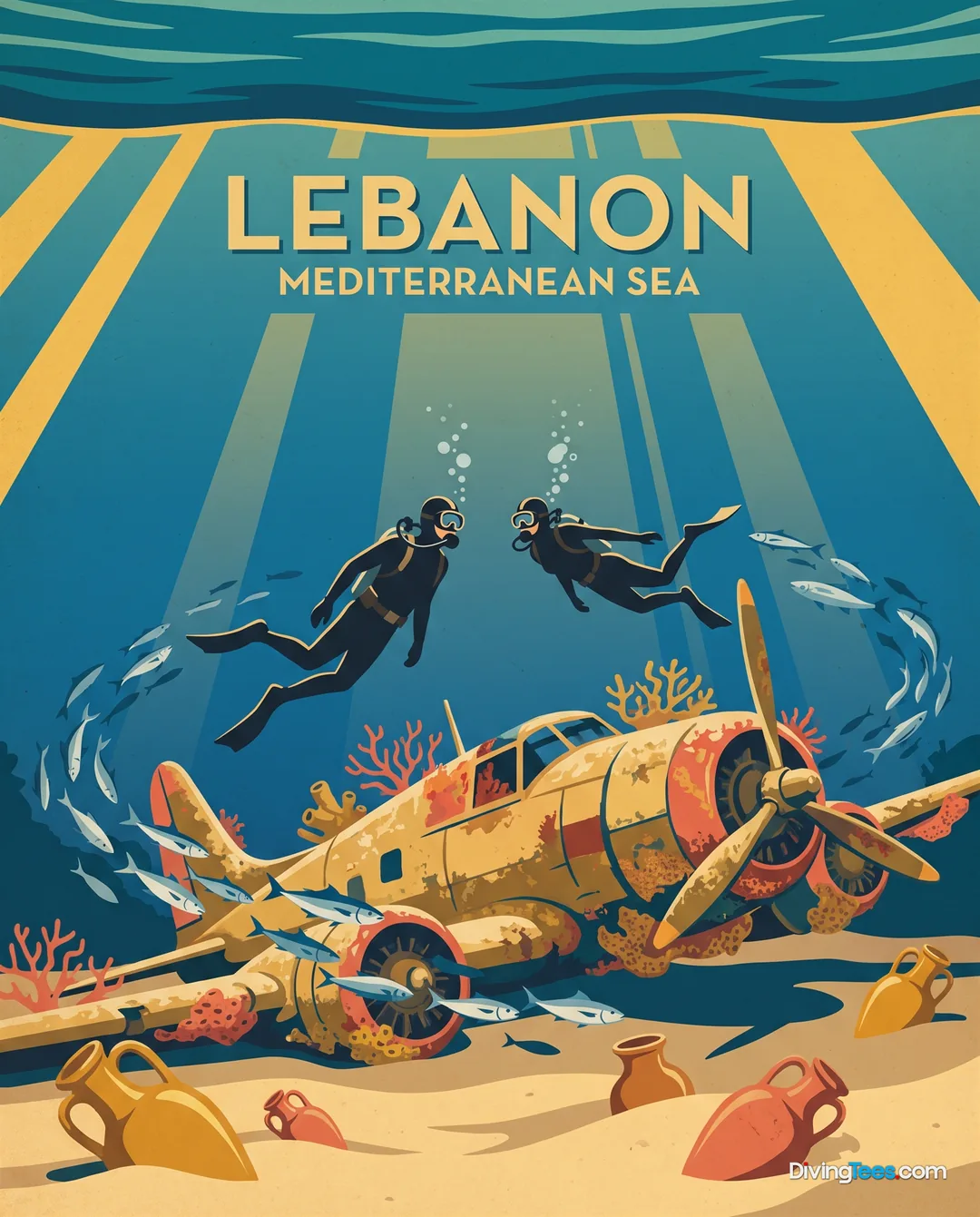

Diving In Lebanon
Google 4.9/5 (145 reviews)
Lebanon · Mediterranean
Raouché walls, the 38–40-metre Souffleur submarine, rocky canyons and groupers put Beirut’s urban coastline firmly on a serious Mediterranean diver’s map.
For subtitles in English: start the video firstthen click the gearat the top right of the video, select “Subtitles/CC”, then “Auto-translate” and choose “English”.
Beirut is for divers who want a city base with proper underwater variety rather than a resort built around one reef. Around Raouché and AUB, the coastline gives access to walls, canyons, arches and rocky blocks, from the shore or on short boat outings. Further along the coast, the character changes to deeper wreck diving, including the Souffleur submarine. Days can therefore move from a relatively straightforward coastal dive to a demanding wreck, while non-divers have Beirut’s urban and cultural life close at hand.
The diving alternates between shore entries and boat trips. Around Raouché, expect rocky relief rather than a coral garden: walls, canyons, arches and fields of blocks give the eye plenty to follow, while AUB Wall and AUB Reef provide familiar local reference points. Conditions are changeable, with currents ranging from manageable to inconvenient and visibility fluctuating from roughly six to twenty-five metres. Rain, coastal run-off and plankton can reduce clarity, so a bright forecast does not guarantee a clear dive. Boat days open the way to the Souffleur, Macedonia, Alice B and other wrecks, with depth becoming the defining factor. Night dives are possible when visibility and sea conditions cooperate, revealing a different rhythm among the rocks, including nocturnal rays and fish.
Groupers, moray eels and octopus are the dependable characters here, turning cracks and rocky corners into worthwhile places to slow down and look. Eagle rays may appear at any time, depending on the site, while lobsters are an occasional spring encounter. From July to October, sand tiger sharks and grey sharks are reported occasionally, but they are possibilities rather than a reason to treat every dive as a shark dive. The attraction is the mixture: a moray tucked into the rock on a coastal dive, an octopus changing colour among the blocks, or a ray passing over the bottom. Expect Mediterranean wildlife suited to patient observation, not a guaranteed procession of large animals.
April, May, June, September and October make the most balanced period for a Beirut diving trip. Marine life is particularly active from spring into late summer, while visibility is often better from October through June, when clearer conditions can suit both coastal relief and wreck photography. July and August remain tempting for the occasional shark encounter and other pelagic sightings, but they can bring more jellyfish and less predictable conditions at some sites. The practical answer is to favour spring or early autumn if clear water and a broad choice of dives matter more than chasing a seasonal possibility.
The coastal sites can suit beginners, provided the day’s conditions and entry are appropriate. Beirut becomes more demanding when the plan moves to deep wrecks or sites south of the city. Advanced Open Water is useful for the deeper profiles, while a Wreck Diver qualification is appropriate for penetration or structured wreck diving. Nitrox can be worthwhile on repetitive days if available. The Souffleur lies at about 38–40 metres, so it is not a casual first wreck and calls for suitable depth experience, gas planning and disciplined ascent procedures.
From London Heathrow, London Gatwick or Manchester, plan to arrive in Beirut and continue by road to the city. No ferry or domestic flight is needed for diving around Beirut. Once there, a centre in or near Raouché may be reachable on foot or by taxi, depending on where you stay. Shore dives use the local coastline, while the Souffleur, Macedonia, Alice B and sites farther north or south require a boat departure arranged through the local diving operation. Allow flexibility around that departure point, since a day at sea is not interchangeable with a shore dive and the final site choice can change with visibility, current and sea conditions.
Do not book the Souffleur as your opening dive simply because it is the name most likely to catch the eye. Start with a wall, canyon or rocky site around Raouché, then let the local team match the deeper wrecks to your experience and the day’s sea state. Confirm the actual plan, depth and whether any penetration is involved before committing, and bring any specialist equipment needed for deep or wreck diving rather than assuming every configuration will be available locally. Keep boat plans flexible, especially for the southern sites. Check site names carefully when arranging a day, as Souffleur, Shark Point, Stingray Reef, AUB Wall and AUB Reef can appear under local and English spellings. Treat July and August shark reports as occasional sightings, not a guarantee, and remember that jellyfish may also be more noticeable. Leave a non-diving day before the flight home, particularly after a deep programme.
A five- to seven-day stay works well on land. Use the first days for Beirut’s shore-accessible relief around Raouché and AUB, then keep one or more flexible days for boat trips to the wrecks and more distant sectors. A night dive can add a different view of the rocky coastline when conditions allow. Between dives, Beirut supplies the urban and cultural part of the trip, while Jounieh, Batroun or Tyr can fill a day ashore. Keep the final day free of diving before departure.
Hello, I'm Marina, DivingDeal.com's AI assistant. I guide you through destinations, areas and countries.
Thinking about the whole trip and the flights? Talk it over with Edith →
Marina is an AI. Some links are affiliate links: DivingDeal may earn a commission, at no extra cost to you. Bookings are made with the partner.
For a Beirut diving trip, favour spring or early autumn, especially April, May, June, September and October. Visibility is often better from October through June, while marine life is active from spring into late summer. July and August can bring occasional shark sightings, but also more jellyfish and less predictable conditions at some sites.
Beirut offers coastal dives that can suit beginners when the entry and conditions are appropriate. Deeper wrecks require greater experience, and Advanced Open Water is useful for deeper profiles. Wreck Diver training is appropriate for penetration or structured wreck diving. The Souffleur reaches between 38 and 40 metres, requiring depth experience, gas planning and disciplined ascents.
Around Beirut, you can explore Raouché walls, canyons, arches and rocky blocks from shore or by short boat trips. Groupers, moray eels and octopus are common subjects, with eagle rays possible at any time and lobsters occasional in spring. Night dives may reveal nocturnal rays and fish, while sand tiger and grey sharks are occasional from July to October.
Plan a Beirut stay around a city base, using shore dives near Raouché and AUB before flexible boat days for the Souffleur, Macedonia, Alice B and more distant sites. A five to seven-day trip allows this mix, with a night dive if conditions cooperate. Keep the final day free of diving before departure.