
Dalabilirim Dalis ve Egitim Merkezi Turizm Tic. Lt
Google 4.7/5 (129 reviews)
Türkiye · Mediterranean
Gallipoli war wrecks, rocky drop-offs, shifting strait currents and occasional dolphins make Çanakkale a very different Turkish diving journey.
For subtitles in English: start the video firstthen click the gearat the top right of the video, select “Subtitles/CC”, then “Auto-translate” and choose “English”.
The rusting hulls of First World War wrecks are the reason to come to Çanakkale. Gallipoli puts military history beneath the surface, with shallower wrecks for recreational divers and deeper objectives for experienced and technical teams. Beyond the Dardanelles, Saros adds varied marine life, while Bozcaada and Gökçeada bring rocky walls, island scenery and less demanding sites. It is a destination for divers who want the story of a place to continue underwater, not simply another reef holiday.
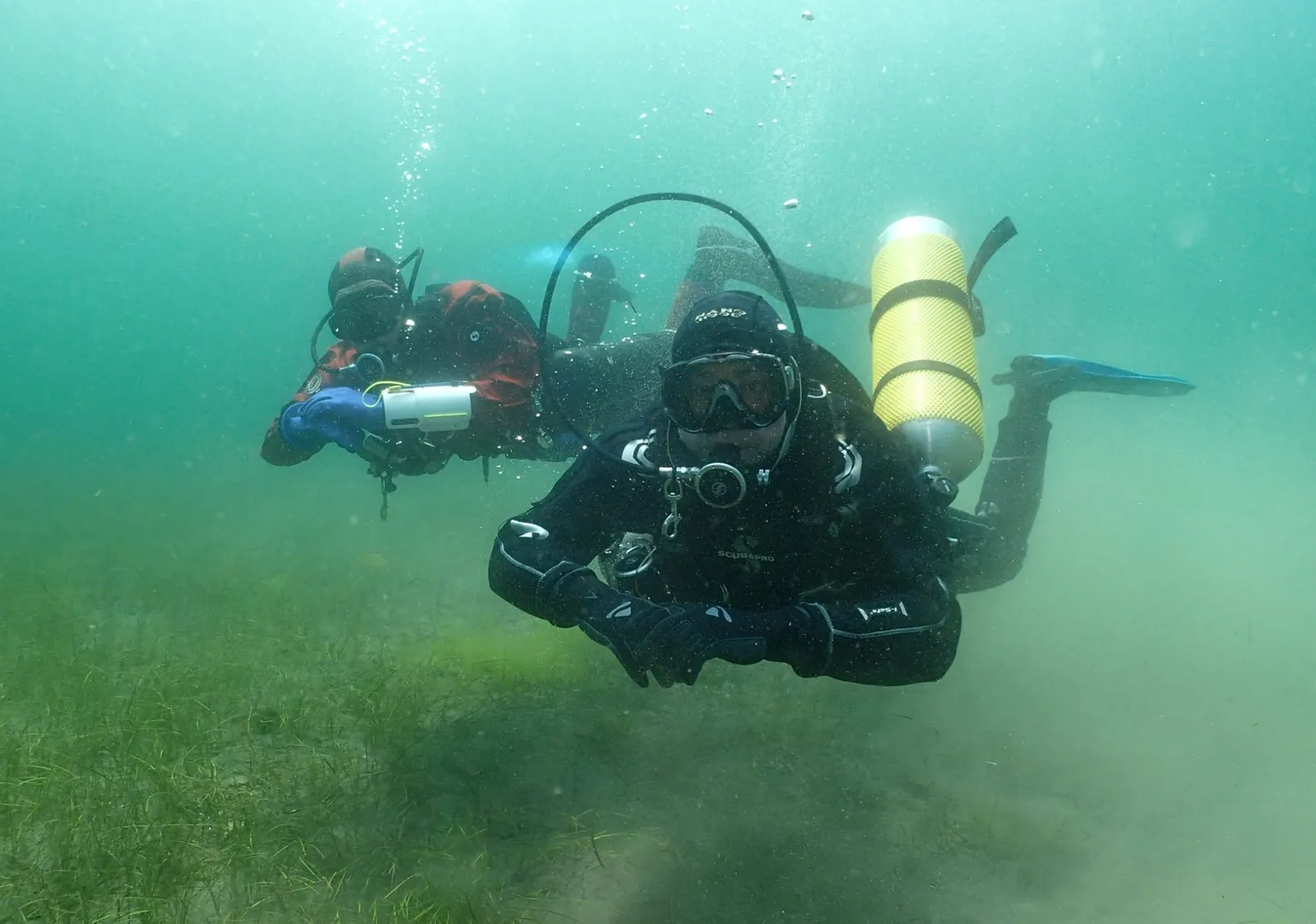
Diving here moves between wrecks, rocky sites and island drop-offs. Gallipoli is the defining experience, with wrecks ranging from straightforward shallow dives to deep structures where penetration, decompression and technical planning may be involved. The Dardanelles can carry a variable current, so a dive may require a controlled descent, a careful route over the wreck and a drift dive or boat recovery rather than an easy return to the entry point. Visibility is changeable with current, swell and plankton, and clear water does not remove the need to watch boat traffic. Saros, Bozcaada and Gökçeada provide a different rhythm, with rocks, walls and habitats suited to recreational divers. Local knowledge matters particularly in the strait, where conditions and maritime movement can alter the character of a dive.
Aegean fish are the dependable underwater presence, particularly around the rocky ground and island sites of Saros, Bozcaada and Gökçeada. Saros is valued for marine diversity, while the Gökçeada Marine Park gives guided diving and snorkelling a managed setting along the coast between Kaleköy and Kuzulimanı. Dolphins and marine turtles are occasional encounters rather than the reason to build an itinerary around a particular month. The attraction is the combination of life on natural rock and the atmosphere of historic wrecks, where the structure itself dominates the dive. Expect a Mediterranean-style fish scene rather than a coral-reef spectacle, with conditions and the season influencing what is visible on the day.
April and May, then August and September, are the most useful windows for planning a trip. Late spring and late summer generally bring favourable diving conditions, while the longer season remains possible if the strait, gulf and ferry crossings cooperate. Pack for variation: a 3 to 5 mm wetsuit suits part of the season, but colder periods call for a 7 mm, semi-dry or drysuit. Allow extra days around island trips, because a disrupted crossing can remove a whole day of diving.
Çanakkale can suit beginners, provided the site is genuinely shallow and the current plan matches their experience. The wreck programme also has a steep range of difficulty. A wreck qualification is useful for appropriate sites, whether held through BSAC, PADI or SSI, while deeper wrecks may require advanced or technical training and experience in current. Do not assume that a recreational Gallipoli dive prepares you for every wreck in the region.
From London or Manchester, the journey normally involves an onward connection before reaching Çanakkale. Domestic flights from Istanbul serve Çanakkale according to the operating schedule, while road or coach travel leads into the town and then to the Dardanelles ferries. Eceabat, Kilitbahir and the Gallipoli peninsula are reached across the strait, so ferry timings become part of the dive plan. Gökçeada is served by ferries from Çanakkale or Kabatepe, and Bozcaada also requires a coastal ferry. In Çanakkale itself, the waterfront and dive centres may be walkable or a short taxi ride away. Gallipoli, Saros and the islands need separate road, ferry or boat arrangements rather than one local transfer.
Decide which sector you are actually diving before booking accommodation. Çanakkale works well for Gallipoli and the strait, but Saros, Bozcaada and Gökçeada are not interchangeable day trips. Build slack into any plan involving a ferry or a boat crossing, and avoid putting a flight immediately after the final diving day. For historic wrecks, confirm the depth, whether penetration is permitted and what qualification the particular site requires. Bring an exposure and wreck setup suited to the planned dives, including a personal light if structures or deeper wrecks are involved, because specialist hire cannot be assumed. Treat military wrecks as protected heritage, not as open exploration sites, and dive with an operator familiar with access restrictions and shipping movements. In the strait, current and traffic deserve as much attention as visibility. At Gökçeada, arrange diving through the Marine Park with a guide and allow for its fee, rather than turning up expecting an unrestricted site.
Allow seven to ten days if the plan includes Gallipoli's wrecks, then Saros or one of the islands. Use Çanakkale as the base for strait and peninsula outings, with the waterfront and town making local logistics relatively simple. Give Bozcaada or Gökçeada their own stay when possible, rather than relying on a same-day ferry return. Keep a non-diving day for Gallipoli's museums, fortifications and memorial landscape, especially before travelling home.
Hello, I'm Marina, DivingDeal.com's AI assistant. I guide you through destinations, areas and countries.
Thinking about the whole trip and the flights? Talk it over with Edith →
Marina is an AI. Some links are affiliate links: DivingDeal may earn a commission, at no extra cost to you. Bookings are made with the partner.
April and May, followed by August and September, are useful windows for diving in Çanakkale. Conditions can vary with the strait, gulf and ferry crossings, so allow flexibility. Pack for changing temperatures: a 3 to 5 mm wetsuit may suit part of the season, while colder periods call for more protection.
Çanakkale can suit beginners at genuinely shallow sites when the current plan matches their experience. Gallipoli’s wrecks range from recreational depths to deeper objectives involving penetration, decompression and technical planning. A wreck qualification helps for appropriate sites, while deeper wrecks require advanced or technical training and current experience.
Çanakkale combines First World War wrecks around Gallipoli with rocky walls, drop-offs and island sites around Saros, Bozcaada and Gökçeada. Expect Aegean fish and varied marine life rather than coral reefs. Dolphins and marine turtles appear occasionally, while the Gökçeada Marine Park offers guided diving and snorkelling.
Choose your sector before booking accommodation. Çanakkale suits Gallipoli and the strait, while Saros, Bozcaada and Gökçeada need separate road, ferry or boat arrangements. Allow flexibility for crossings, avoid flying immediately after diving, and consider seven to ten days for Gallipoli plus Saros or an island.