Pacific
New Caledonia: lagoons, islands and Kanak culture
From Nouméa’s Port Moselle to Lifou’s Jinek, New Caledonia pairs French-Pacific life with coral lagoons and a distinctly island-shaped journey.
What makes this country unique
- Lifou’s Gorgone Reef and the cliffs of Jokin
- November opening around Île des Pins
- Leopard sharks and reef sharks around Lifou
- Bougna shared in a tribal setting
- Nouméa’s Port Moselle market at dawn
- The Kanak architecture of Centre culturel Tjibaou
- Oro’s natural pool on Île des Pins
For subtitles in English: start the video firstthen click the gearat the top right of the video, select “Subtitles/CC”, then “Auto-translate” and choose “English”.
This country for a diver
New Caledonia is less about a single resort coast than about choosing between an urban base, a quieter Loyalty Island and an isolated southern island. Its French infrastructure sits alongside Kanak custom, tribal land and locally organised access, giving the trip a character unlike nearby Pacific archipelagos. Diving is suitable for all levels, with light conditions around Île des Pins and Lifou, while Nouméa can be more variable. The country is best understood as a land-based, multi-island journey rather than a liveaboard destination, with scenery and cultural contrast carrying as much weight as the underwater time.
How the country divides
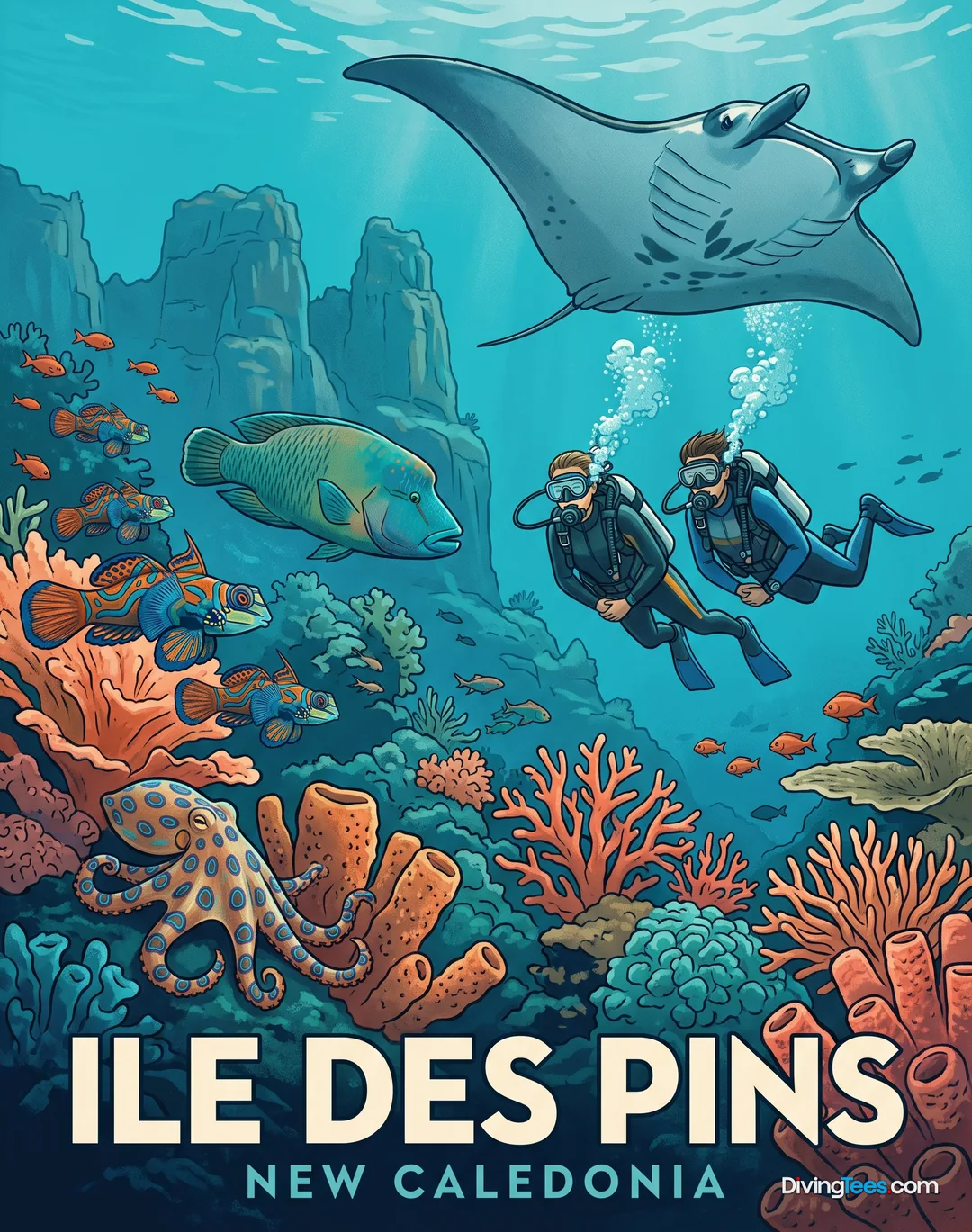
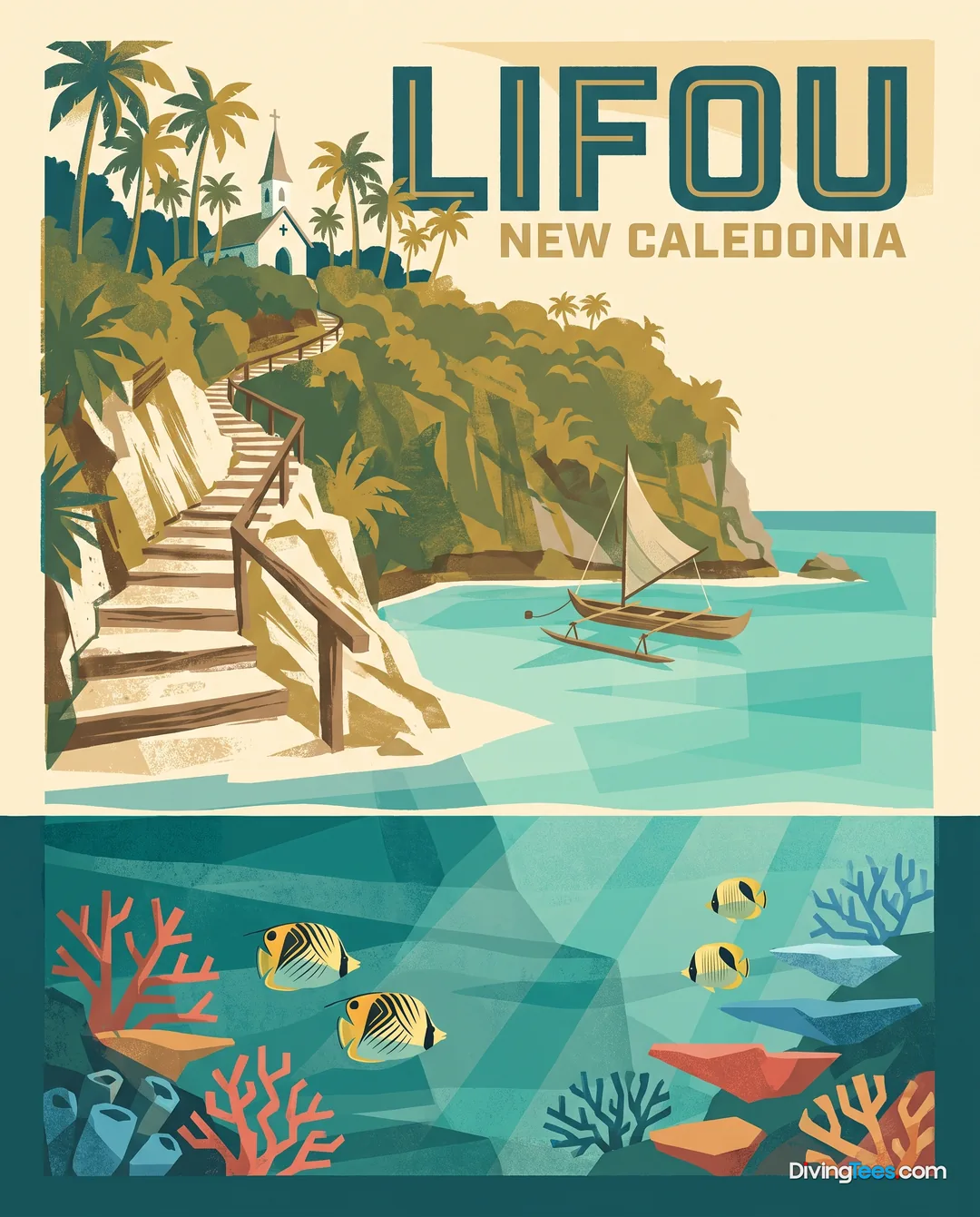
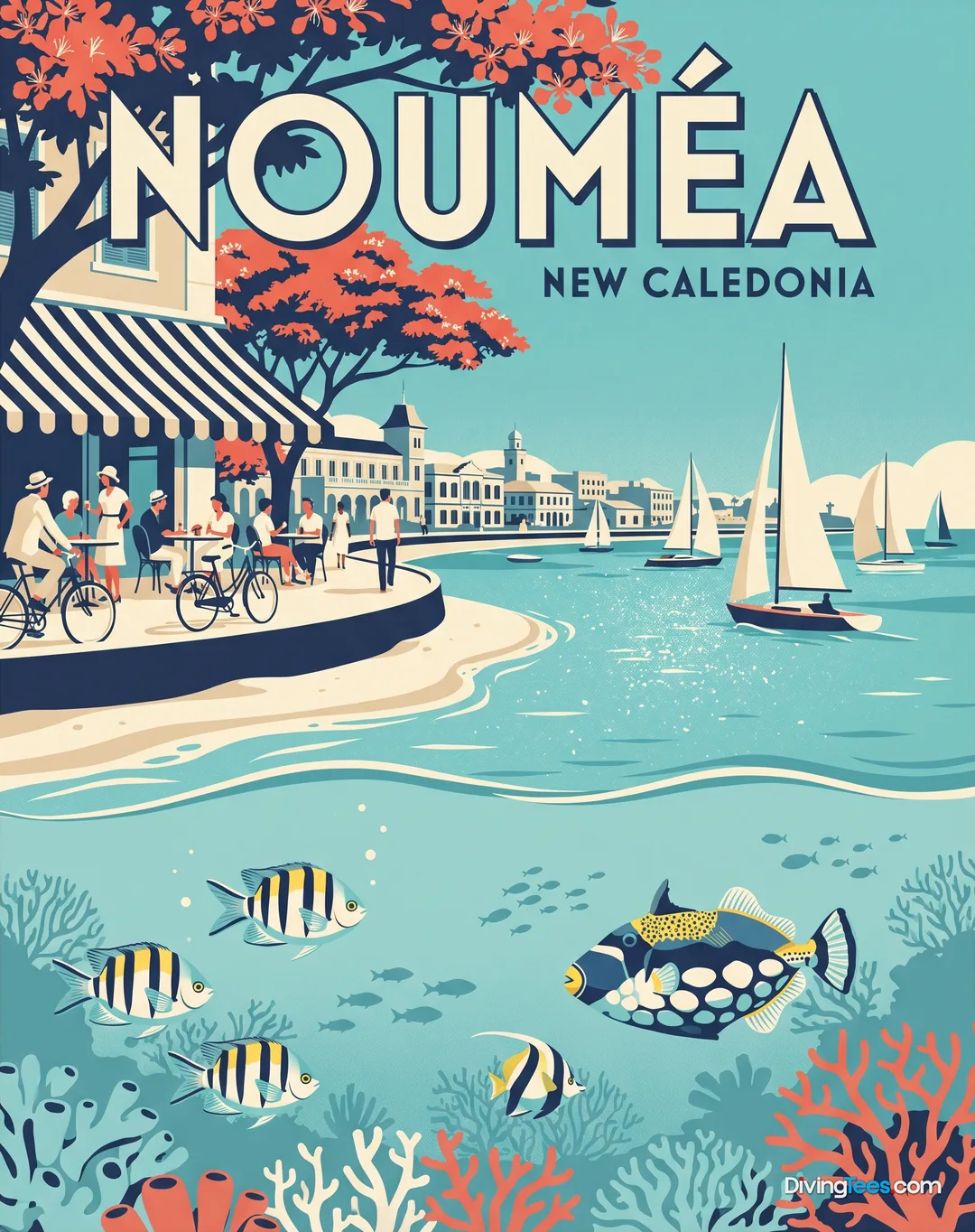
Lifou forms the more intimate choice: a Loyalty Island where tribal land, small-scale hospitality, vanilla plantations and coral cliffs shape the experience. Its named diving anchors include Gorgone Reef and L’Arche, but the wider appeal is the slower relationship between village, coast and lagoon. The southern grouping brings together Île des Pins and Nouméa. Île des Pins suits divers wanting boat diving, light conditions and a more secluded setting, with Grand Canyon and Grotte de Gaji among its named sites. Nouméa is the practical urban counterpart, with French-style services, restaurants, markets and access to lagoon sites such as Boulari Pass. Île des Pins is the more expensive island option; Nouméa is also expensive, but offers a moderate tourist pressure and a broader choice away from the boat. Lifou is comparatively moderate in price and quieter, though services are more limited.
Diving destinations
Dive centres

Hotels
When to go, and where by month
The useful calendar is staggered rather than divided into opposite seasons. January, February, March and April suit both Lifou and Île des Pins, making these the clearest months for a two-island plan. In May, Lifou remains the seasonal choice while Île des Pins drops out of the shared window. June, July, August, September and October are not shown as seasonal months for the diving areas covered here, so they do not offer the same straightforward island pairing. November opens Île des Pins on its own, creating a southern-island option before the broader December window returns. December again brings both Lifou and Île des Pins together. Nouméa belongs to the Île des Pins travel grouping, but its seasonal calendar is not defined in the same way. For a carefully paced itinerary, the common months from January through April and December are therefore the simplest points of reference, while May and November favour choosing one island rather than forcing a link-up.
Marine life, coast by coast
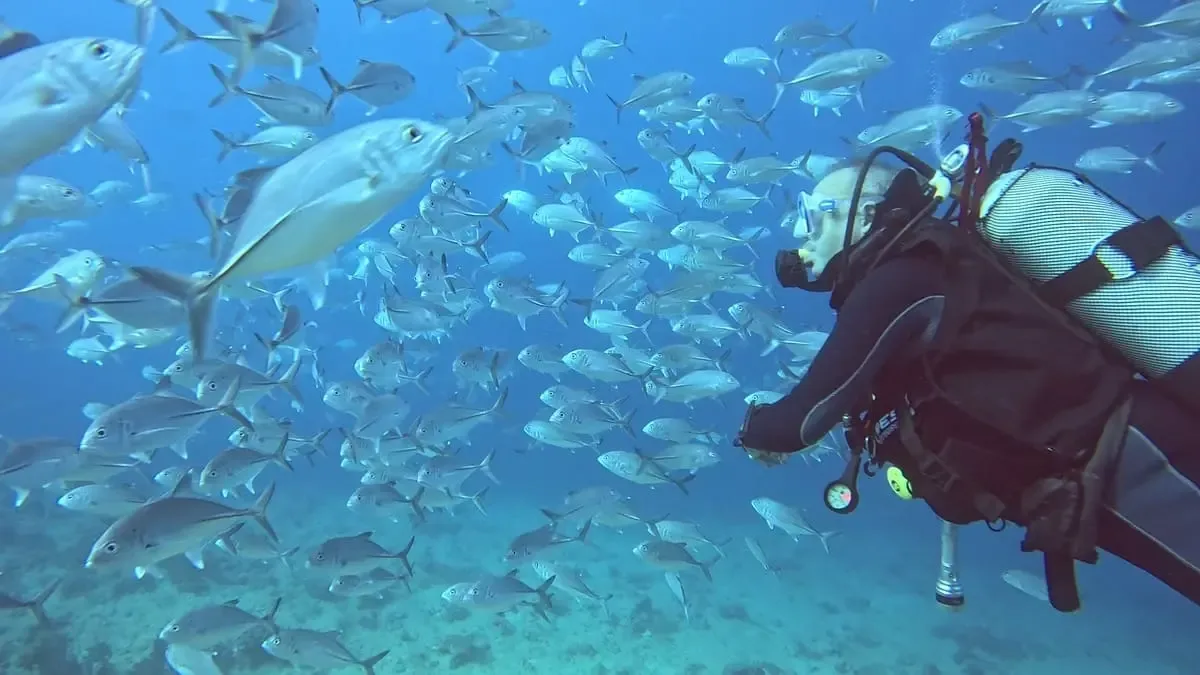
The wildlife picture changes with the itinerary. Lifou is the place specifically associated with a strong selection of larger reef and pelagic animals: reef shark, leopard shark, sea turtle, dogtooth tuna, trevally, fusilier and triggerfish all belong to its underwater identity. Butterflyfish add the more detailed reef encounters, while nudibranchs reward slower searching. This makes Lifou particularly attractive to divers who want their island choice to be reflected in the animal life as well as the scenery. Across the country, no single shared wildlife signature is established in the same way, so a trip built around Lifou has a different natural emphasis from one centred on Nouméa or Île des Pins. The distinction is useful when choosing between islands, not merely when planning surface excursions.
Getting between the areas
Nouméa and Île des Pins are the natural combination for a multi-island holiday: they are separated by 107 kilometres and can be linked within one trip without turning the itinerary into a long overland exercise. Lifou is farther from the capital, at 187 kilometres, and its relationship with Île des Pins is more substantial still, at 201 kilometres. These are not distances to treat like a short coastal transfer. Regular domestic flights from Magenta are the practical backbone, with short island hops structuring the journey. Ferries are much less useful for a short stay and may consume a full day. On Grande Terre, a hire car is the normal solution, while Lifou and Île des Pins rely more on limited local hire, gîte transfers and arrangements made through diving operators. A two-week plan can include all three, but each added island takes time away from diving.
Take off your mask
Nouméa gives the clearest introduction to the territory’s French, Kanak, Asian and Pacific influences. At Port Moselle, the morning market brings together fish, tubers, fruit, cooked food and local craft; later, the Centre culturel Tjibaou places contemporary Kanak architecture and artistic expression at the centre of the city experience. The Parc provincial de la Rivière Bleue offers a full-day change of landscape, with forest, red mining country and protected natural spaces. Île des Pins is more village- and tribe-based: Kuto and Kanuméra can be paired with the natural pool at Oro, while the Grotte de la reine Hortense connects the limestone landscape with Kunie history. On Lifou, the cliffs of Jokin and the vanilla plantations around Wadrilla or Xodré show a different rhythm, where local welcome matters. Food follows the same geography. Try bougna in a tribal meal, lagoon fish with coconut on the islands, po’e banane for dessert, and achards of vegetables in Nouméa. Restaurants, brasseries and the market suit the capital; gîtes, pensions and booked tribal meals suit Lifou and Île des Pins.
What holds true everywhere here
Everywhere, the diving profile favours a calm, low-stress approach rather than big-current adrenaline. Light conditions around Lifou and Île des Pins make careful buoyancy and a controlled safety stop more valuable than chasing a drift dive. Nouméa can be more variable, so the briefing deserves attention before committing to the plan for the day. The lagoons sit within a conservation setting: avoid contact with living coral, never use the reef as a handhold and choose an operator that explains its protection rules clearly. Above water, the same respect applies to tribal land and beaches. Ask before entering customary ground, bathing in a locally controlled place or taking photographs, particularly on Lifou and in the Loyalty Islands.
Frequently asked questions about New Caledonia
When should you go to New Caledonia for the diving and island experiences?
November is relevant if you want to include the opening around Île des Pins, while New Caledonia also offers diving connected with Lifou, Jinek, Gorgone Reef, and Nouméa. Plan your timing around the islands you want to combine, rather than treating the destination as one uniform dive setting.
What marine life can you see while diving in New Caledonia?
Lifou is associated with reef sharks, leopard sharks, sea turtles, dogtooth tuna, trevally, fusiliers, triggerfish, butterflyfish, and nudibranchs. Gorgone Reef and Jinek fit that underwater focus. Elsewhere, your itinerary can add Île des Pins and Nouméa, giving the trip a different balance of diving and island experiences.
How should you plan your New Caledonia island itinerary around diving?
Choose Lifou if animal life is central to your plans, since its underwater identity includes sharks, turtles, pelagic fish, reef fish, and nudibranchs. A Nouméa-based stay has a different emphasis, while Île des Pins adds its own scenery and sites. The islands are worth comparing before arranging your route.
What can you combine with diving during a stay in New Caledonia?
In Nouméa, you can visit the Port Moselle market at dawn and the Kanak architecture of Centre culturel Tjibaou. Lifou offers the cliffs of Jokin and Bougna shared in a tribal setting. On Île des Pins, add Oro’s natural pool, creating a trip that mixes diving with local culture and scenery.