CMAS
Eden Blue Caledonia
Google 5/5 (86 reviews)
New Caledonia · Pacific
Koumac brings together distant barrier reefs, black tunnels and passes where sharks, eagle rays and dogtooth tuna may appear.
At Koumac, diving starts from a quiet northern base on Grande Terre and heads out by boat towards the passes, walls, caves and reef barriers of the lagoon. The journey is part of the character of the place: the outer barrier can take thirty to fifty minutes to reach, but it leads away from the feel of a town-centre dive area. Close to shore, some sites are gentle enough for beginners. Further out, exposed passes and broken underwater relief reward divers who are comfortable with current, changing conditions and a longer day on the water.
Koumac is shaped underwater by a first and second barrier reef, with passes, drop-offs, tunnels, cavities and caves providing the main visual drama. The diving is predominantly from a boat, and the reef farther offshore is not a quick hop from the harbour. Conditions vary with weather, sea state and tide. Passes may involve current and can suit a drift dive, while sheltered, shallower sites offer a calmer introduction. The Deverd Pass deserves particular attention: its interior can be completely dark, so a dependable torch is part of the basic kit rather than an optional extra. Visibility is commonly around 15 to 40 metres, but rain, river run-off and stirred sediment can reduce it. Plan for a proper descent, a controlled exploration of the relief, and enough reserve for the return and safety stop.
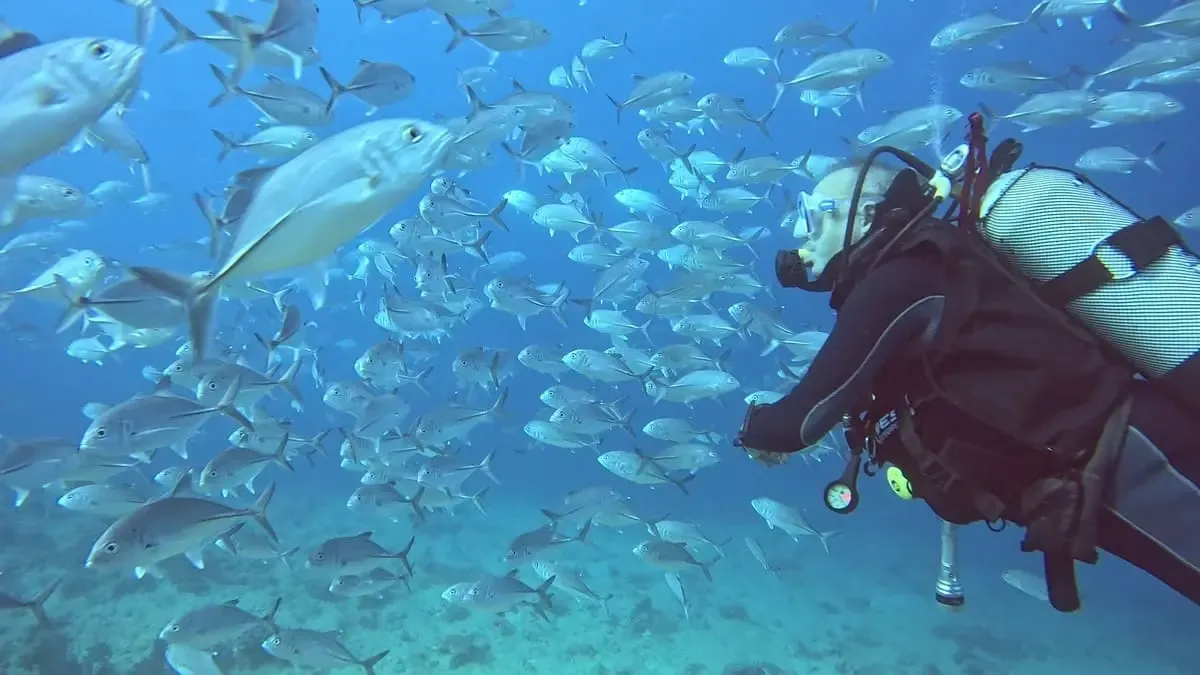
The passes are where the shape of the terrain and the movement of the water bring the larger encounters. Pelagic fish, sharks, eagle rays and dogtooth tuna can all be seen at any time of year, though none should be treated as a guaranteed appointment. An incoming tide is the useful detail to discuss when the aim is to improve the chances of pelagic fish in the passes. Around the reef, the attraction is the broader biodiversity of the lagoon rather than a single headline animal. Caves and tunnels add a second kind of wildlife experience, with the beam of a torch picking out the walls as the daylight disappears behind you. Allow the skipper and guide to match the site to the tide and conditions.
June to September is the most straightforward window for a Koumac dive trip, because the cool season is generally associated with clearer water. Visibility can also be good from April onwards. The rainy season brings heavier rain, more run-off and a greater chance of sediment clouding the lagoon, while cyclones are a particular concern in February and March. Warmer water alone is not a sound reason to choose those months. A settled spell matters more here, since wind can close the outer barrier or force a change of site. Keep the most exposed boat dives for the steadiest weather rather than building the whole holiday around fixed departures.
Koumac can work for a first dive, a refresher or a holiday group with mixed experience, provided the site is chosen honestly. Beginner-friendly, shallower dives exist, while the passes and exposed relief demand better control in current and a calm response to changing conditions. An Advanced qualification is useful for the walls and deeper profiles. A drift-diving specialty is relevant for pass work. BSAC, PADI and SSI divers should judge the day by experience, tide, weather and comfort in a boat-led outing, not by certification alone.
From London or Manchester, allow at least two days in practice, with international connections to Nouméa followed by a separate domestic connection to Koumac. The destination is reached overland on the RT1 along Grande Terre's west coast, a road journey of about five hours from Nouméa, or by an internal flight. Coaches also link Nouméa and Koumac. No ferry is needed. Once in town, the diving is organised around the local marina, roughly five minutes from the centre of Koumac. Do not assume that an onward airport connection removes the need to plan the local transfer, particularly if you are combining the area with a longer Grande Terre road itinerary.
Bring a reliable torch for the Deverd Pass, tunnels and cavities, and carry a second light or spare batteries because some interiors are completely black and local replacements cannot be assumed. Ask for pass dives on an incoming tide if pelagic fish are a priority. Do not fill every day with fixed boat plans: wind may cancel an outer-barrier departure, alter the leaving time or force a different site. A three to five-day stay is more workable than a rushed stop, with one day left as weather margin. The barrier is distant, so allow for thirty to fifty minutes of travel rather than expecting every dive to sit beside the marina. Put the furthest or most exposed outings into the calmest forecast window. In the rainy season, expect run-off and sediment to affect the lagoon, and do not choose it simply for warmer water. Reserve boat places ahead, and pack more light capacity than you think you need.
Koumac works best as a land-based dive stay, with mornings and surface intervals built around boat departures from the marina. Three to five days gives time for several outings and a weather buffer, rather than turning every day into a gamble. When diving is postponed, the northern Grande Terre setting provides a useful change of pace: explore the land caves and surrounding relief, follow the coast towards Poum, or take a surface trip on the lagoon. The west-coast road also makes a natural extension to the stay.
Hello, I'm Marina, DivingDeal.com's AI assistant. I guide you through destinations, areas and countries.
Thinking about the whole trip and the flights? Talk it over with Edith →
Marina is an AI. Some links are affiliate links: DivingDeal may earn a commission, at no extra cost to you. Bookings are made with the partner.
Choose Koumac during the cooler season, especially from June to September, when water is generally clearer. Visibility can also be good from April onwards. Rainy-season run-off may cloud the lagoon, while cyclones are a concern in February and March. Wind can close the outer barrier, so prioritise settled weather.
Koumac suits beginners for selected shallow, sheltered sites, as well as refresher dives and groups with mixed experience. Passes and exposed relief require confidence in current, changing conditions and boat-led outings. An Advanced qualification is useful for walls and deeper profiles, while drift-diving experience is relevant for pass dives.
Koumac offers first and second barrier reefs, passes, drop-offs, tunnels, cavities and caves. Sharks, eagle rays, pelagic fish and dogtooth tuna may appear throughout the year, with pelagic encounters more likely on an incoming tide. The Deverd Pass has completely dark interiors, while the lagoon provides broader reef biodiversity.
Plan a land-based stay around boat departures from Koumac marina, allowing time for the outer barrier journey and a weather margin. Reserve boat places ahead, keep exposed dives flexible, and bring a reliable torch plus spare batteries. Koumac works well for several diving days, with land caves, the coast and lagoon available when conditions change.