
Dive Gizo
Google 4.9/5 (149 reviews)
2.2 km away as the crow flies
Gizo · Solomon Islands · Pacific
Descend into the vibrant convergence of oceanic currents at Grand Central Station, where an unparalleled abundance of marine life creates a dynamic underwater spectacle just off Njari Island.
For subtitles in English: start the video firstthen click the gearat the top right of the video, select “Subtitles/CC”, then “Auto-translate” and choose “English”.
Approaching Grand Central Station, you immediately understand its name; this site feels like the very heart of the ocean's activity. Nestled at the north-western tip of the Gizo islands, it's a strategic point where deep oceanic currents converge, funneling nutrients and attracting a colossal array of marine life. Just 20 metres from the shore of Njari Island, the site begins to reveal its secrets, inviting you into a world where the sheer volume of fish can be almost disorienting, a true testament to the Solomon Islands' vibrant underwater environment.
As you descend, the moderate current becomes noticeable, a constant pulse that dictates the rhythm of the dive and the behaviour of the inhabitants. This flow isn't just a force to contend with; it's the lifeblood of Grand Central Station, an invisible conveyor belt bringing nutrients to the reef. Within moments of dropping below the surface, you're enveloped by schools of colourful reef species, their collective movements creating flickering patterns of light and shadow against the coral backdrop.
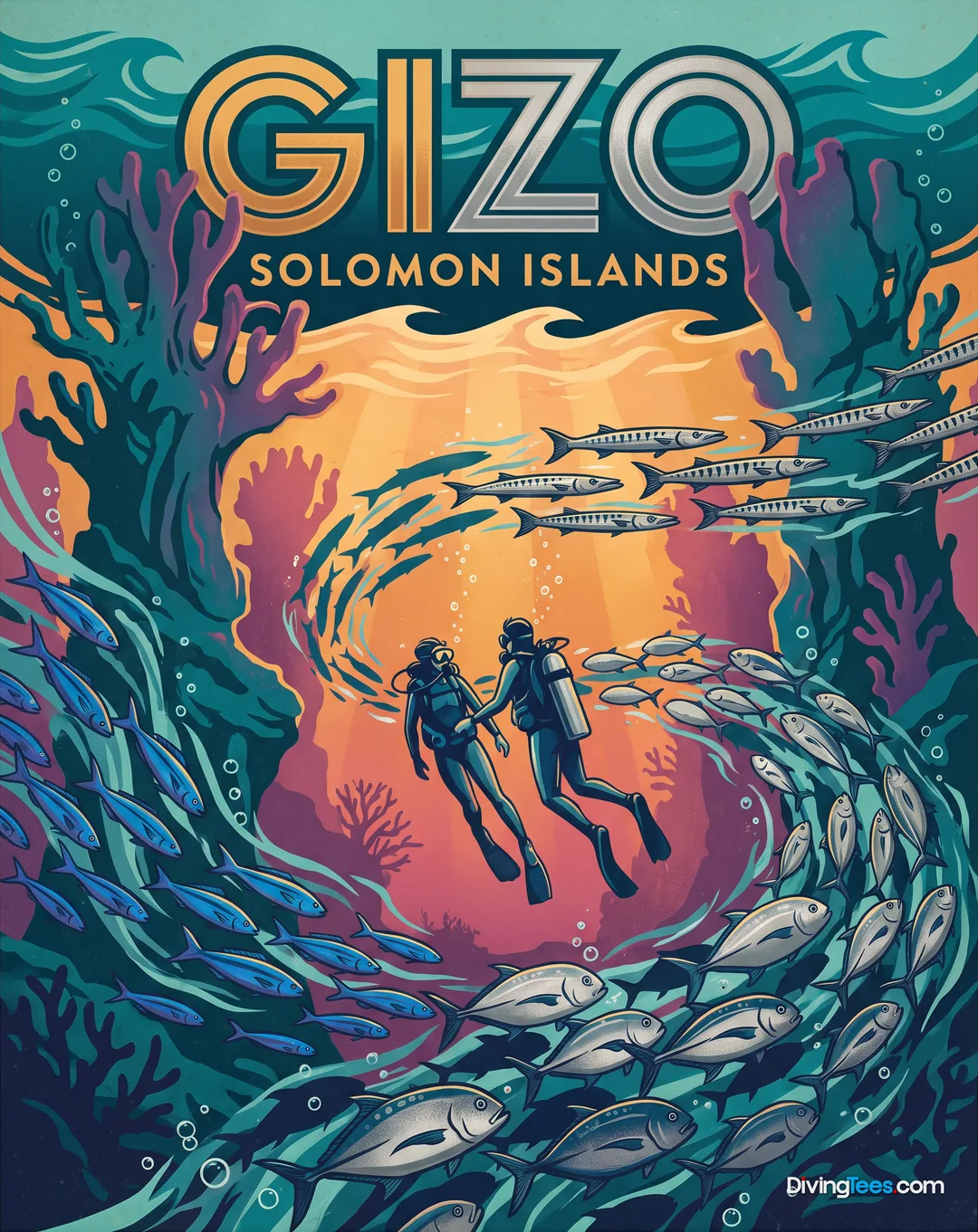
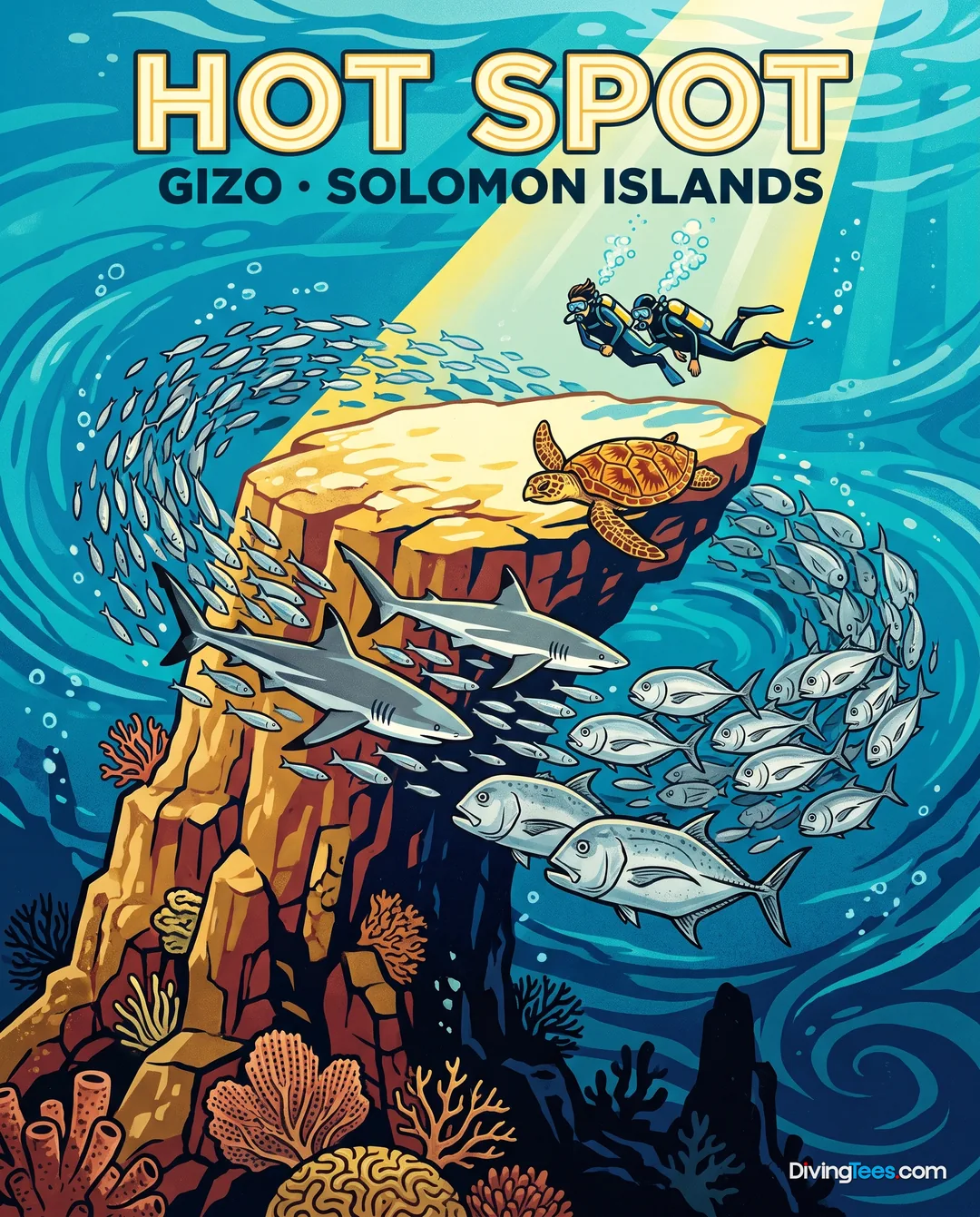
The currents are what truly set Grand Central Station apart, acting as a magnet for larger pelagic species. Hold your position firmly and watch as the water column comes alive with the powerful, streamlined forms of sharks, patrolling the edges of the reef with purpose. Alongside them, immense schools of trevally move with synchronized precision, their silvery scales flashing as they navigate the nutrient-rich waters. It’s a primal ballet, playing out right before your eyes, showcasing the raw energy of this marine ecosystem.
Beyond the powerful pelagics, the site teems with a rich tapestry of marine diversity closer to the reef. Groups of batfish drift gracefully, their distinctive shapes adding an elegant counterpoint to the frenetic energy of the currents. But it is the sheer variety of colourful reef species that truly captivates, painting the coral gardens with every imaginable hue. With over 270 fish species recorded in a single dive, you quickly realise that this site is not just about big fish encounters, but about an overwhelming abundance at every level of the food chain.
The experience at Grand Central Station is one of sustained immersion in a thriving, active ecosystem. Unlike sites where you might search for specific creatures, here the life comes to you, carried on the currents or resident within the reef's complex structure. This constant movement and the sheer volume of marine inhabitants create a powerful sense of being in a truly wild and untouched oceanic environment, where every direction you turn offers a new, thrilling encounter.
Whether you are gliding over the reef crest or finding a sheltered spot to observe the oceanic drama unfold, the site constantly reminds you of the interconnectedness of its inhabitants. The moderate current, though a defining feature, also sculpts the reef and influences the hunting patterns of the larger predators, making the behaviour you witness here unique to this particular junction of oceanic forces. It's a dive that activates all your senses, a constant display of nature's power and beauty.
This incredible aggregation of marine life, from the smallest reef dweller to the largest patrolling shark, is what defines Grand Central Station. It's not just a dive; it's an educational experience, a chance to observe a complex food web in constant action. The site offers thrilling underwater encounters and incredible fish diversity, a living, breathing example of how ocean currents bring a reef vividly to life, making it a truly remarkable destination in the Gizo islands.
Grand Central Station is accessible to divers of all levels, welcoming everyone from novice to experienced. You can expect a moderate current, which is a key factor in attracting the abundant marine life to this vibrant reef. The best time to experience this site is typically between April and October, when gentle south-east trade winds contribute to comfortable diving conditions.
You can typically dive Grand Central Station between April and October, when gentle south-east trade winds contribute to comfortable conditions. The site lies near Njari Island’s shore, so you can reach this vibrant reef just offshore and experience the oceanic currents that attract its abundant marine life.
Grand Central Station is accessible to divers of all levels, from novice to experienced. You can explore a vibrant reef while experiencing the moderate current that shapes the dive and attracts marine life. Whether you are developing your skills or have extensive experience, the site welcomes you.
You should expect a moderate current at Grand Central Station. Oceanic currents converge here, bringing nutrients to the reef and attracting abundant marine life. The flow influences how you dive and how animals behave, while also carrying larger pelagic species past the reef. You can find a sheltered spot to observe the activity.
At Grand Central Station, you can see colourful reef species filling the vibrant reef, along with sharks, trevally and batfish. The site is known for abundant marine life and a wide variety of fish, with oceanic currents bringing activity through the water and shaping encounters around the reef.