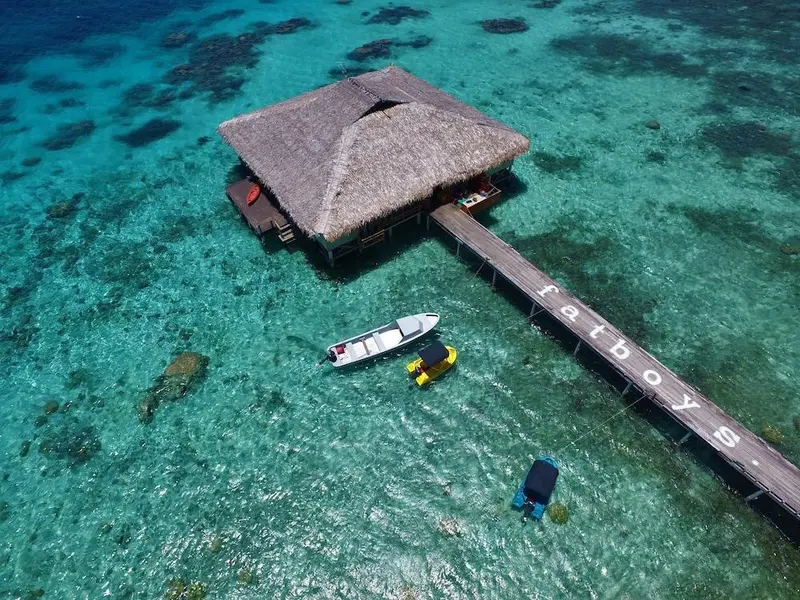
 Dive centre in the hotel
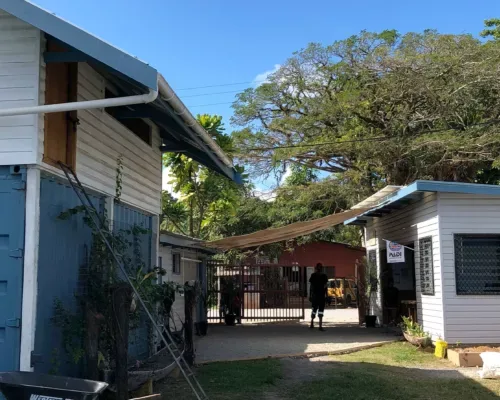
Fatboys Resort
★★★
Google 4.6/5 (57 reviews)
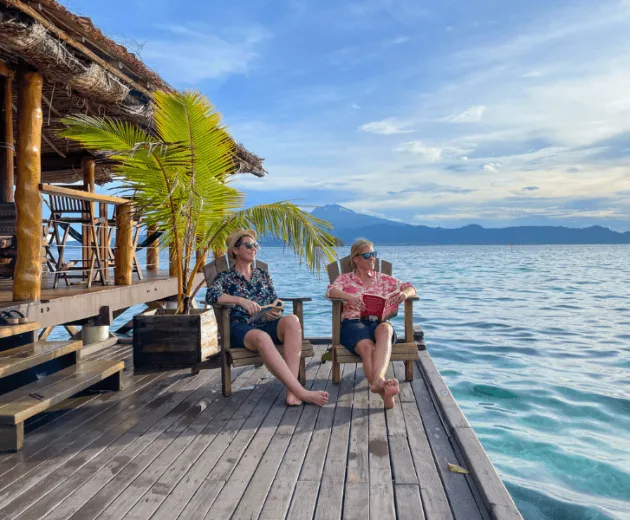
The dive centre
Fatboys Resort Dive Center
Google 4.6/5 (57 reviews)
Solomon Islands · Pacific
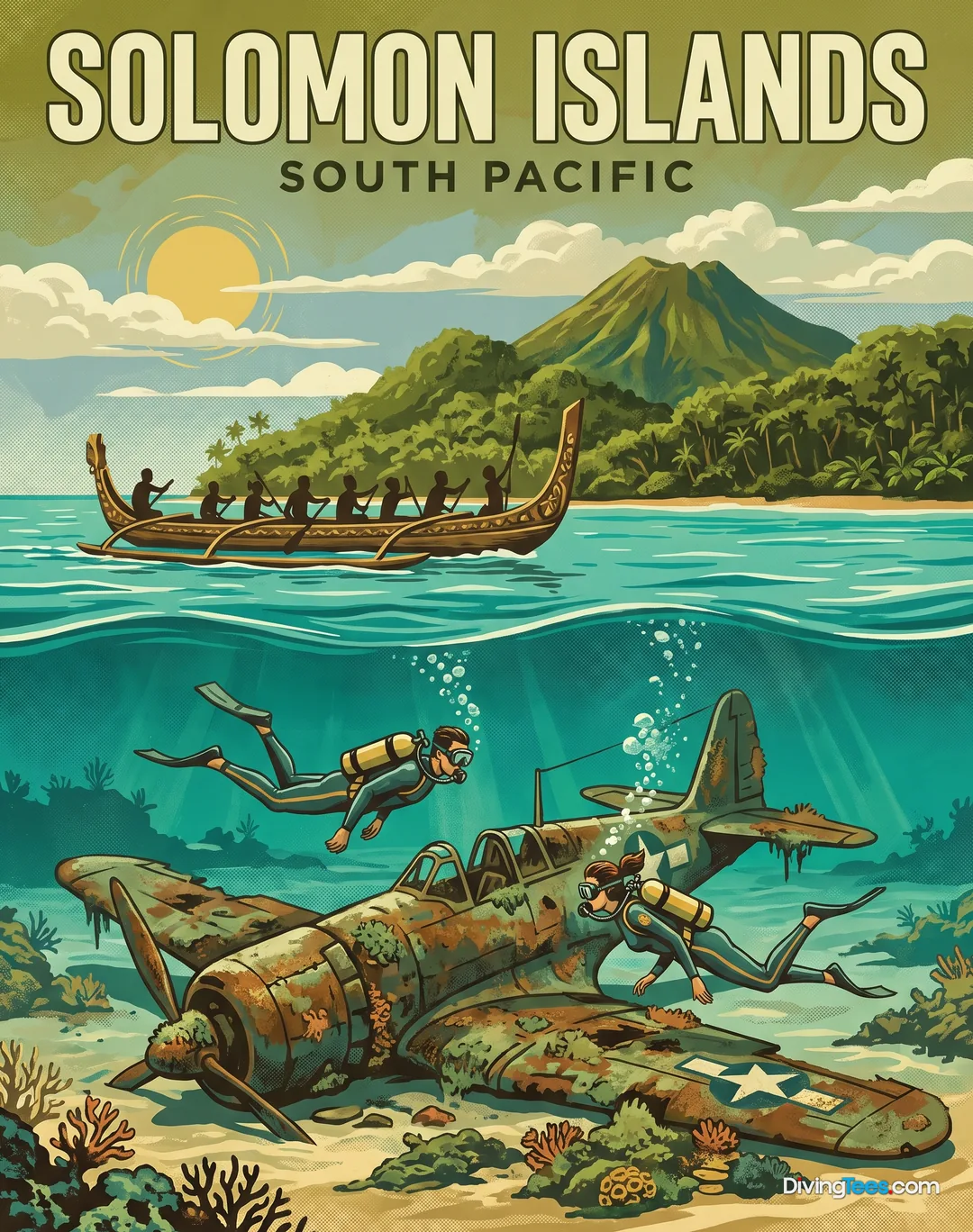
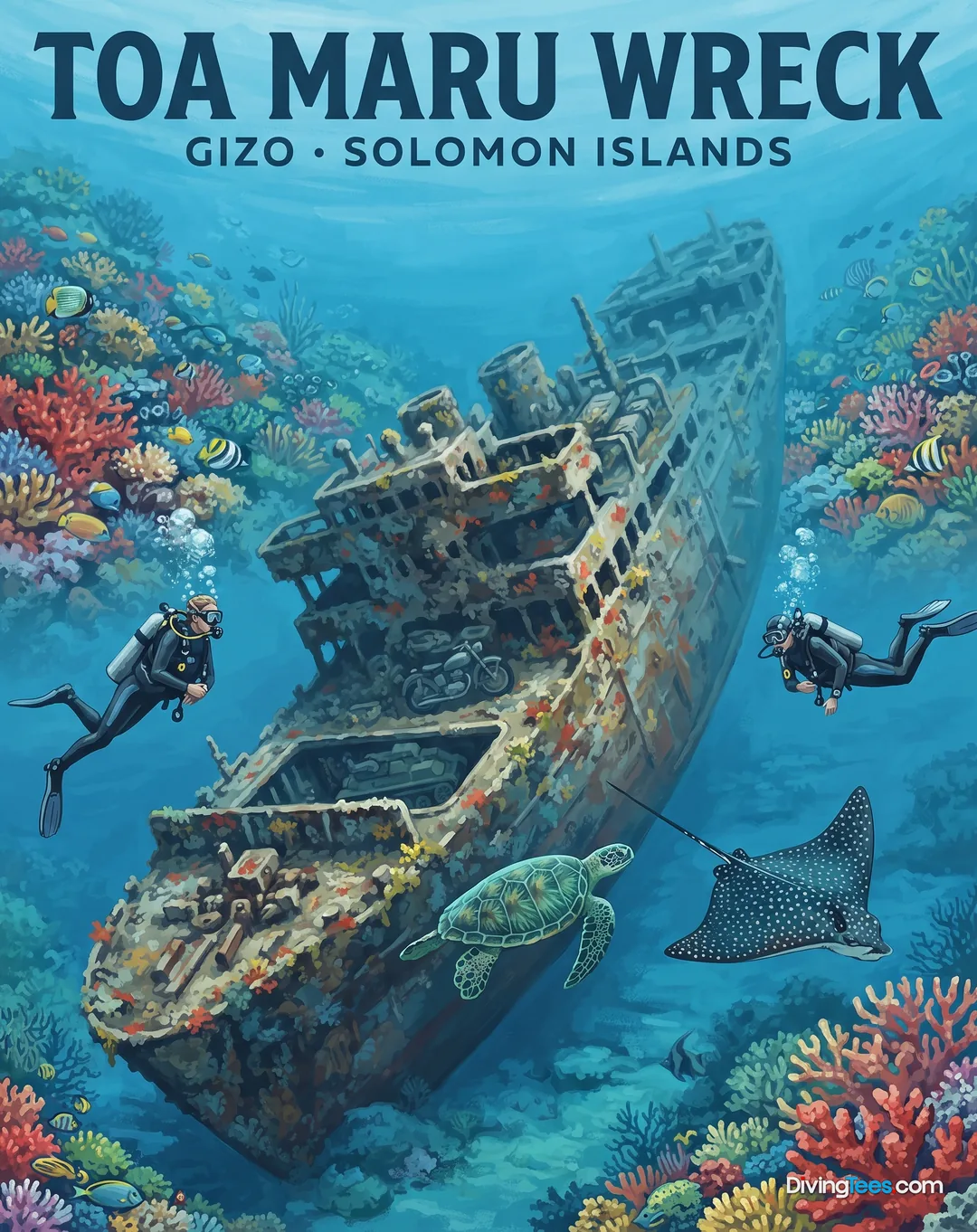
A 140-metre Japanese transport wreck, yellow soft-coral walls, drifting barracuda and trevally, and shallow fighter planes give Gizo its distinctive underwater shape.
For subtitles in English: start the video firstthen click the gearat the top right of the video, select “Subtitles/CC”, then “Auto-translate” and choose “English”.
Gizo is a practical island base for divers who want coral reefs and Second World War history in the same week. The Toa Maru lies on its starboard side, with coral growth and historical remains spread along a slope from seven to thirty-seven metres. Around it are walls, lagoon reefs, light drifts and aircraft wrecks shallow enough for relaxed exploration. Diving is arranged from boats, while the town setting leaves room for village visits, snorkelling and WWII excursions.
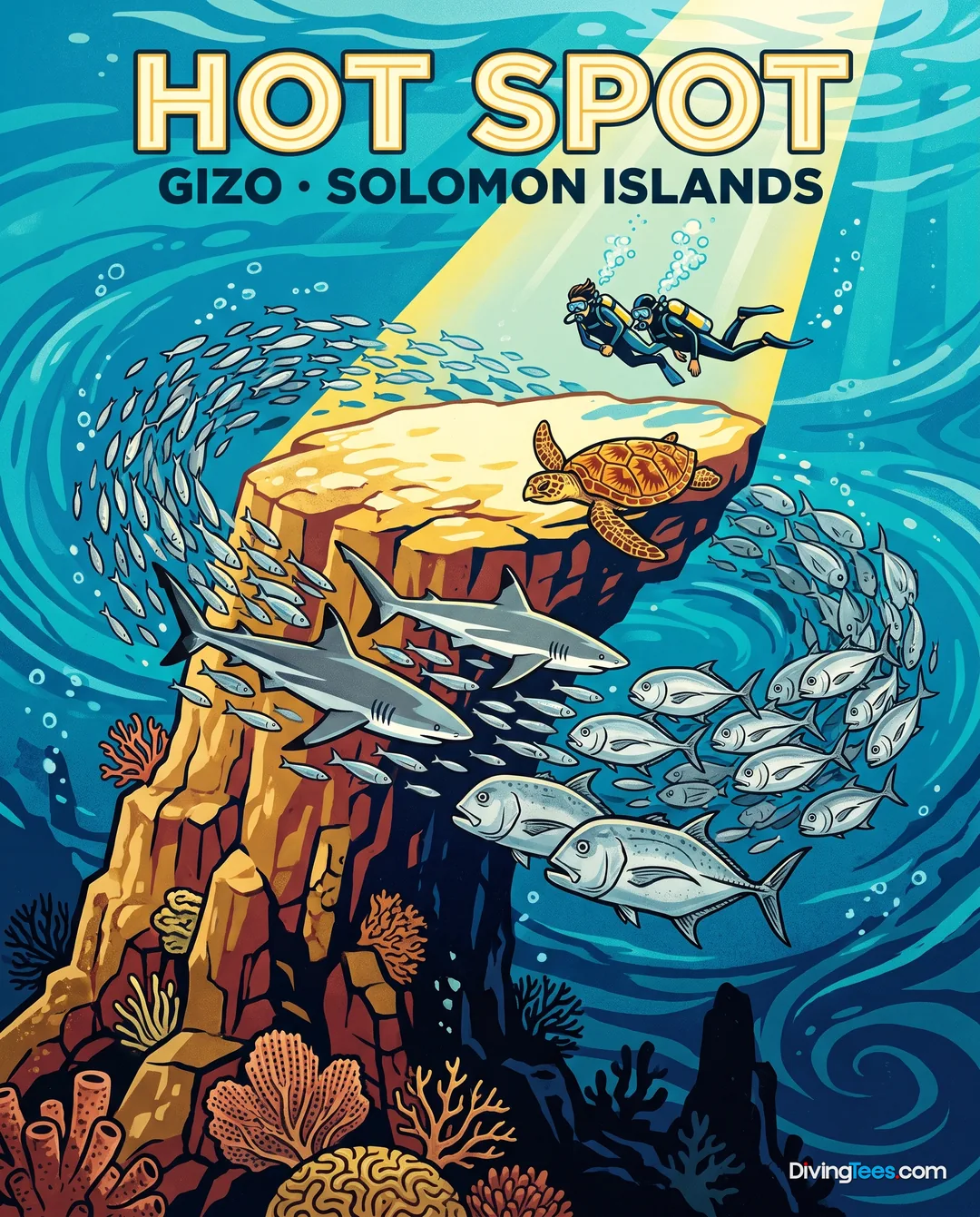
The diving changes noticeably from site to site. One Tree Island offers sheltered lagoon reef with soft corals, gorgonian sea fans and reef fish, while Yellow Corner places experienced divers beside a wall and a knoll coated in yellow soft corals. The Gap is a moderate-current drift from outside Naru Wall into the lagoon, with a maximum depth of thirty metres. The Beach Dive follows a similar moving-water rhythm over fan corals and nudibranchs before finishing in calmer water. At Hot Spot, a pinnacle rises to five metres from depths of roughly three hundred metres; tidal swings can make the current strong, drawing baitfish and predators. Visibility is commonly twenty to thirty metres, but rain, runoff and sea state can reduce it. Most dives are boat trips, often with twenty to thirty minutes of travel.
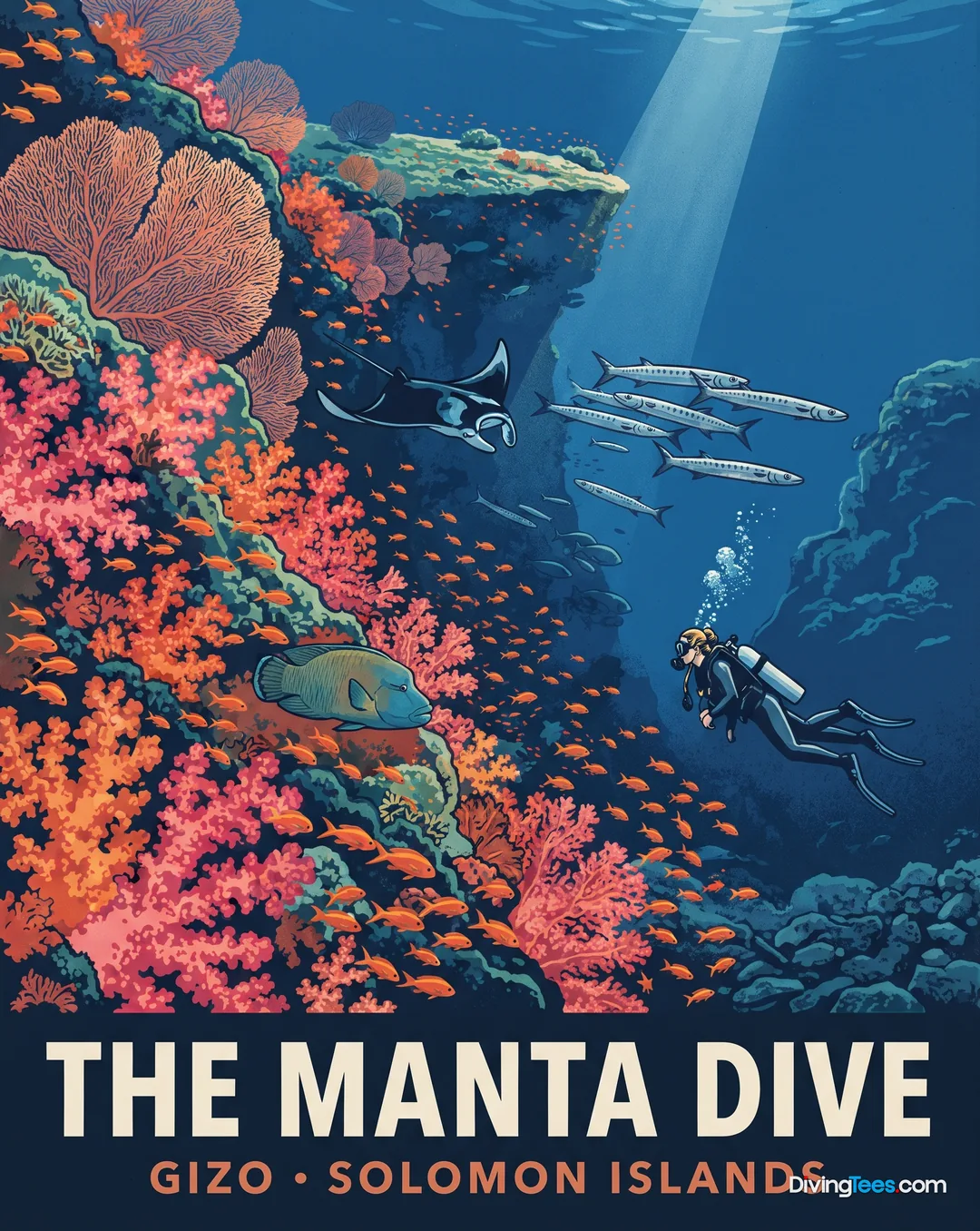
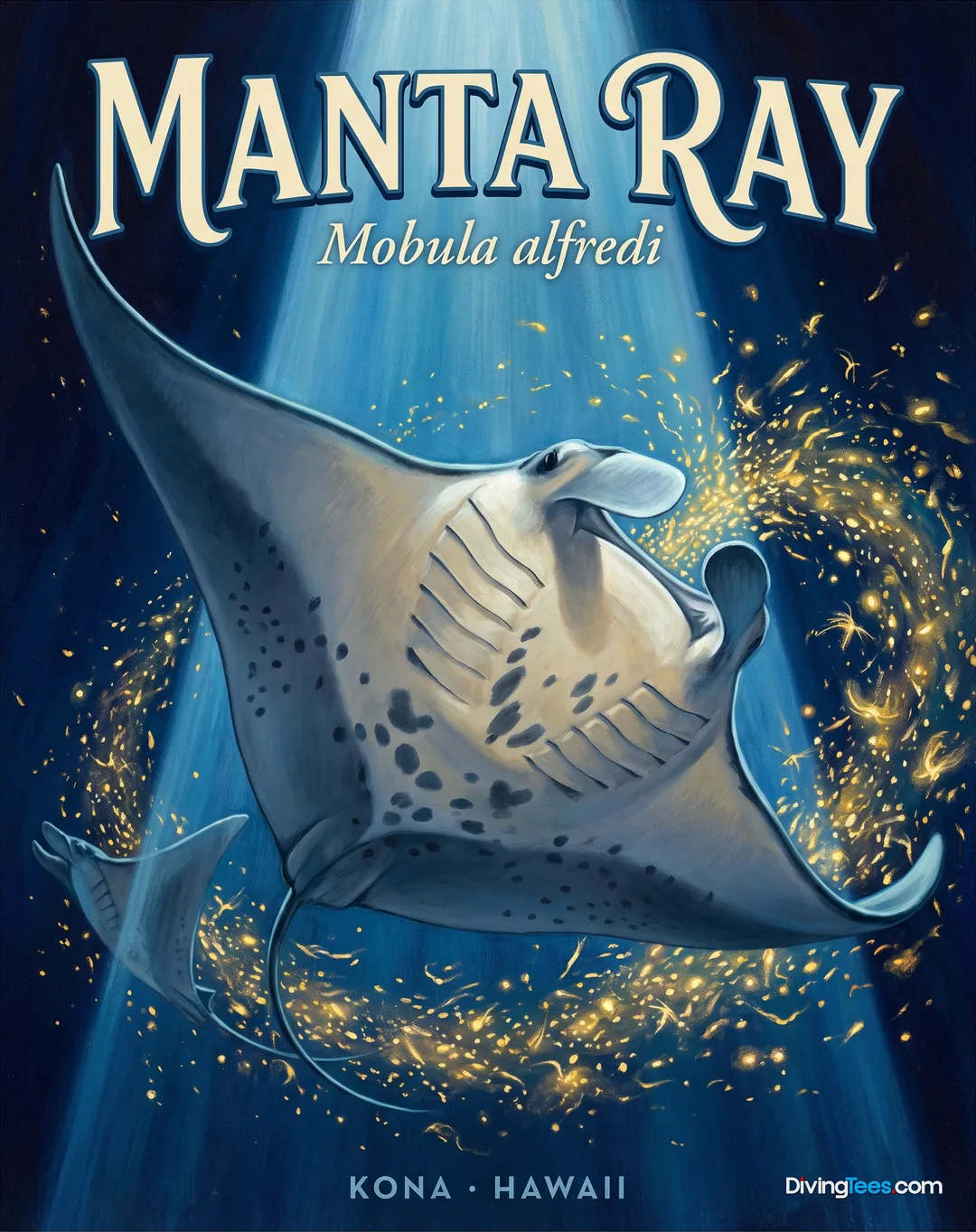
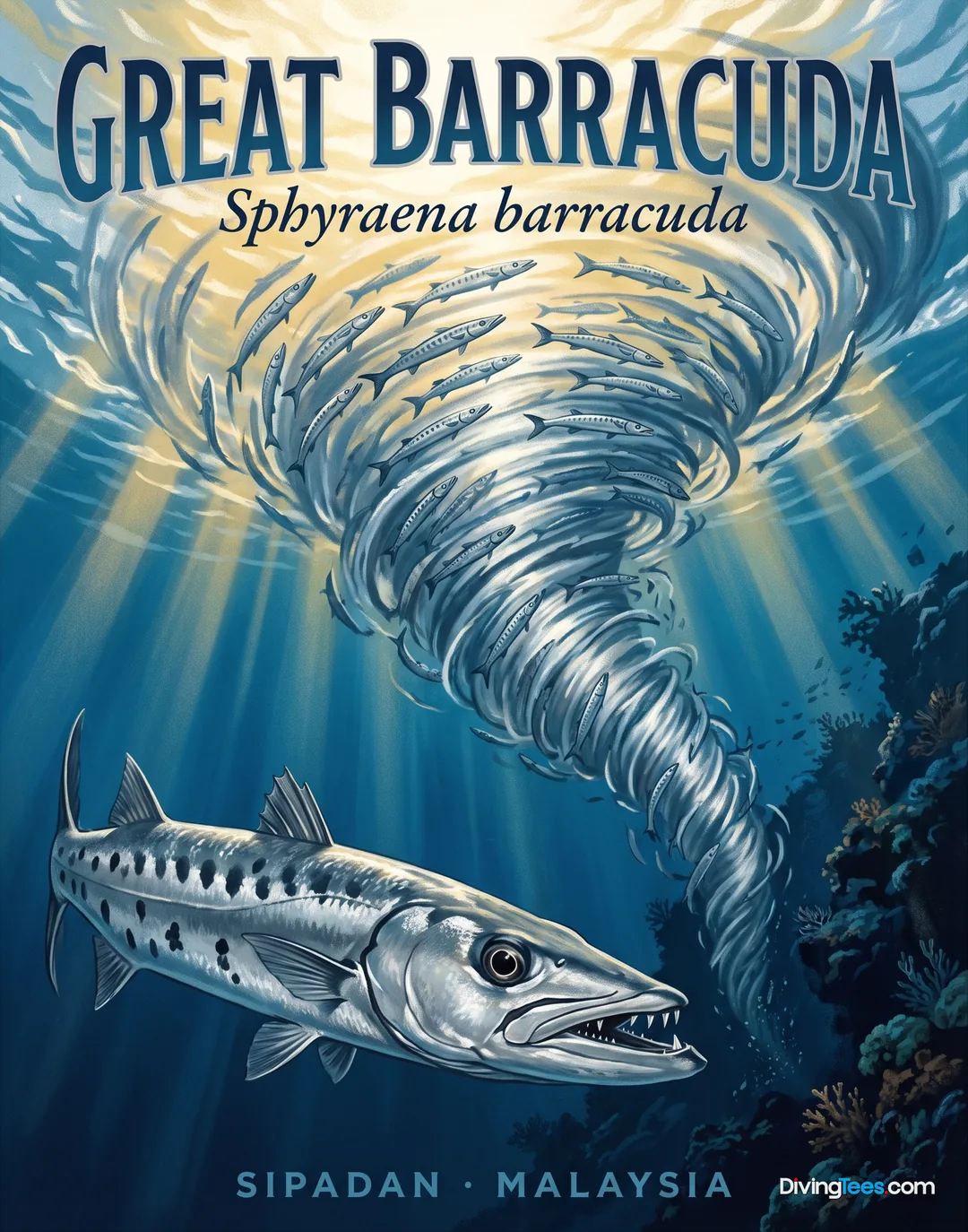
Gizo’s larger attractions are often moving rather than hiding. Reef sharks, bigeye trevally and barracuda are regular possibilities, particularly where current gathers fish around walls, passes and the Hot Spot pinnacle. Rays and sea turtles appear around reefs and wrecks, while lionfish and anemone gardens make the Petaj a gentler, closer-looking dive. Manta ray encounters are associated especially with the November-to-April period, when groups may approach divers on The Manta Dive. Dugongs are possible year-round but occasional rather than a dependable feature. The aircraft wrecks and Toa Maru also carry marine life, with corals spreading across metal and reef fish using the structure. This is not a destination to approach solely as a macro trip: the more characteristic scenes involve wreck scale, schooling fish, sharks and open-water movement.
The measured calmest sea period is October to March, but the most useful all-round diving window is generally May to October, when the drier conditions tend to bring clearer water and more dependable boat operations. Rain during the wetter months can add coastal runoff and turbidity, even when the sea itself is relatively calm. April to October is particularly well suited to Toa Maru, The Gap and other exposed sites under gentler south-easterly trade winds; November often brings the least wind. November to April is the period to consider if manta ray encounters matter more than consistently dry weather.
Gizo can suit beginners, especially on sheltered reefs, Petaj, Japanese Zero, Plum Pudding Island and the shallow American Hellcat. The wider area is more rewarding for divers comfortable with boat procedures, changing current and progressive depth. Advanced, Drift, Nitrox and Wreck training are useful additions; BSAC, PADI and SSI divers should match the qualification to the planned site rather than treating every wreck as an entry-level dive. Toa Maru and Hot Spot demand sound depth awareness, while Yellow Corner is specifically for experienced divers when the current is running.
From London Heathrow, Gatwick or Manchester, the journey involves a long international trip to Honiara followed by a domestic flight to Gizo. There is no normal ferry passage forming the route to Gizo itself, but the boat becomes essential once diving begins. Allow roughly twenty-four to thirty-five hours door to door from western Europe, depending on the connections, and avoid building the trip around a tight domestic transfer. On arrival, local transport connects the airport area and accommodation with Gizo’s town-based departure points. Depending on where a diver stays, the final link may be a short road transfer, a resort shuttle or a walk to the operator’s boat.
Keep several weather-flexible days in a five- to seven-day stay: boat conditions can decide whether Toa Maru, the walls or the more exposed sites are practical. Divers who put the transport wreck first should be genuinely comfortable with wreck profiles and depth; the most interesting parts are not simply a shallow glance at the hull. Pack equipment for different jobs, including a more covering three-millimetre suit for repeated dives and a camera or light mounting system if photography matters. Alternate wrecks with reef and drift dives to avoid stacking deeper profiles. Do not assume that every site offers the same Gizo experience: Japanese Zero and the American Hellcat are shallow and calm, whereas Hot Spot can carry strong tidal current. Local community-managed areas operate with permanent, multiple-use and seasonal closures, so follow the applicable no-touch, anchoring and fishing restrictions. Gizo is also a poor fit for a single diving day; one missed boat window can remove the reason for the visit.
A land-based stay is the natural way to use Gizo, with daily boat trips from the town or nearby resort areas. Five to seven days gives enough time to mix Toa Maru and the aircraft wrecks with lagoon reefs, walls and drifts, while leaving room for weather changes. Non-divers have straightforward alternatives in snorkelling, village outings, birdwatching, coastal walks and WWII-related visits. Liveaboards also pass through the wider region, but they are not necessary to experience Gizo’s main character.
Hello, I'm Marina, DivingDeal.com's AI assistant. I guide you through destinations, areas and countries.
Thinking about the whole trip and the flights? Talk it over with Edith →
Marina is an AI. Some links are affiliate links: DivingDeal may earn a commission, at no extra cost to you. Bookings are made with the partner.
In each one, the dive centre is inside the hotel: step out of your room and go diving.
Dive centre in the hotel★★★
Google 4.6/5 (57 reviews)
The dive centre
Fatboys Resort Dive Center
Google 4.6/5 (57 reviews)
The most useful all-round diving window is generally May to October, when drier conditions often support clearer water and more dependable boat operations. April to October suits Toa Maru, The Gap and exposed sites under gentler south-easterly trade winds. Choose November to April if manta encounters matter more than consistently dry weather.
Gizo suits beginners on sheltered reefs, Petaj, Japanese Zero, Plum Pudding Island and the shallow American Hellcat. The wider area is more rewarding when you are comfortable with boats, changing current and progressive depth. Toa Maru and Hot Spot require sound depth awareness, while Yellow Corner is for experienced divers when current is running.
You can combine Second World War wrecks with coral reefs, walls and drifts. Toa Maru and shallow aircraft wrecks carry corals and reef fish, while The Gap and Hot Spot may bring barracuda, trevally, reef sharks and baitfish. Rays, turtles, lionfish, anemone gardens and seasonal manta encounters add variety.
Plan a land-based stay with daily boat trips from town or nearby resorts, allowing five to seven days and several weather-flexible days. Travel to Honiara before taking a domestic flight to Gizo, and avoid a tight transfer. Mix wrecks with reef and drift dives, while following local closures and site restrictions.