RAID
Back to Basics Adventures
Google 4.9/5 (96 reviews)
Mozambique · Africa
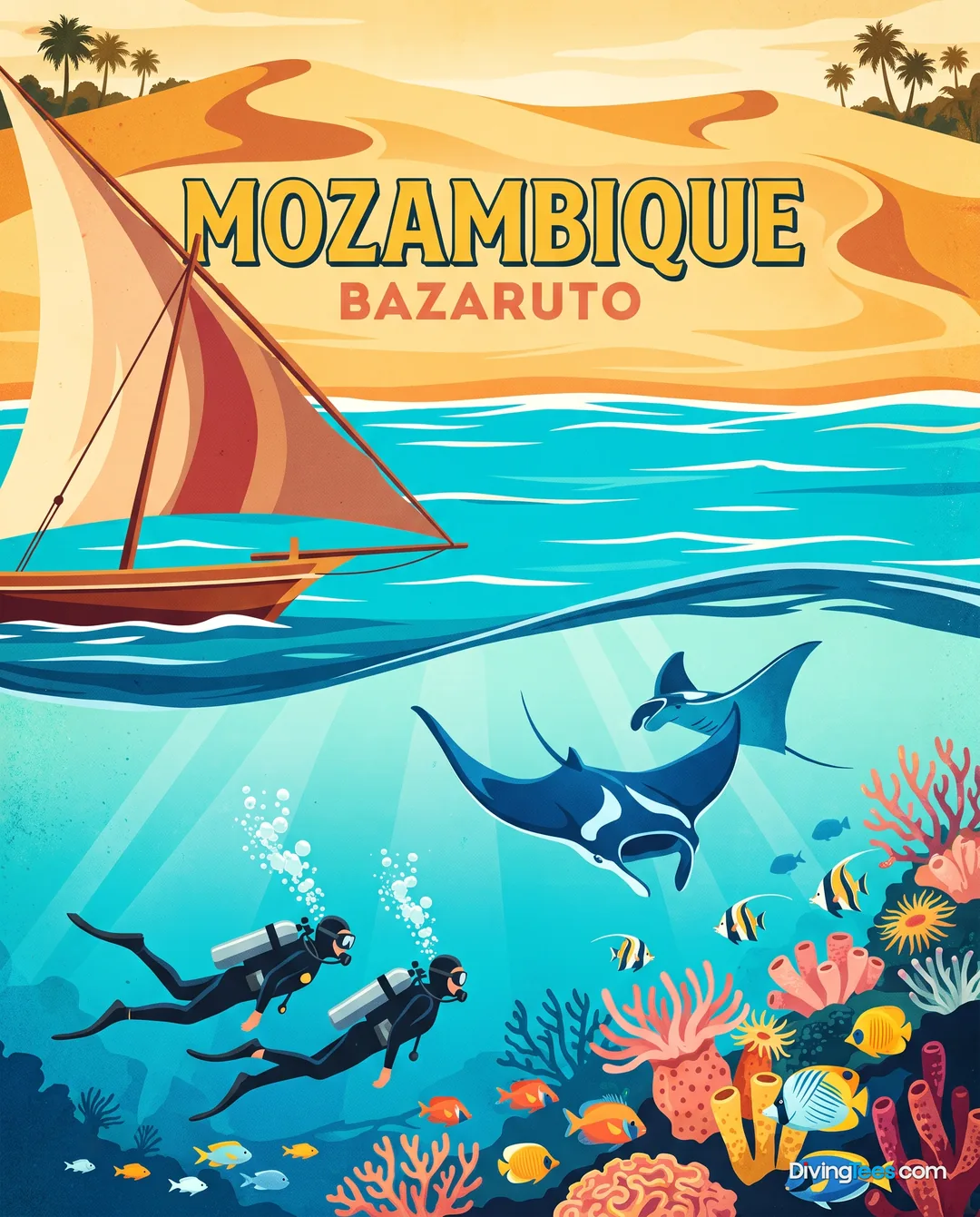
Beach-launched boats reach coastal reefs, Atlantis drops towards 47 metres, whale sharks pass seasonally and humpback whales travel through from July.
For subtitles in English: start the video firstthen click the gearat the top right of the video, select “Subtitles/CC”, then “Auto-translate” and choose “English”.
Ponta do Ouro is a shore-based Mozambican diving holiday built around boat trips to coastal reefs. The shallow sites make room for beginners and refresher dives, while Atlantis and other deeper reefs take experienced divers into the 40 to 47-metre range. The attraction is the combination of close reefs, occasional strong current and seasonal big-animal encounters, without needing a liveaboard. It also works for a mixed group, with beaches, whale watching, turtle activity and nearby natural areas beyond the diving.
The boats leave from the beach rather than a pontoon, carrying divers to reefs between roughly 1 and 12 kilometres from the launch point. Underwater, the choice runs from shallow reef suitable for learning to deeper walls and reef structures where current can become pronounced, particularly around Atlantis. Conditions are variable rather than routinely benign, so a planned dive can become a shorter outing if wind, swell or current changes. Visibility is often around 15 to 30 metres in the more favourable months, but coastal runoff and moving water can reduce it. Expect a proper beach launch and recovery, followed by boat diving over near-shore reefs. Ponta Malongane and Ponta Mamoli extend the range when you want different sites without changing your base.
Whale sharks are the most regular seasonal draw, with the strongest period for sightings generally running from October to March. The warmer part of the year can also bring occasional bull sharks, tiger sharks and hammerhead sharks, so the appeal is not limited to small reef life. Humpback whales pass between July and November and may be watched from the coast or on a dedicated trip. Marine turtles are regular around the wider coastline, with nesting and egg-laying activity on the beaches from November to February. These encounters are seasonal rather than guaranteed, which makes the choice between calm-water diving and big-animal potential a genuine planning decision.
May to September is usually the most comfortable period for diving, with less wind, calmer water and better visibility. That is the sensible window for divers who want several boat days and the best chance of keeping planned outings intact. From October into the warmer summer months, wind and swell can make the sea more mobile and visibility less predictable, but whale sharks and some larger sharks become more likely. Diving remains possible throughout the year. Allowing spare days matters most outside the calmer season, when a weather-affected departure can disrupt a tightly packed itinerary.
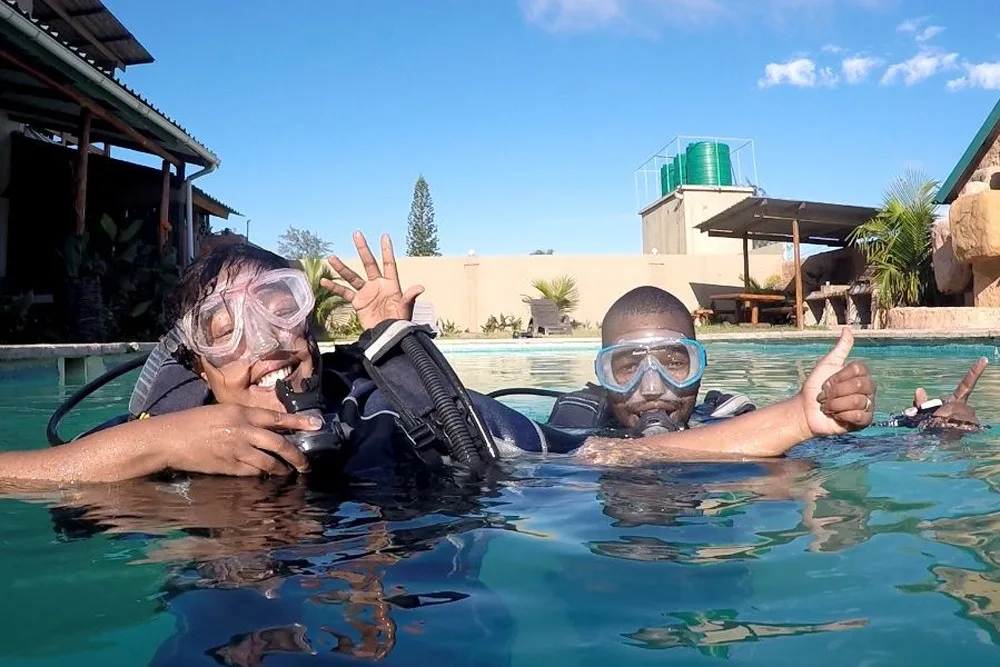
Beginners can use the shallower reefs, provided they are comfortable with a beach launch and boat recovery. Advanced Open Water, or an equivalent qualification, is useful for the deeper reefs, while sites reaching roughly 40 to 47 metres call for appropriate deep-diving training and experience. Current awareness matters as much as the depth rating. Atlantis should not be treated as an ordinary progression dive: a diver who is not ready for a downcurrent or a demanding drift dive may find the plan shortened or the return to the boat difficult.
From London Heathrow, Gatwick or Manchester, the usual approach is by road from Maputo, roughly 110 kilometres and about one and a half to two hours depending on conditions. Ponta do Ouro can also be reached overland from South Africa. There is no need to build the journey around a regular sea connection. The final kilometres can be slow, particularly where sandy tracks and changing road conditions affect progress, so suitable transport matters. Once in the compact village, some accommodation, dive services and the waterfront are walkable. Staying farther out, or basing yourself in Ponta Malongane or Ponta Mamoli, means arranging a land transfer rather than relying on a general shuttle network.
Keep spare days in the programme. Wind and swell can delay or cancel a beach launch, and a day held back before a flight or long road journey is more useful than a final dive squeezed into the schedule. Protect personal kit against knocks and rubbing during the shore launch and recovery, which are more physical than boarding from a pontoon. Ask before booking whether the trip reaches Ponta Malongane or Ponta Mamoli if you want more than the local reefs. For deep plans, confirm the required qualification and depth policy in advance, especially for Atlantis. Do not leave a 40 to 47-metre dive until the last day before flying. Finally, check that the amateur diving licence required by the Ponta do Ouro Partial Marine Reserve is included in the arrangements, and that the commercial operation is licensed too.
Plan on seven to ten days on shore rather than a short, tightly timed break. That gives room for several boat outings, weather delays and a possible trip to Ponta Malongane or Ponta Mamoli. The village makes daily logistics relatively simple when you stay near the waterfront, while accommodation farther away needs land transport. Non-divers have beaches, whale and turtle watching, natural areas, water sports and snorkelling to fill days when diving is not possible.
Hello, I'm Marina, DivingDeal.com's AI assistant. I guide you through destinations, areas and countries.
Thinking about the whole trip and the flights? Talk it over with Edith →
Marina is an AI. Some links are affiliate links: DivingDeal may earn a commission, at no extra cost to you. Bookings are made with the partner.
May to September is usually the most comfortable period, with less wind, calmer water and better visibility. October to March offers stronger whale shark potential, but wind and swell can make conditions less predictable. Diving remains possible throughout the year, although spare days are especially useful outside the calmer season.
Beginners can use the shallow reefs if they are comfortable with a beach launch and boat recovery. Advanced Open Water or equivalent training helps with deeper reefs, while Atlantis and other sites reaching 40 to 47 metres require suitable deep-diving training and experience. Current awareness is important because conditions can become demanding.
Ponta do Ouro combines coastal reefs, deeper walls and reef structures with seasonal wildlife. Whale sharks are generally most likely between October and March, while humpback whales pass from July to November. Marine turtles are regular around the coastline, with nesting and egg-laying activity from November to February, and larger sharks may also appear.
Plan seven to ten days on shore to allow several boat outings, weather delays and possible trips to Ponta Malongane or Ponta Mamoli. Keep spare days before flying or a long road journey, and avoid leaving a deep dive until the final day. Confirm qualifications, depth policies, licensing and transport arrangements before booking.