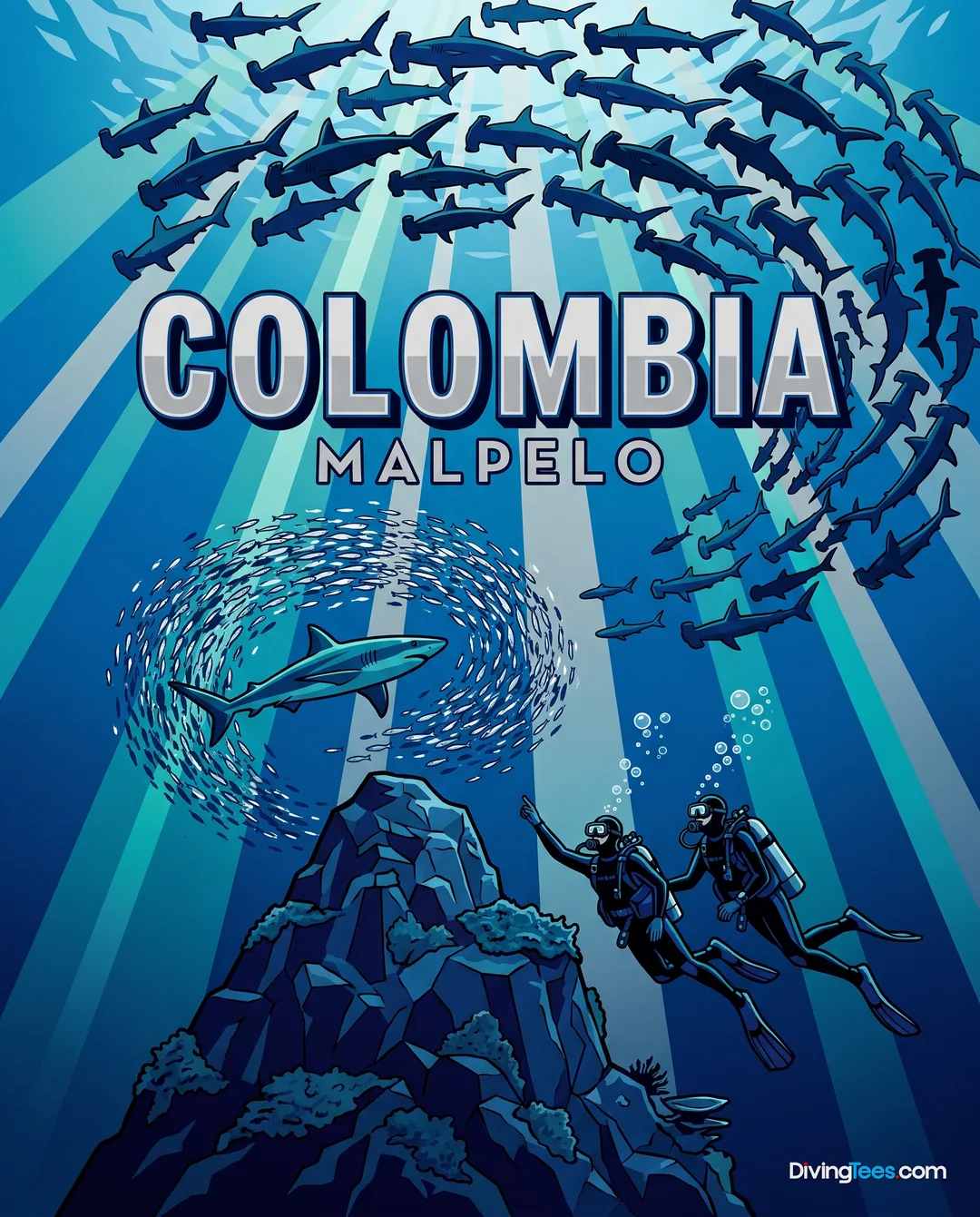
Colombia · Americas
Diving Gorgona Island: volcanic walls and open-water currents
Volcanic cliff walls, boat dives around rocky reefs, and the exposed current of Palma Sola define Gorgona’s protected Pacific experience.
What makes this destination special
- Palma Sola’s exposed volcanic wall and deep-water drop
- Strong oceanic currents carrying larger open-water species
- Boat dives around Gorgona’s rocky Pacific reefs
- Nutrient-rich flow along a dramatic island cliff
- May to October for Palma Sola’s marine encounters
- Parque Nacional Natural Gorgona boat-based diving
- Advanced skills useful on exposed Palma Sola
For subtitles in English: start the video firstthen click the gearat the top right of the video, select “Subtitles/CC”, then “Auto-translate” and choose “English”.
Overview
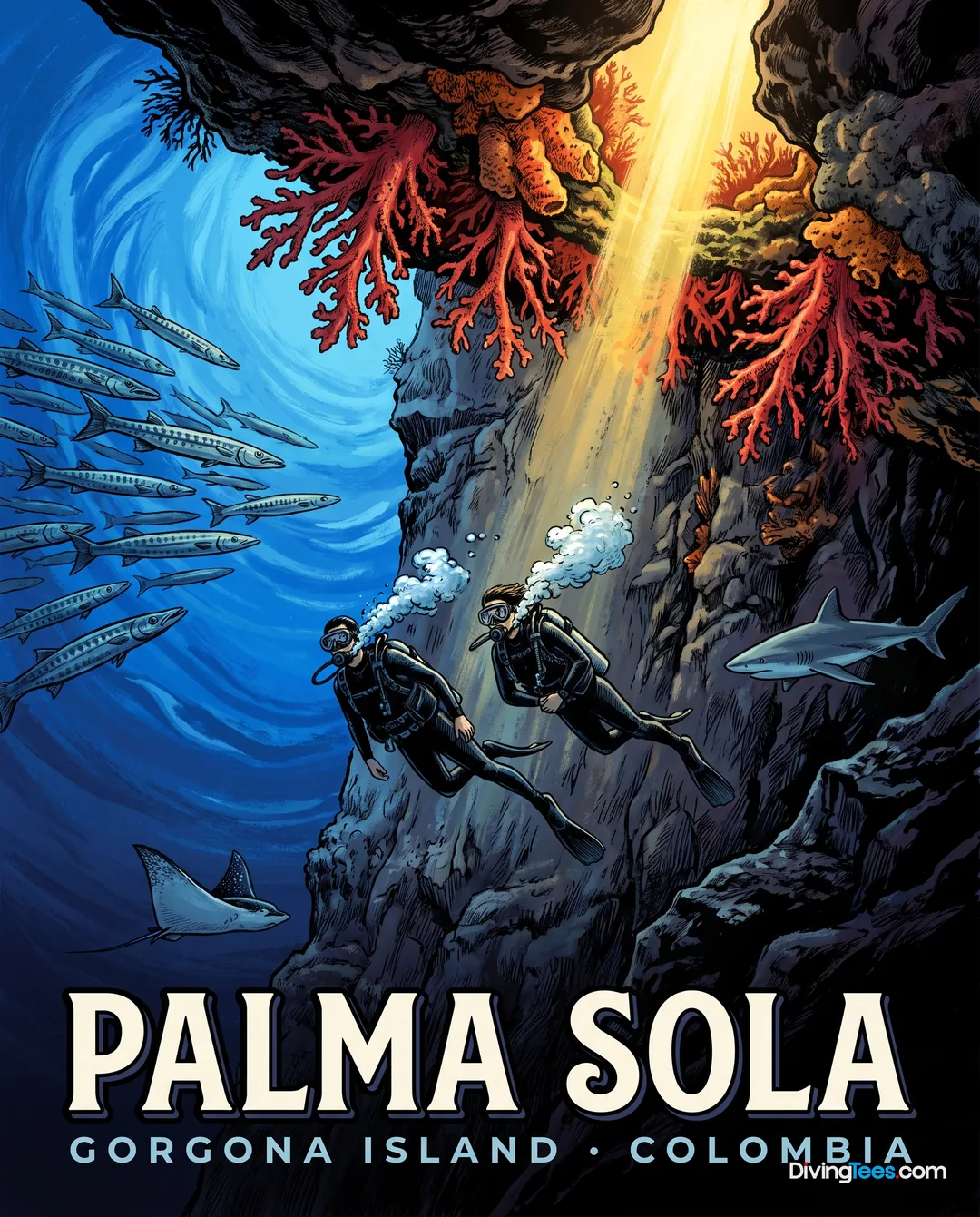
Palma Sola gives Gorgona its clearest underwater signature: an exposed volcanic cliff face that falls into deep water, with oceanic current running across the wall. The island is reached by boat and diving is organised within Parque Nacional Natural Gorgona, so this is not a shore-diving resort with a string of casual options. It suits divers who value protected nature, open-water conditions and a stay shaped by the island rather than by nightlife or extensive resort facilities.
Diving here
Gorgona’s diving is primarily boat-based, with rocky reefs, exposed walls and open-water terrain around an isolated island. Palma Sola is the most demanding example: its volcanic cliff drops into the deep Pacific and is fully exposed to oceanic flow. Currents can be strong, variable and affected by the state of the sea, so the dive calls for a controlled descent, disciplined positioning and the ability to respond to changing water movement rather than simply follow a fixed route. The nutrient-rich flow is part of the attraction, drawing larger open-water species close to the wall. There is no dependable shore-diving fallback built into the destination, and visibility is not something on which to base an elaborate plan. Expect carefully briefed boat outings, with the park framework and local conditions influencing which sites are practical on the day.
One dive not to miss
The underwater wildlife
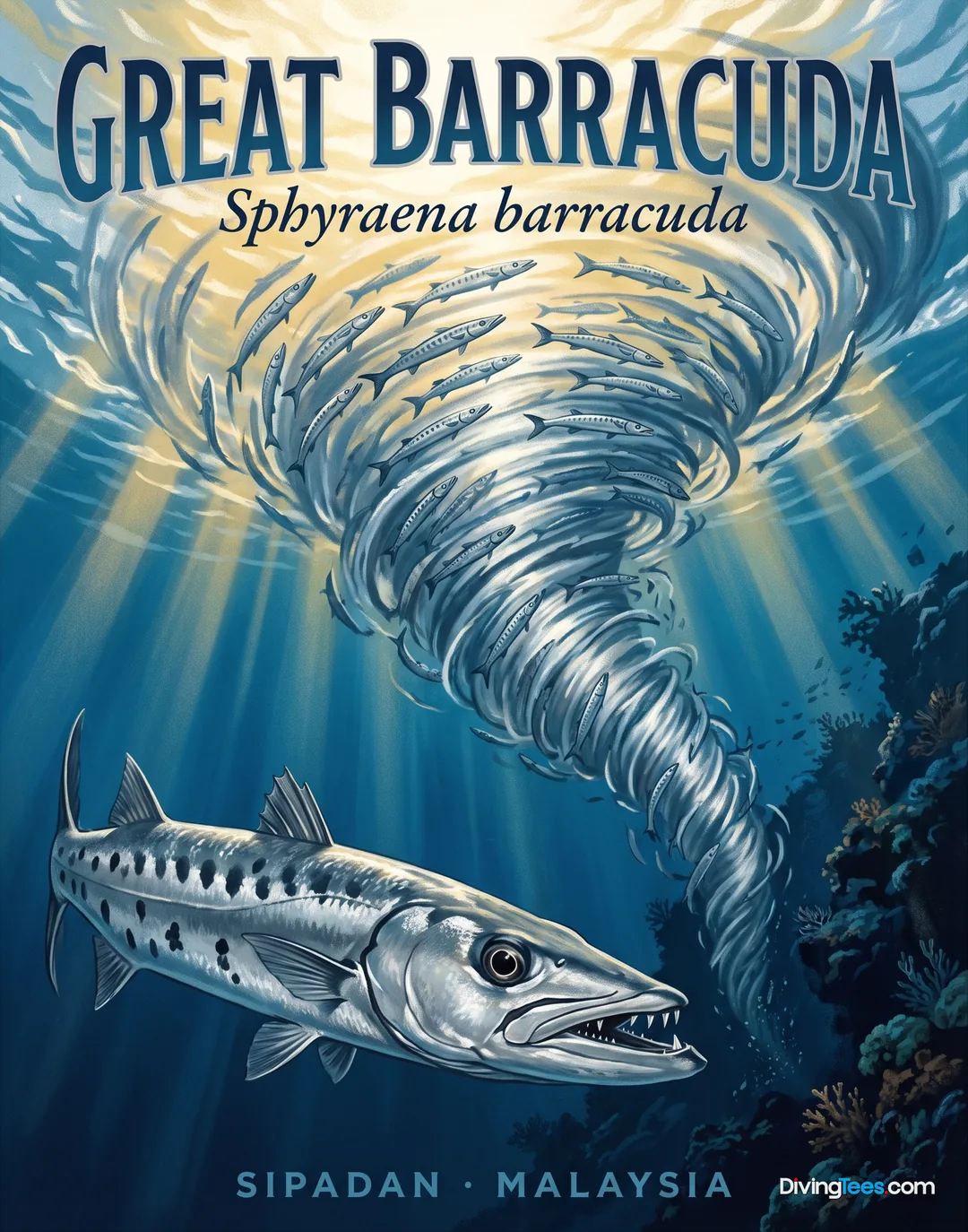
The main wildlife interest is pelagic rather than a guaranteed list of named reef animals. At Palma Sola, the nutrient-rich current brings a realistic chance of seeing larger open-water species moving through or around the wall. The setting is as important as the encounter: a diver hovering beside a volcanic cliff, watching the blue water beyond while the current carries life past the face. Marine encounters are favoured from May to October, when the site conditions are considered most suitable for this aspect of the diving. Sightings remain dependent on sea state, current and timing, so the destination rewards patience rather than a checklist mentality. On land, the island’s protected status also makes terrestrial and coastal nature part of the overall wildlife experience.
Possible underwater encounters
When to go
May to October is the clearest window for Palma Sola’s marine encounters. The reason is not that the current disappears: this exposed site remains a current dive, and conditions can still change with the sea. Rather, this period is identified as the more favourable one for meeting larger open-water species in the nutrient-rich flow. The crossing and the day’s boat programme still need to be treated as weather-dependent. Outside this window, Gorgona may still offer a worthwhile protected-island stay, but the specific pelagic appeal of Palma Sola should not be treated as equally predictable.
Level required
The destination is listed as suitable for all levels, but that does not make every dive equally appropriate. Palma Sola requires experience with strong current and is better reserved for divers who are comfortable in exposed, open-water conditions. An Advanced certification is useful, while Nitrox can be helpful for a programme built around repeated boat dives. PADI, SSI and BSAC divers should pay more attention to recent experience and comfort in current than to the label on the certification card.
On the ground
From London Heathrow, London Gatwick or Manchester, the journey first has to reach Colombia’s Pacific coast; Gorgona itself is then accessible only by boat. The practical complication is therefore the handover between the land journey to the embarkation point and the maritime crossing to the island. Exact connections vary with the chosen arrival airport and departure point, so the boat timetable and park entry arrangements need checking before flights are fixed. Once on Gorgona, the diving is organised as local boat outings within the national park rather than as shore-based departures. Allowing sensible flexibility around the crossing matters: the island’s isolation means a rougher sea can affect the day’s plan more than a late taxi or short transfer would.
Local tips
Treat the crossing and park entry authorisation as part of the dive booking, not as administrative details to sort out after arrival. Confirm that both are included in the planned sequence before committing to tightly connected travel. Build the stay around the diving days, because sea conditions and the boat programme govern the island more than the accommodation timetable. A spare day is useful if the sea deteriorates and Palma Sola becomes impractical. Do not arrive expecting a large choice of last-minute outings or the flexibility of a coastal resort. Bring basic personal equipment if possible: an isolated island may have a more limited rental stock than a mainland base. Divers considering Palma Sola should be honest about their current experience, especially with strong current and open-water positioning. In the park, follow the briefing closely, make no contact with the reef and take nothing underwater; the protected setting is central to the experience, not an optional extra.
Planning your stay
A Gorgona stay works best as an island-and-diving break, with boat outings arranged around the sea and time left for the national park. Non-divers can spend their days walking and observing the island’s terrestrial and coastal nature, although the destination is not built around a broad range of resort entertainment. Keep the schedule unhurried enough to absorb changes to the boat programme, and use non-diving days for rest or park exploration rather than planning complicated excursions away from the island.
Hello, I'm Marina, DivingDeal.com's AI assistant. I guide you through destinations, areas and countries.

Thinking about the whole trip and the flights? Talk it over with Edith →
Marina is an AI. Some links are affiliate links: DivingDeal may earn a commission, at no extra cost to you. Bookings are made with the partner.