
Caribe Colombiano Diving
Google 5/5 (344 reviews)
Colombia · Americas
Eighteen-metre wrecks, rocky pinnacles, eagle rays and giant moray eels frame Cartagena’s warm-water diving, with Rosario and Barú reached by day boat.
For subtitles in English: start the video firstthen click the gearat the top right of the video, select “Subtitles/CC”, then “Auto-translate” and choose “English”.
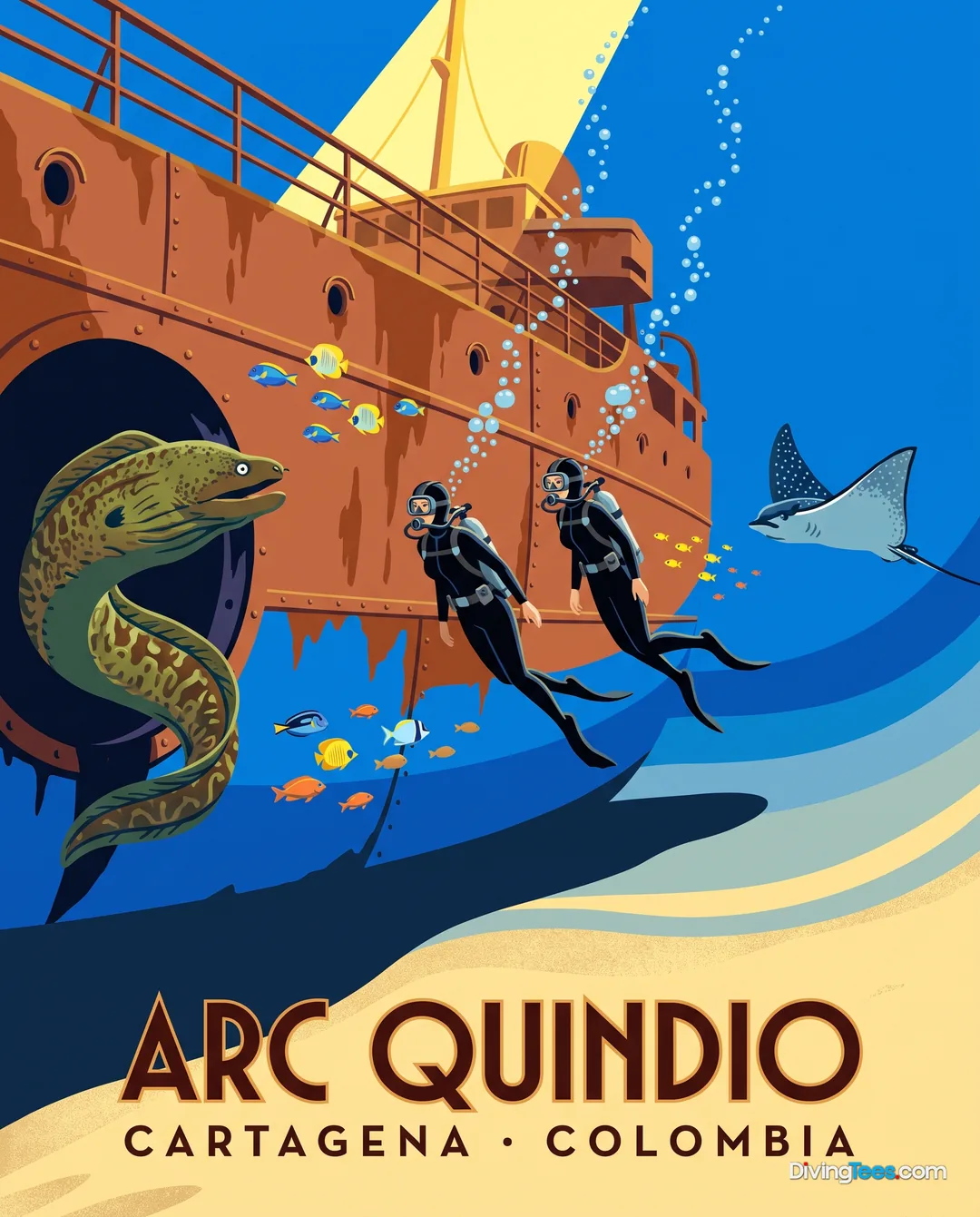
Cartagena is a useful Caribbean base for divers who want proper diving without giving up a historic city. The working pattern is a day boat from Cartagena towards Barú, the Rosario islands, San Bernardo or offshore banks, with reefs, walls and a few shallow wrecks in the mix. The ARC Quindío gives the trip a more defined objective: an intact wreck at eighteen metres, away from the usual beach-and-snorkelling circuit.
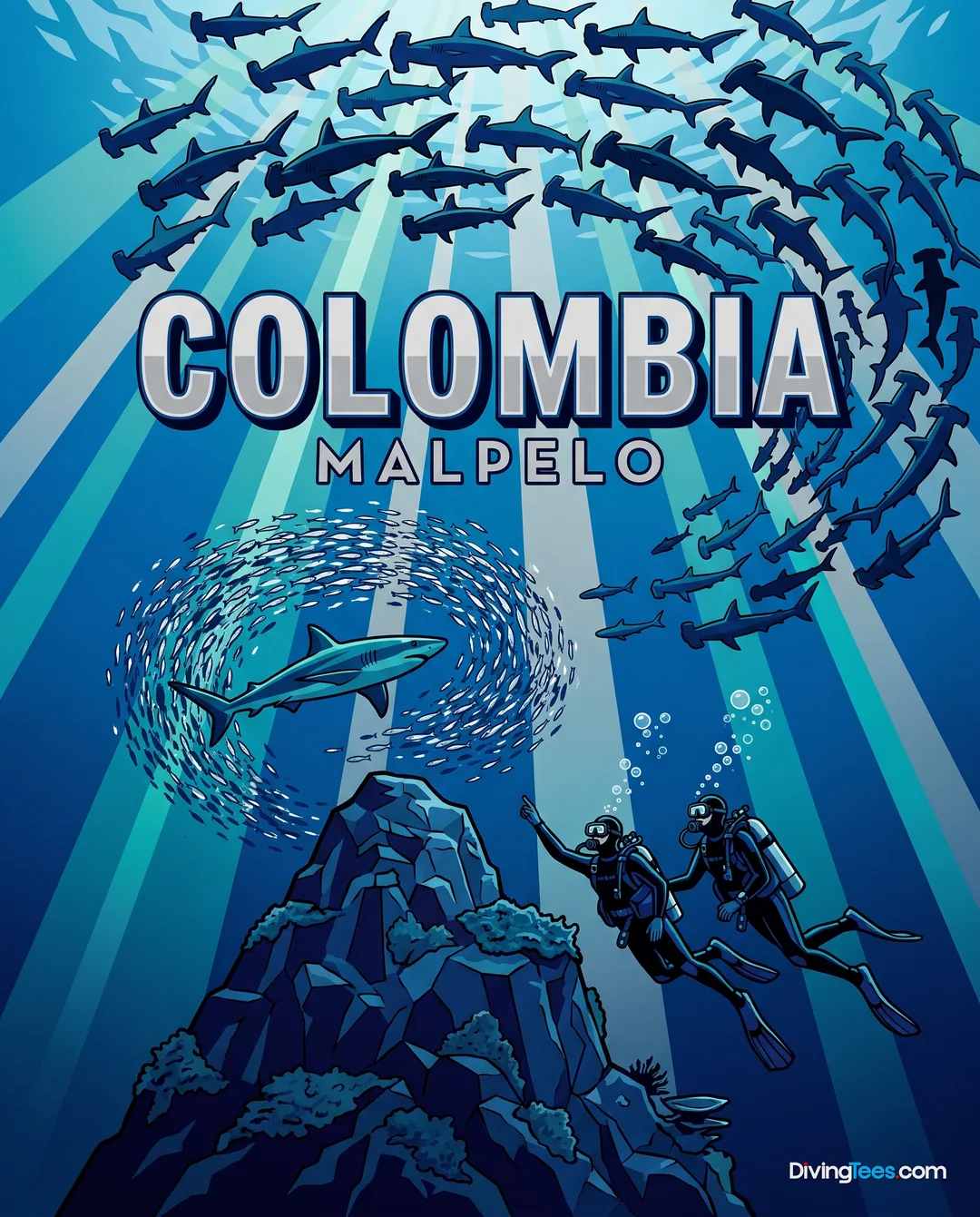
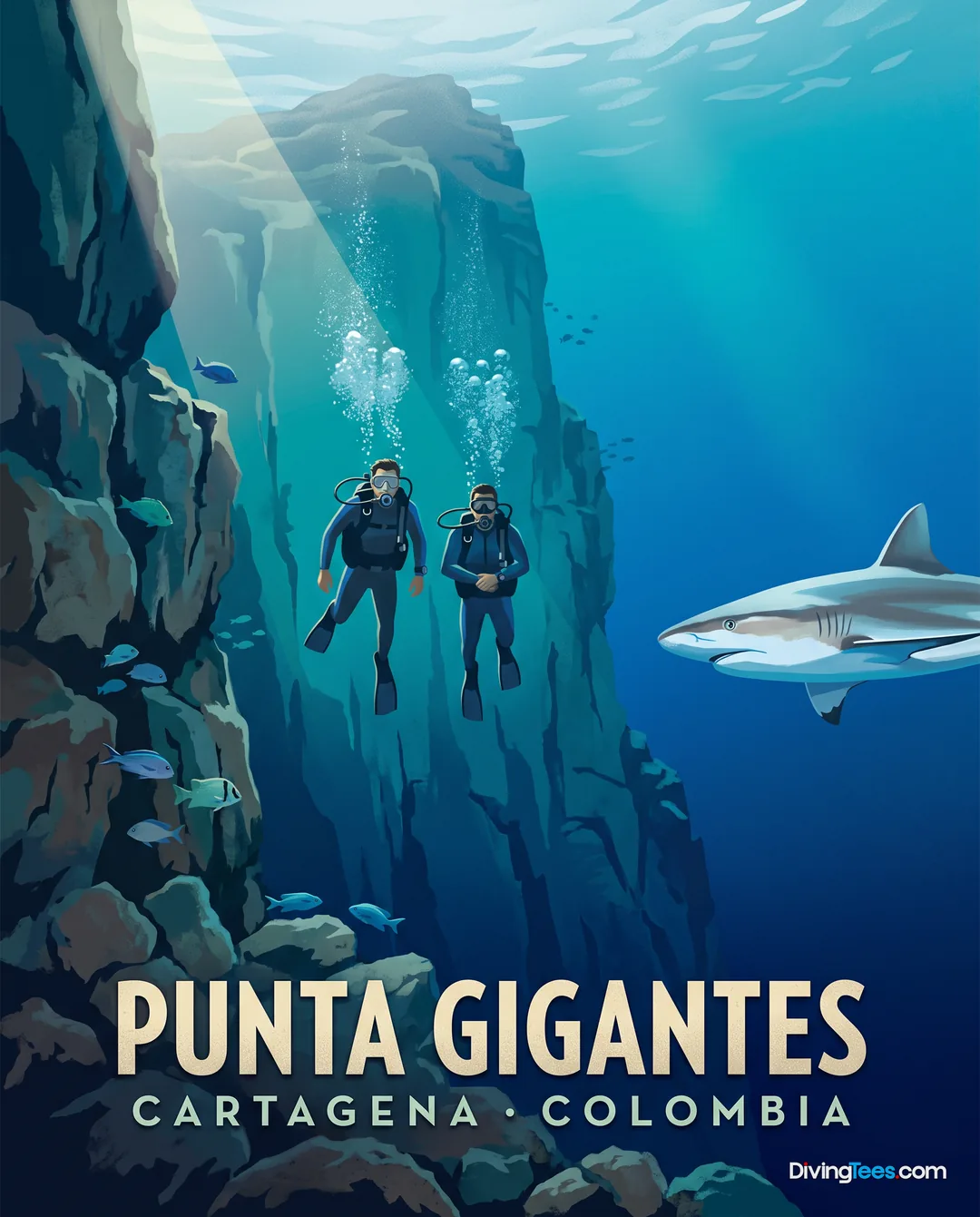
The diving is built around shallow coral reefs, island walls, rocky outcrops and offshore banks rather than long-range expedition sites. At the ARC Quindío, the intact naval wreck lies steadily at eighteen metres; divers can work around its structure, where eagle rays and giant moray eels may appear. Punta Gigantes changes the pace, using a prominent rocky pinnacle for a drift dive and the possibility of grey reef sharks. Currents are generally light on sheltered reefs and wrecks, although Punta Gigantes can produce a moderate, variable drift. Visibility is commonly around fifteen to twenty metres, clearest from December to April. Most diving is organised as a full-day boat outing from Cartagena, with Rosario, Barú and Salmedina offering different levels of exposure. The journey, rather than the depth, is often the main practical consideration.
Tropical reef fish are the dependable background here, present throughout the year around the coral formations and island sites. Lutjanids, damselfish and surgeonfish give the reef dives their everyday movement, while the artificial structure of the ARC Quindío offers more focused searching: eagle rays and giant moray eels may use the wreck. Punta Gigantes is the more open-water proposition, with grey reef sharks among the larger pelagic possibilities around its rocky pinnacle. Turtles and rays, including stingrays and eagle rays, are occasional encounters rather than a fixed appointment, with the best chance listed from December to April. The appeal is therefore a mixture of close reef observation and occasional larger-animal sightings, not a guaranteed large-fauna show.
December to April is the clearest and generally most settled choice for Rosario and Barú. Lower rainfall means less runoff and suspended sediment, while the visibility commonly reaches fifteen to twenty metres. The measured pattern adds a useful distinction: the calmest sea falls from August to November, but October is best treated cautiously because it coincides with the wet season’s peak and can bring more turbidity and rougher conditions. August and September may therefore suit divers who value a calmer boat ride, whereas December to April makes more sense for those prioritising underwater clarity. Turtles and rays are also most likely to be encountered occasionally during the drier window.
This coast is exposed to sargassum strandings, whose intensity varies greatly from year to year. To find out more, see the “Sargassum alert” panel on this page.
Many sites around Barú and Rosario suit beginners, trainees and divers with modest experience, particularly when currents are light and the reefs are sheltered. Open Water certification is sufficient for the ARC Quindío if the diver is comfortable at eighteen metres. Advanced Open Water is useful for making the most of the wreck and deeper options. Nitrox can help on repeated reef days, while a BSAC or equivalent drift-diving background is valuable for Punta Gigantes and island walls where the current may become more noticeable.
From London Heathrow, London Gatwick or Manchester, Cartagena is reached through the international Rafael Núñez Airport. Some European routings operate seasonally or regularly from cities including Amsterdam, Zurich, Milan and Madrid, but travellers from the UK should allow for connections through Bogotá or another hub rather than assuming a direct flight. Once in Cartagena, diving boats normally leave from Muelle Turístico La Bodeguita or other authorised piers in the bay. The main island sites are reached by boat, with roughly an hour of navigation to Barú or the principal Rosario islands. Hotels in Cartagena are often within a short taxi ride or walk of the departure piers; island accommodation usually relies on boat or internal shuttle transfers arranged locally.
Treat a Rosario or Barú dive day as the day’s main event. Boats usually leave in the morning and return late afternoon, so do not place a flight or tightly timed commitment after the trip. Early departures help avoid the busiest pontoon traffic and the beach boats that crowd Rosario and Playa Blanca. Check that the programme is dedicated to scuba rather than a general island tour: the latter may give divers short underwater stops between swimming and snorkelling. Weekdays outside Colombian holiday periods are quieter, and staying a night on Barú or Isla Grande can put divers in the water before the day boats arrive. If the sea is uncomfortable, sheltered lagoons and channels around Isla Grande are more sensible than exposed Salmedina. Keep clear of bathing areas, and confirm that park entry, authorised guiding, designated zones and permitted moorings are included. Moor only on sand or approved buoys; touching coral or wildlife, feeding animals, collecting anything and using non-biodegradable products are not acceptable in the park.
Five to seven days works well for a land-based stay: allow several mornings for boat diving, with separate days for Rosario, Barú and, where conditions permit, San Bernardo or more exposed sites. Cartagena’s walled centre, ramparts and colonial squares provide a substantial non-diving counterpoint, while an accompanying non-diver can spend time on the islands, beaches or cultural excursions. An island night is worth considering if early or late diving matters more than city access.
Hello, I'm Marina, DivingDeal.com's AI assistant. I guide you through destinations, areas and countries.
Thinking about the whole trip and the flights? Talk it over with Edith →
Marina is an AI. Some links are affiliate links: DivingDeal may earn a commission, at no extra cost to you. Bookings are made with the partner.
Your last day stays dry: no diving in the 18-24 hours before a flight, the perfect window to see the destination from another angle.
 Culture
⏱ 2 h · ★ 5.0 (45 reviews)
from £29$39€35
see on Viator ↗
 Culture
⏱ 5 h · ★ 5.0 (38 reviews)
from £403$539€481
see on Viator ↗
 Nature
⏱ 8 h · ★ 5.0 (34 reviews)
from £272$364€325
see on Viator ↗
 Nature
⏱ 2 h · ★ 5.0 (21 reviews)
from £137$183€164
see on Viator ↗
Ratings and reviews collected by Viator and Tripadvisor.
December to April offers the clearest conditions, with visibility commonly around fifteen to twenty metres, lower rainfall and less suspended sediment. Turtles and rays are also occasionally encountered during this period. August and September may suit you if calmer boat rides matter more, while October can bring turbidity and rougher conditions.
Many Barú and Rosario sites suit beginners, trainees and divers with modest experience because currents are often light on sheltered reefs. Open Water certification is sufficient for the ARC Quindío if you are comfortable at eighteen metres. Advanced Open Water helps with deeper options, while drift-diving experience is useful at Punta Gigantes.
You can explore shallow coral reefs, island walls, rocky outcrops, offshore banks and the intact ARC Quindío wreck at eighteen metres. Tropical reef fish are common, while eagle rays and giant moray eels may appear around the wreck. Punta Gigantes offers a rocky pinnacle, possible grey reef sharks, and occasional turtles and rays.
Plan several mornings for full-day boat trips to Rosario, Barú and, when conditions permit, San Bernardo or exposed sites. Boats usually leave in the morning and return late afternoon, so avoid scheduling flights afterward. A five-to-seven-day land-based stay works well, while an island night can help with early or late diving.