Americas
Colombia: four months across contrasting Caribbean waters
Colombia brings Cartagena, Santa Marta, San Andres and Fuerte Island into one August-to-November diving window, with Providencia adding an island perspective.
What makes this country unique
- Cartagena and Fuerte Island within one practical pairing
- San Andres and Providencia beyond the Colombian mainland
- Santa Marta beside the Tayrona programme
- August to November aligns every listed diving area
- Cartagena’s busier coastal diving environment
- Fuerte Island’s quieter island setting
- Rosario and Playa Blanca demand careful site selection
For subtitles in English: start the video firstthen click the gearat the top right of the video, select “Subtitles/CC”, then “Auto-translate” and choose “English”.
This country for a diver
For a diver, Colombia is less one uniform destination than a Caribbean coastline with an offshore island alternative. Cartagena and Santa Marta bring mixed diving environments, while San Andres shifts the trip towards island logistics; Fuerte Island offers another island setting close enough to pair with Cartagena. The useful common ground is timing: every listed area opens in the same four-month window. That makes Colombia straightforward to plan seasonally, but not interchangeable geographically. The choice is between combining nearby Caribbean stops or committing to a more distant island journey.
How the country divides
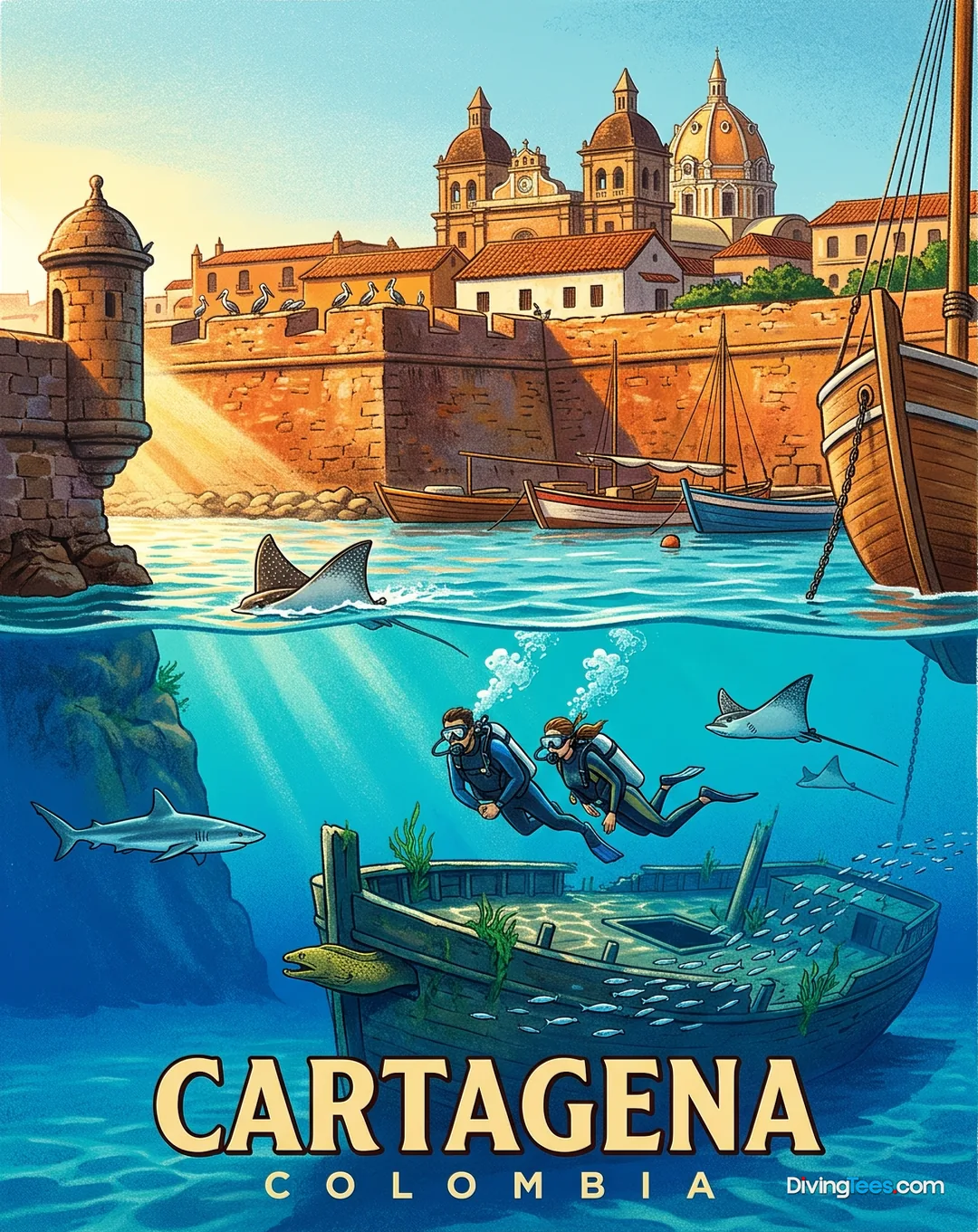
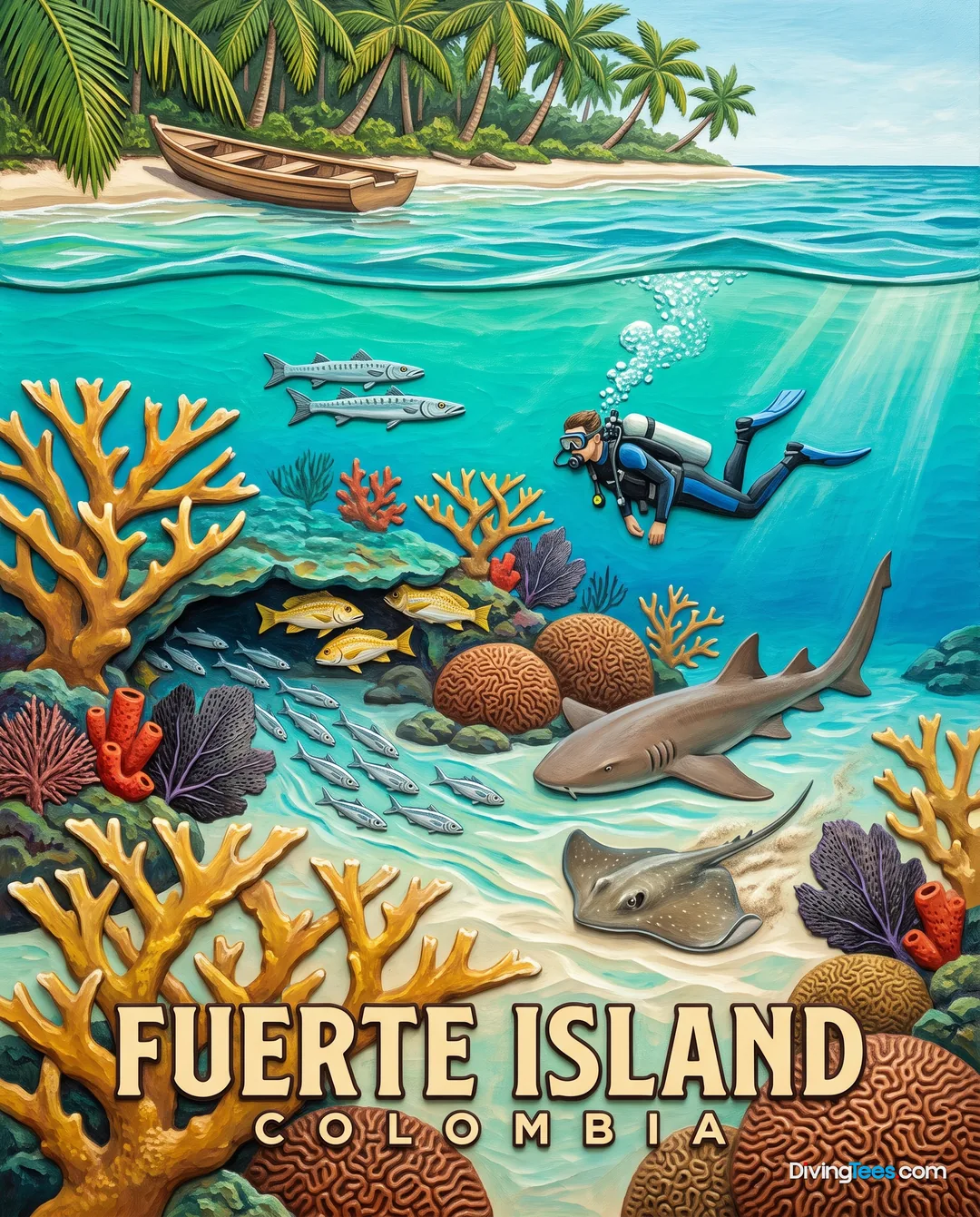
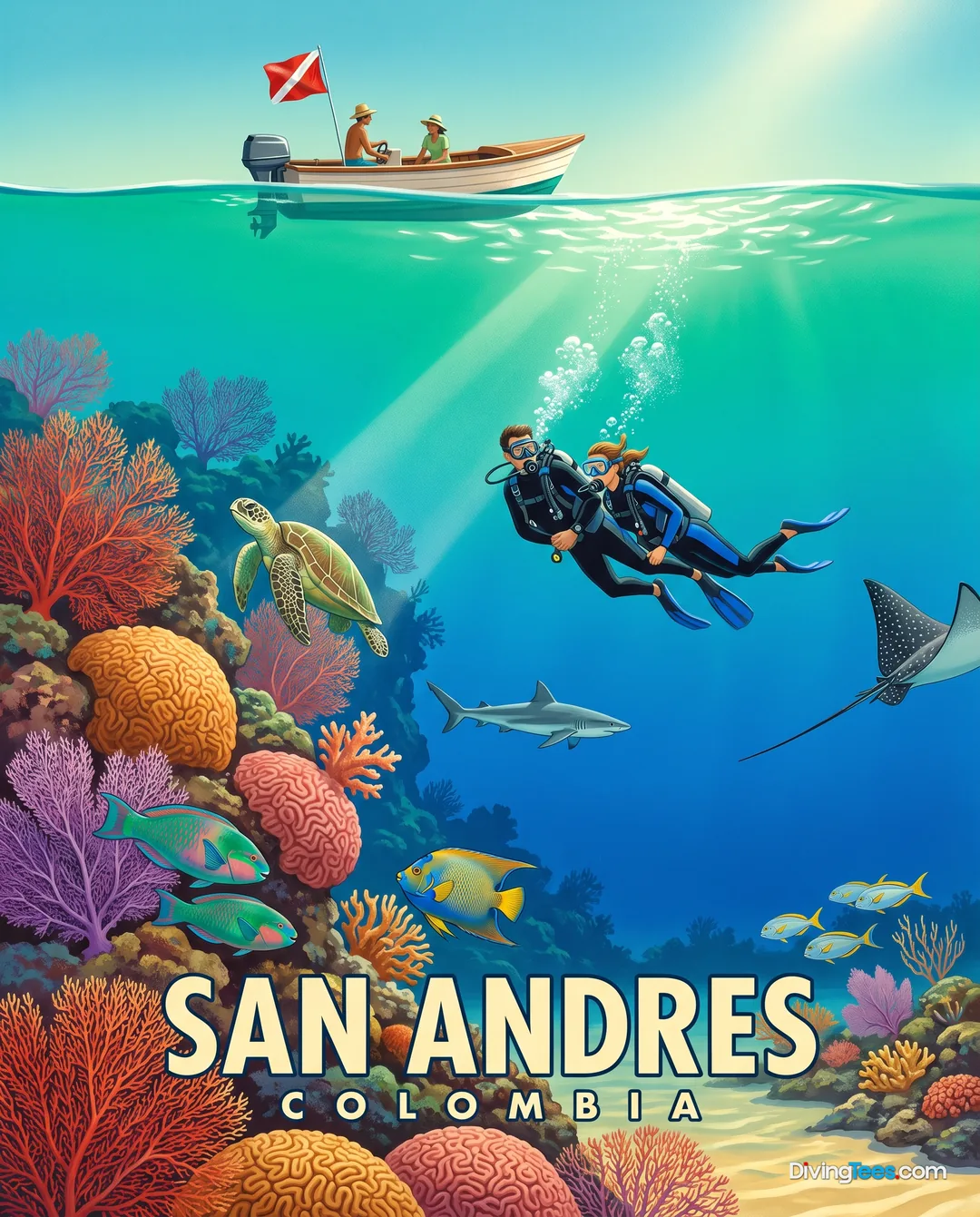
Colombia divides naturally into three planning groups. Cartagena and Fuerte Island form the only practical pairing: they sit 134 kilometres apart, so a traveller can build one itinerary around a mainland base and an offshore island. Cartagena is the busier choice, with high tourist pressure, while Fuerte Island gives the trip a more detached character. Santa Marta stands alone on the Caribbean coast. Its diving is mixed rather than a separate seasonal alternative, and the Tayrona programme needs local judgement about the day’s sea state. San Andres is the outlying island option, also based on mixed diving and moderate tourist pressure. It belongs in a different travel plan from the mainland coast, not as a casual add-on. In plain terms, choose Cartagena and Fuerte Island for a potentially combined trip; Santa Marta for a separate coastal focus; or San Andres for an island-led journey.
Diving destinations
Dive centres

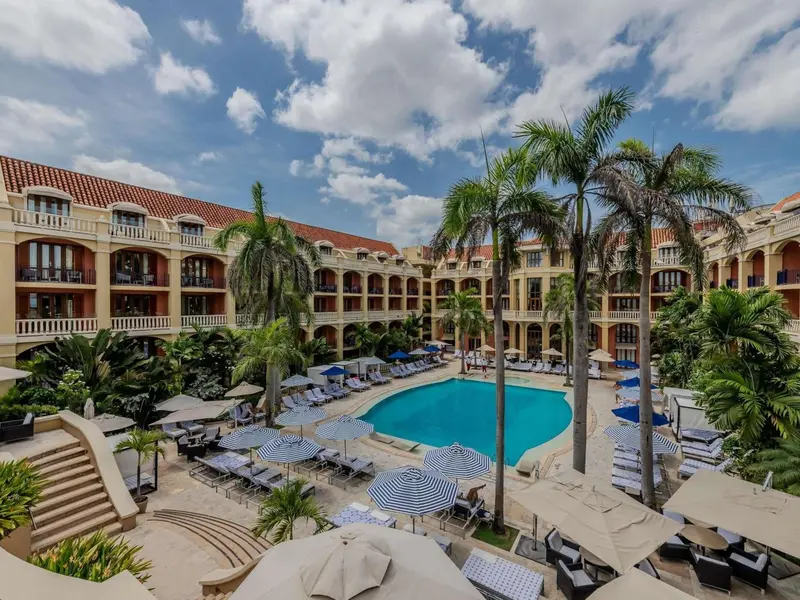
Hotels
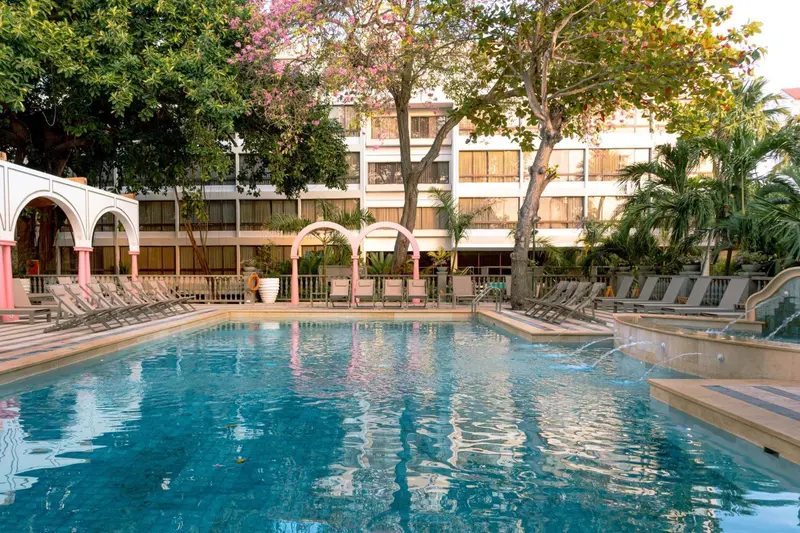
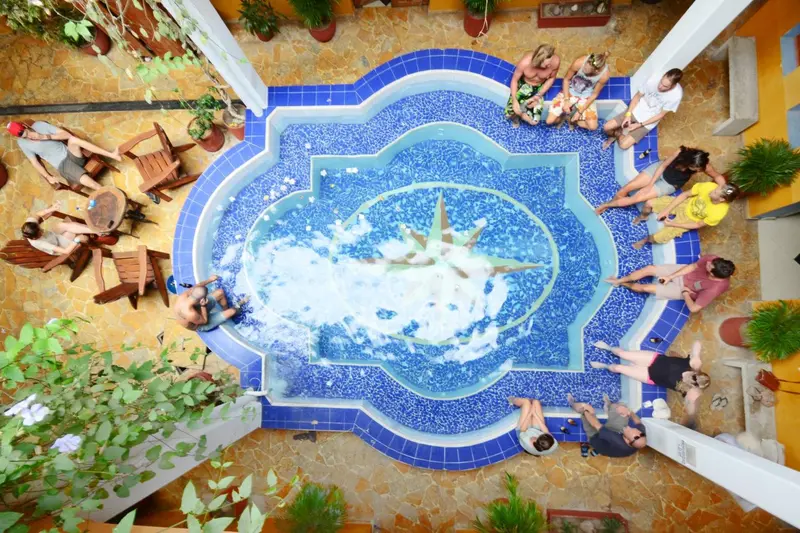
Liveaboards
When to go, and where by month
The clear Colombian diving window runs from August through November. In August, Cartagena, Fuerte Island, San Andres and Santa Marta are all in season; the same is true in September, October and November. From January through July, and again in December, none of these listed areas is marked as being in season. There is no opposing seasonal pattern here in which one Colombian coast replaces another. That is the important planning point: changing from Cartagena to Santa Marta or San Andres does not create a second, complementary season. Instead, the country’s recognised diving period is concentrated into one shared block. For a costly annual trip, this narrows the sensible calendar but simplifies the decision between regions. Within that window, the itinerary question is geographical and logistical rather than a search for a different Colombian coast that opens when the first one closes.
Marine life, coast by coast
Colombia’s cross-country wildlife picture cannot be reduced to one named animal or one itinerary-wide encounter. No fauna is assigned across the country as a whole, and no species is attached specifically to one of the regional groups. That means wildlife should not be used here as a reason to move from Cartagena to Santa Marta, or from the mainland to San Andres. The meaningful national distinction is therefore one of geography and timing, not a promised animal route. A diver choosing between Fuerte Island, Santa Marta and San Andres is selecting different settings within the same August-to-November season, rather than following a documented progression from one signature species to another. Keep the fauna question local when reading each zone’s page, and avoid paying for a long transfer on the assumption that Colombia offers a single, country-wide wildlife highlight.
Getting between the areas
Cartagena and Fuerte Island are the sensible combination, at 134 kilometres apart. Even that distance should not be treated as a quick hop: island transfers involve embarkation, navigation and landing, and a tight connection can compromise a return flight. Santa Marta is 174 kilometres from Cartagena, close on a map but not automatically an effortless extension once the diving programme and transfers are included. Fuerte Island is 300 kilometres from Santa Marta, making that pairing a more substantial overland or coastal move. San Andres is different again: roughly 700 kilometres from Fuerte Island and 712 from Cartagena, while Santa Marta lies 829 kilometres away. These distances make San Andres a separate island journey rather than a casual addition. Leave proper margin between the final boat day and any flight.
Take off your mask
San Andres is the Colombian island gateway to Providencia, described as a little-known and carefully preserved paradise beyond the usual route. That relationship gives the country an unusual above-water thread: San Andres is not only an island stop in its own right, but also the passage towards Providencia. The contrast is between the recognised name and the smaller, less familiar destination beyond it. Elsewhere, the material available for Colombia is notably spare on named food, towns, cultural regions and specific visits. It does, however, place particular attention on the excellent meals served during a stay. That is a useful expectation, but not a reason to invent a national dish or attach a menu to Cartagena, Santa Marta or San Andres. For a traveller building a richer land itinerary, Providencia is the one concrete extension that can be named with confidence; the rest should be checked locally rather than assumed from generic Colombian travel writing.
What holds true everywhere here
Colombia rewards unusually careful transfer planning. Island embarkation, navigation and landing can take longer than the map suggests, so the last diving day should not sit hard against a flight. Reef technique matters especially in protected areas: poor buoyancy and fin strokes that lift sediment are identified as major sources of impact. In Cartagena’s Rosario and Playa Blanca area, ask the operator to move away from heavily used swimming zones, where boats and bathers can increase turbidity. The same conservation logic applies throughout the country: no contact, no collecting, no anchoring on coral, and attention to the local briefing. Around Santa Marta, an operator should choose Tayrona sites according to the day’s sea and wind rather than promise one fixed location. Nitrox may suit repetitive boat diving, but it is a comfort choice, not a Colombian requirement.
Frequently asked questions about Colombia
When should you plan a diving trip to Colombia?
Plan your Colombia diving trip between August and November, when that window aligns with the listed diving areas. This timing covers Cartagena, Santa Marta, San Andres and Fuerte Island, while Providencia adds an island perspective. Choosing this period lets you compare mainland and island settings within the same seasonal window.
What diving settings can you choose in Colombia?
Colombia offers varied geographic settings rather than one country-wide wildlife route. You can choose Cartagena’s busier coastal diving environment, Fuerte Island’s quieter island setting, Santa Marta beside the Tayrona programme, or the island perspectives of San Andres and Providencia. These choices reflect location and timing, not a documented progression between signature species.
What should you expect to see while diving in Colombia?
Colombia’s wildlife picture is not tied to one named animal or one itinerary-wide encounter. No species is assigned across the country as a whole or specifically to its regional groups. Choose between Cartagena, Fuerte Island, Santa Marta and San Andres for their different settings, rather than expecting a single country-wide wildlife highlight.
How should you plan a diving stay in Colombia?
Plan your Colombia stay around the areas you want to combine. Cartagena and Fuerte Island form one practical pairing, while San Andres and Providencia offer an island-focused option. Santa Marta sits beside the Tayrona programme. Choose Rosario and Playa Blanca carefully, and avoid long transfers based on expectations of a shared wildlife route.